
Intermittent faults that come and go, sometimes with no repeatable pattern, making them some of the most challenging to resolve.
Intermittent faults can be difficult to find and fix, because:
- They are not always present, which makes tracing them harder
- They may be modulated by ‘triggers’ like temperature, voltage, signal level and humidity
- They can be difficult to trigger, and the harder to trigger, the harder to find
- When not present or triggered, they are essentially untraceable
- This means they can take up lots of bench time trying to trigger and locate
Causes
- Solder joints degrade over time and may become electrically resistive
- Capacitors and resistors change as they age, and as they warm up
- Customer equipment factors, such as DC in the signal path, may trigger intermittent faults
- Semiconductors can become leaky under certain load and temperature conditions, causing gain changes, popping, rushing, crackling and whistling noises, and DC offset voltages
- Signal path contact points in switches, potentiometers and relays can oxidise and degrade
Transistors are most likely to cause intermittent faults, with some types especially prone. Electronic parts don’t generally show visual signs of deterioration, so they must be tested. This is best done under dynamic conditions, as static testing often fails to reveal issues.
Good technicians always want to find, understand and eliminate problems like these. This is essentially trend analysis, which builds knowledge and saves time later. Recapping rarely solves intermittent faults and never leads to an understanding of which part caused a problem.
Fixes
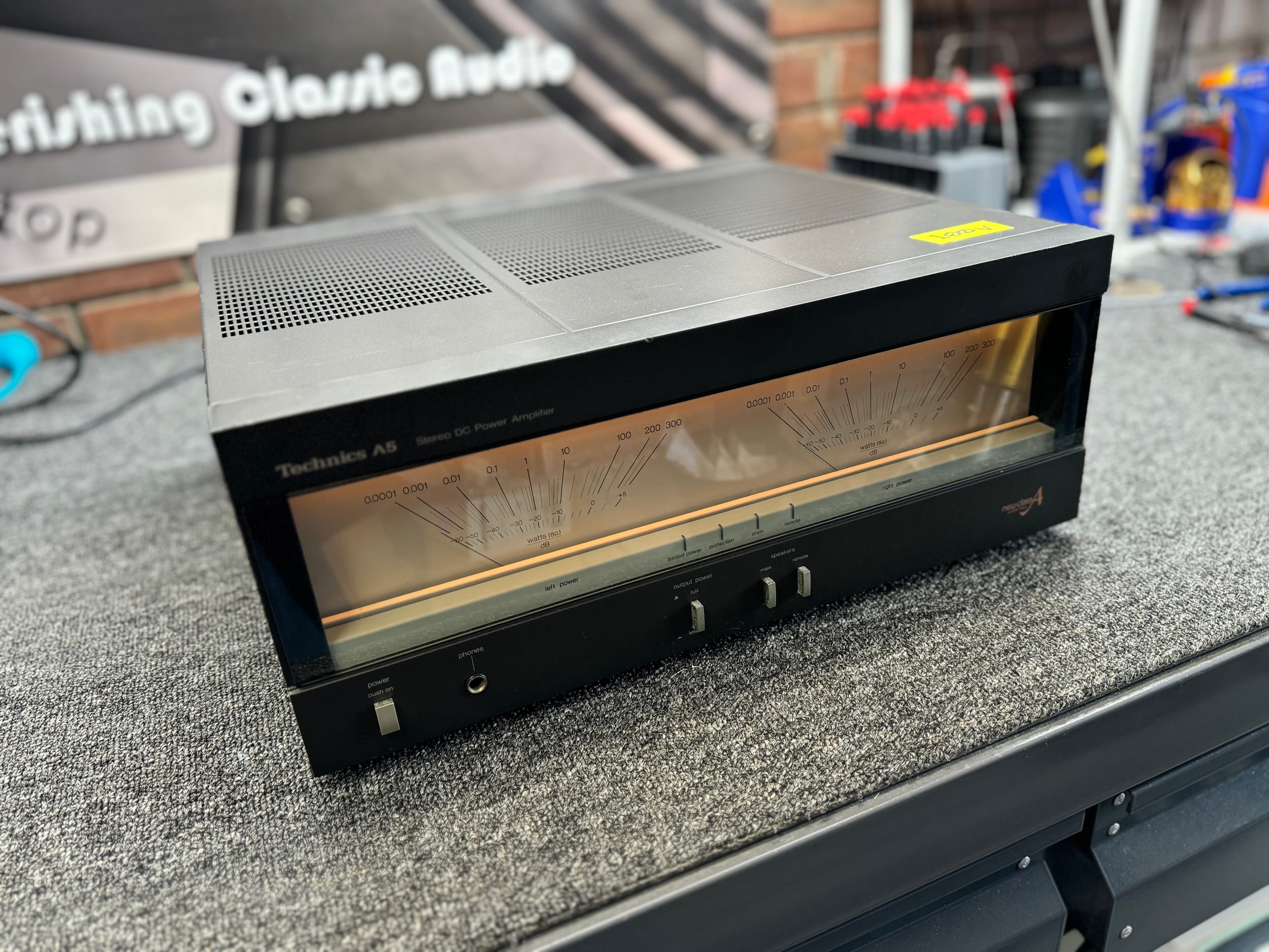
Resolving intermittent faults can be challenging, and equipment will occasionally require more than one visit to eliminate the most problematic intermittent faults. Whilst painful, these faults are also extremely satisfying to fix. Some of my best repairs involve resolving intermittent faults, like with this Technics SE-A5 power amplifier.
Just remember that intermittent faults are nobody’s ‘fault’ if you get me. I’ve occasionally had customers get upset with me for not finding/fixing a fault that never presented itself to me. That’s as silly as getting upset with someone about the weather, or blaming someone who never drove your car for its condition!!
Such faults are a quirk of complex electronics, and whilst good technicians will be able to resolve most of these faults, customers need to work with and support technicians who are prepared to dig into these sorts of faults.
Discover more from LiQUiD AUDiO
Subscribe to get the latest posts sent to your email.