
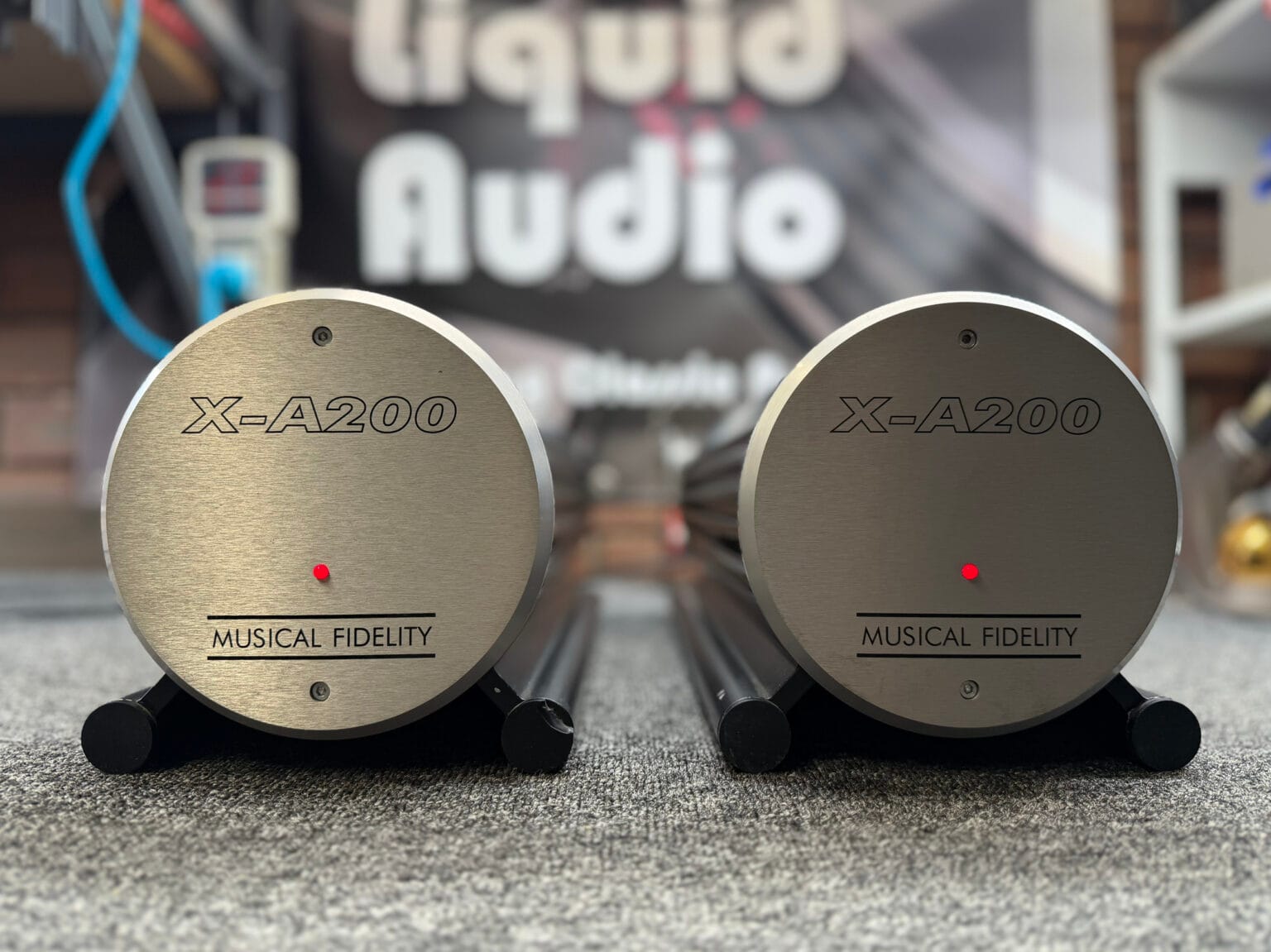
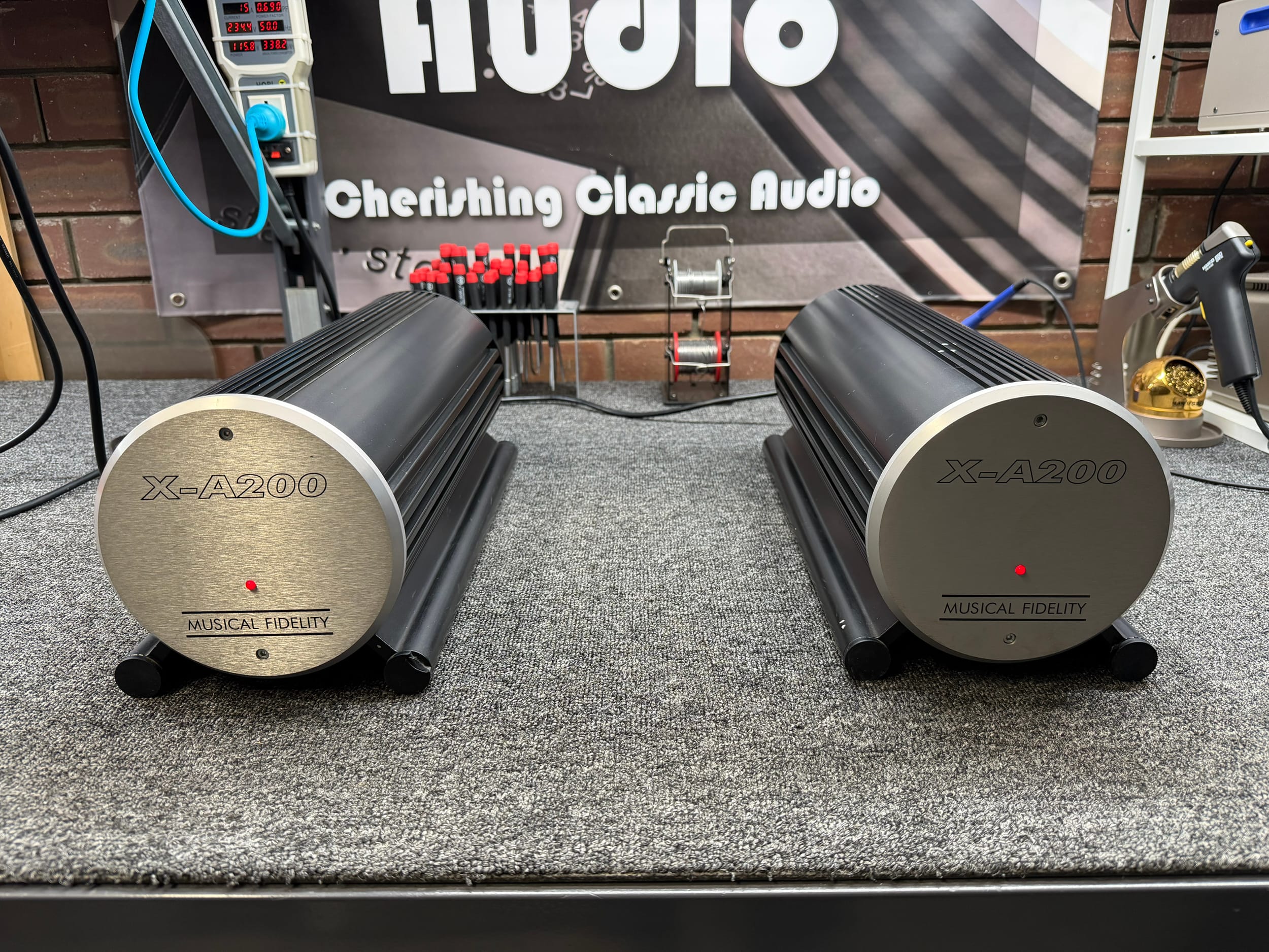
Join me as I overhaul and improve a pair of lovely Musical Fidelity X-A200 monobloc power amplifiers. The owner is very impressed, as you’ll see!
Welcome back, after one of, if not the busiest, months on record here @ Liquid Audio. This is partly because I’ve been feeling better and have been able to power through many jobs, and also because I had a lot here to get through. One of those jobs was for one of my longest-standing customers and was this pair of Musical Fidelity X-A200 power amplifiers.
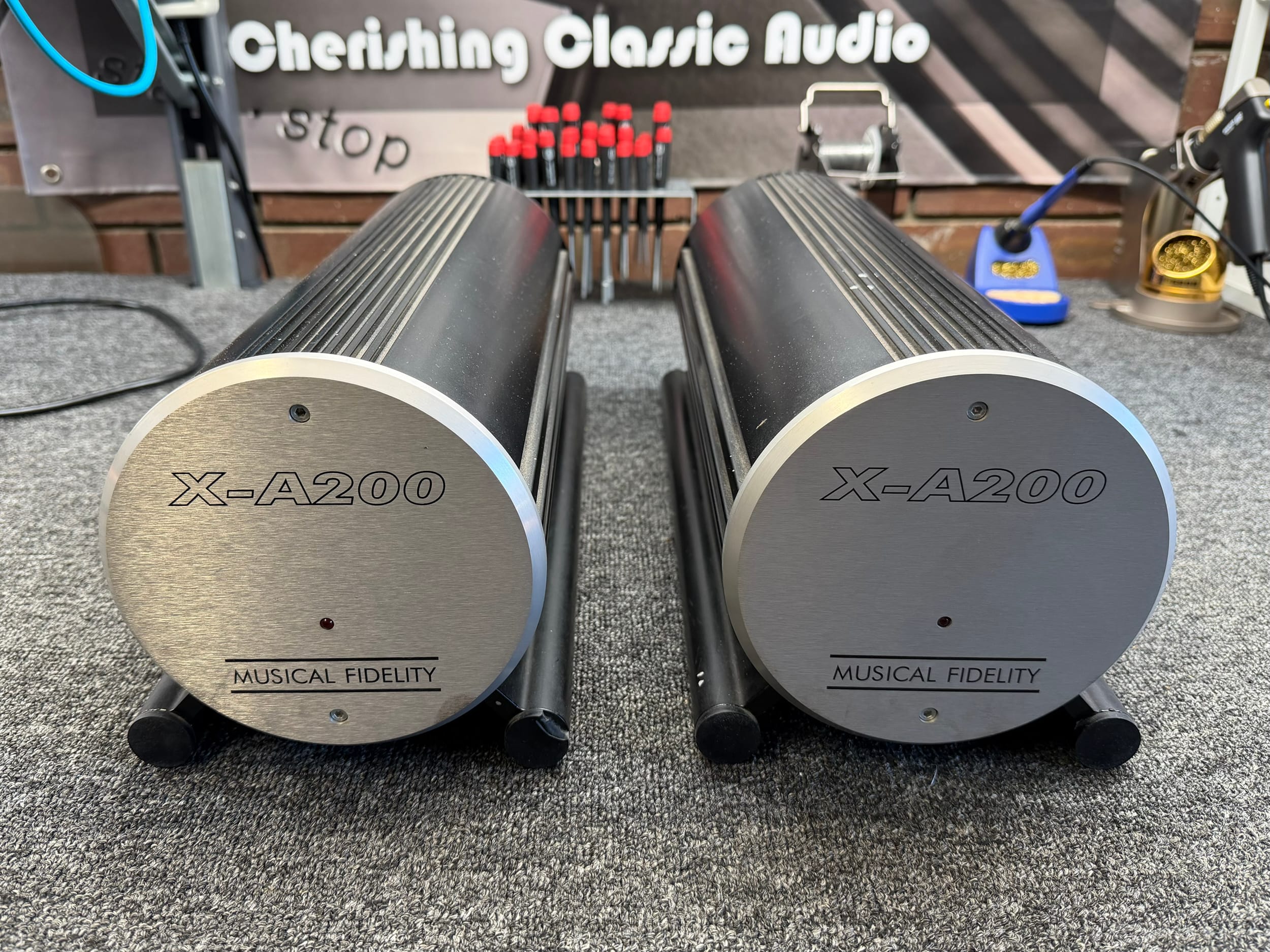
You might recall that the incredible Sansui AU-8500 I wrote about last was owned by a George. Well, these two Musical Fidelity beauties are owned by another long-standing George, so this is another perfect follow-up article!
I’ve repaired, overhauled and improved George’s other Musical Fidelity equipment, including his DM-25 DAC and his A5 CR preamplifier. I need to write those stories up, along with too many others, but suffice it to say that George was very impressed with the results we achieved with those pieces. With that in mind, we’ve been planning to overhaul his power amplifiers for several years. I’m pleased to report that they are finally done!
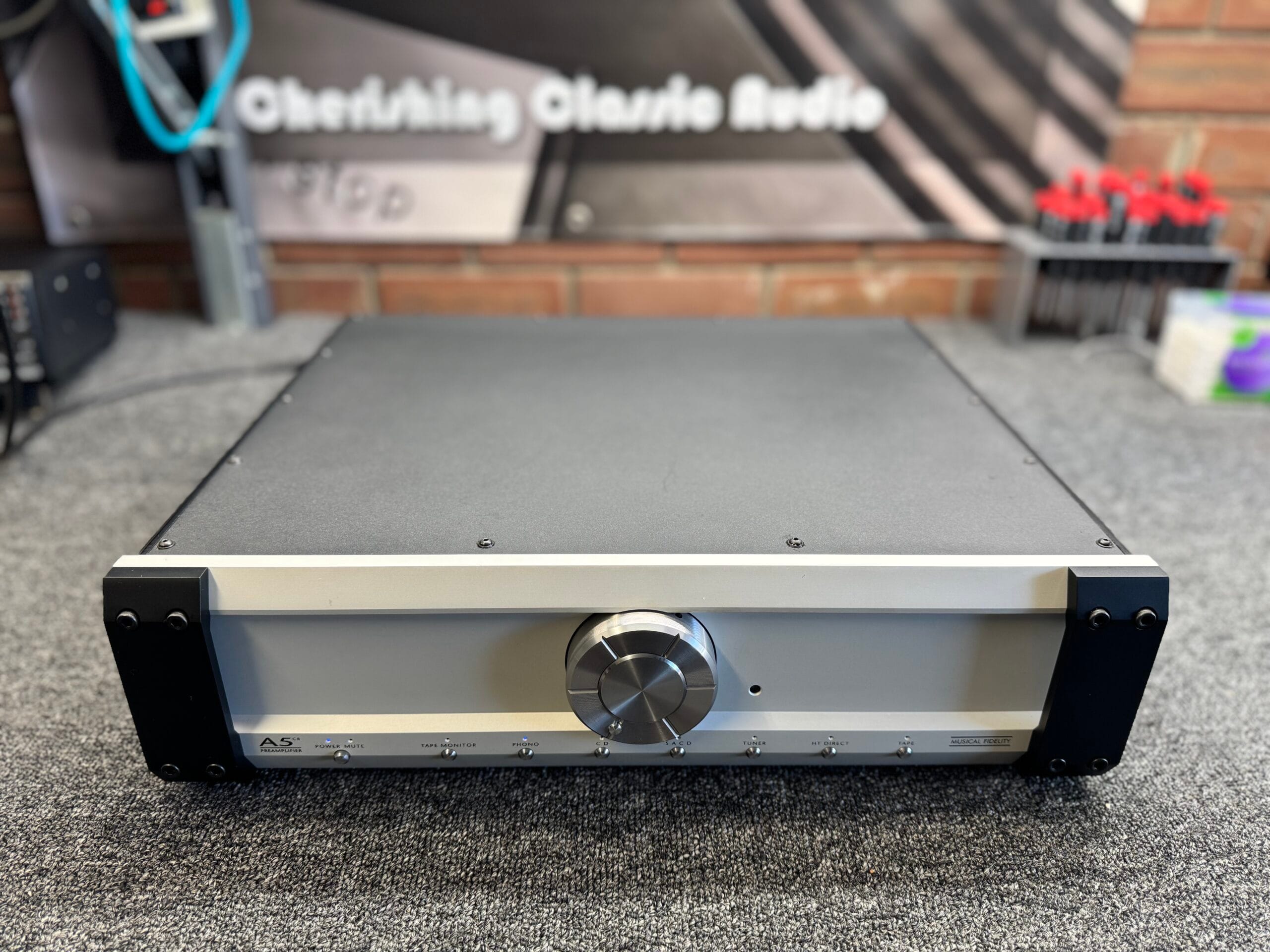
On the topic of Musical Fidelity, regulars will know that I’m both a fan and critic, and I’ve been overhauling and improving Musical Fidelity equipment for over a decade, including several of my own pieces. I usually have at least one piece of Musical Fidelity equipment with me, and currently I have a MF KW-500 and a Nu-Vista M3 amplifier in the workshop, awaiting their turn on the bench.
A quick site search for Musical Fidelity using my new live super search in the sidebar will generate many hours of reading, enjoy 🙂
Features
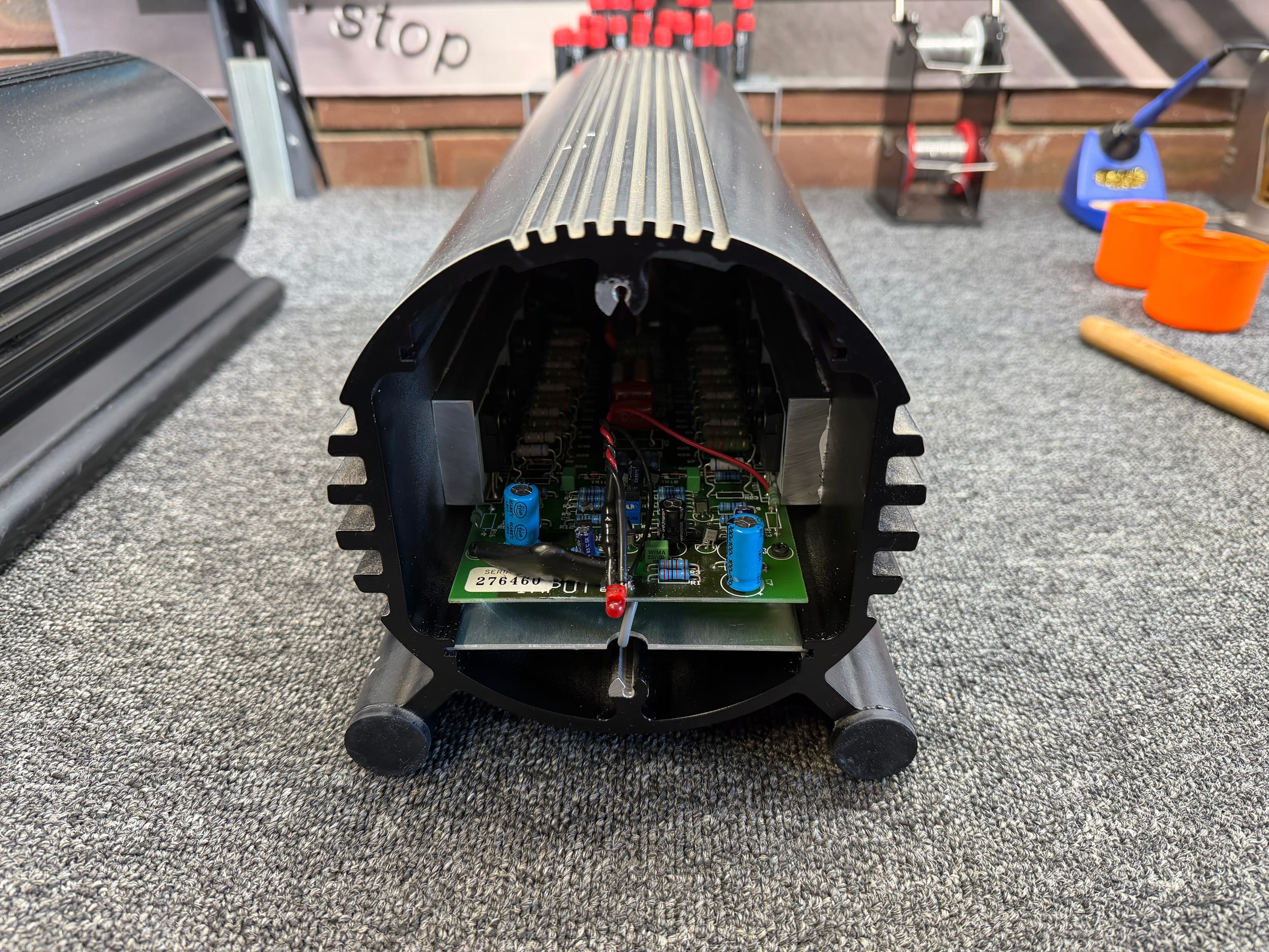
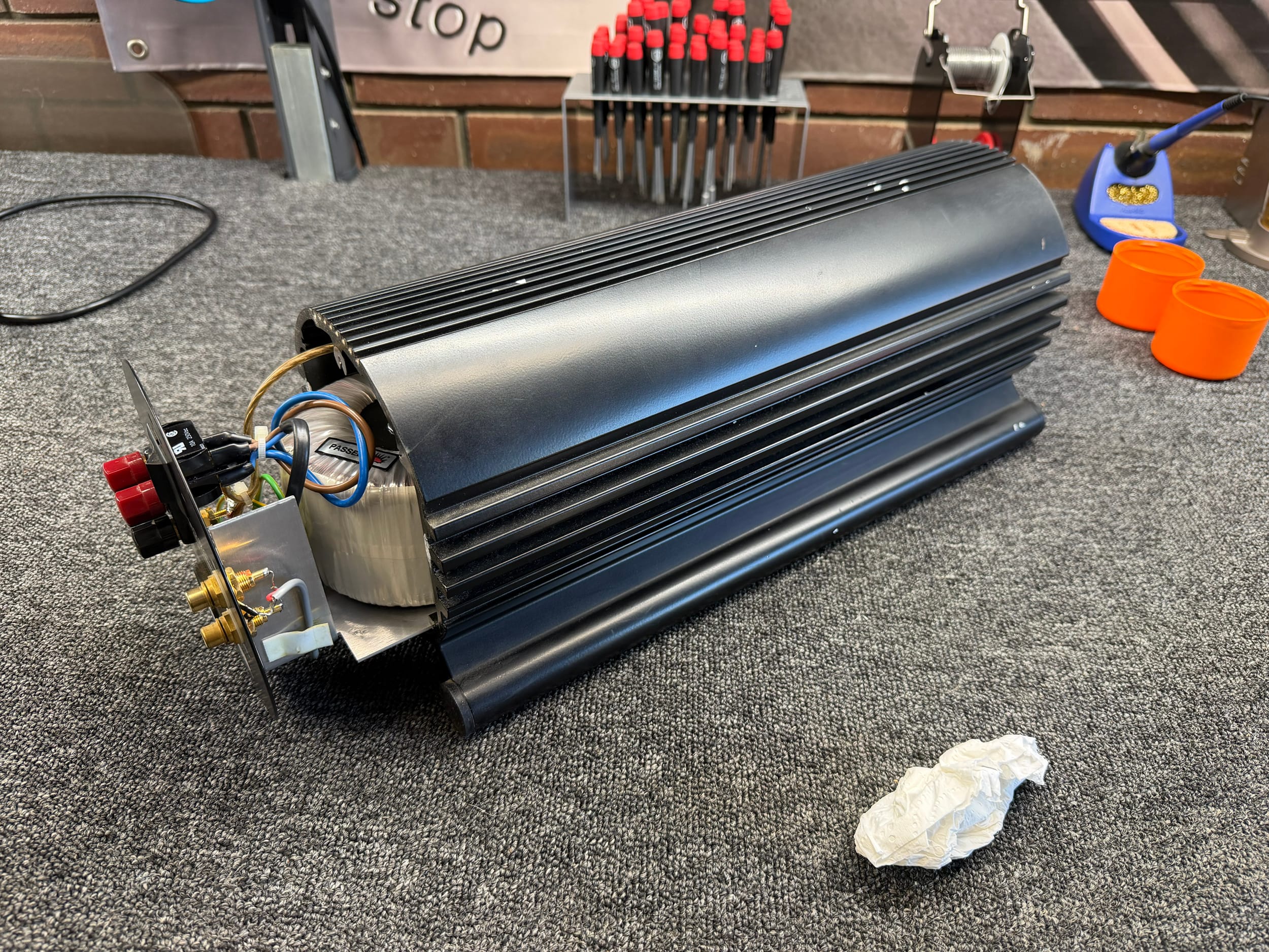
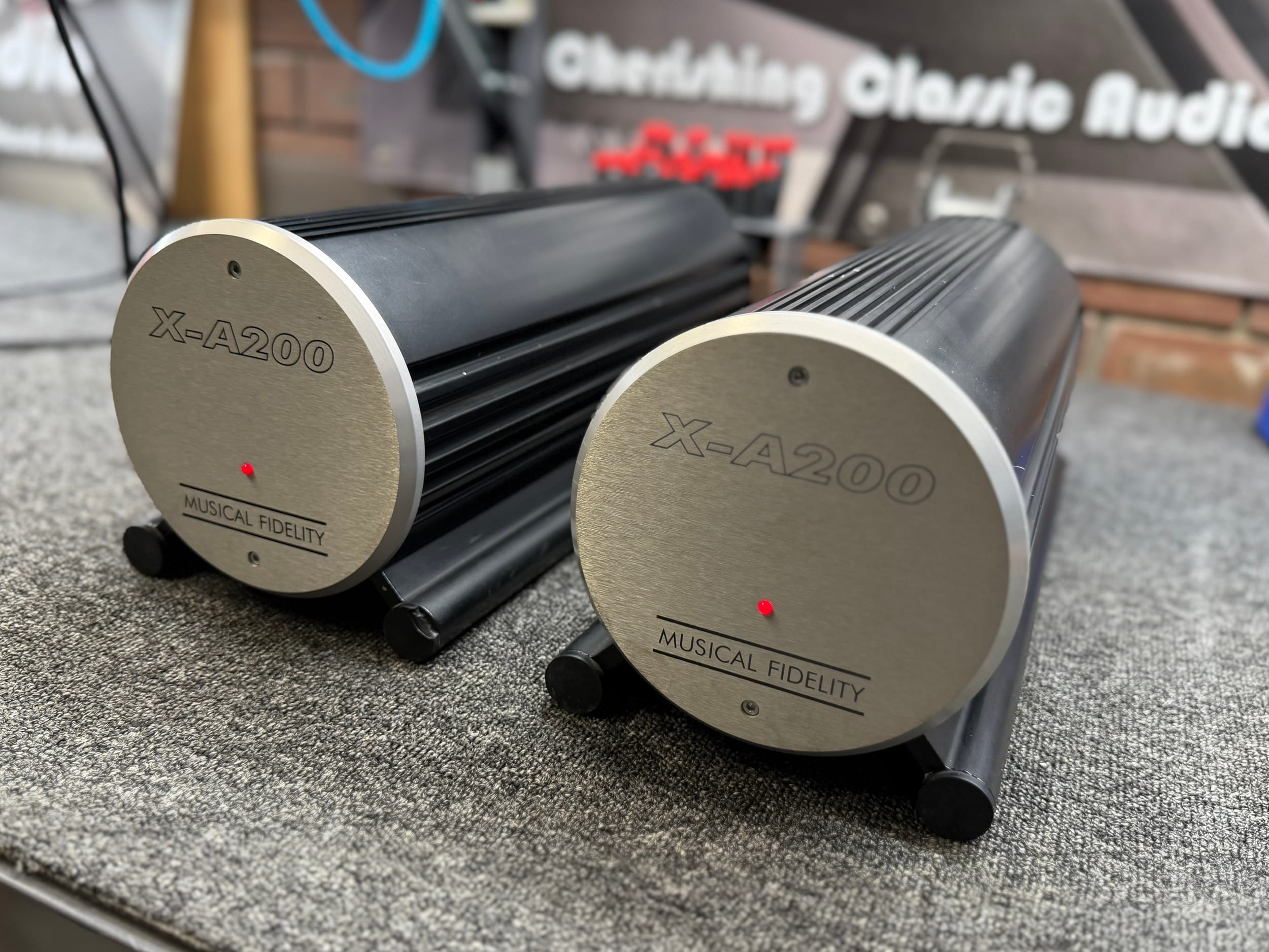
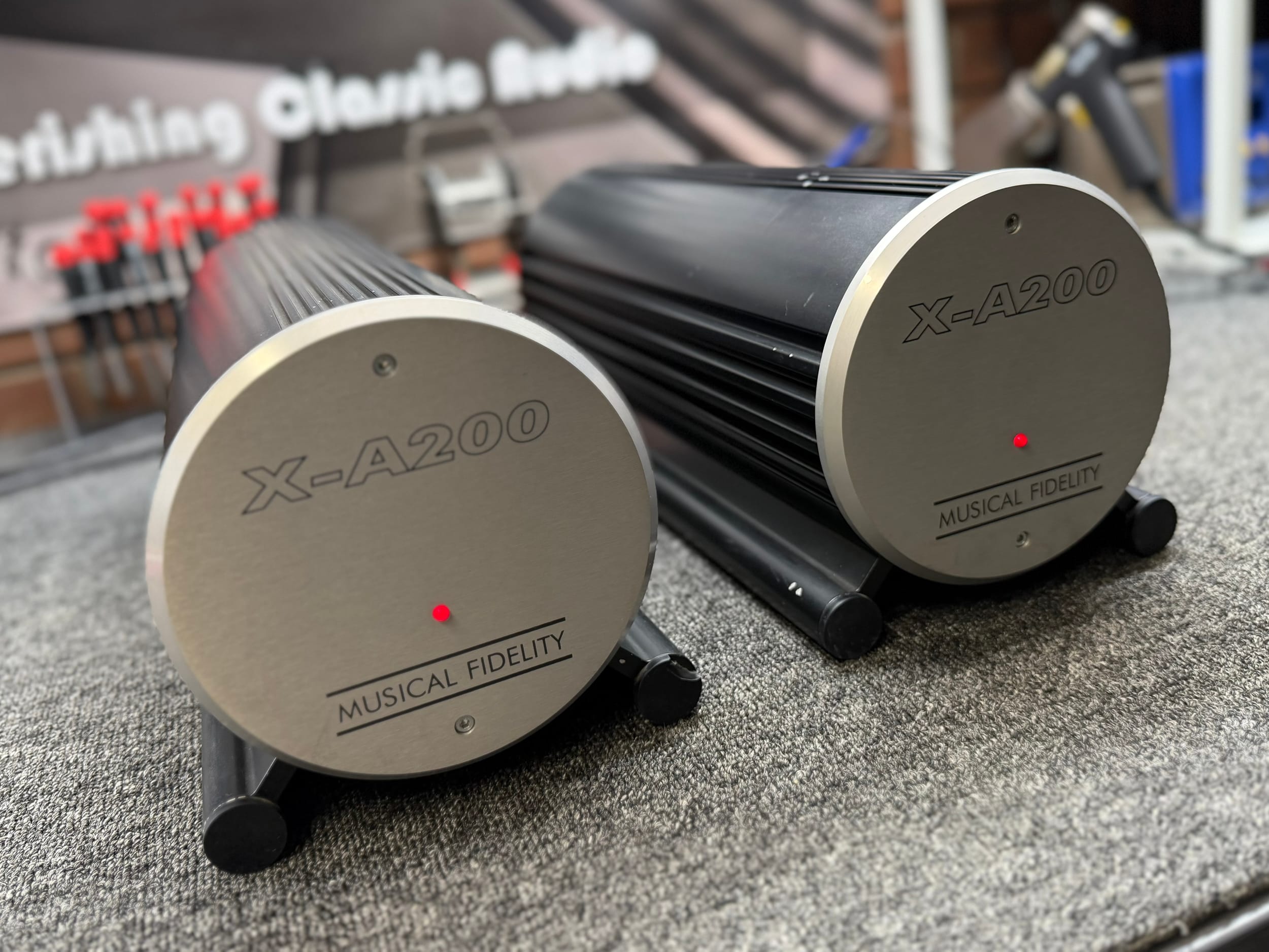
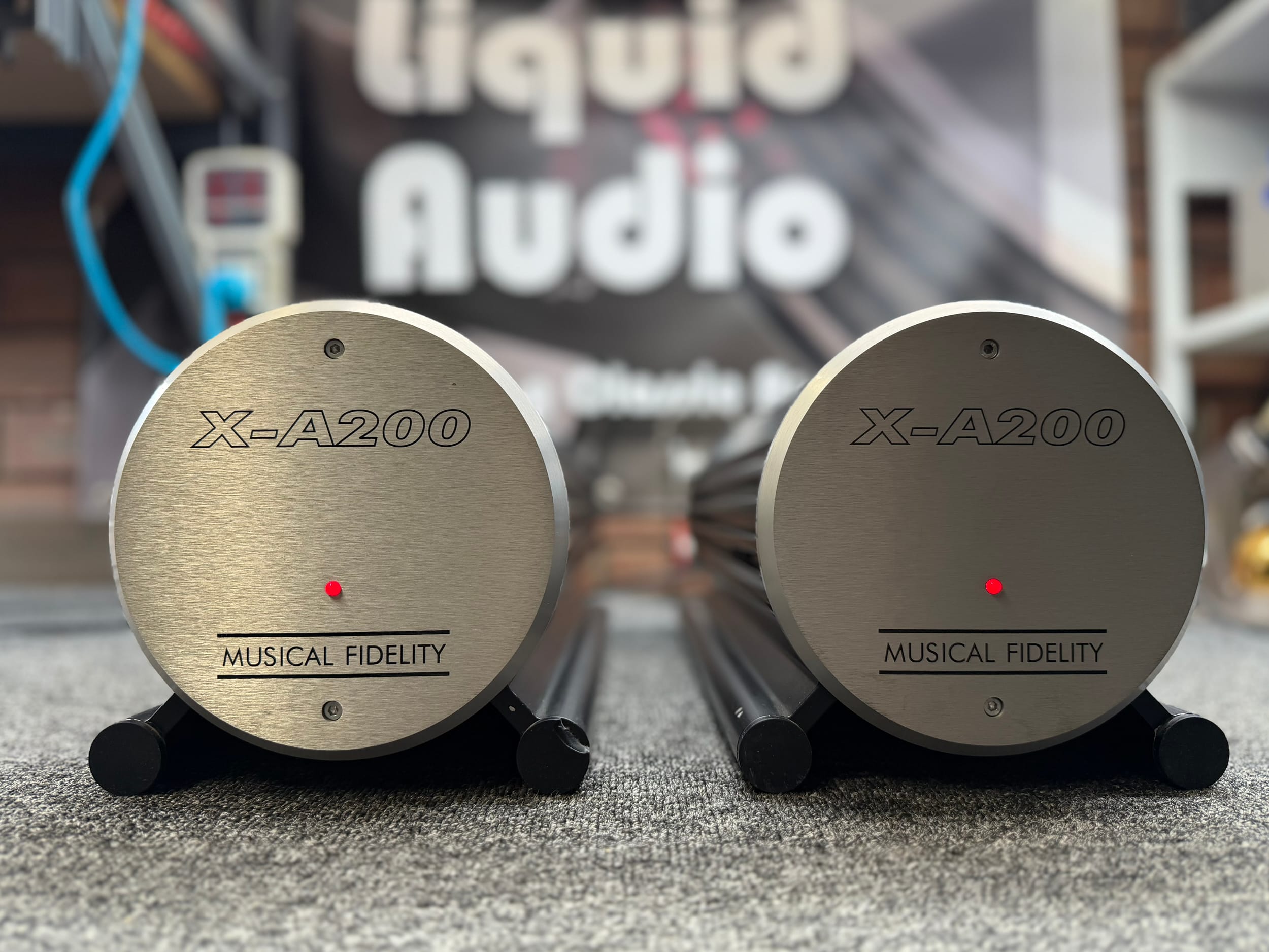
Back in the day, Musical Fidelity made a whole host of components housed in unique chassis, like these extruded aluminium tubes. This set MF apart stylistically because nobody else was really doing this, and the aesthetics really caught on. I remember the ‘fever’ over these and others like the rectangular-chassis Musical Fidelity X-Can V3 I owned back in the day.
The Musical Fidelity X-A200 monobloc power amplifiers are simple designs, both externally, as monoblocs tend to be, and internally, which is more because MF needed it to be this way to fit the amplifiers into this custom extrusion they were using. I’m rather fond of Musical Fidelity as a brand, but this brings us to one of their biggest weaknesses in absolute terms: an obsession with form over function.
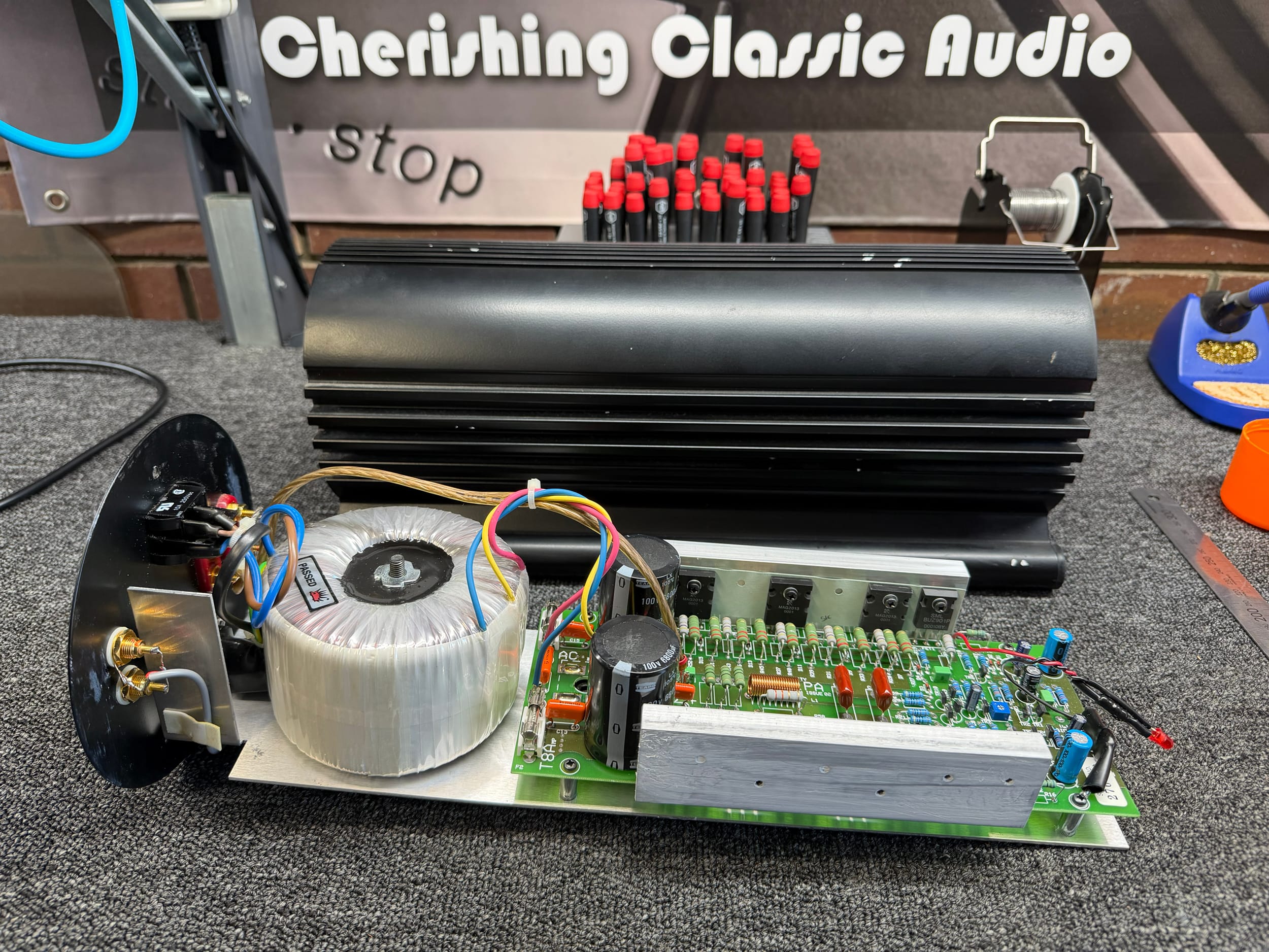
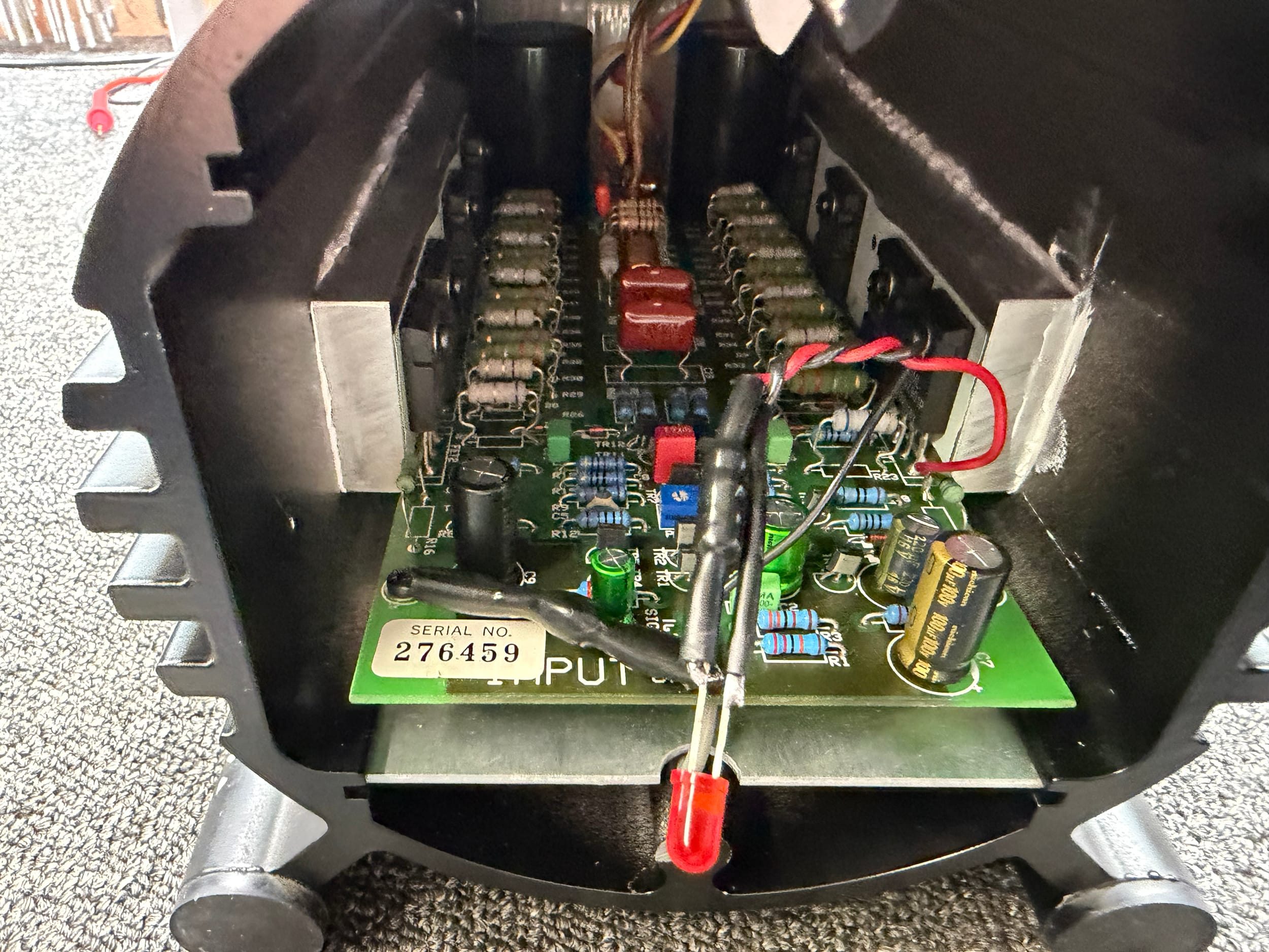
Yes, these amplifiers look cool in their aluminium extrusion cases, but this creates issues with dissipating thermal energy and a resultant need for fairly low bias current. The curved sides create size restrictions that limit our ability to use bigger filter capacitors during overhaul. More on that later.
In terms of features, then, there are few, other than two sets of basic speaker terminals and a home theatre line-pass-through RCA connector. No balanced connectors here, to save money and because of the non-balanced design; no attenuators and just one line-level input. You do get a power-on LED, though!
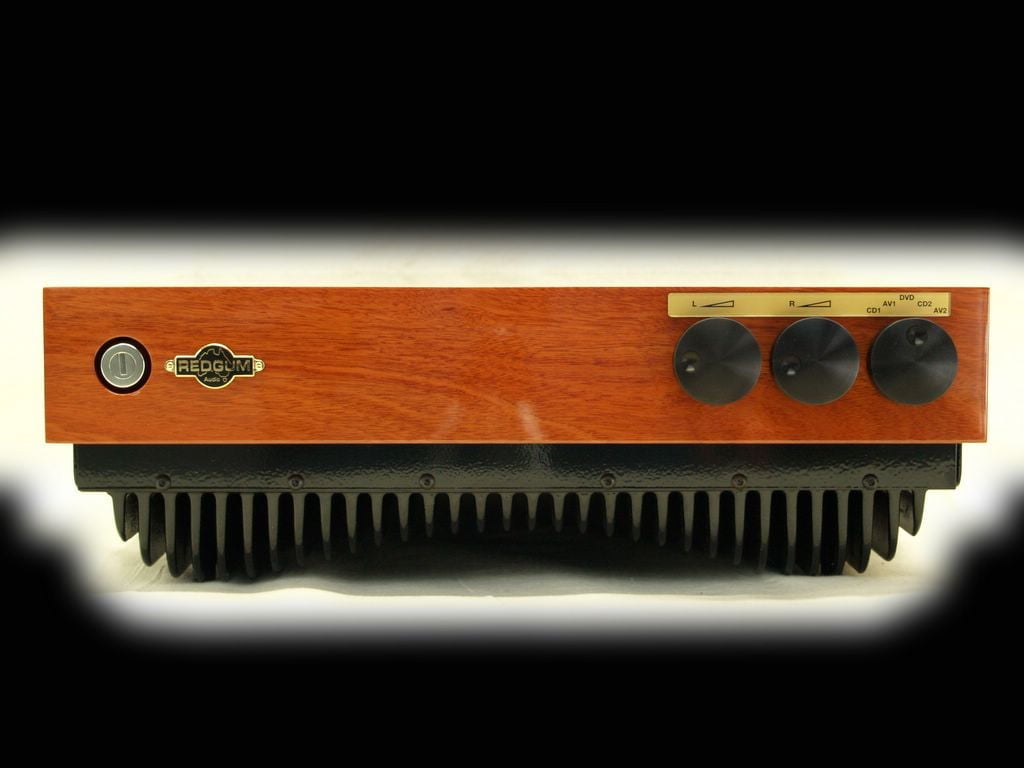
All that said, a power amplifier has one job to do, and that is to faithfully amplify the signal. We ought to care most about how well it does that; function really needs to be the most important element in hi-fi. Sadly, it often isn’t, leading to wooden-bodied DL-103s, Bose 901s, Nakamichi Soundspace systems and hi-fi equipment like this:
Musical Fidelity X-A200 Specifications
Courtesy of Google AI
Audio Performance
- Power Output: 200 Watts RMS into 8 Ohms
- Total Harmonic Distortion (THD): < 0.09% (20Hz–20kHz unweighted), < 0.01% (‘A’ weighted), < 0.003% at 1W
- Frequency Response: 10Hz–50kHz (+0.5dB), 5Hz–80kHz (+1dB)
- Signal-to-Noise Ratio: > 107 dB unweighted, > 120 dB ‘A’ weighted
Physical & Power Specs
- Power Consumption: 400W max
- Power Requirements: 100, 115, or 230V AC at 50/60Hz (factory preset)
- Dimensions: 170 mm wide x 175 mm high x 430 mm deep (including feet and terminals)
- Weight: Approximately 10 kg per amplifier unit
Overhaul & Improvement
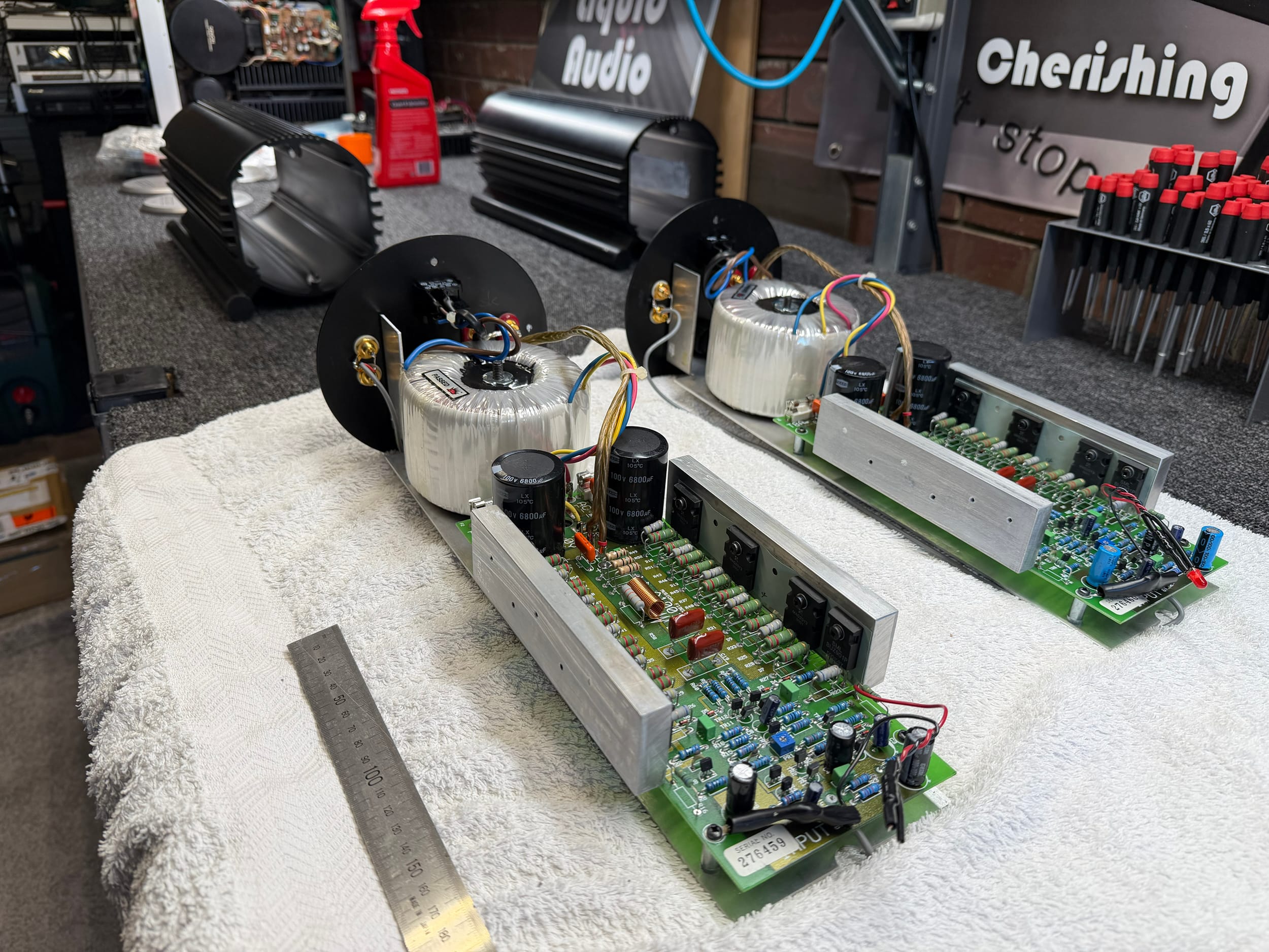
OK, so back to the reason these two came to me – for overhaul and sensible improvement. That means we want to refresh the pair and attend to any obvious low-hanging fruit in terms of clear signal path bottlenecks, for example. This doesn’t mean they are here to receive every possible upgrade one might possibly apply; that is beyond budget, scope and sensibility for modest monoblocks like these.
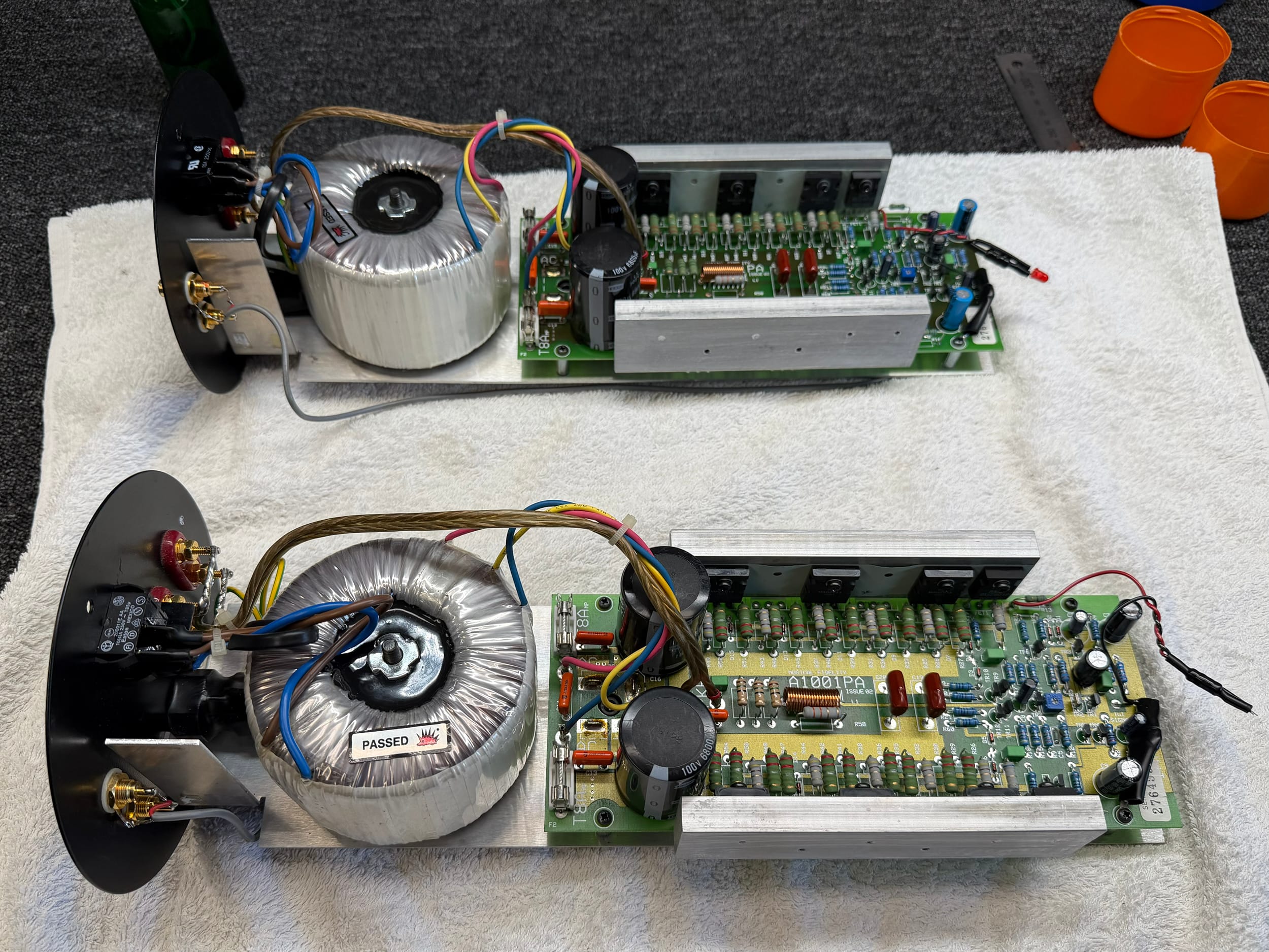
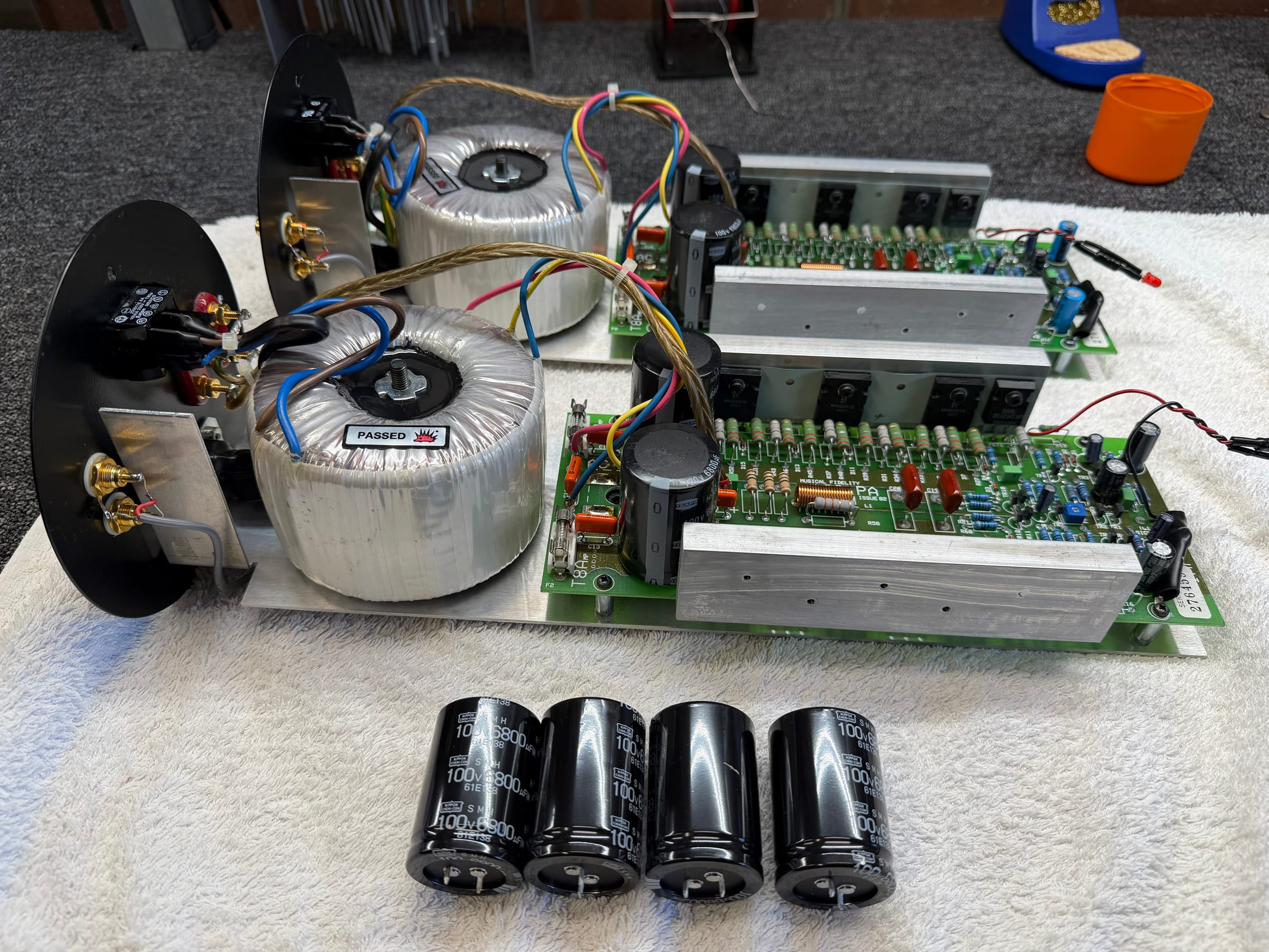
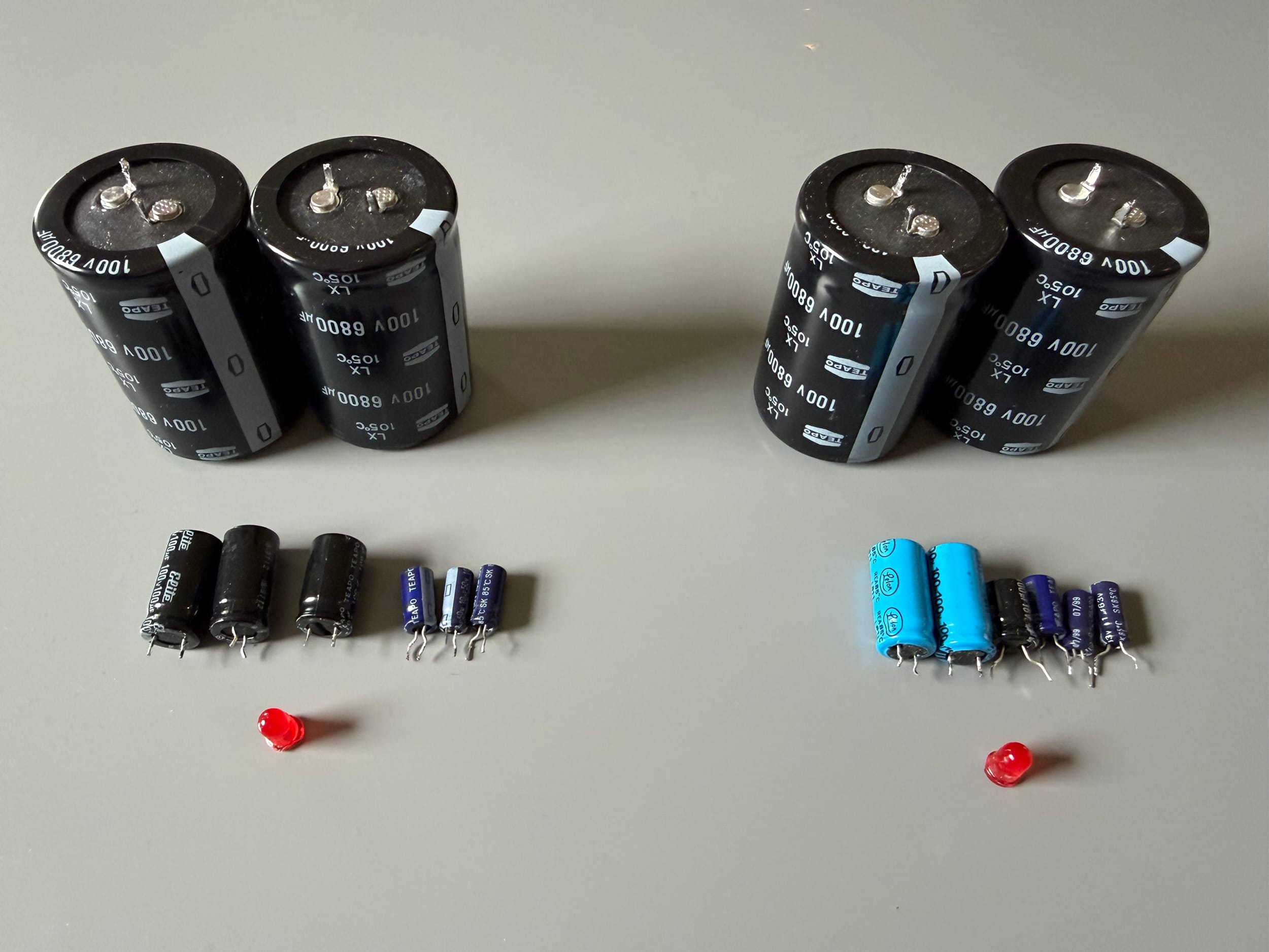
The X-A200 suffers from the other classic Musical Fidelity weakness, and that is cost-cutting in design and manufacture, via the use of low-grade components, most typically Jamicon, Lelon and Teapo capacitors. Other component-saving elements like Darlington transistor output devices are thankfully not featured here.
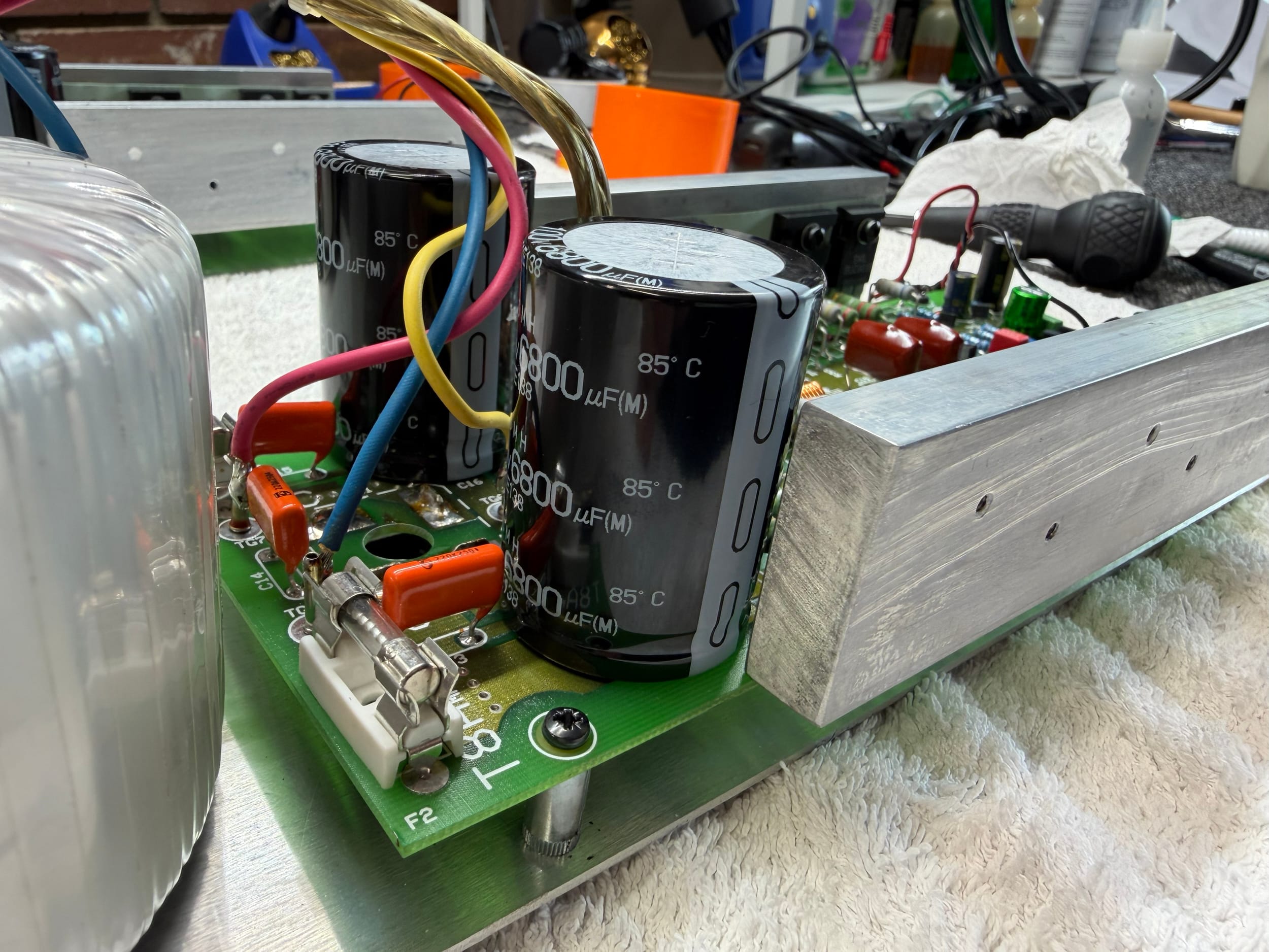
The power supply filter capacitors in these X-A200s are junk, as are the other electrolytics. The big filters were rattly, which happens as they dry out, and the smaller Jamicon and Lelon electrolytics, whilst actually measuring OK, can be massively improved from a technical perspective, which is why the pair came to me.
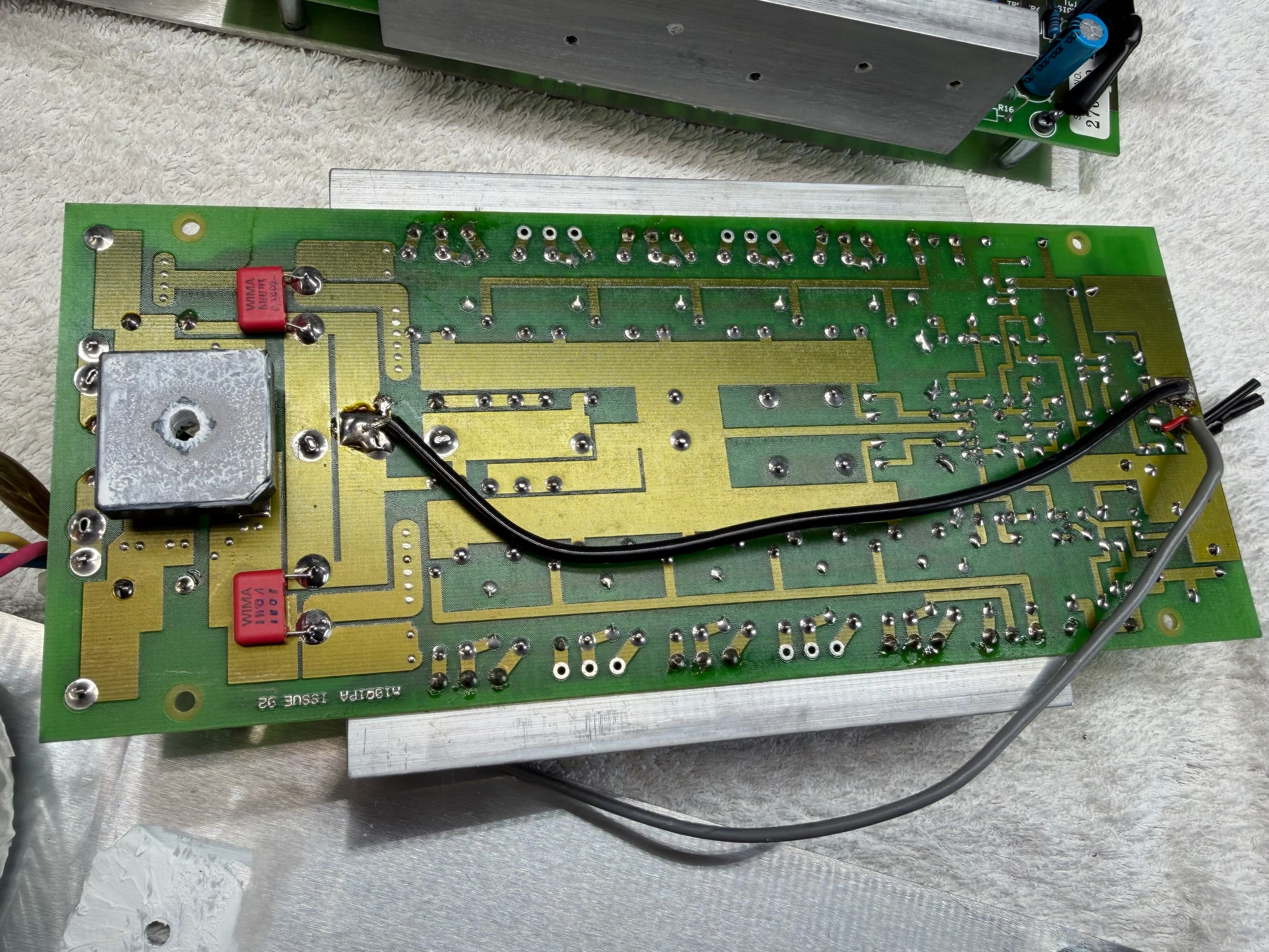
I make strategic improvements to the power supply and signal path to somewhat mitigate the cost-saving measures MF installed in the design. We are, of course, limited by board layout, chassis dimensions, etc, but I’ve never had a customer who wasn’t very happy with the improved performance of their Musical Fidelity equipment after visiting the workshop.
So, without further ado, let’s get into the overhaul of these two Musical Fidelity X-A200 power amplifiers.
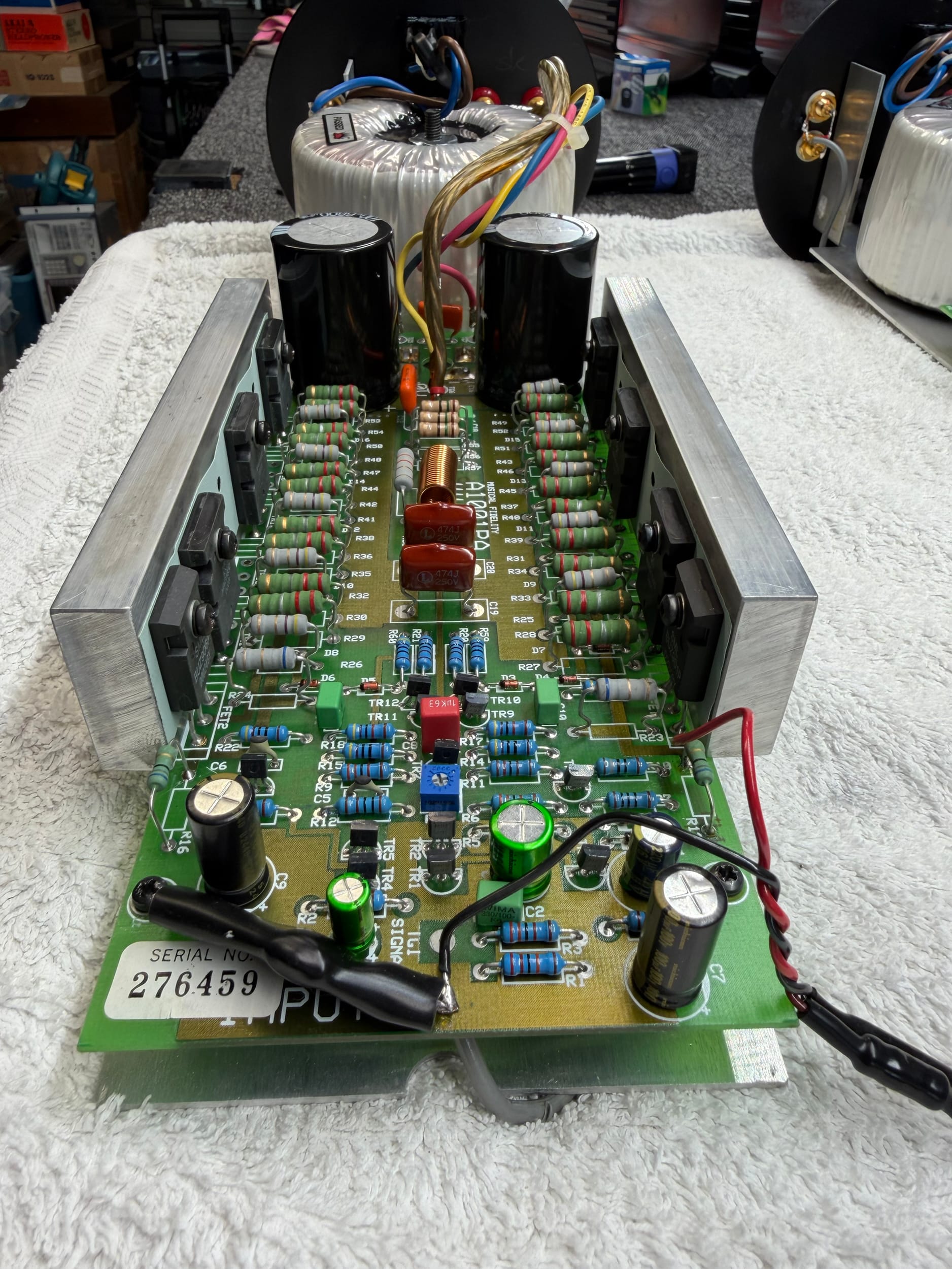
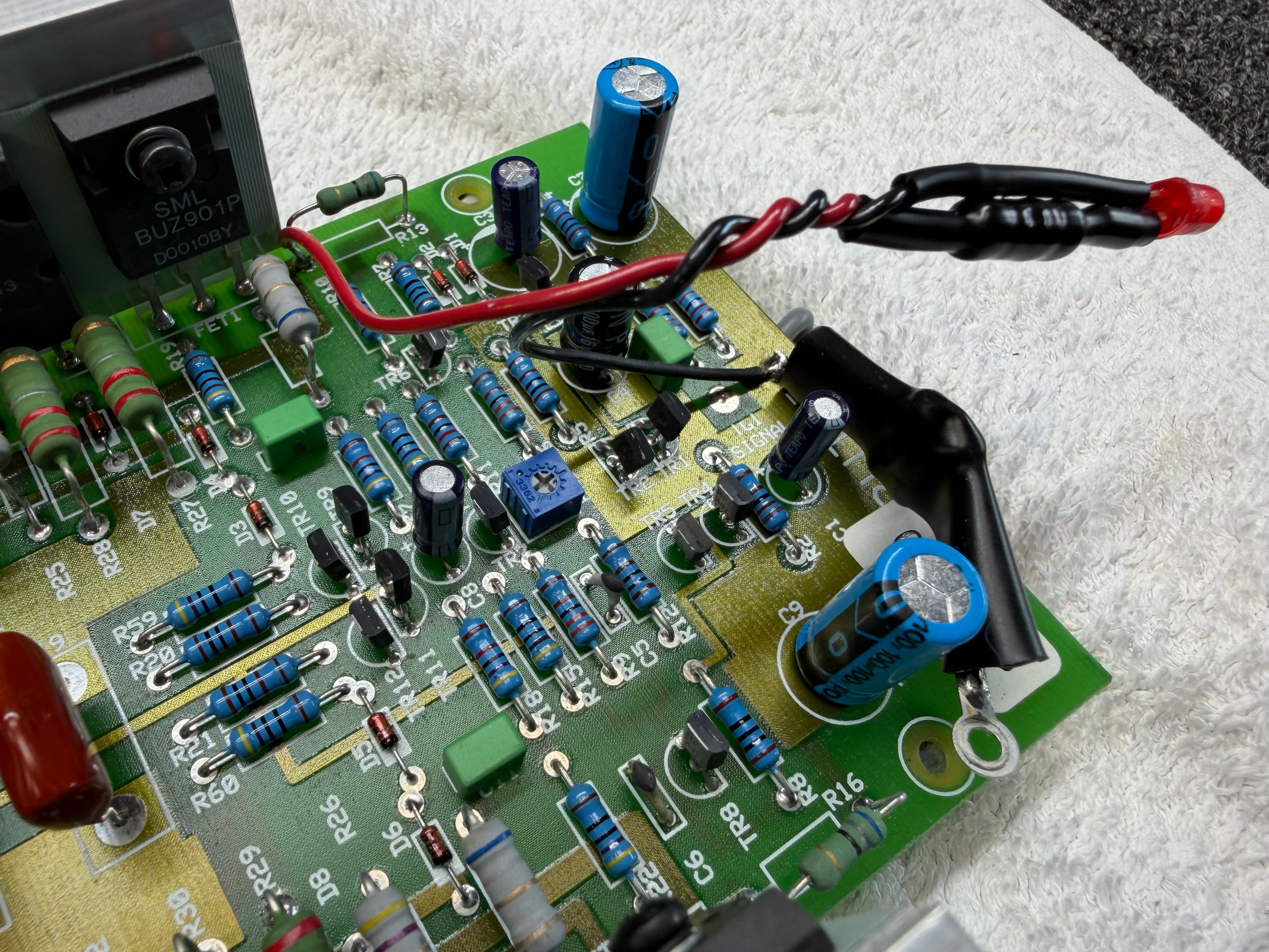
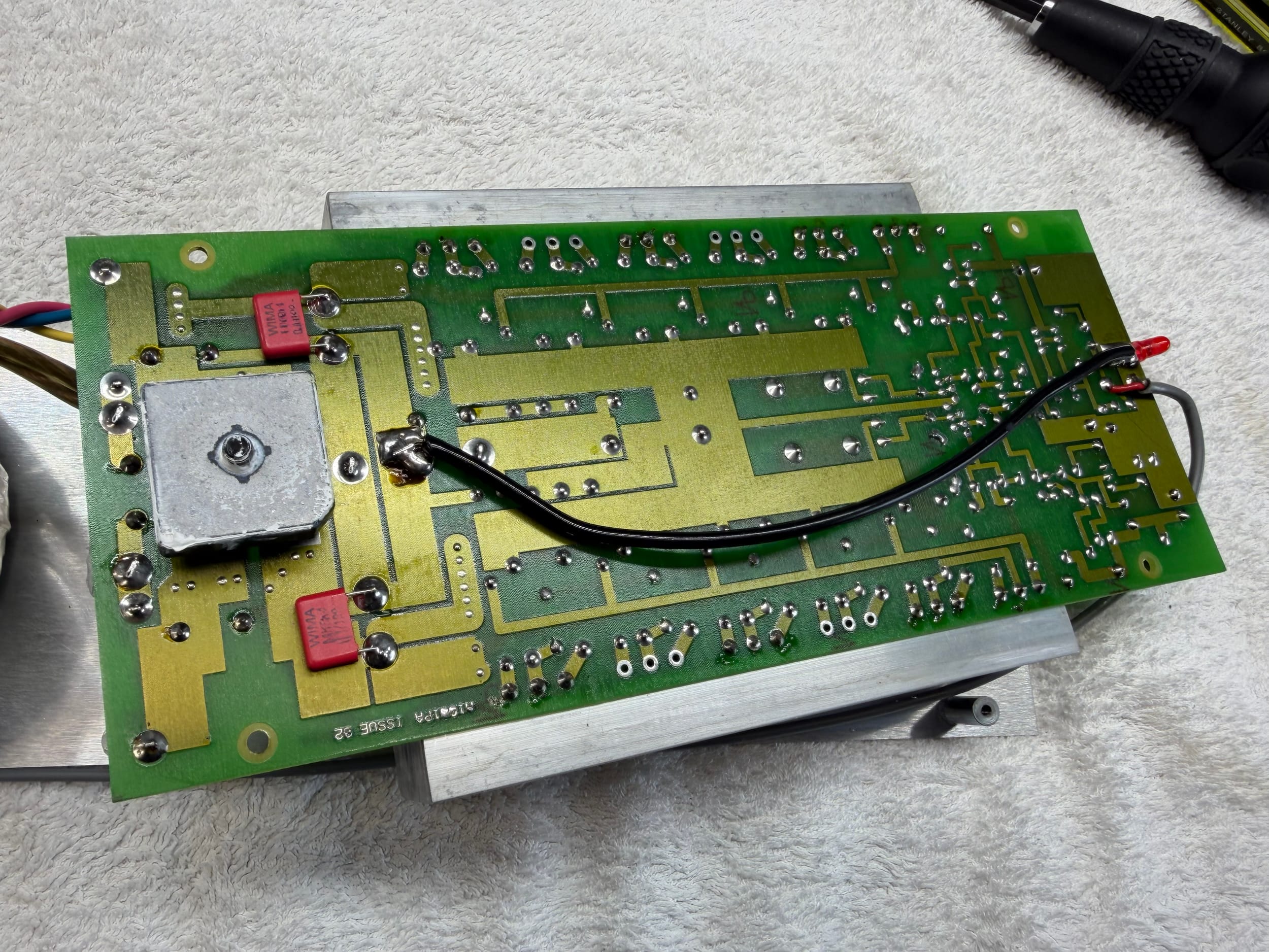
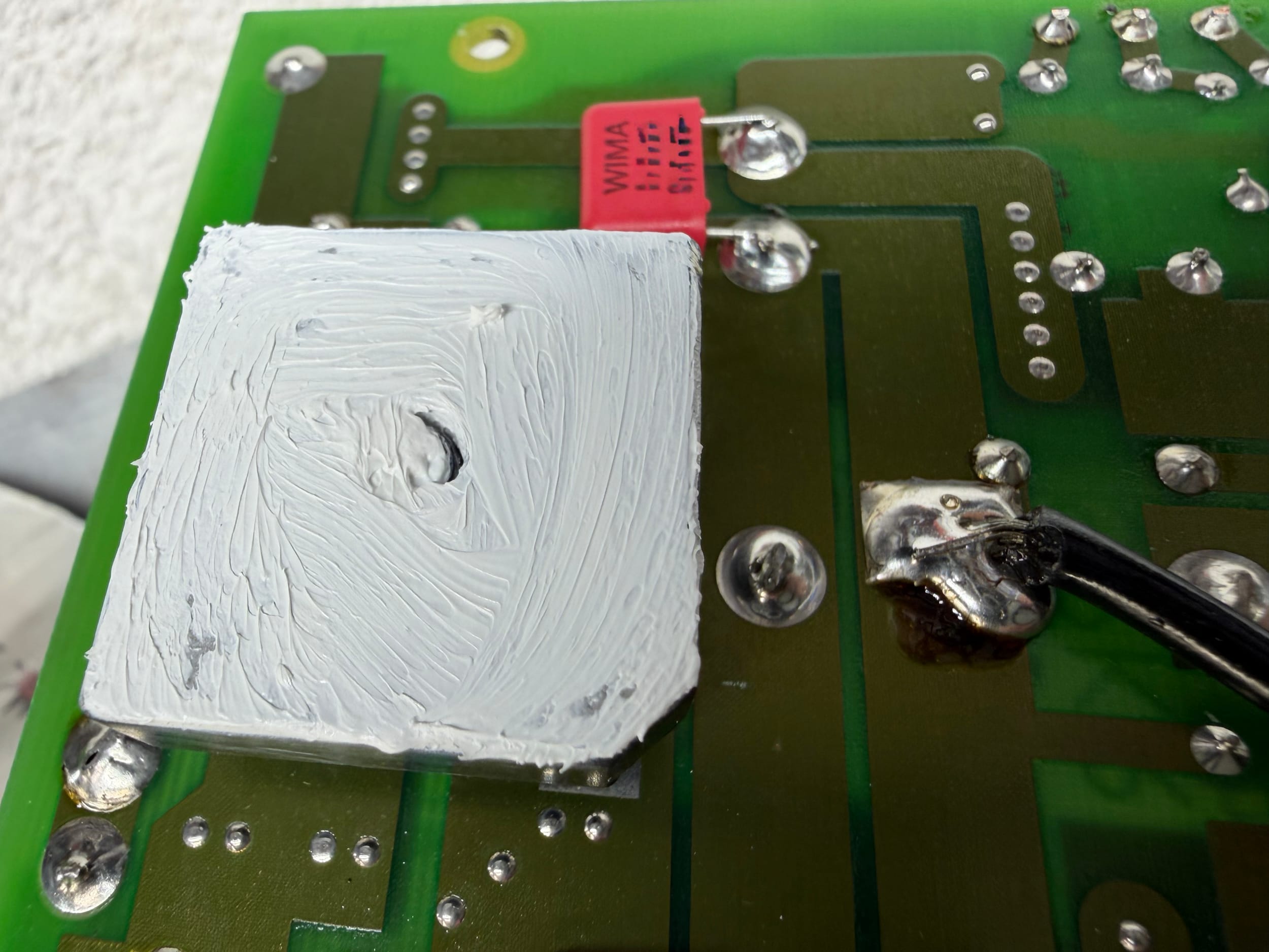
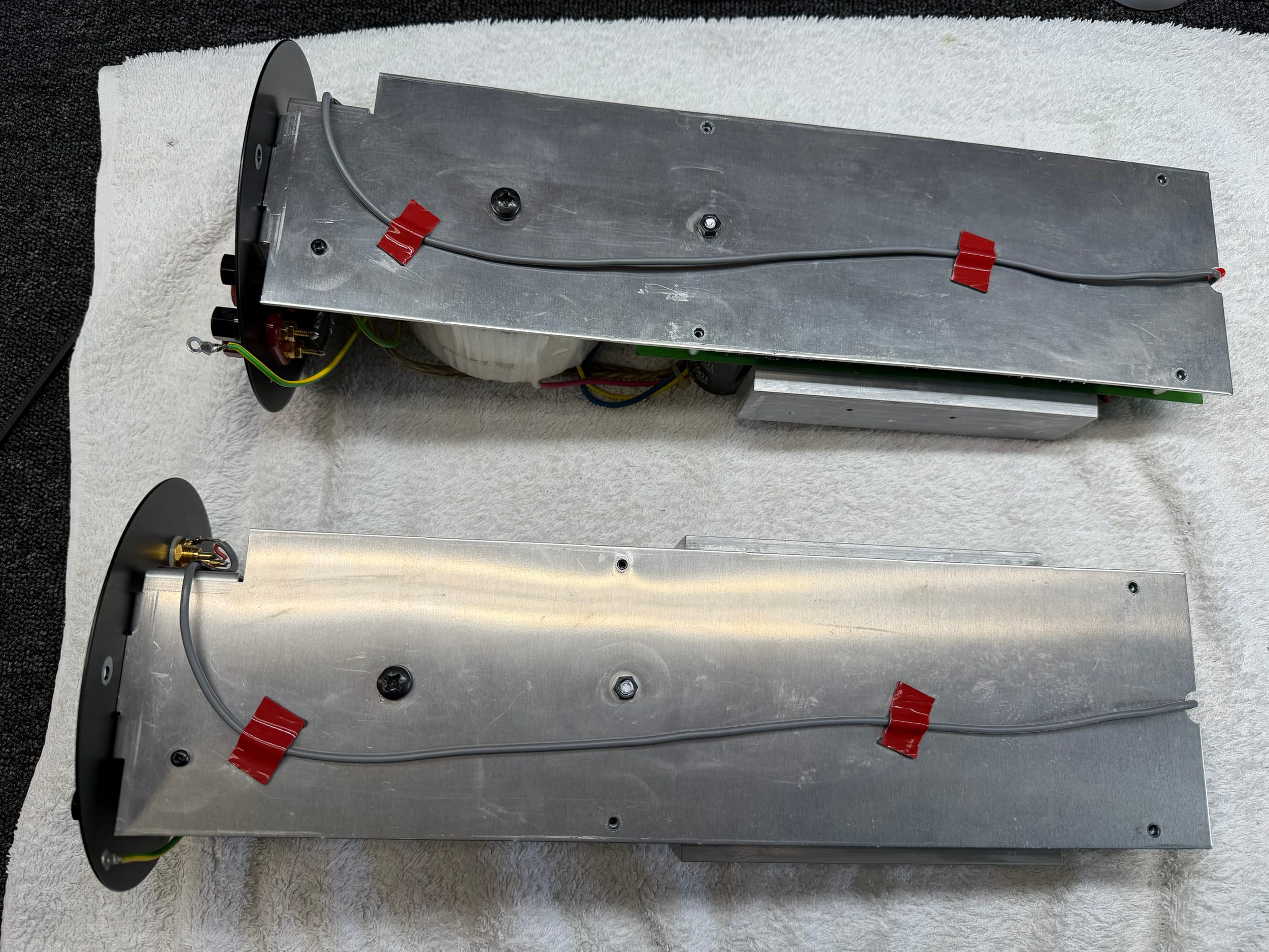
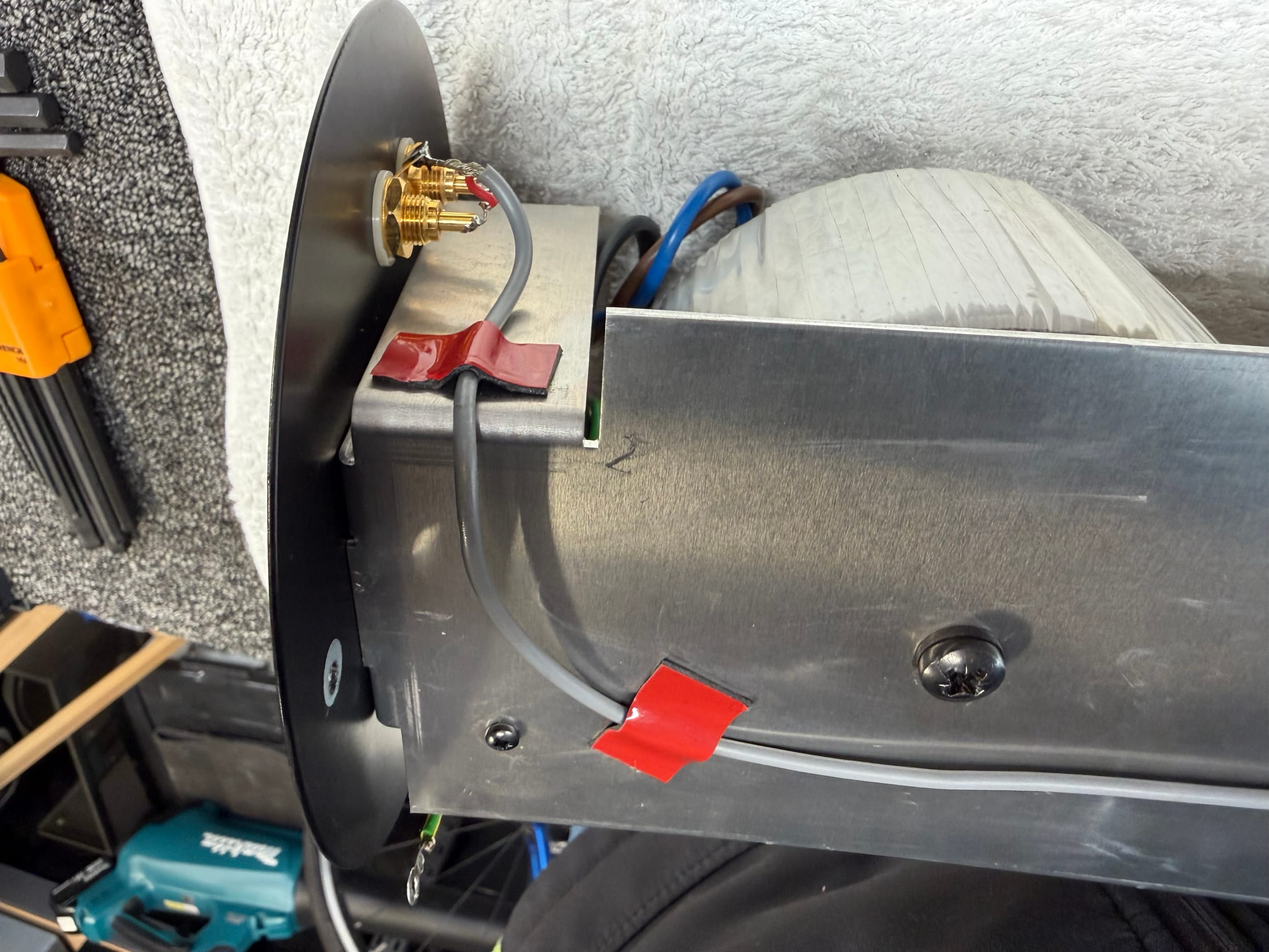
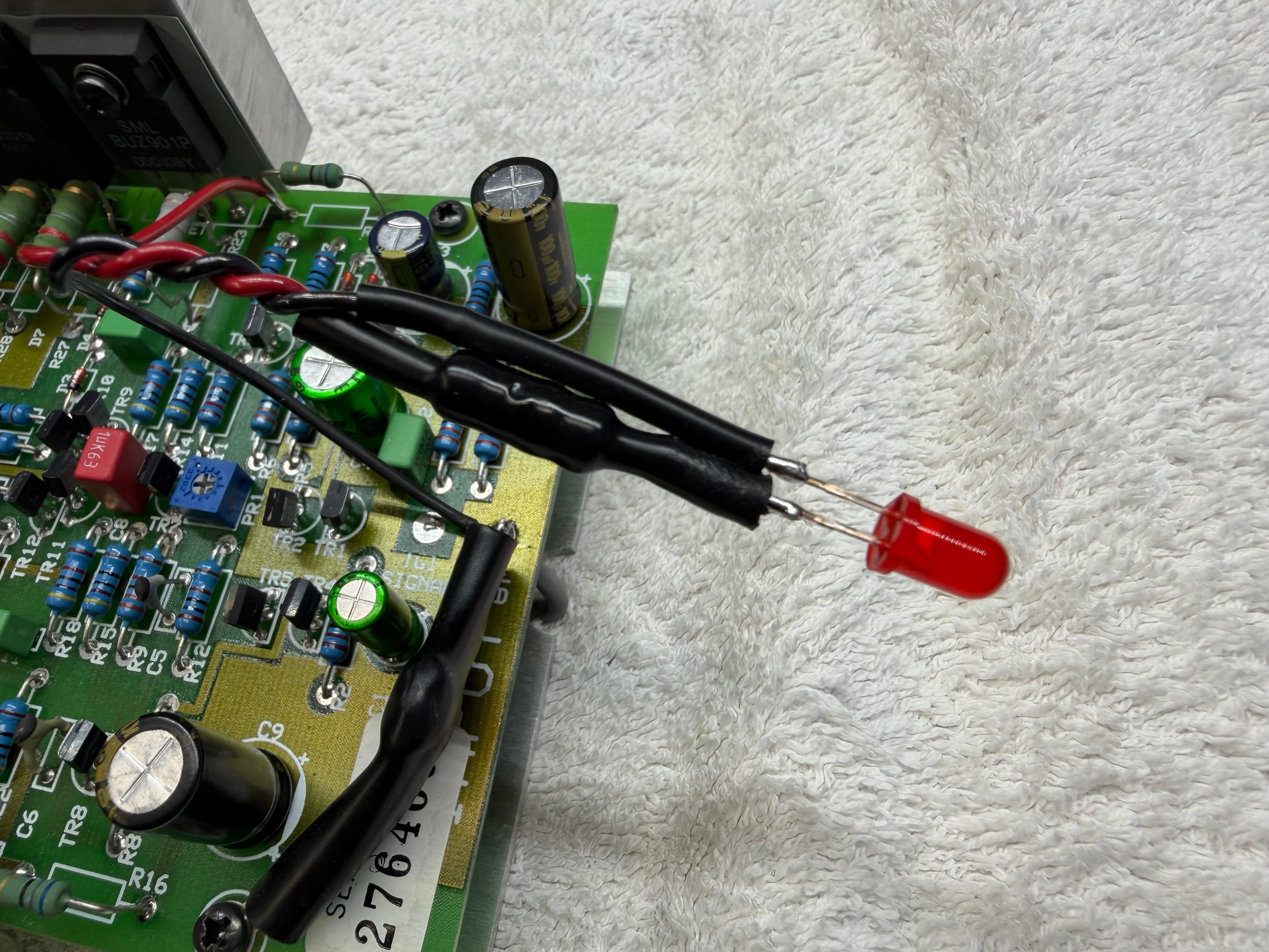
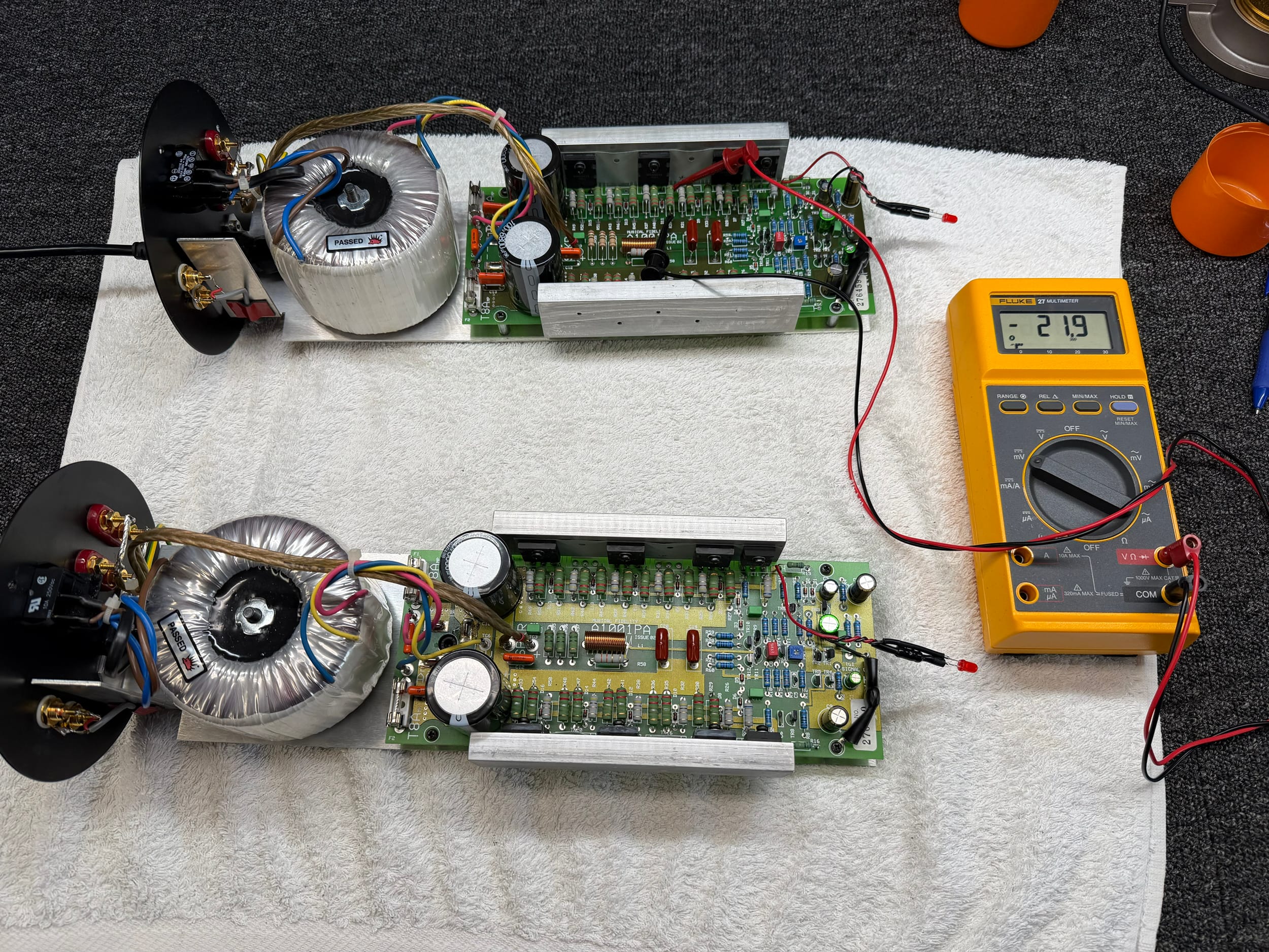
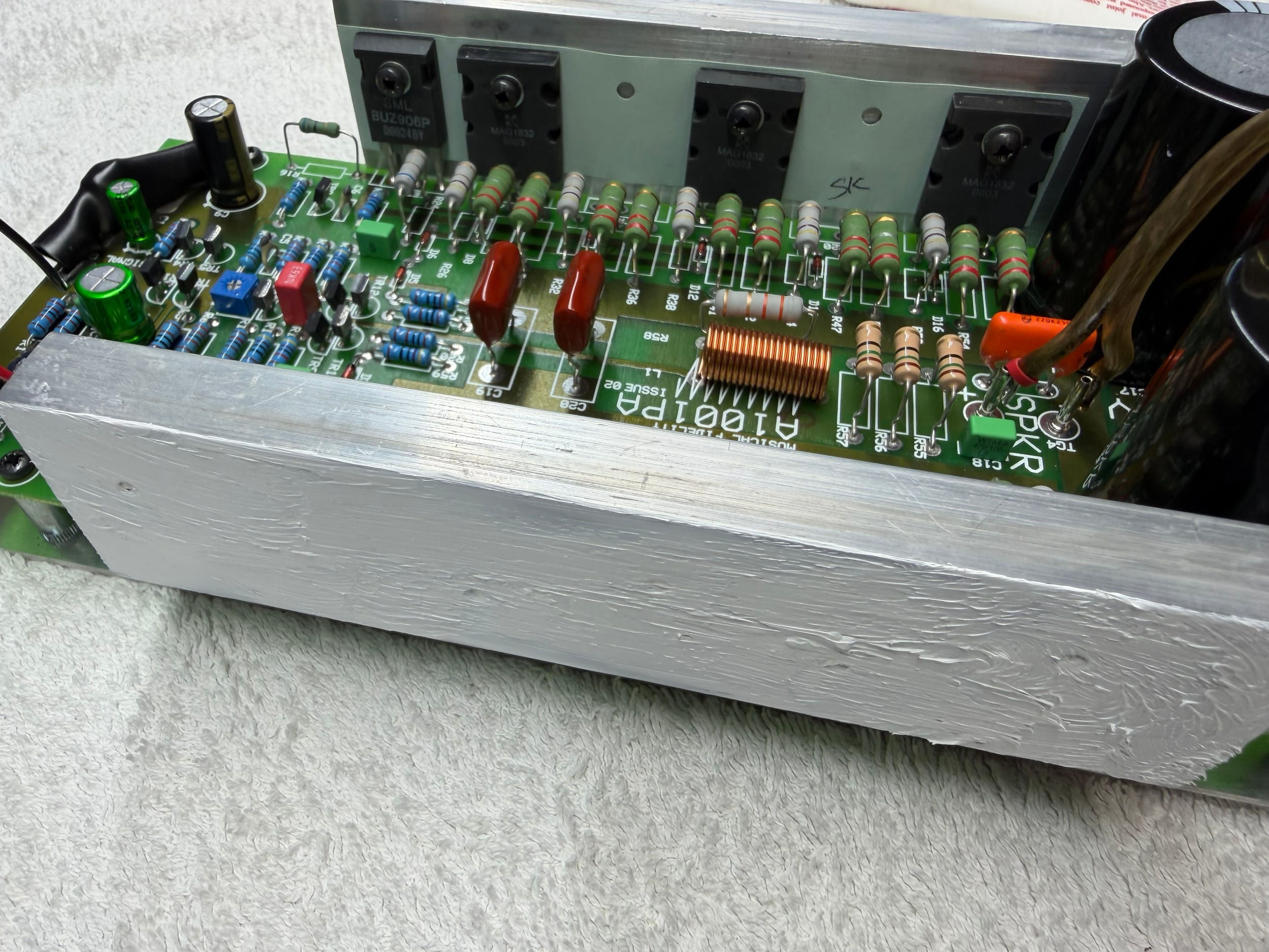
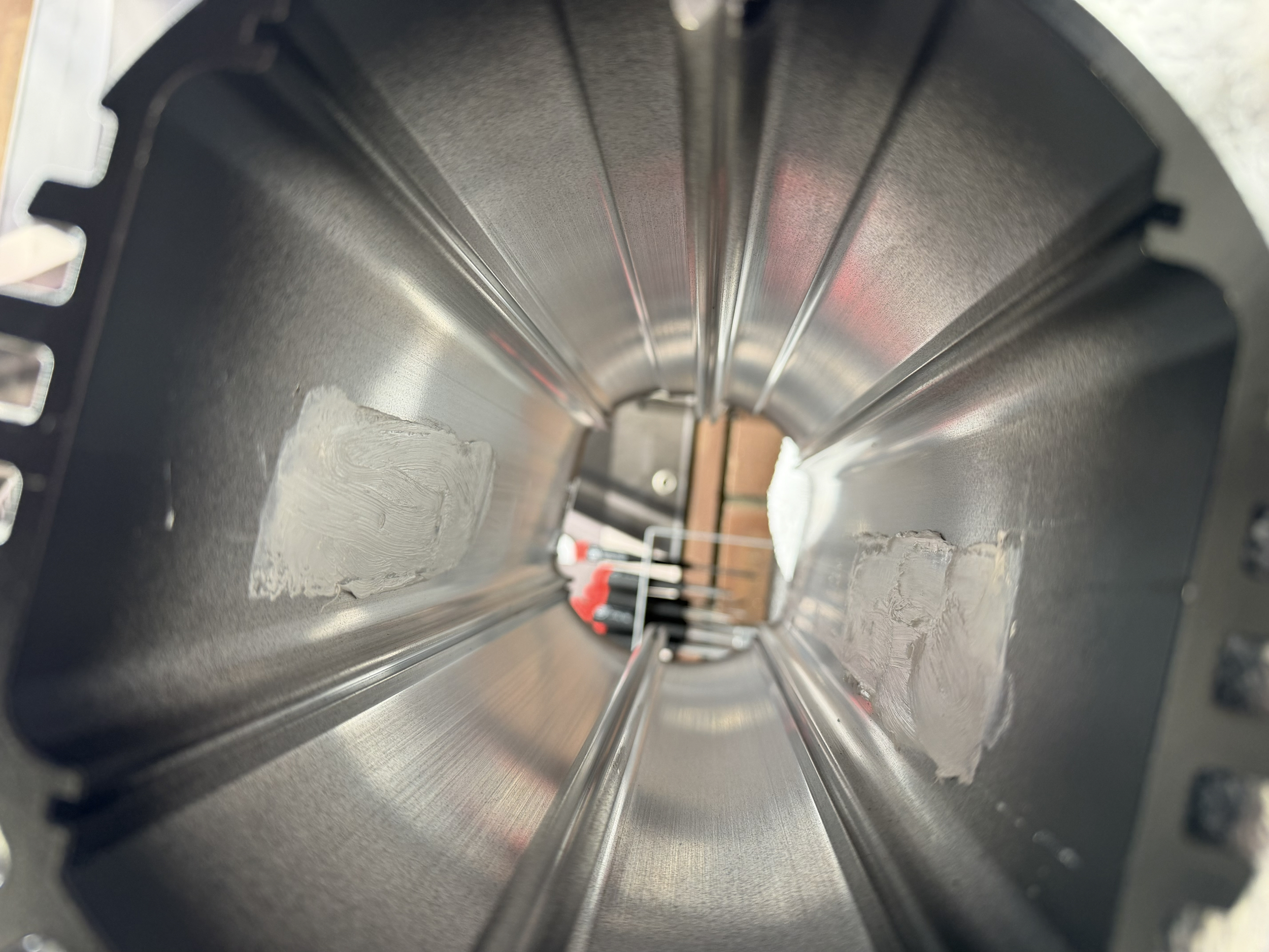
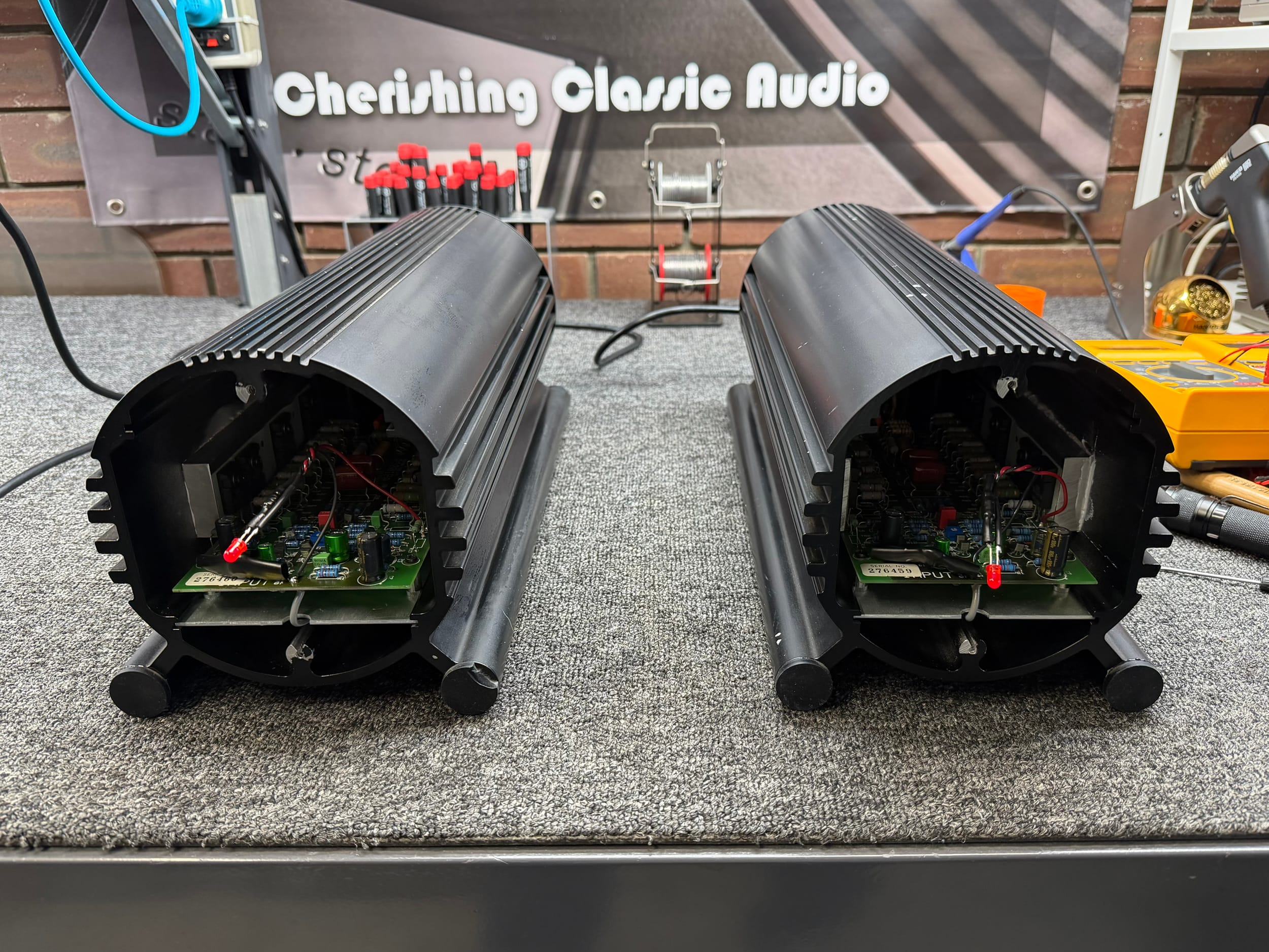
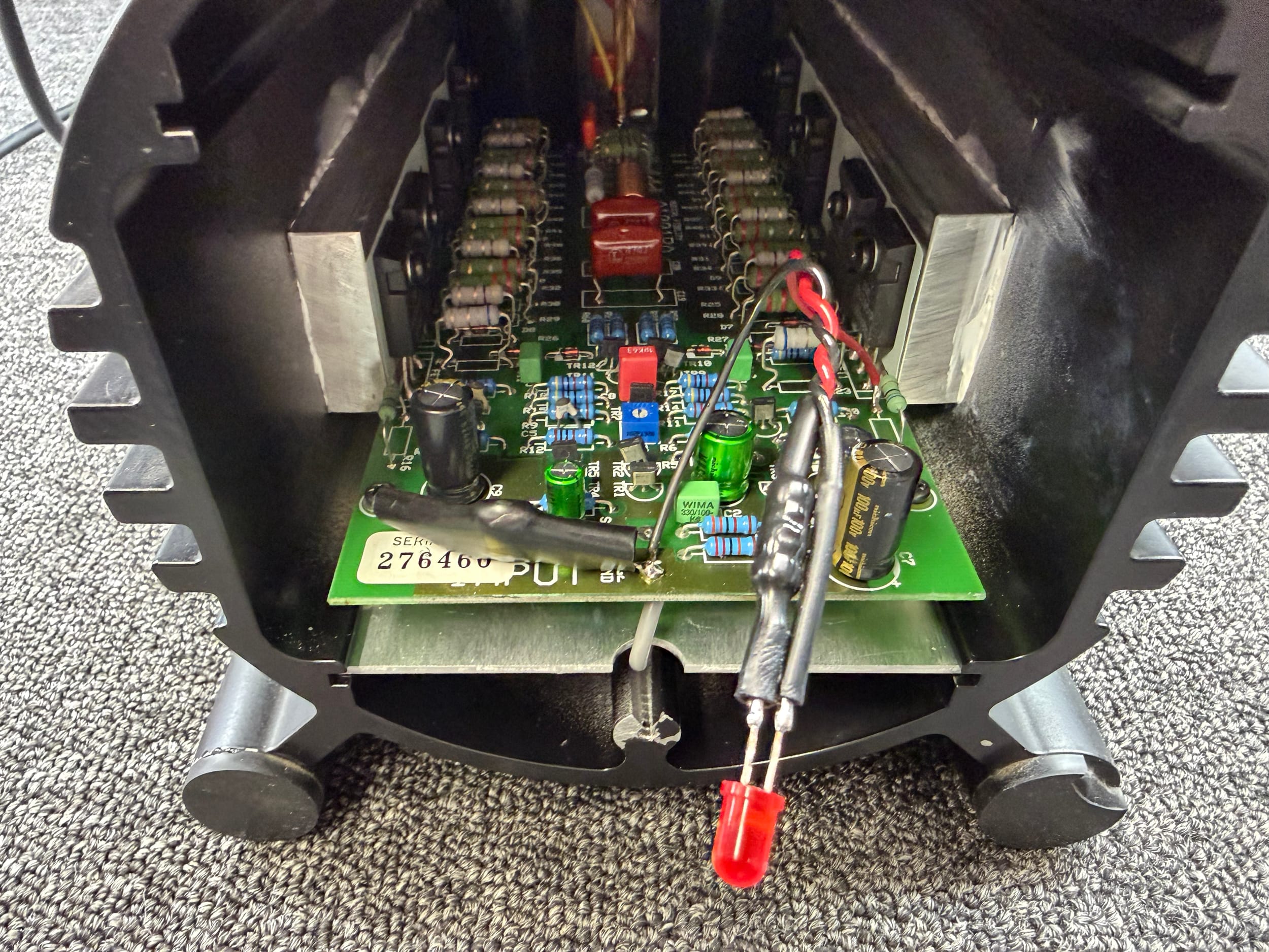
Results
I’m pleased to report that my results with the overhaul and improvement of this pair of Musical Fidelity X-A200 power amplifiers match those I’ve achieved with other Musical Fidelity products. These sounded really rather nice upon completion, and I was hopeful that George, the owner, would agree.
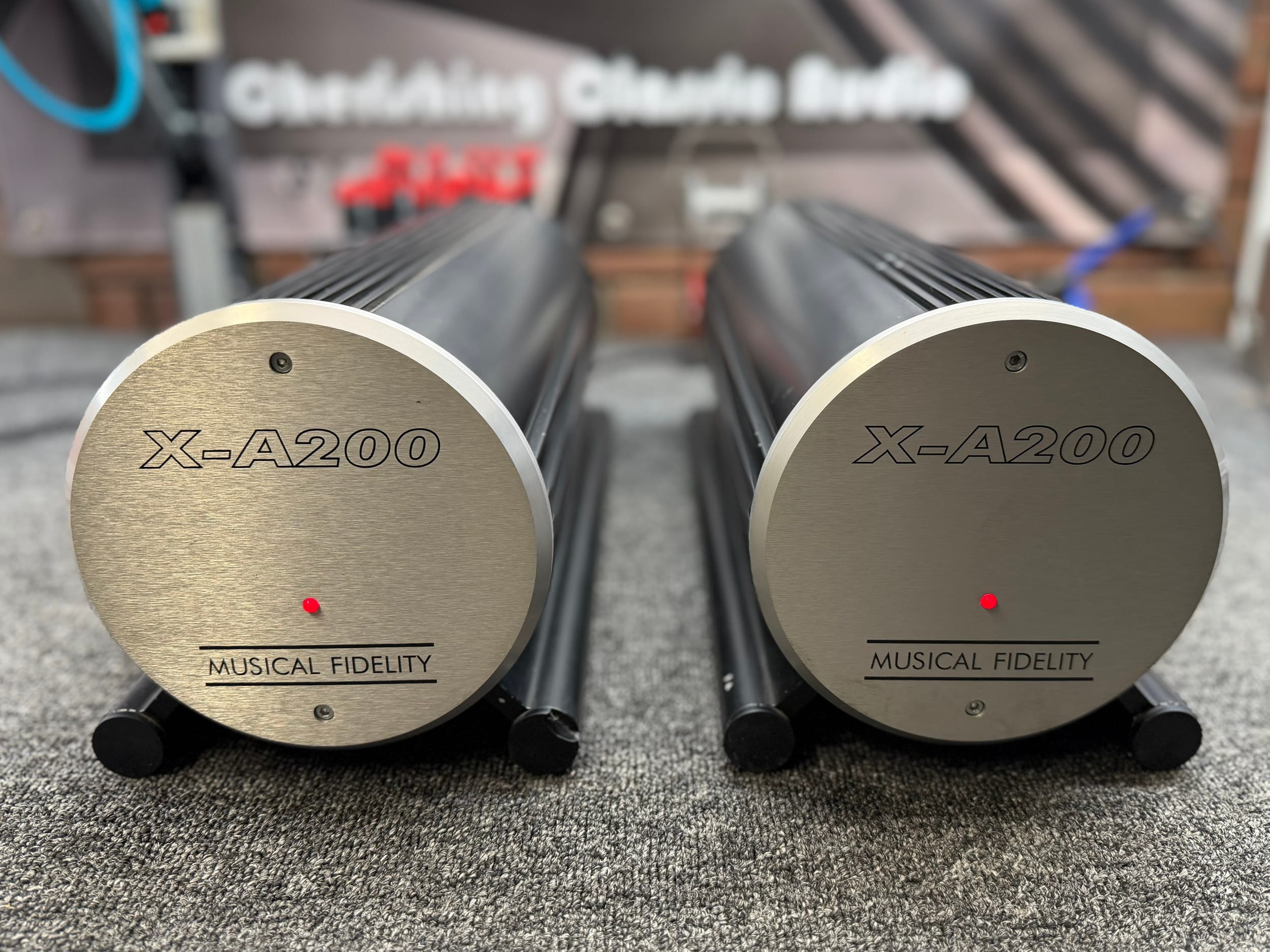
Rather than take my word for it, let’s read what George said about how these freshly overhauled X-A200s sounded in his system:
… It sounds really brilliant, Mike. Thank you very much. And it’s made a big difference to the lower end; the bass sounds really refined, clean, and tight, and the transient speeds are really good. The mid-range and the high frequency, the treble, is also more detailed, clear and refined. So yes, it has made a big difference, and I could tell the difference straight away.
George F
I won’t pretend that feedback like this doesn’t matter to me; of course it does, it makes all the difference to someone for whom results and reputation are so important. Results like this are a big part of why I do the work, and customers like George are such a pleasure to work with; what’s not to be happy about?!
In terms of ownership and whether you might like a pair of these, if they come up for the right price and you are prepared to invest a little in them as George did here, why not? The X-A200 is a proper 200 Watt mono power amplifier.
A pair of these will literally destroy multichannel home cinema amplifiers and most integrated amplifiers up to many thousands of dollars. A pair of these is probably better than many affordable stereo power amplifiers too.
Performance-wise, these are clean, punchy class AB amplifiers. They don’t produce subterranean bass or magical air, but they are not that type of design. I would describe these as honest, simple designs that should be robust and long-lived if cared for.
Thank You!
As always, thank you for visiting, and thanks to George for entrusting these beautiful Musical Fidelity amplifiers with me and for supporting Liquid Audio over the years. If you’d like me to look at your Musical Fidelity X-series amplifier or any other MF or quality hi-fi amplifier, don’t hesitate to get in touch.
A ton of work and time goes into creating these articles. You can support my work by engaging our services, commenting, liking, sharing, subscribing and donating, using the button in the footer. You can view our supportive legends on the page dedicated to them.
Discover more from LiQUiD AUDiO
Subscribe to get the latest posts sent to your email.
I have no respect for companies that advertise that they sell top quality products at premium prices and then put garbage inside. I opened up a Parasound phono preamp, which was advertised as having high-quality components and it was full of trash components. That is false advertising and is inexcusable.
Thanks, Mike, and yes, this really is appalling, especially as even budget products from Rotel, a Japanese manufacturer with integrity, from the same era, for example, were filled with premium Elna electrolytics. Parasound are known for this; Redgum, as mentioned in the article, filled their gear with Lelon junk, and MF is one of the worst offenders. It’s all about shaving a few extra dollars from the per-unit cost, but I can’t excuse including Elite, Jamicon, Lelon and Teapo capacitors in amplifiers costing thousands of dollars.
Hello Mike
Cheap parts and inflated prices are the hallmark of British engineering. Linn and Rega with their cheap motors and poorly made plinths, the Naim Supernait using the case as a heatsink (at $8,000), Rega arms with no VTA adjustment to save on the cost of a simple screw that would allow height adjustment, Nottingham Analogue turntables that have to be spun by hand because the motor cannot turn the platter from a stationary state, etc.
As you say, even budget Japanese equipment offers quality parts and brilliant engineering.
Anthony Michaelson’s experience was in stage lighting (not electronics) and like so many in British audio, he was simply a good snake oil salesman. The NuVista, no doubt, came about when Michaelson realized that there would be a vast supply of new old stock NuVistas as they never actually took off, and which he could acquire for a song. I remember when the first NuVista amplifier was released, Musical Fidelity sold it as a limited edition at an exorbitant price, claiming that there was only a small quantity of NuVistas and some had to be saved as replacement parts. Since then, we have seen a litany of NuVista products. It seems that Musical Fidelity has an endless supply.
At least your customer now has a much better amplifier than left the Musical Fidelity factory. Hopefully, he does not have a British turntable or CD player.
Cheers
Marius
Thanks Marius, you always make me laugh with your observations, and I can’t really disagree with any of that! The no VTA adjustment, deliberately fast running, and no separate ground of Rega turntables make for endless interesting discussions and looks of surprise from bemused customers when I explain the significance of such things.
Hello Mike
Your articles are the best in the hifi space anywhere in the world. Better than anything in the hifi magazines, be they Stereophile, Hifi News and Record Review or The Absolute Sound. Even better than their lab reports which are ultimately directed at supporting the Pythonesque musical analysis in the equipment reviews. You bring real science and a genuine appreciation of music reproduction in all your articles. I always look forward to your articles.
On the Rega front, I find it interesting that the audiophiles do not see the contradiction in the hifi press reciting Rega’s “low mass” turntable philosophy (which was its pseudo-science, contrived after the fact, to give credibility to its cheap MDF plinths) while raving about high mass turntables like SME, VPI, Oswald’s Mill, etc., as the absolute high end.
Similarly, the absence of any criticism of Rega’s lack of VTA adjustment from reviewers who wax lyrical about getting the VTA right. Somehow, it is important to correctly set the VTA on the US$50,000 SAT tonearm for it to make music but geometry does not apply to Rega because it sings regardless of where the VTA strays.
The Emperor’s New Clothes hang well on the hifi racks.
Cheers
Marius
Thanks, Marius, you are too kind. I don’t think I deserve such praise, but I certainly thank you sincerely for it. I’ve always enjoyed JA’s technical analyses at Stereophile. The main thing for me is that people like yourself find something of interest here. Oswald’s Mill is a fascinating topic; those guys have some crazy gear, and I’m sure the pricing is similarly crazy. As you note, Rega ‘lore’ is filled with pseudoscience and contradictions, like so much of the hi-fi space, unfortunately. I think education/knowledge is the key.
Rega (and those guys in Scotland) have always been full of audio BS. Along with their stance on VTA (sacrificing adjustability for rigidity), they were also against stylus/record cleaning, leaving the stylus to plow records clean. Michael Fremer once tested this in front of Roy Gandy by playing the dirtiest record he could find. So much crud built up on the stylus that it jumped out off the record lol.
Thanks Wayne, and yes, there is so much self-serving nonsense in hi-fi that I really should write an article just on this topic! Most of it is so easily debunkable, something I do with customers wherever I can.
Very interesting reading. Thank you very much. I started the work of fixing my own X-A200. I bought the NuVista Pre.amp together with a pair of X-A200:s back in 1998. They have been used for a few years but I thought it was time now. I have one question though, I see that put two “Wima polypropylene bypass capacitors” in parallel with the 6800 uF. I’ve tried to identify these caps but I really can’t read what they say. Could you share what Wima caps you used here?
Thanks Robert, with the amount I put out into the world, I have to keep a few things up my sleeve, but I’m glad you enjoyed and found the article useful. Best of luck with your overhaul.
Just discovered your service through this XA-200 article, thoroughly enjoyed it and was inspired to share my experience and ask your opinion. I had a friend, now deceased, who modded my XA-200’s by moving the transformers over to seperate cases, connected to each monoblock by umbilical cable. In each case, beside the original, he installed an additional transformer of equal specifications and populated the remaining space with capacitors (too many low quality capacitors I feel). It was a failure! On turn on, the speakers thumped badly, dynamics were impaired and it generally sounded slower and greyer. My question is – Do you suspect where the problems lie and would you undertake such a project for the opportunity to increase filtering capacity.
Hi Michael, really glad you enjoyed the article and thanks for your questions. This raises a really interesting point, because there is engineering involved in the decisions around capacitors and whether bulk filter capacitance can/should be increased. You can’t just double the capacitance, for example, without doing calculations around inrush current, geometry, and other changes that might be needed. Likewise, moving a transformer or adding another (why?) brings significant design implications and considerations in terms of wiring, grounds, current paths, etc.
Too often, work like this is done without consideration of these issues because they are not understood. I can’t comment on your units without seeing and assessing the work, but from what you have described, this sounds like a terrible idea. Reversion to the factory layout, with sensible improvements based on sound design and engineering principles, is always the best way to go.