

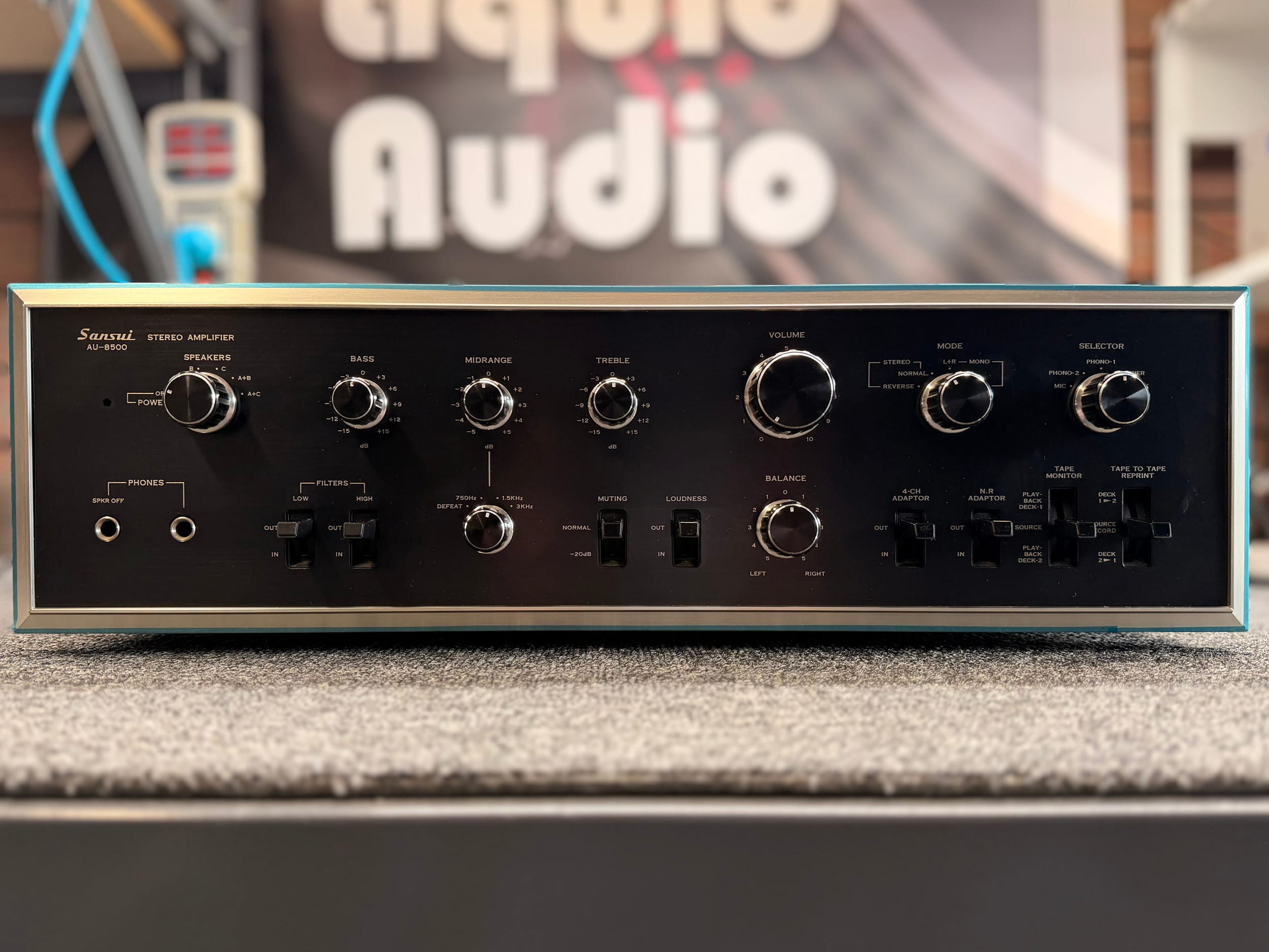
Join me as I service a pristine, literally time-capsule-quality Sansui AU-8500 integrated amplifier. This one even blew me away!
Welcome back, everyone and greetings to my Sansui readers and owners in particular, as this one is especially for you. George is the lucky owner of this piece and a long-term and very loyal Liquid Audio customer. We love George, and we love George’s Sansui AU-8500, for several reasons, not the least of which are that George never let the recappers get to this one, nor did George want me to do anything to this lovely, original amplifier, beyond what it actually needed. Bravo George!
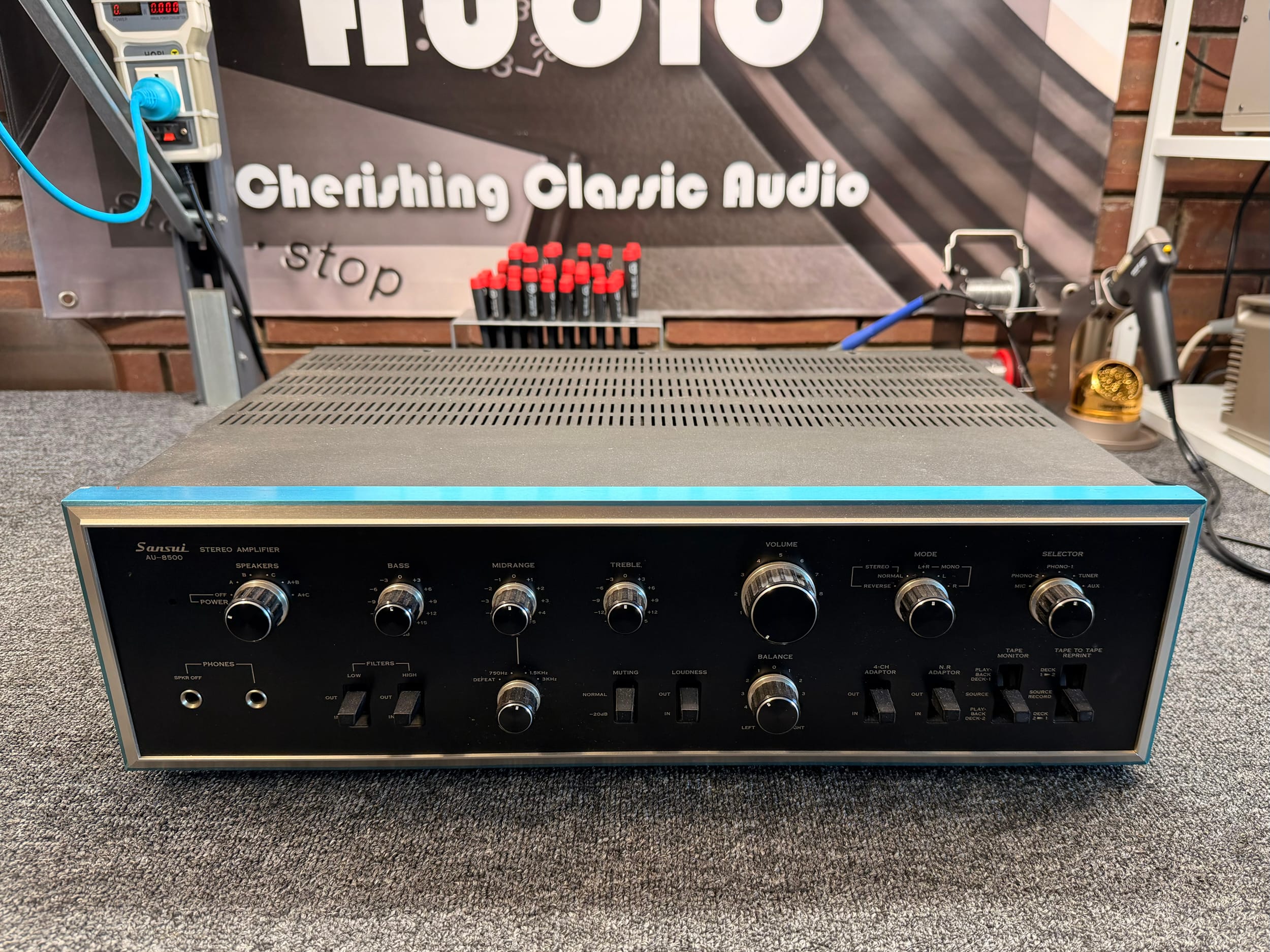
Sansui AU-8500 Specifications
Courtesy of HiFi Engine
- Power output: 60 Watts per channel into 8Ω
- Frequency response: 15Hz to 30kHz
- Total harmonic distortion: 0.1%
- Damping factor: 50
- Input sensitivity: 2.5mV (mic), 2.5mV (MM), 100mV (DIN), 100mV (line)
- Signal-to-noise ratio: 65dB (mic), 75dB (MM), 85dB (line)
- Output: 100mV (line), 30mV (DIN), 0.8V (Pre out)
- Speaker load impedance: 4Ω to 16Ω
- Semiconductors: 58 x transistors, 2 x FET, 33 x diodes, 5 x zener diodes
- Dimensions: 140 x 500 x 347mm
- Weight: 20.5kg
Features
There are a lot of things to love about the Sansui AU-8500 integrated amplifier. This model came at a time when Sansui was building things almost as well as Accuphase, and that is saying something. When you look at his and compare it to, say, the equivalent Accuphase E-202, an amplifier I have worked on dozens of examples of over the years, there is little between them in terms of build quality.
Yes, the E-202 is the slightly more powerful and, I think, better-sounding amplifier, but it weighs about the same, and if you compare the specs below, you’ll see they are actually very similar on paper. The 40W power differential represents only about 2.2dB, which is theoretically less than audible, so these are more closely matched than you may realise. That said, the beefier E-202 power supply and better parts quality no doubt contribute to its superb sonic performance.
Accuphase E-202 Specifications, again, courtesy of HiFi Engine
- Power output: 100 watts per channel into 8Ω (stereo)
- Frequency response: 20Hz to 20kHz
- Total harmonic distortion: 0.15%
- Damping factor: 50
- Input sensitivity: 2.5mV (MM), 160mV (line)
- Signal-to-noise ratio: 74dB (MM), 80dB (line)
- Speaker load impedance: 4Ω to 16Ω
- Semiconductors: 53 x transistors, 4 x FET, 44 x diodes, 2 x thermistors
- Dimensions: 455 x 152 x 355mm
- Weight: 19.5kg
In terms of features, the Sansui AU-8500 has most of the things the owner of an integrated amplifier would want, including three sets of speaker terminals, bass, midrange and treble tone controls and associated filters, two tape loops, phono preamp, rear panel fuses, rear panel power outlets, multivoltage capability, MM cartridge loading adjustment, and it goes on.
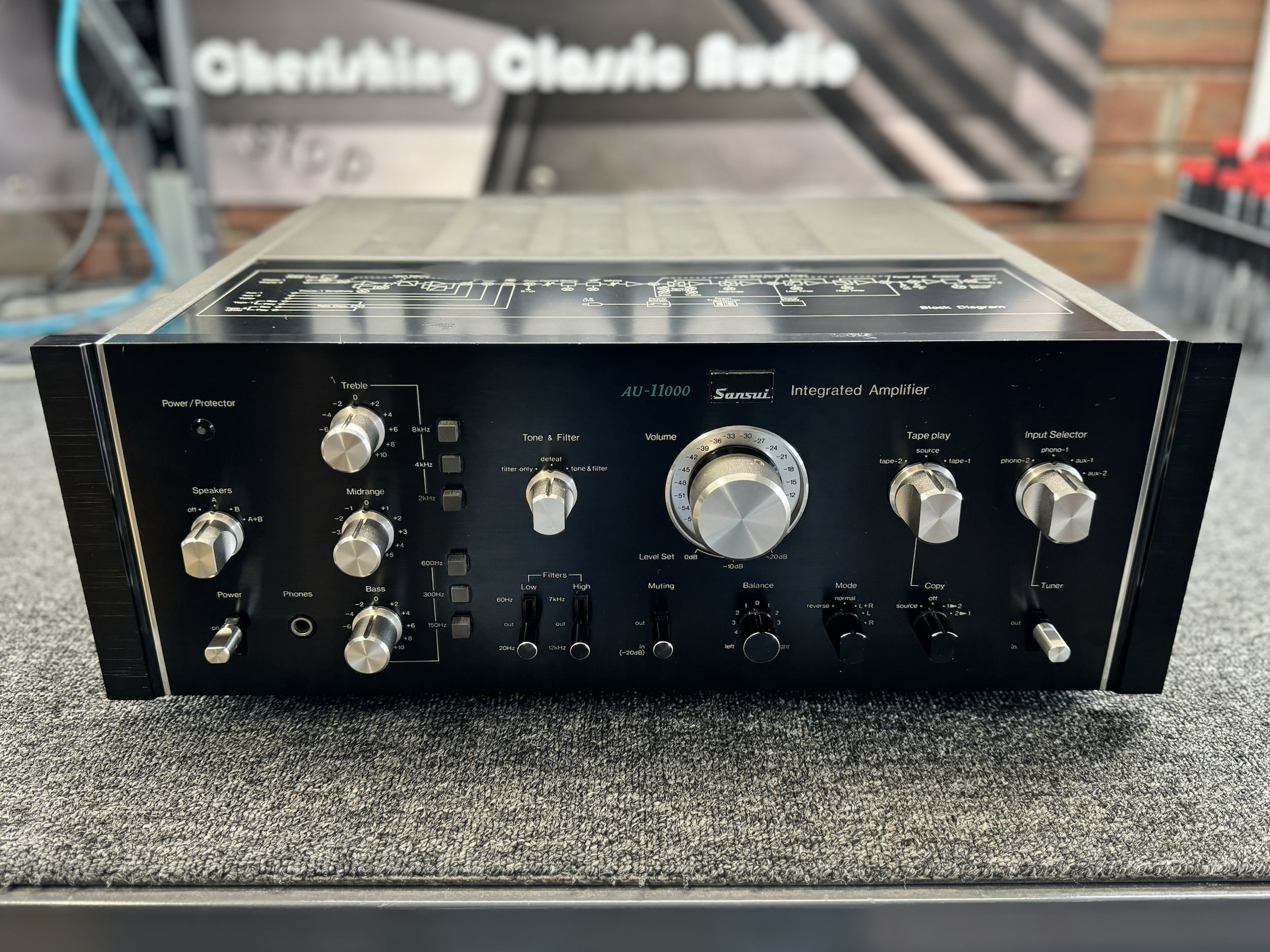
Later models like the Sansui AU-9900 and Sansui AU-11000 looked and performed better in my opinion, but the Sansui AU-8500 truly is a comprehensive integrated amplifier. Whilst it will never perform as well as the Sansui BA-5000 I’ve just repaired for another lucky BA-5000 owner (plus CA-3000 of course), more on that story when I get a chance, the AU-8500 performs about as well as one can expect from an integrated amplifier of this vintage.
Service
As mentioned, George is the owner of this one and has been having a few health issues, so if we can send a collective get-well energy beam to George, I know he would appreciate that 🙂. Anyway, George bought this from the original owner, and that owner cared for it just as well as George has.
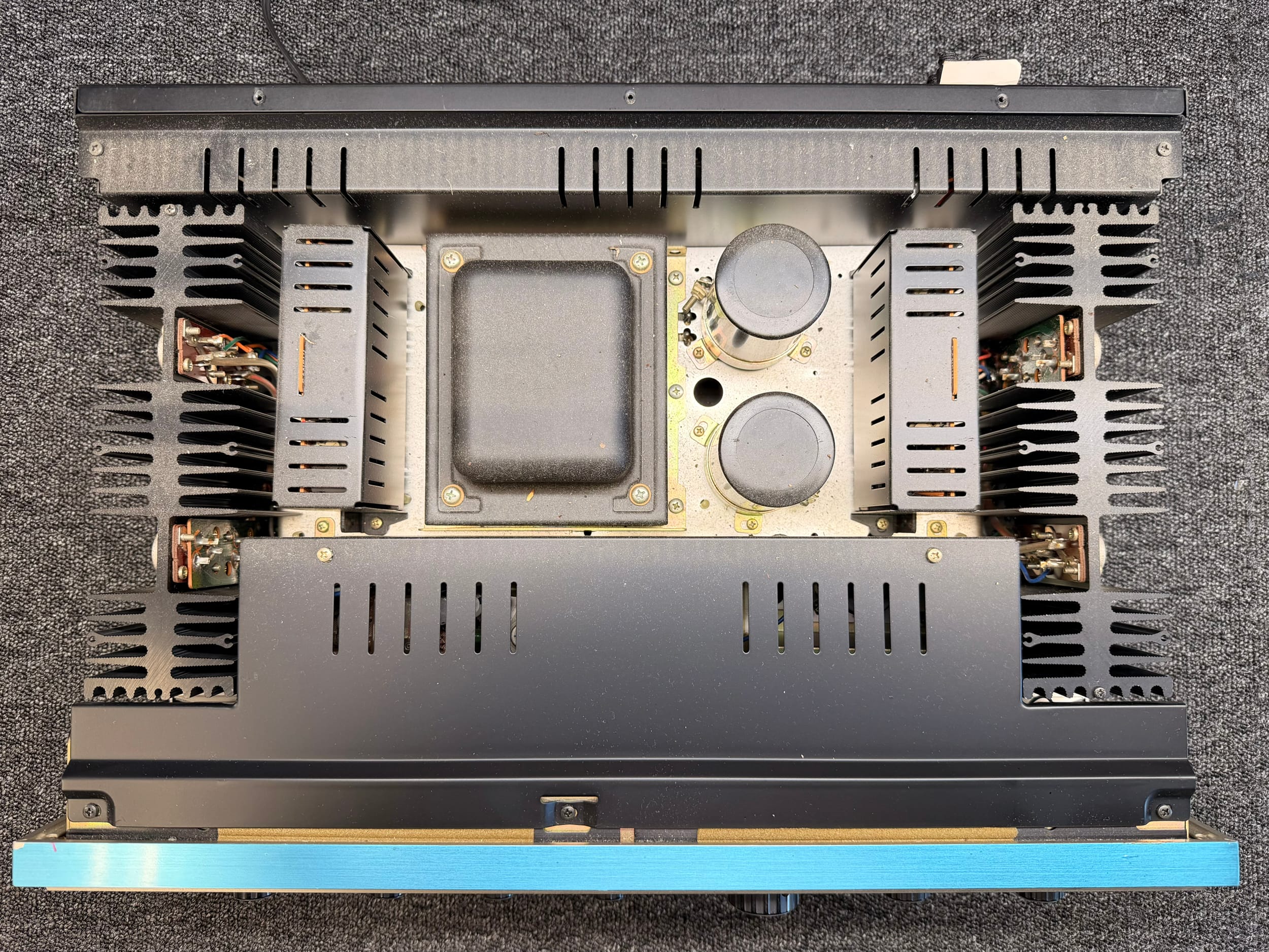
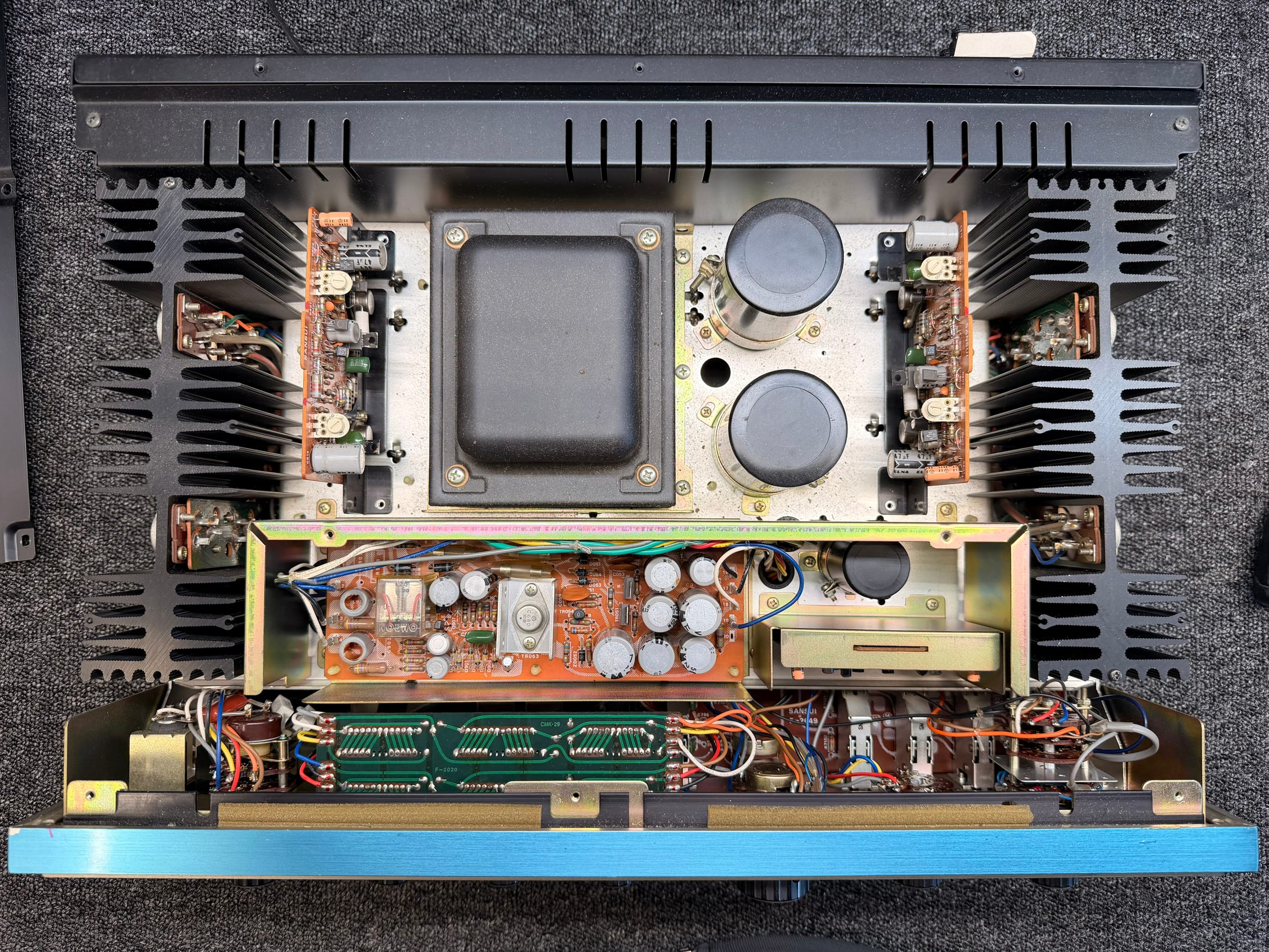
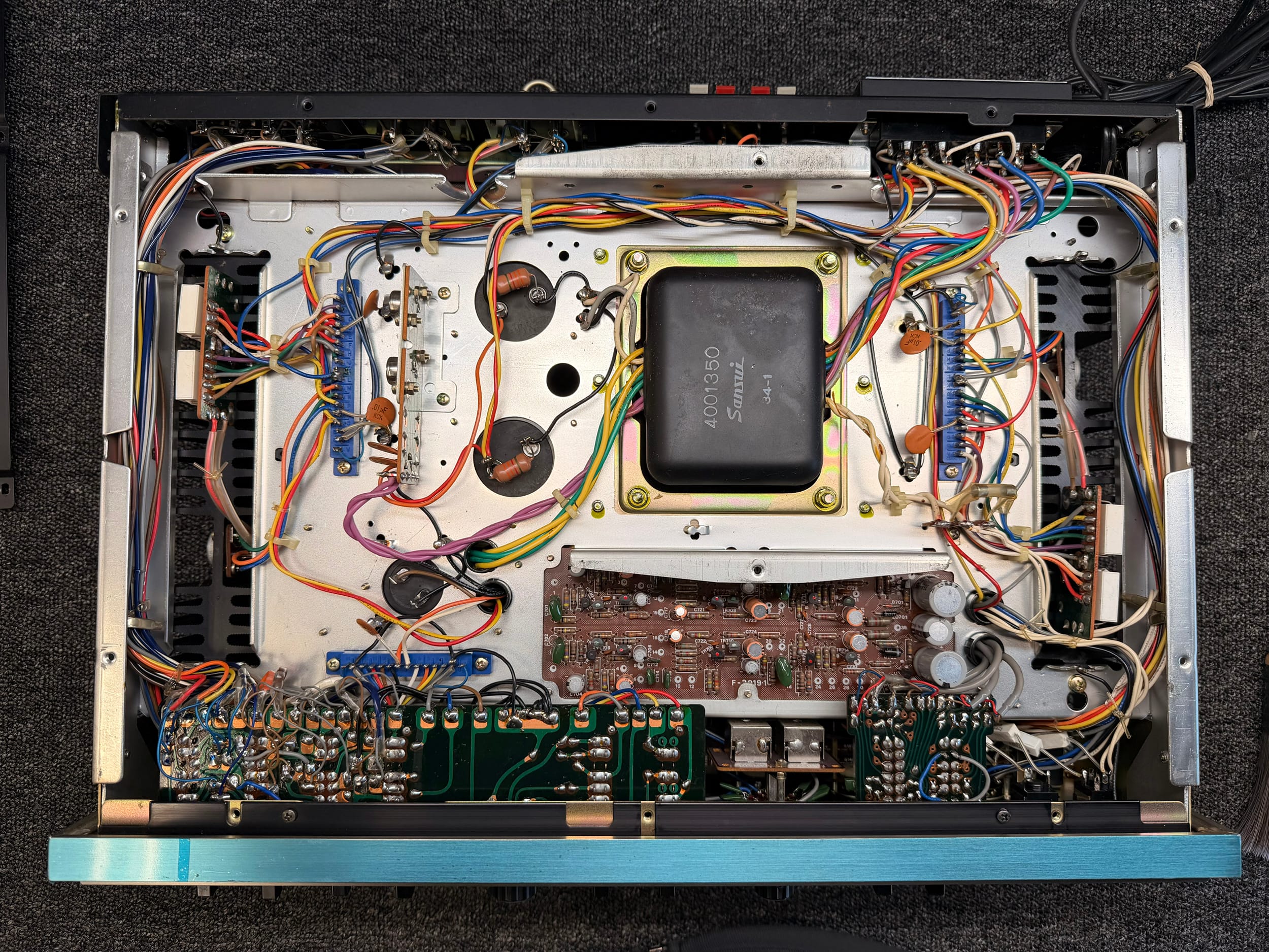
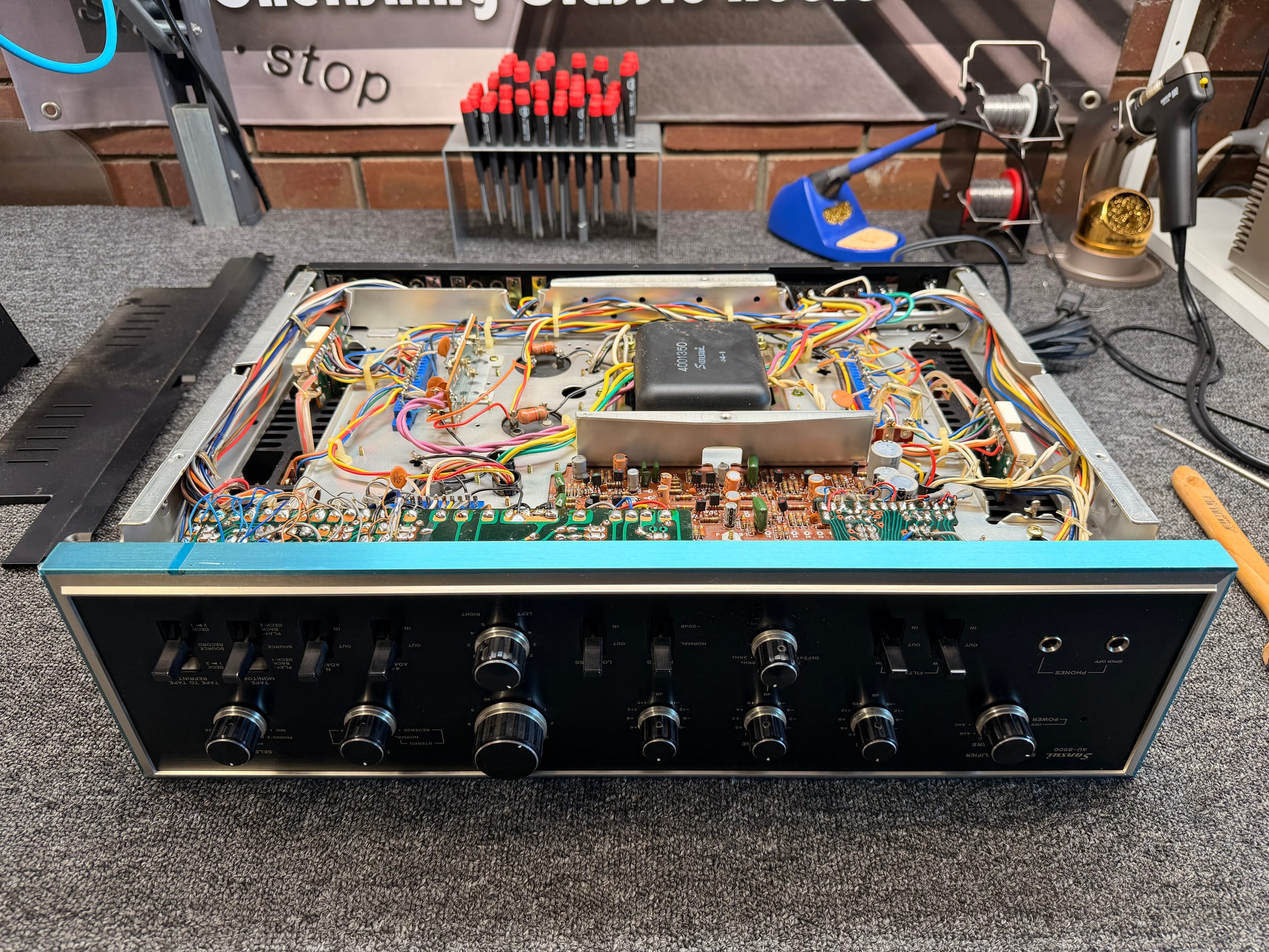
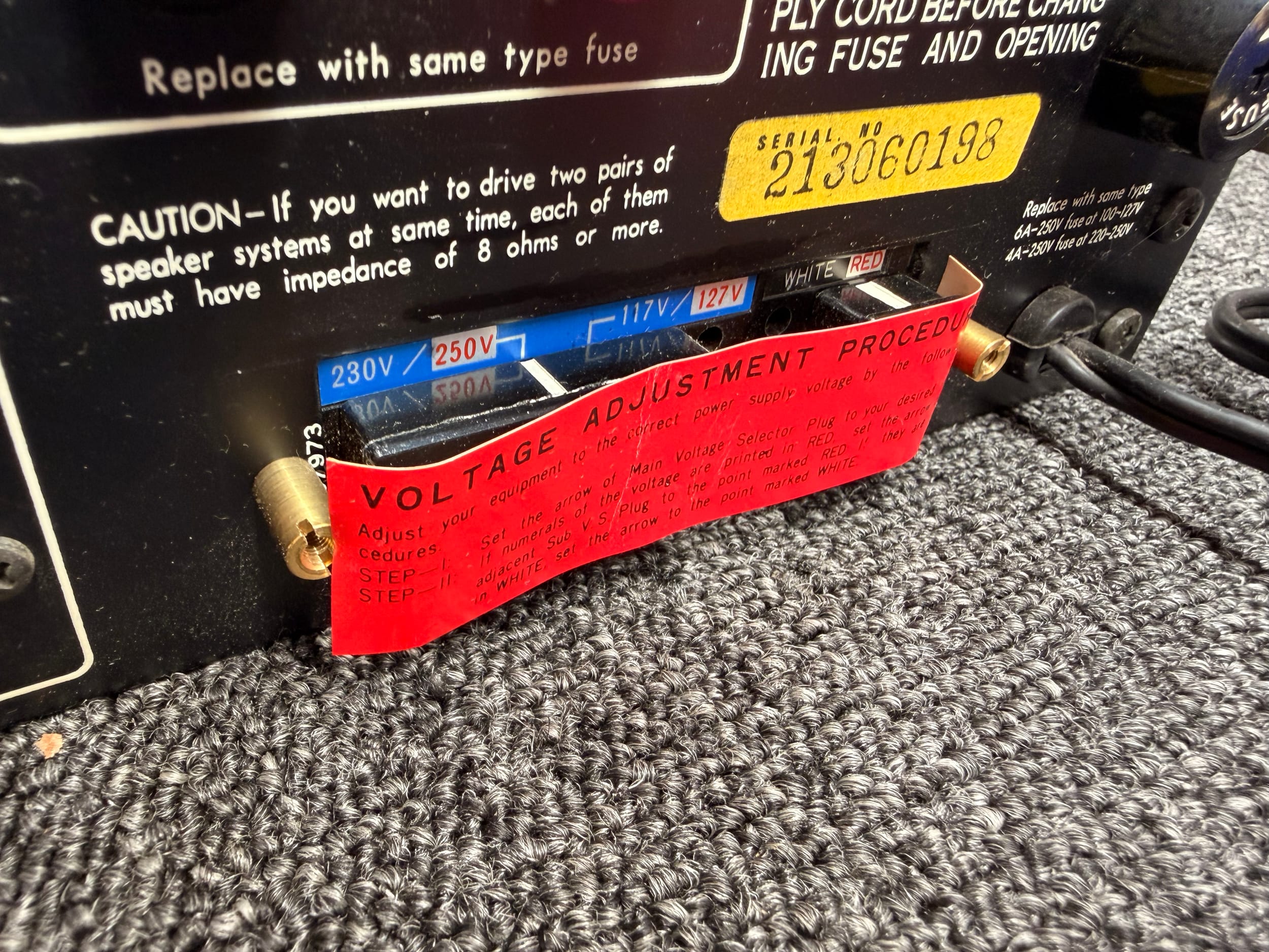
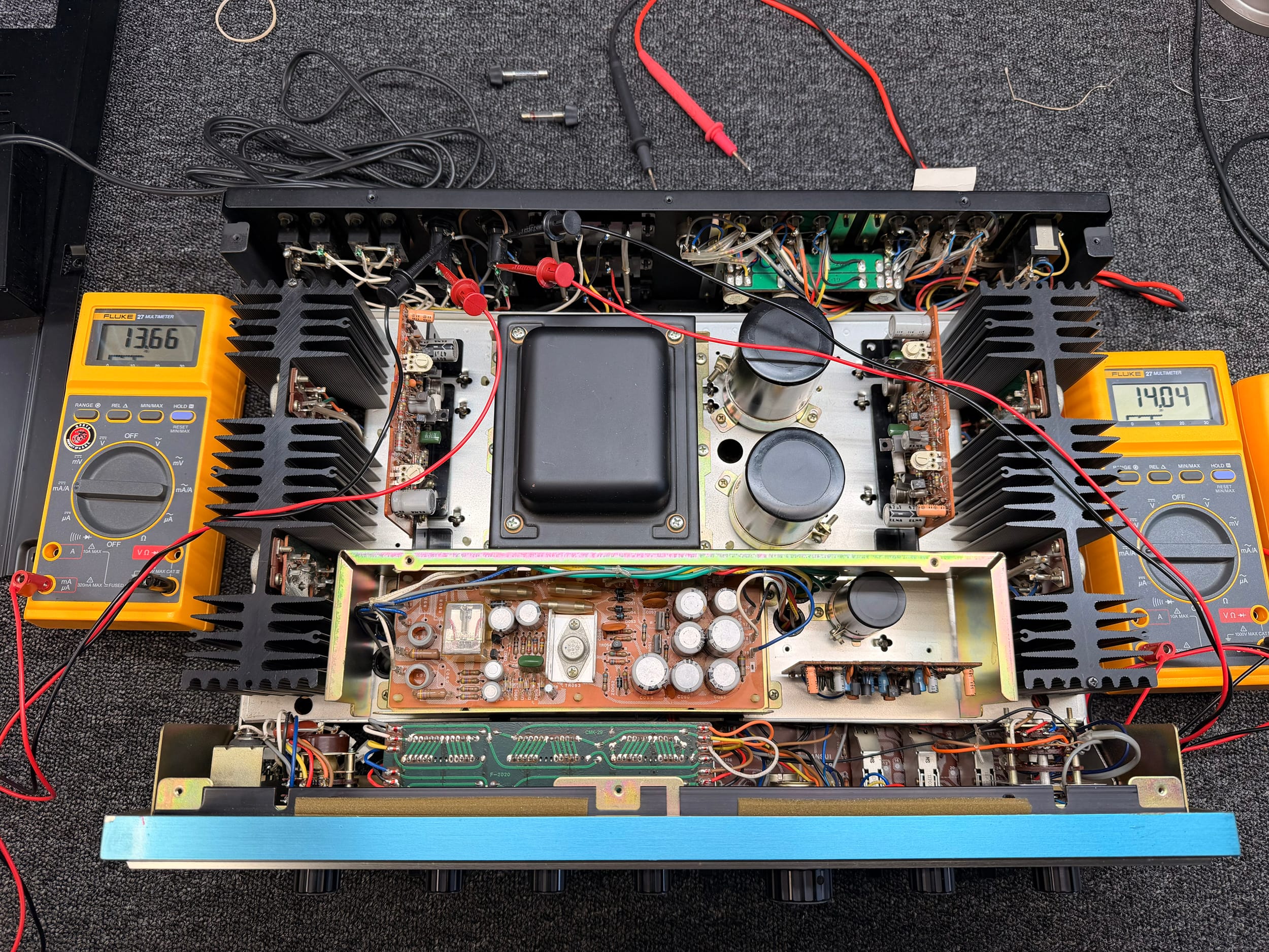
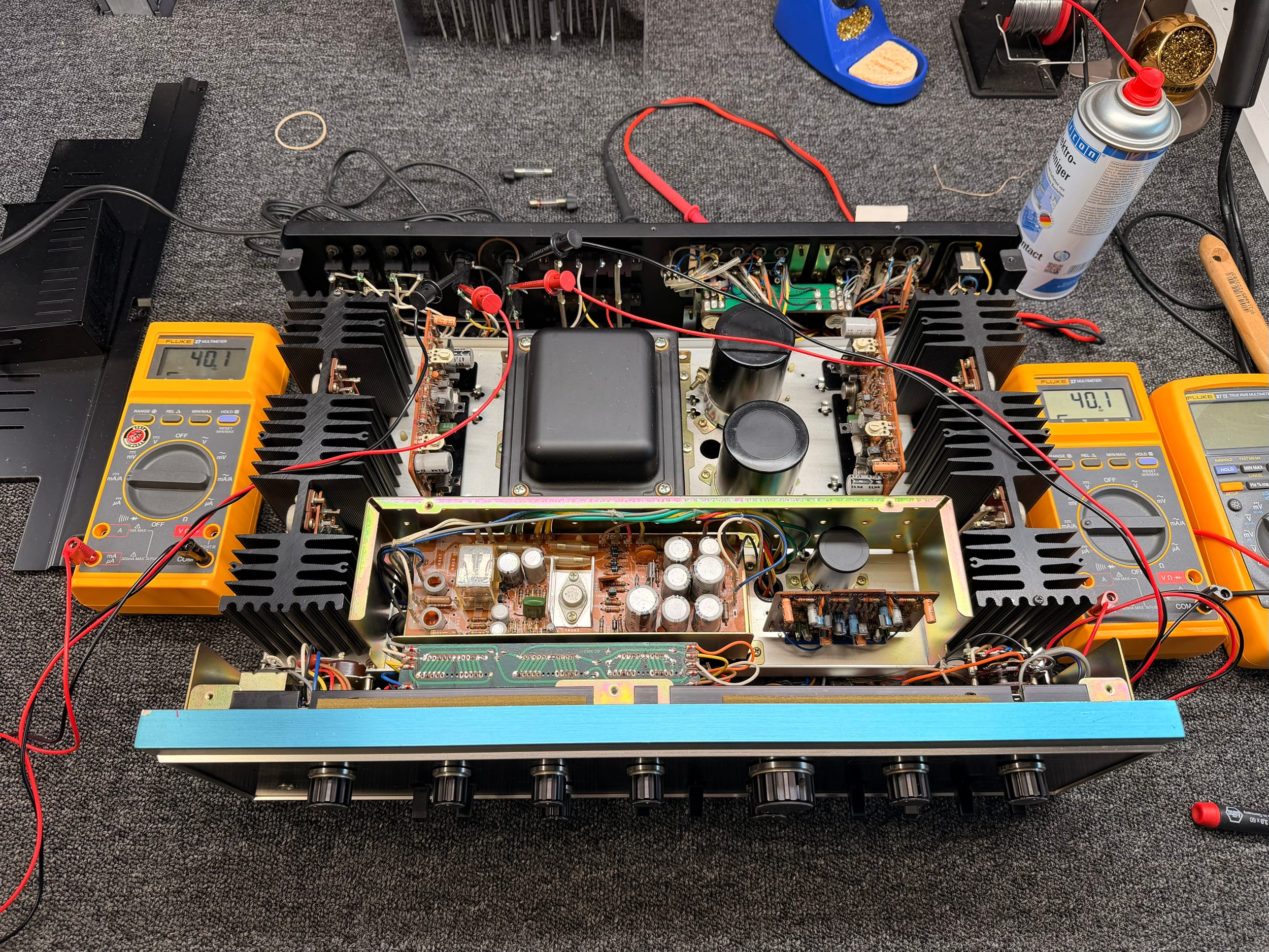
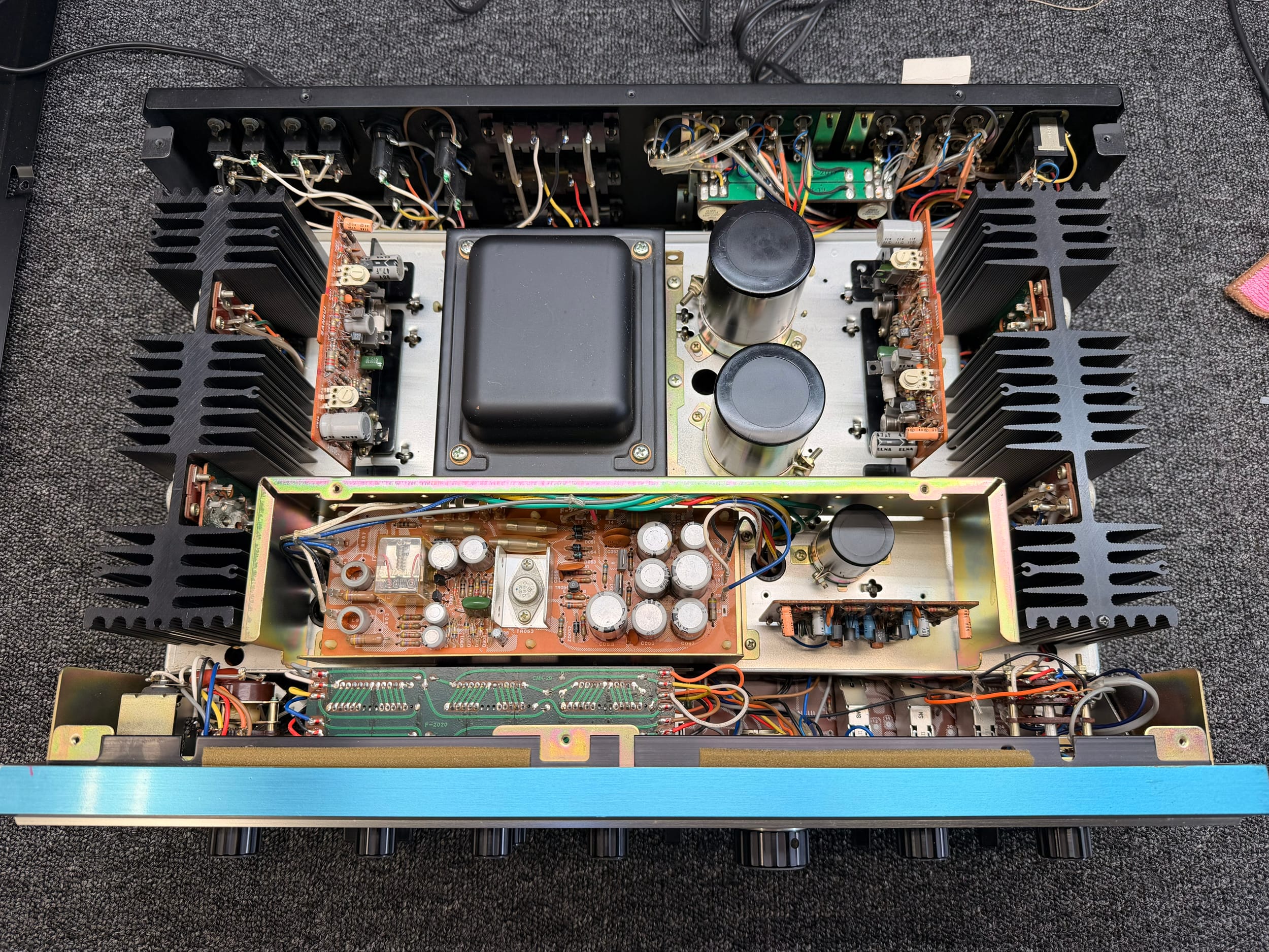
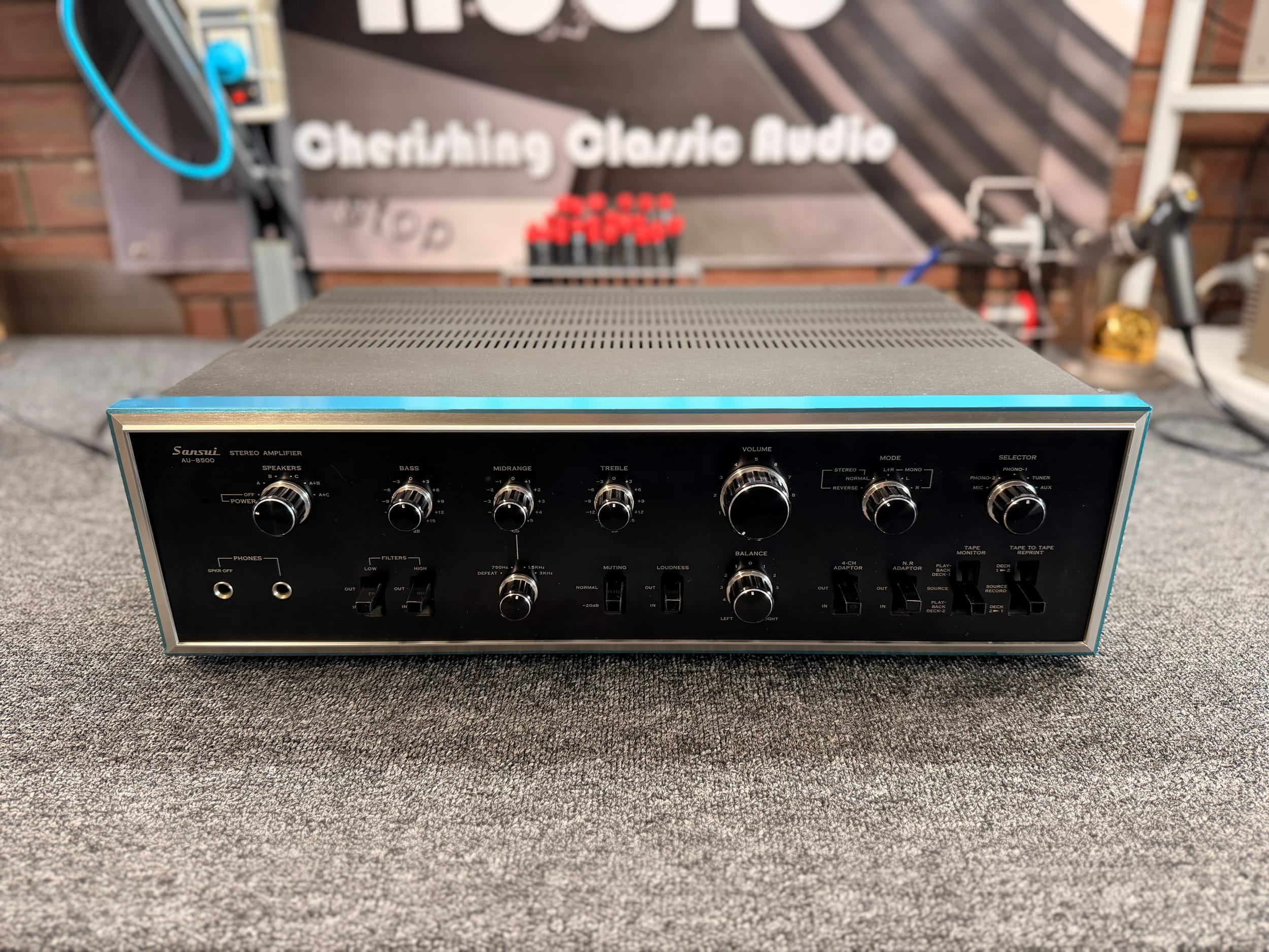
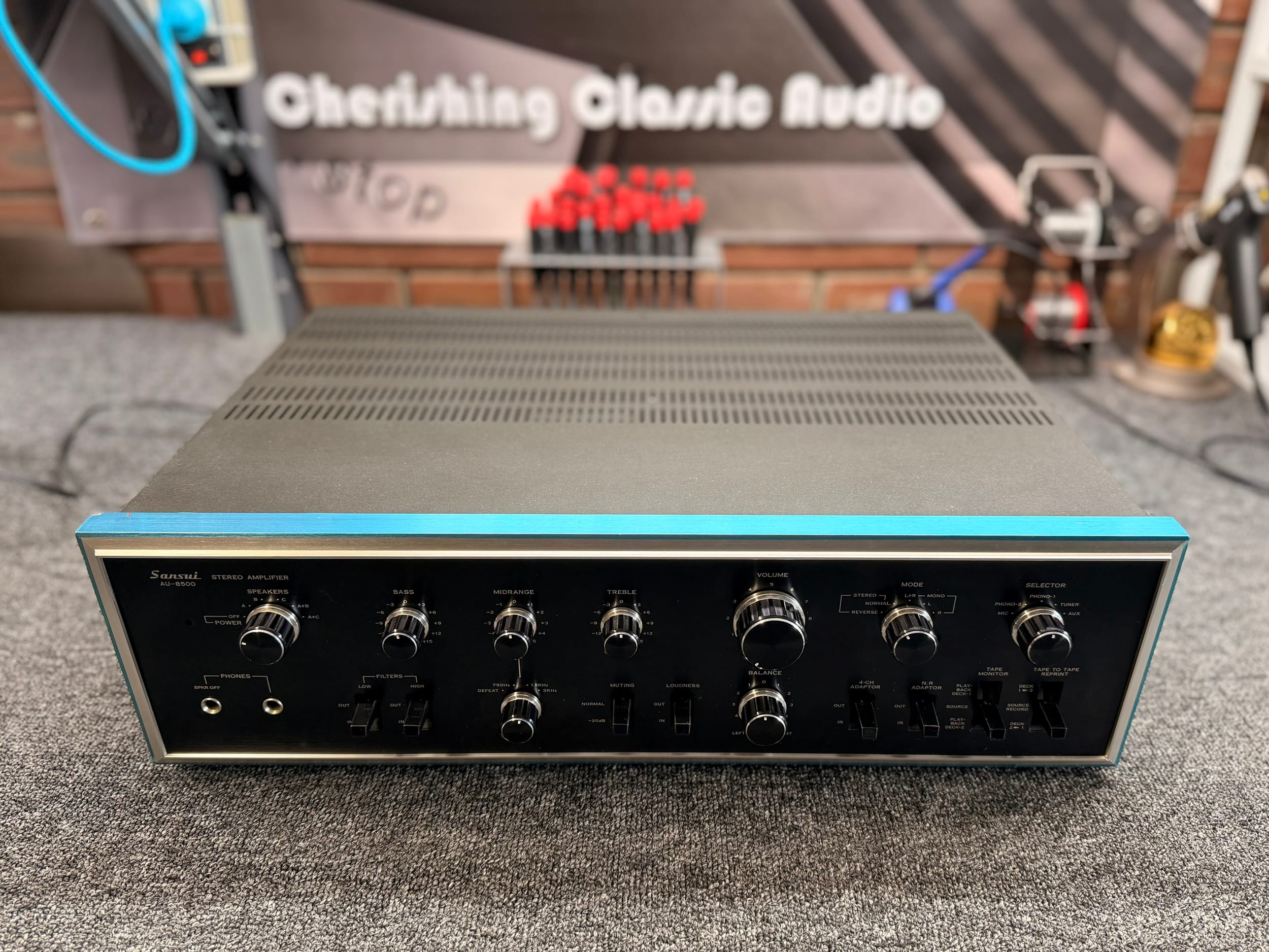
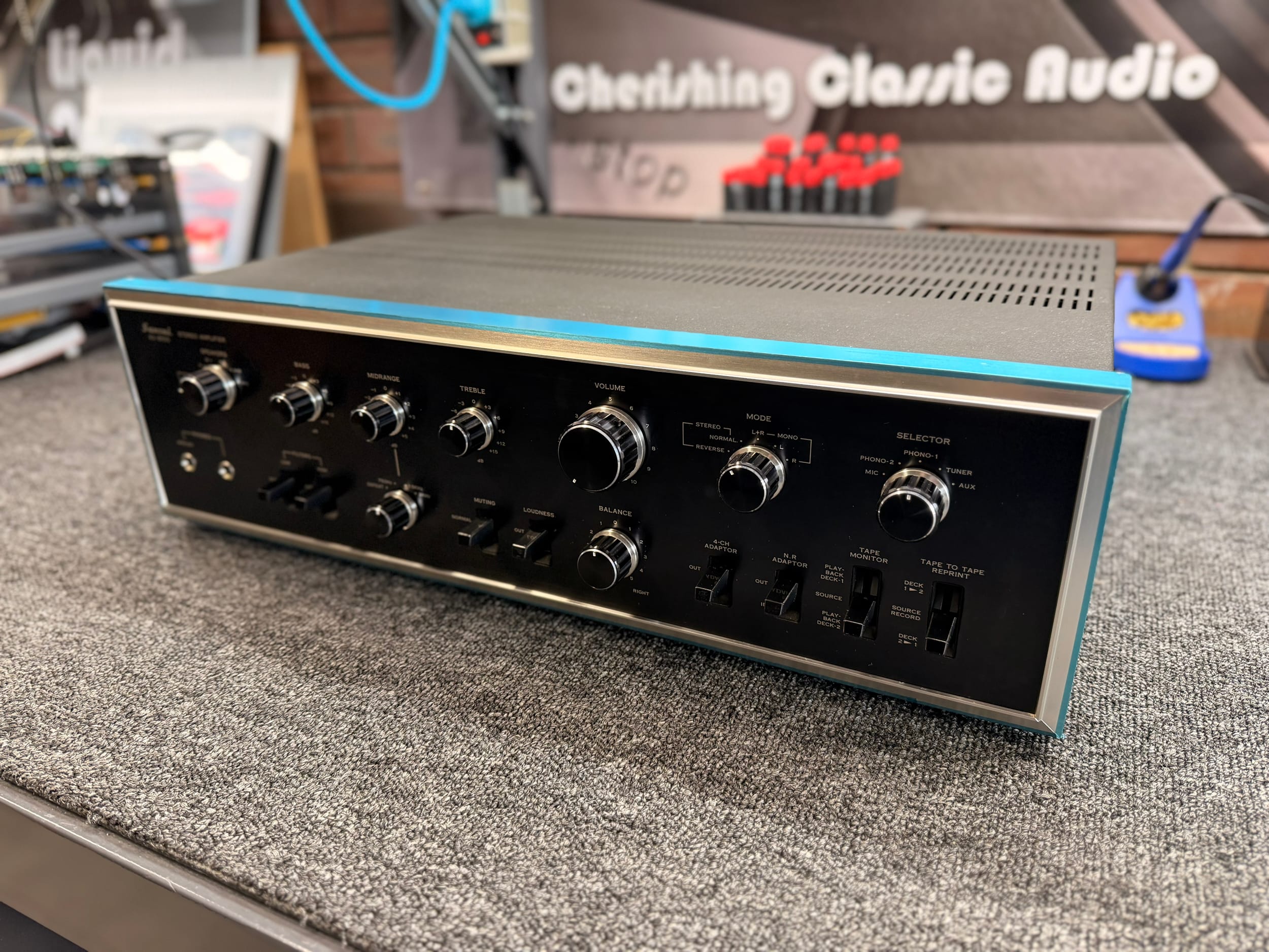
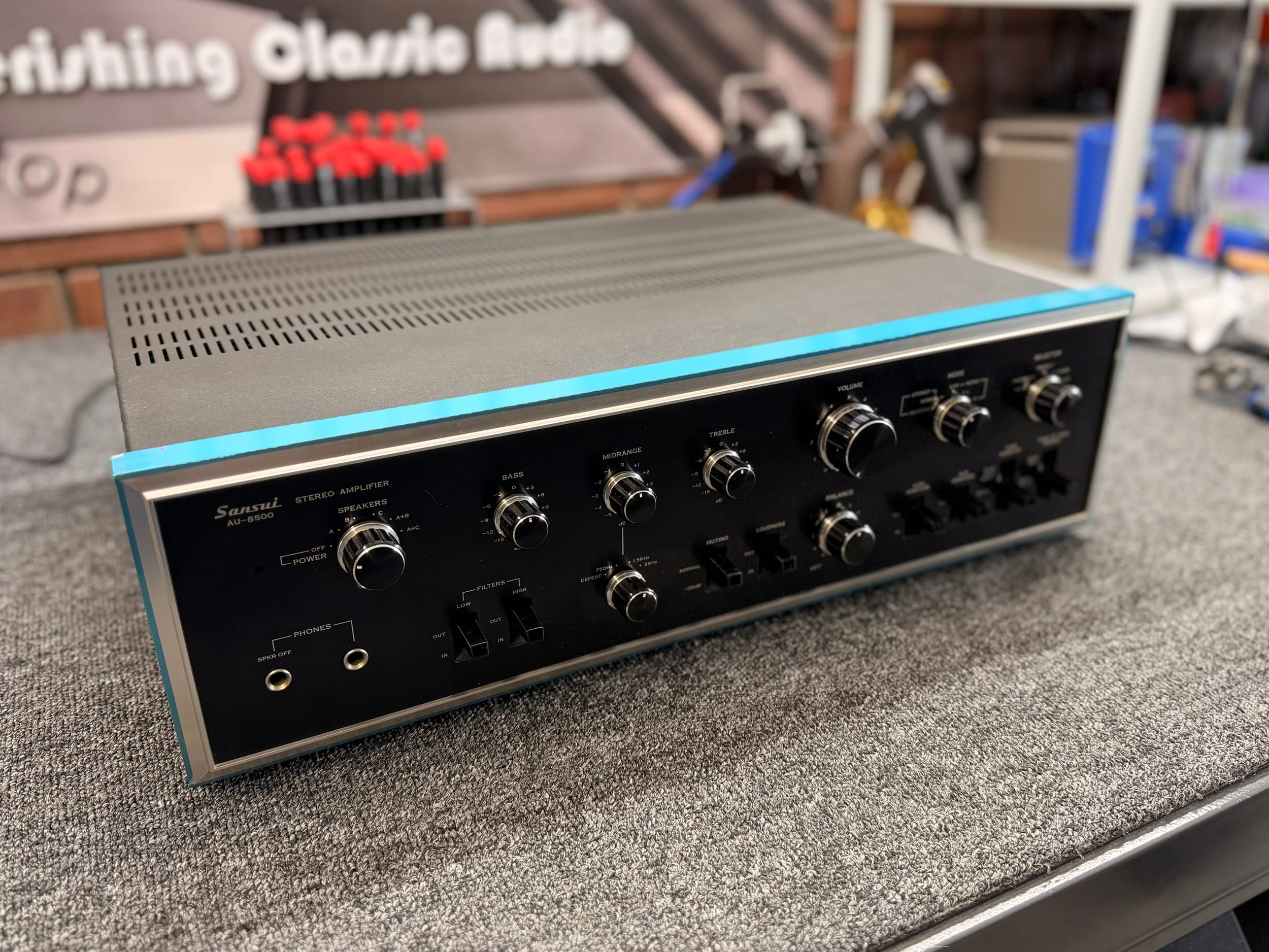
This AU-8500 still has its protective blue film on the front bezel surfaces and all the original factory labelling, cards etc. The unit itself had a layer of grease and grime on it that we sometimes see on older gear, but apart from that, she only needed careful cleaning, switch and control service and a very careful electronic adjustment, so let’s go.
As usual, feel free to watch my detailed accompanying video on the Liquid Audio YouTube channel, as it contains some details I ommited here, and vice versa:
On with the inspection and service of this baby!
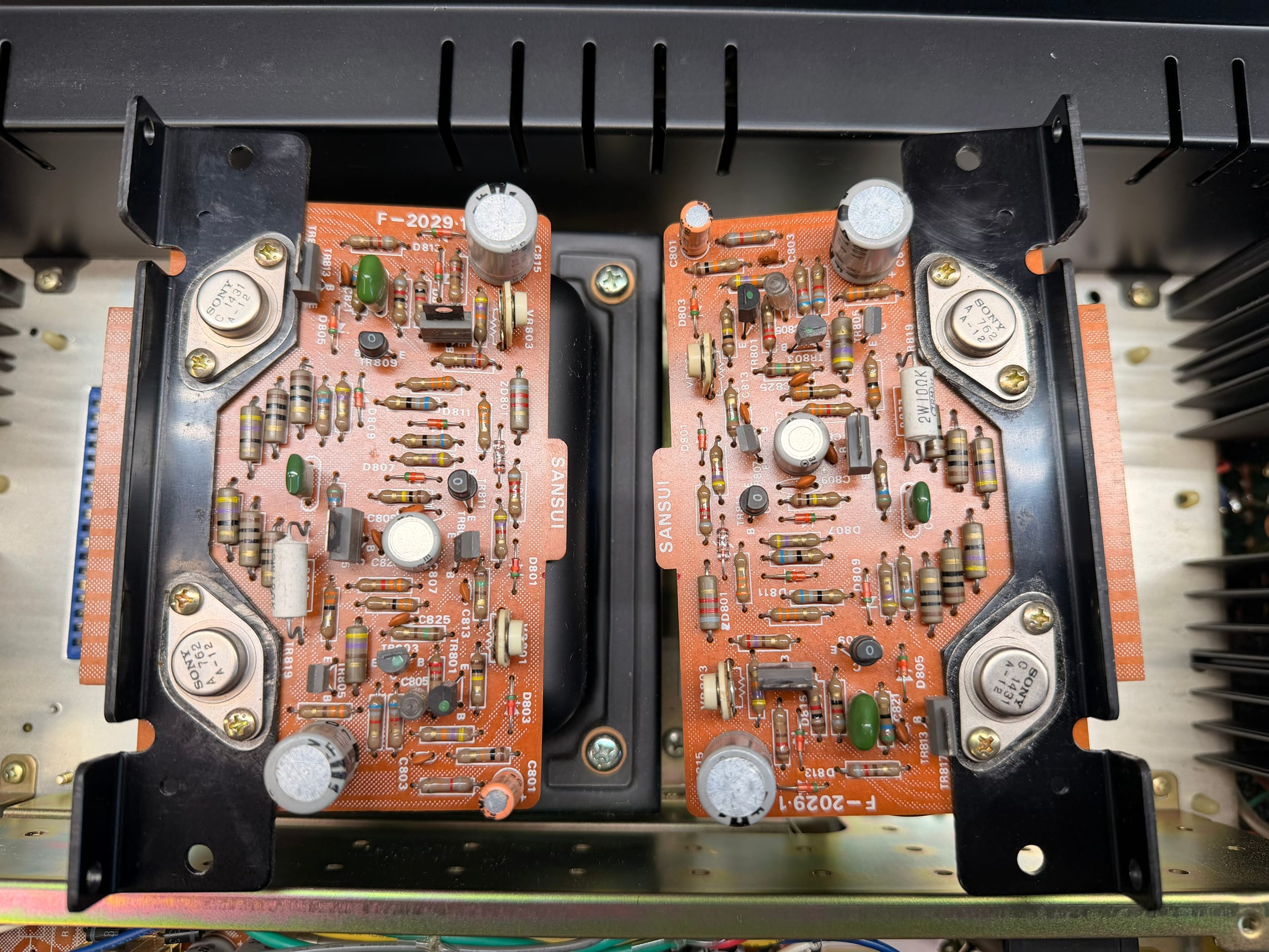
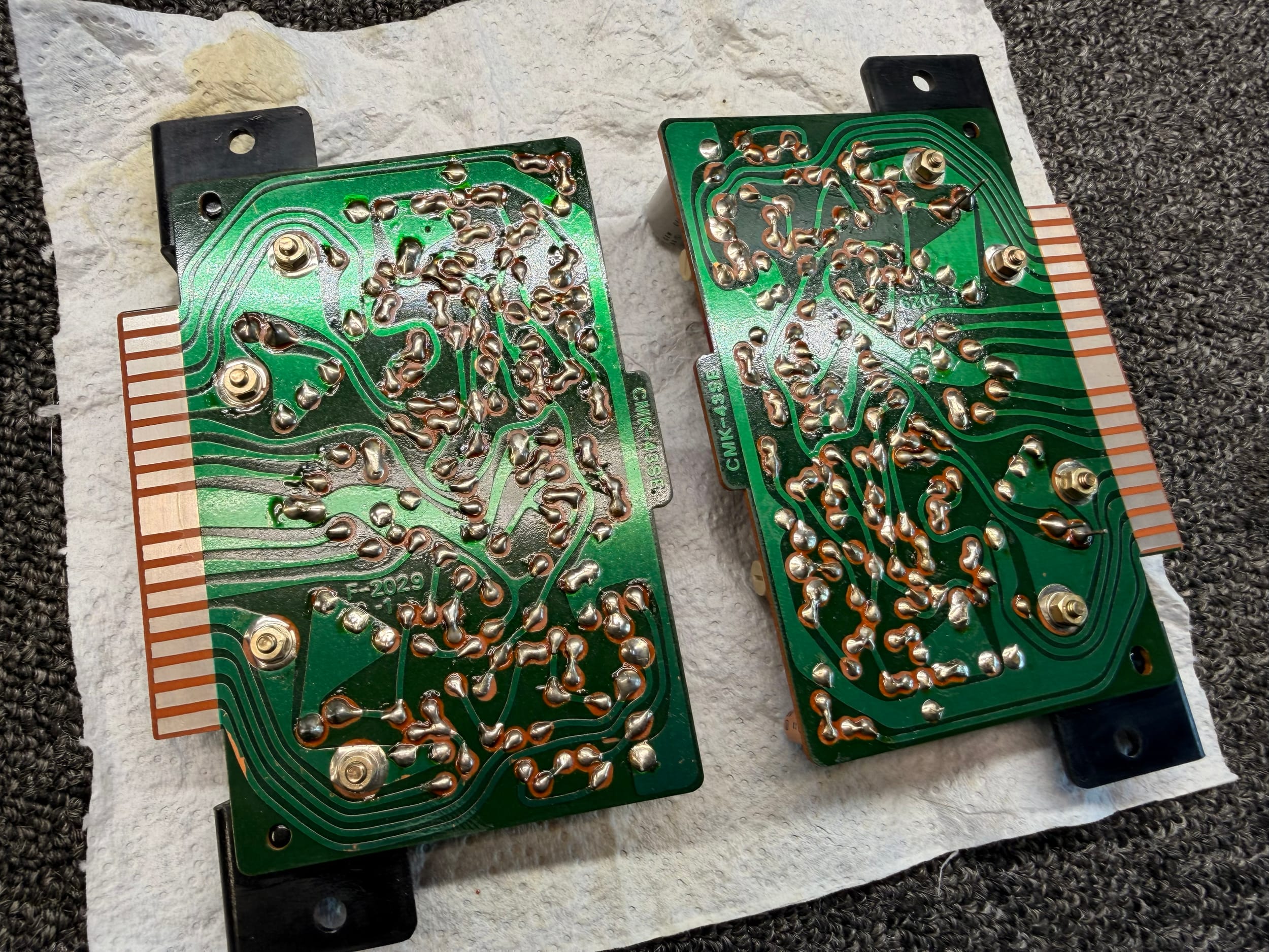
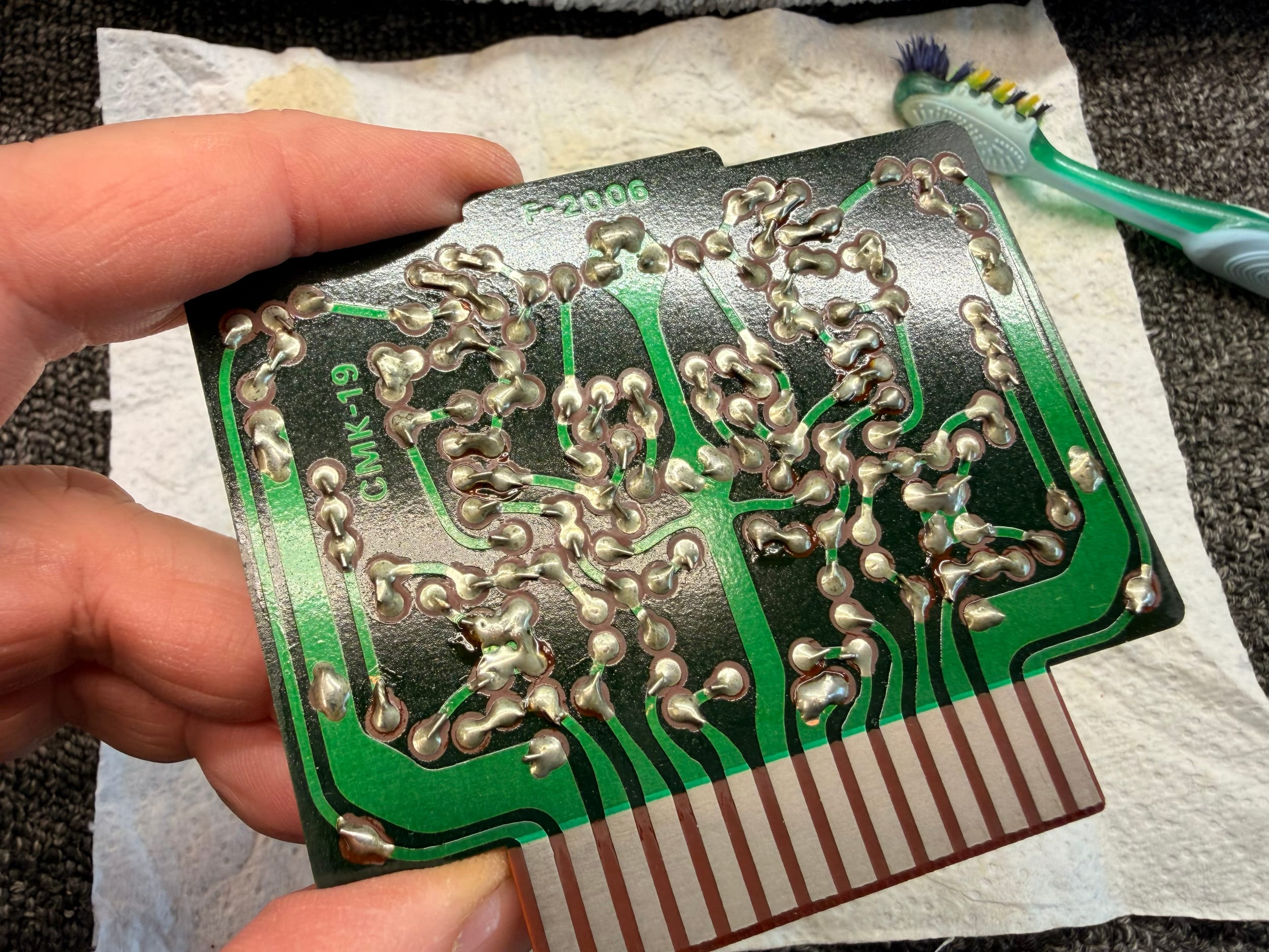
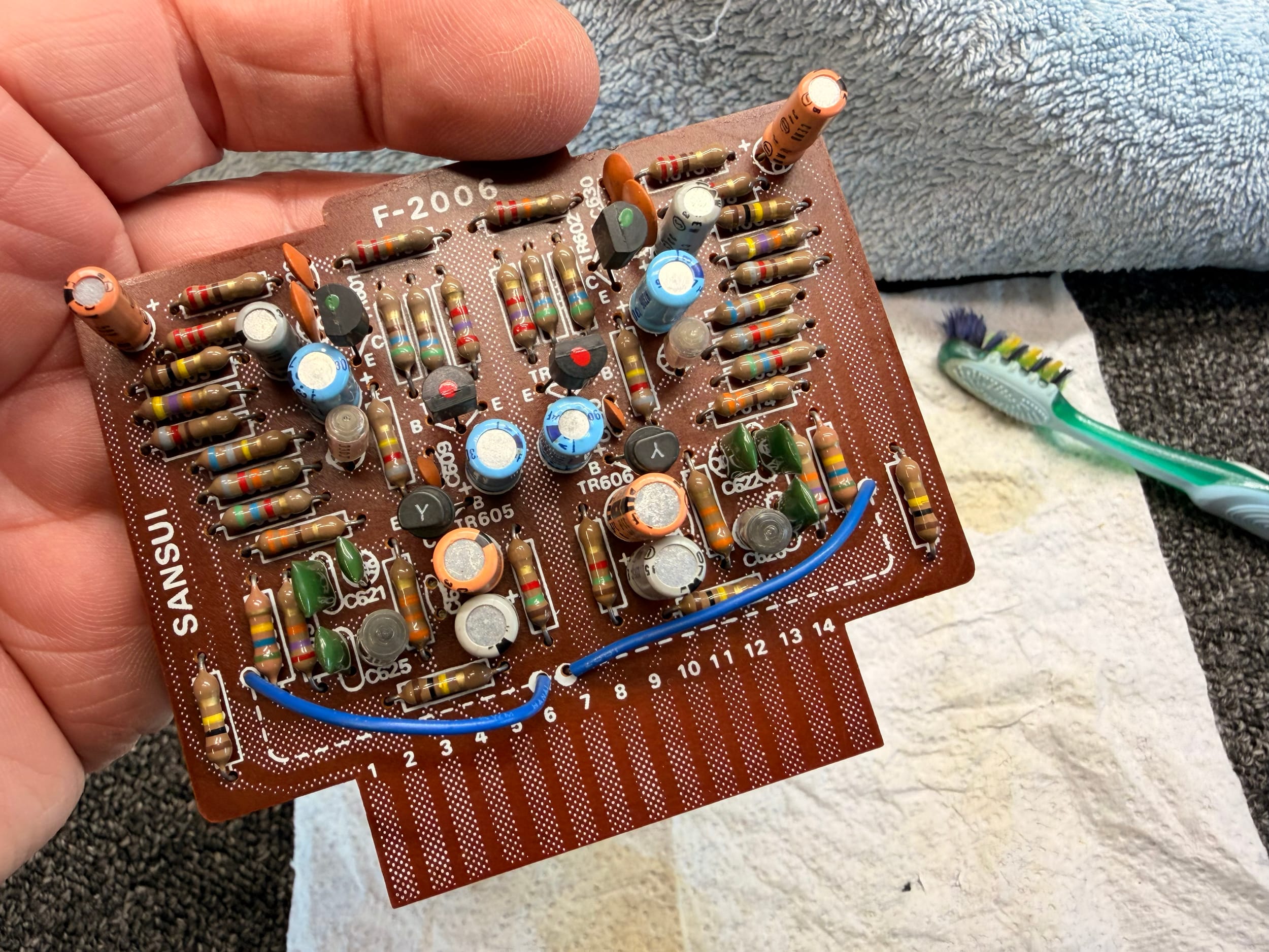
Results
As you might expect, George was stoked when he got this and remained as enthusiastic as I explained her almost perfect, museum-grade condition in my inspection report, and when he collected this stunner.
There isn’t really much more one can say about a piece like this, except that I made him promise that, if he gave this to his son as he planned to, to emphasise the importance of never taking her to a recapper, or anyone who felt that just ripping everything out and replacing it without any testing was a good idea!
Pieces like this Sansui AU-8500 are increasingly rare or even impossible to find in this original condition. This alone is reason enough to leave well alone, but there are many others. Many fail to understand what should be replaced, when, and why. Many who engage in this work damage boards and traces, throw away irreplaceable parts, install faults, and the list goes on. Much better to do absolutely nothing than terrible work that can’t be undone.
I strongly encourage all who’ve not yet understood the concept that less is generally more in cases like these to really think about why keeping equipment as original as possible, whilst also attending to the unique needs of each piece, is such a worthwhile philosophy. I’ve been writing about this philosophy for 15 years now, and I am actively reducing my earnings on jobs like this because of it. Think about that.
There are, of course, cases where the replacement of many parts is not only recommended but essential. In all such cases, this is determined not by guesswork or what someone who hasn’t seen the unit in question ‘thinks’. It is determined by experience with many other examples of the same model, by hands-on testing, and by the unique requirements of the equipment in question.
Thank You
As always, thank you for visiting, and thanks to George for entrusting this beautiful amplifier with me and for supporting Liquid Audio over many years. I hope you enjoyed reading about another classic piece of hi-fi equipment. If you’d like me to look at your Sansui AU-8500 or any other Sansui or quality Japanese integrated amplifier, don’t hesitate to get in touch.
A ton of work goes into creating these articles, and it’s all done in my time off. You can support my efforts to spread the word about beautiful hi-fi equipment and how to keep it alive by engaging our services, commenting, liking, sharing, subscribing and donating, using the button in the footer. You can also view our supportive legends on the new page dedicated to them.
Discover more from LiQUiD AUDiO
Subscribe to get the latest posts sent to your email.
Ah, a Sansui article from Liquid Mike! Excellent and thankyou!!
Firstly, very best wishes to George and his family for good health and fun times listening to this lovely vintage ‘Sui. And our thanks that he’s happy to share his lovely AU-8500 with us in this way.
Secondly, best wishes for your own return to good health, Liquid Mike! We really appreciate the time and effort you put into your articles and videos.
As you are only too well aware, there is a lot of “stuff” out there that encourages well-intentioned and enthusiastic amateurs to tinker with their beautiful vintage stereo gear. Oher factors influencing this are the shortage of suitably qualified professional technicians and owners’ perception of saving money and waiting time by DIY. Perhaps the parallel with “tear down and rebuild” restorations of older cars and motorbikes and popular videos about these are also factors in encouraging a perception that recapping etc is “just like doing up an old car, only much easier”.
Most of us can do a good job of baking a cake to a recipe found on the internet, and if we get it wrong we can chuck it out and make a fresh one. However, we should be wary of extending this approach to vintage electronic equipment containing parts that are difficult or impossible to replace if damaged or just thrown out because “they’re old and newer is always better”. Such an approach is even more ill-advised when paying for it to be performed by someone who claims to have done exactly the same ill-informed thing scores of times, rather than identifying specific problems in each unique case and addressing only those, and who can’t cite what professional training or qualification they have earned.
Thanks for educating us on the beauty of this beast, while restating the case for proper identification and assessment of what real problems exist, and treating the symptoms and underlying causes only as needed rather than “rip it all out because that’s what a YouTube video with 231 likes said to do”.
And a professional who argues for less and better targeted use of their services is a welcome and responsible voice to be respected and admired!
Thanks so much, Robert. I’m pleased you enjoyed this one and, of course, that you understand exactly where I am coming from! Most of us like to DIY things where we can, and the cars and motorcycles analogy is the perfect one. Wanting and being able to actually do useful work on a car or motorcycle are two completely different things. I’ve lost track of how often I’ve found stripped and missing fasteners, broken and damaged parts on cars and motorcycles, just as I do with the electronics I work on here. Sadly, other technicians are sometimes the worst culprits, with vehicles and electronics. People don’t know what they don’t know and often know just enough to be dangerous. I had to decline a Krell repair just the other day because an owner had gone and recapped it, killed it, and I know from experience what a can of worms that will now be to resolve.
I definitely subscribe to the “less is more” approach, and I realize your scope of work was limited to evaluating the unit.
But if the thermal grease in this Sansui is anything like that in the contemporary Yamaha I am currently restoring, it will have turned to ineffectual dust and should be renewed.
As far as trimpots, open-frame Nobles were well-made and can definitely be left in place after proper servicing and testing, however old sealed pots are best replaced for safety.
Beautiful amp!
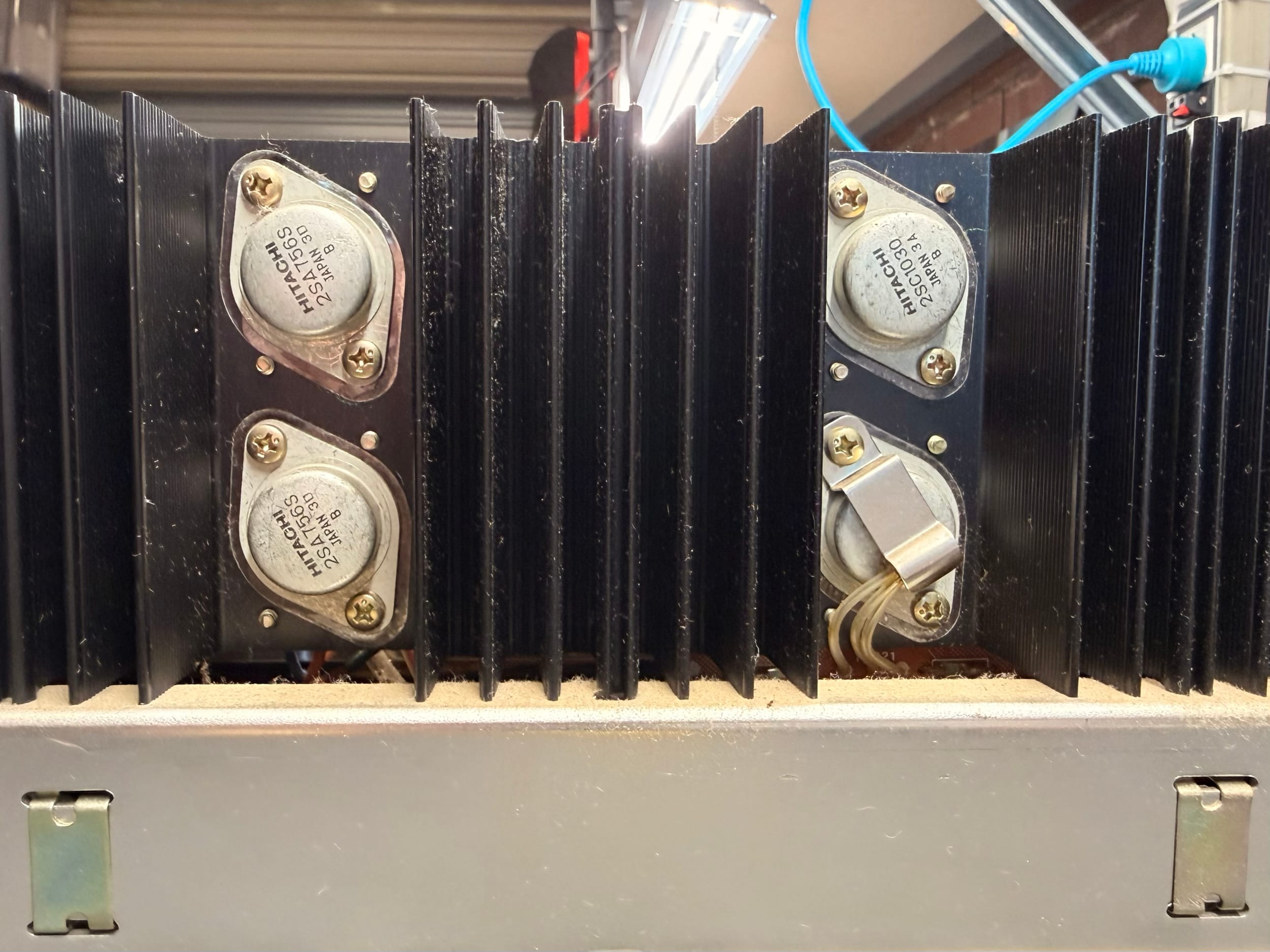
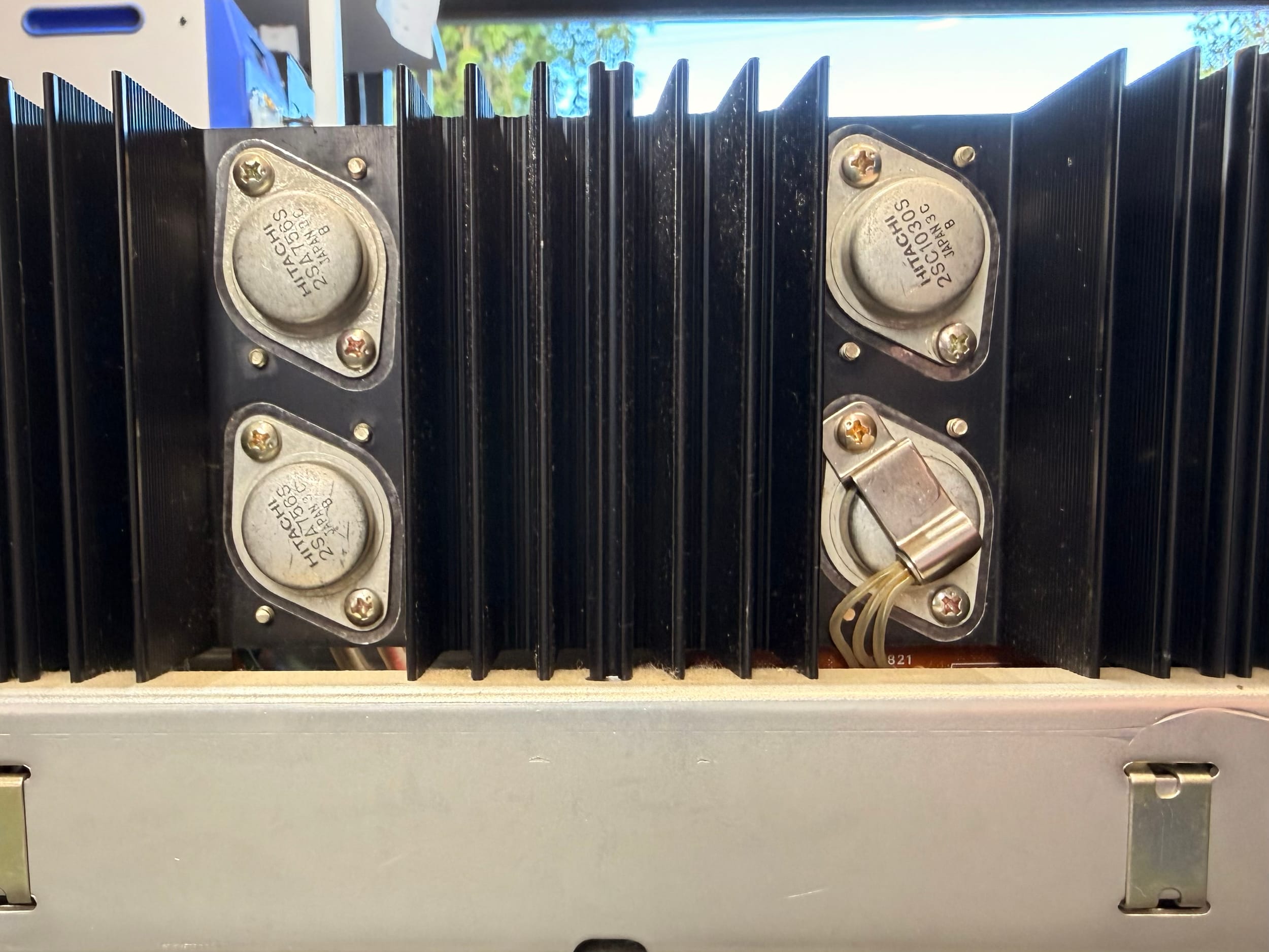
Thanks, and I’m glad you enjoyed the article! The thermal interfaces here are all good, determined by careful inspection. This is an unstressed amp that runs cool due to very low bias current, and the TO-3 and TO-66 interfaces on these amps use a clear silicone grease which retains its consistency for many decades and is usually still good, even at this age. You are thinking of the white mica-based thermal pastes that dry out over time; these must be renewed in cases where thermal margins are small. The clear silicone grease has much poorer thermal conductivity, but they used it here because of its long lifespan and the amplifier’s modest thermal power dissipation requirements. Designs that run harder/hotter should use a really good white mica-based paste or premium silpads.
I just received my AU-8500 back from my tech a couple of weeks ago. Like you, he is not a recapper for recapping’s sake. He’s very much practices the “if it ain’t broke don’t fix it” philosophy. And he’s rightly chastised me for some novice shot-gunning on other Sansui units. I’ve come around to this more conservative approach myself.
I was getting some DC leak with significant rifle shot cracks and excursion at the woofers. The main cap cluster on the power supply board was covered in glue. He cleaned that up and replaced affected parts. He also did a little bit of revision on the driver cards. I note and I think that the driver cards in my 8500 are quite a bit different than in your example above. First, the TO-66 transistors are mounted directly on the PCB. They are not mounted on the card bracket as a heatsink like George’s above. That heatsink bracket doesn’t exist on my unit. The cards plug in and are held in place with the typical cover shroud. Second, my driver cards had a small fuse and fuse holder mounted in the center of the driver card that I believe was tied to transistors. My tech revised that design and removed those as they were very crusty. I’m not sure, but he may have said there was a service bulletin upgrade or he ferreted something out online with regard to that modification. I suspect George’s driver cards are a later design. Those heatsink brackets are quite a bit beefier and I don’t see that fuse in the middle of the card. My tech finished the service off with factory service manual adjustments and that’s it. It’s running great.
My 8500 is a nice clean one-owner example as well. It’s an absolute battleship and I love it. It sounds fantastic. I’m excited to have it back in the rotation. I have (too) many Sansui amps and receivers before and after the 8500 and I love them all one way or another, of course, but the 8500’s no-nonsense industrial design and bomb-proof build quality has appealed to me from the beginning.
Incidentally, I launched a little experiment this weekend and have pre-amped the 8500 with my 1969 AU-777. The tubey sound of the 777 with the power of the 8500 is something special that I’m going to continue to enjoy for a bit. Great writeup, Mike. I really enjoy your perspective and learning from you. Thanks, mate!
I’m second guessing myself about those heatsink brackets on the driver cards, but I don’t recall them at the moment. I’m unlikely to open the 8500 up anytime soon to double check as it’s inline and playing fine!
Yeah, I’d be surprised if Sansui removed such a key design element and a structural one, as this is how the driver cards are secured in place. I’ve worked on a few of these, so I’ll have other photos…
I stand corrected. I looked at some pictures on my phone. The heatsink brackets on the driver cards are indeed present in my unit. It’s been seven months and many projects since I was in there. The memory fades fast these days!
Thanks for sharing those details, Pete. Very glad to hear you can enjoy your AU-8500 once again!
What a beauty. The Sansui gear of this era was IMHO very well engineered. It’s generally a pleasure to work on these provided no cowboy has previously hacked the unit to death. Regarding your comments regarding re-capping. I totally agree Mike. I often get heavily criticized in the audiophool forums for being against the practice of shotgun re-capping. IME if it ain’t broke and there aren’t any signs of deterioration there’s no need to fix it. Often just a thorough inspection, servicing and electrical performance testing is all that is required. If anything doesn’t measure up to specifications then IMO that’s when it needs further investigation and rectification. IME a lot can be gleaned from non-destructive testing. If the levels, frequency response and noise measurements are all within specifications there’s nothing wrong with the unit.
When someone brings me one of these gems and insists on having all the electrolytics replaced I ask them why they think this is necessary. The usual response is they read about it on forums like Audiokarma or saw it on YouTube. Strangely but not unsurprisingly I don’t ever recall any of these YouTubers who advocate wholesale shotgun re-capping ever verifying that the process reaped any tangible benefits other than to the wallet of the “repairer”. One YouTuber who has since finally seen the error of his ways about wholesale shotgun re-capping gained his initial following on the platform by taking a Marantz receiver to a carwash and power washing it. Then proceeding to replace every electrolytic capacitor and even some film caps and some semiconductors for no apparent reason whatsoever other than citing that they will eventually fail. Whilst component failure is always a possibility replacing a perfectly good Elna, United Chemi-con or Rubycon capacitor that’s physically located inside a hot part of the amplifier with some capacitor rated at just 85 deg. C with a quoted lifespan of just 2000 hours simply because it has the words “Audio Grade” printed on the sleeve isn’t going to last the next 50 years as most of these re-cappers will claim. Those who know no better really have to take the advice of experienced technicians like your self and disregard the so called advice of the cowboys. As always, it’s a pleasure to see your work Mike.
Yes, she is certainly a gem of a find, a lovely amplifier. Thanks for your kind words and support. There are unfortunately just too many of these non-technical parts replacers out there, many here in Perth, for example. Some of them have ‘loud voices’ though and capture the attention of those less able to parse the facts from the noise. This has always been a problem and will remain so.
Tanamera-tech you are mostly correct, but the market expects a total recap. If you don’t provide one, you’re leaving money on the table.
Do I fully recap my own hifi components? Of course not! Do I fully recap components I intend to sell? Of course I do! Not because it’s needed, mind you, but because it’s expected.
The only (relatively) expensive caps are the big filter ones. The rest are dirt cheap. Maybe you’re looking at $40 or $50 worth of caps, but what about the difference in selling price? Folks believe in recapping, and if you fully recap you’re a consciencious, trustworthy tech and that’s priceless. Compare to the measly $50 worth of parts it cost you.
I disagree. Some of the market expects a ‘total recap’, and it is up to us as professionals to inform, educate, and correct misunderstandings. Pandering to ill-informed requests is not helpful, nor is implying that a recap involves just a few dollars’ worth of parts. The far bigger cost is in time, which can be many hours for a skilled specialist, certainly not “dirt cheap”, which is a ridiculous notion. Recapping where it’s not needed and installing faults, crappy parts and damage as so many do is the opposite of trustworthy and professional; it is a serious problem, and one that I’ve covered extensively in the Hall of Shame.
Informing and educating work well in one-on-one conversations with customers who have learned to trust you, but try that when you’re just selling gear on an online platform, which was my point.
In addition, no one can seriously assert that a 50-year-old electrolytic is in fine shape without testing it.
Testing it involves desoldering it. At the point you’ve desoldered it, you do have to re-solder either the old cap or a new one, so the incremental cost of just replacing with new is minimal.
For the record, we are in agreement that shotgun recaps are an absurd practice. I am merely trying to be pragmatic.
As an aside, what does bug me is the vocal recap advocates who do not replace filter caps because “they tested fine”.
Informing and educating are possible both one-on-one and, as I’ve been doing for 15+ years, through this website, for example, which is viewed by tens of thousands a month. One thing we agree on is that many expect ‘recaps’, but that is only because they are misinformed and enabled. This can and should be corrected, because an informed technical approach is always the right one, whereas spreading the myth that a recap is just $50 in parts is so unhelpful to those of us doing this work seriously that I’m genuinely surprised to have to address it. The bigger problem is poor workmanship, equipment damage and the lack of knowledge that typically go hand-in-hand with recappers. These are symptoms of a bigger problem and are one of the reasons I created this website. If a customer wants me to carefully recap their equipment to improve performance, using premium parts, that’s no problem, but also completely different from what we’re talking about.
Mike brought one these about 9 months ago off e bay of all places . When I got it looked like it had hardly being used ;no scatches dents etc .took the cover off ; no botches lost screws @ it was clean . The sansui was a 100 volt one @ when hooked it up she was A1 no crakles pops @ every thing worked. The amp to me had very light use . The sound is what a Sansui should like . Compared to Accuphase e-306 there’s not much in it .The Accuphase has mor power and works better on heavy rock but the sansui is better on female vocals [ Ella Fitzerrald Billie Holiday ]. Regards Steve
Fantastic, Steve. I am very pleased to know that you have one of these beauties. Thanks for sharing your experience!