
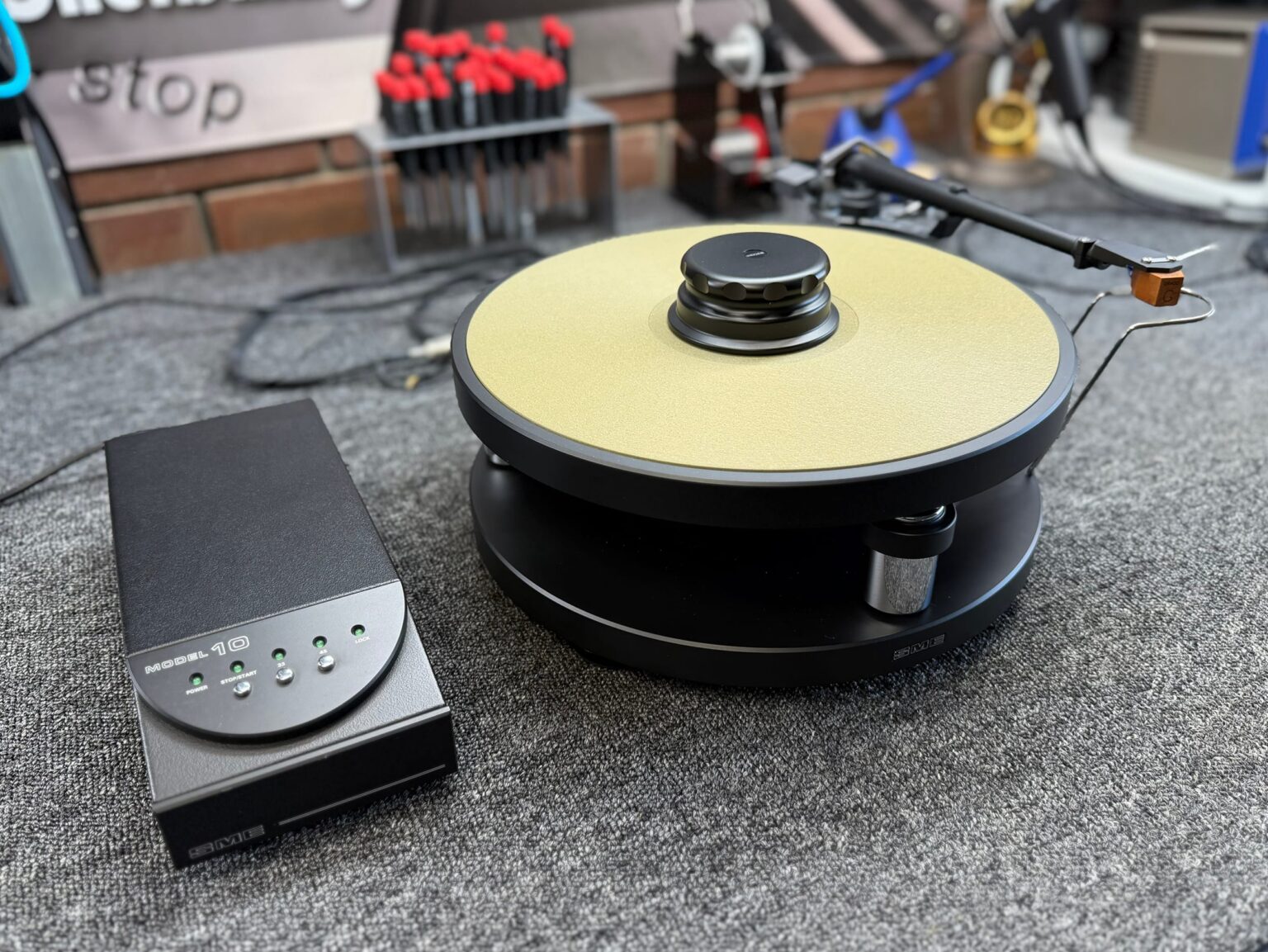
Join me as I complete a setup and major service on this beautiful SME Model 10 belt-drive turntable!
Updated with comments from the owner!
My apologies for being ‘out of service’ for a little while, folks. I’ve been unwell at a particularly busy time of the year, and given how time- and energy-intensive articles are to create and how much time I lost, I needed a break while I caught up with customer work. The last article I wrote was about the lovely Plinius Model 10 amplifiers, so what better way to ease back in than with an article about another Model 10 – the stunning SME Model 10 turntable!
If you know, you know, that SME is one of the luminaries in vinyl and turntabling, the English company has been basically hand-making some of the most amazing tonearms and turntables since 1959. I still have my ultra-low mass SME Series 3, re-wired with silver, and I’ll probably never sell that one. Likewise, the SME IV and V are legendary, and they are also known for creating some of the most beautifully designed and engineered turntables, like the SME Model 30, and the ‘baby’ SME Model 10 we’re looking at today.
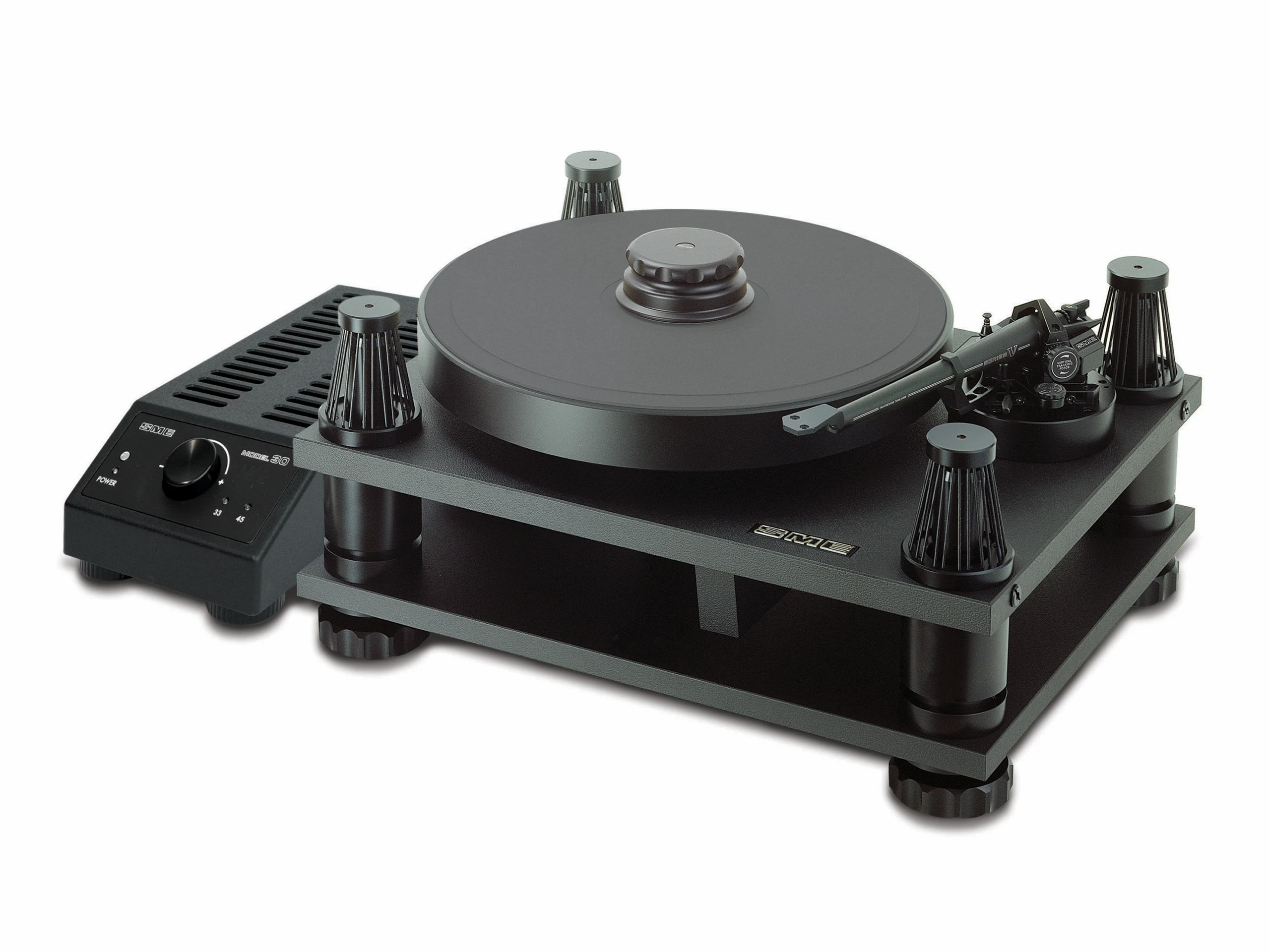
For a good introduction to the brand and how they do things, check out this recent video that includes some history and a factory tour:
Features
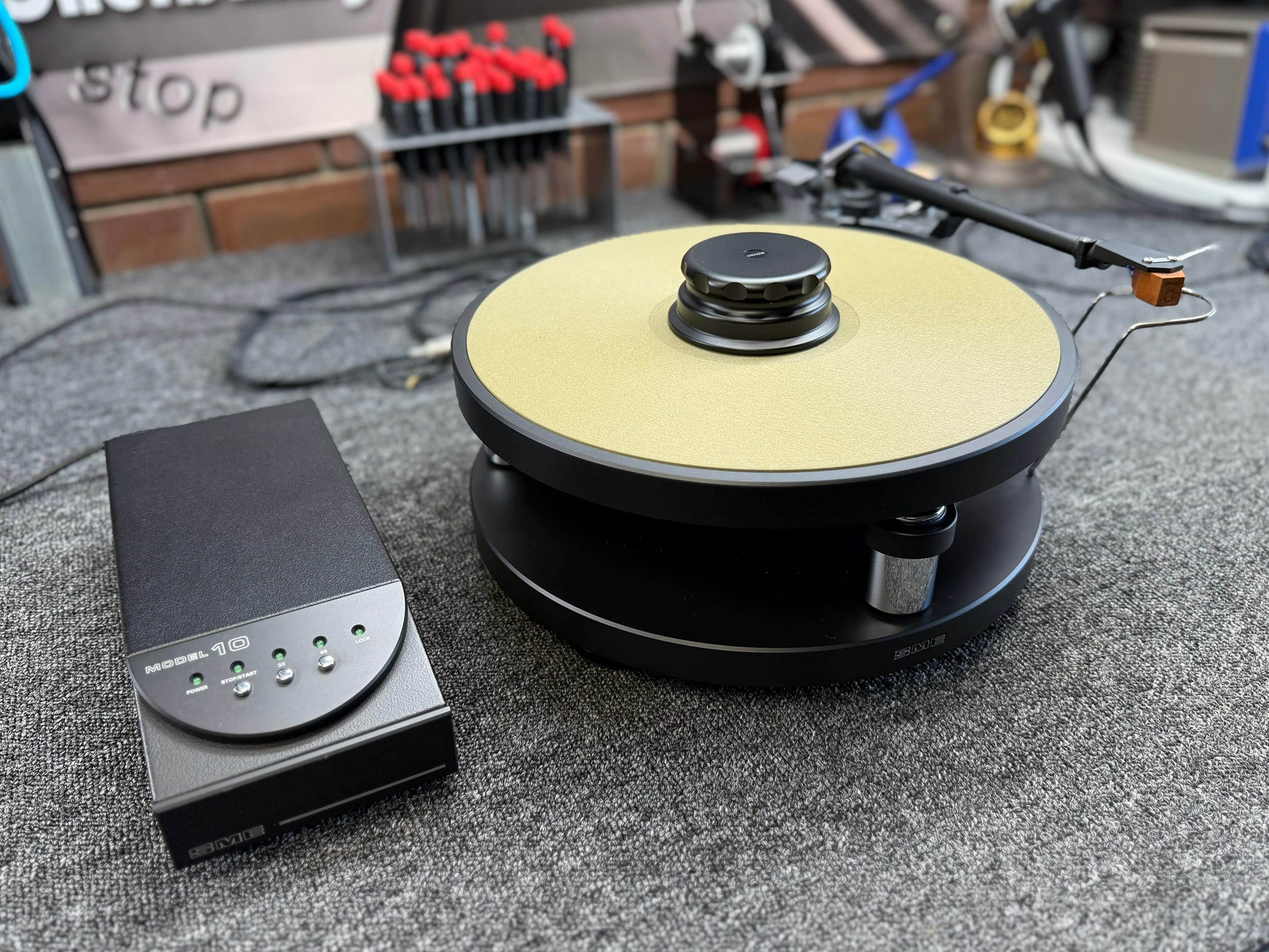
The SME Model 10 was the most basic belt-drive turntable SME offered, and whilst it’s no longer sold, replaced by the Model 12, there are plenty out there if you’re looking for one. With a smaller, lighter form factor and a more basic design without the elaborate suspension of the Model 30, the Model 10 is perfect for those looking to dip their toes into the SME world or precision-machined aluminium parts and micron-tolerances.
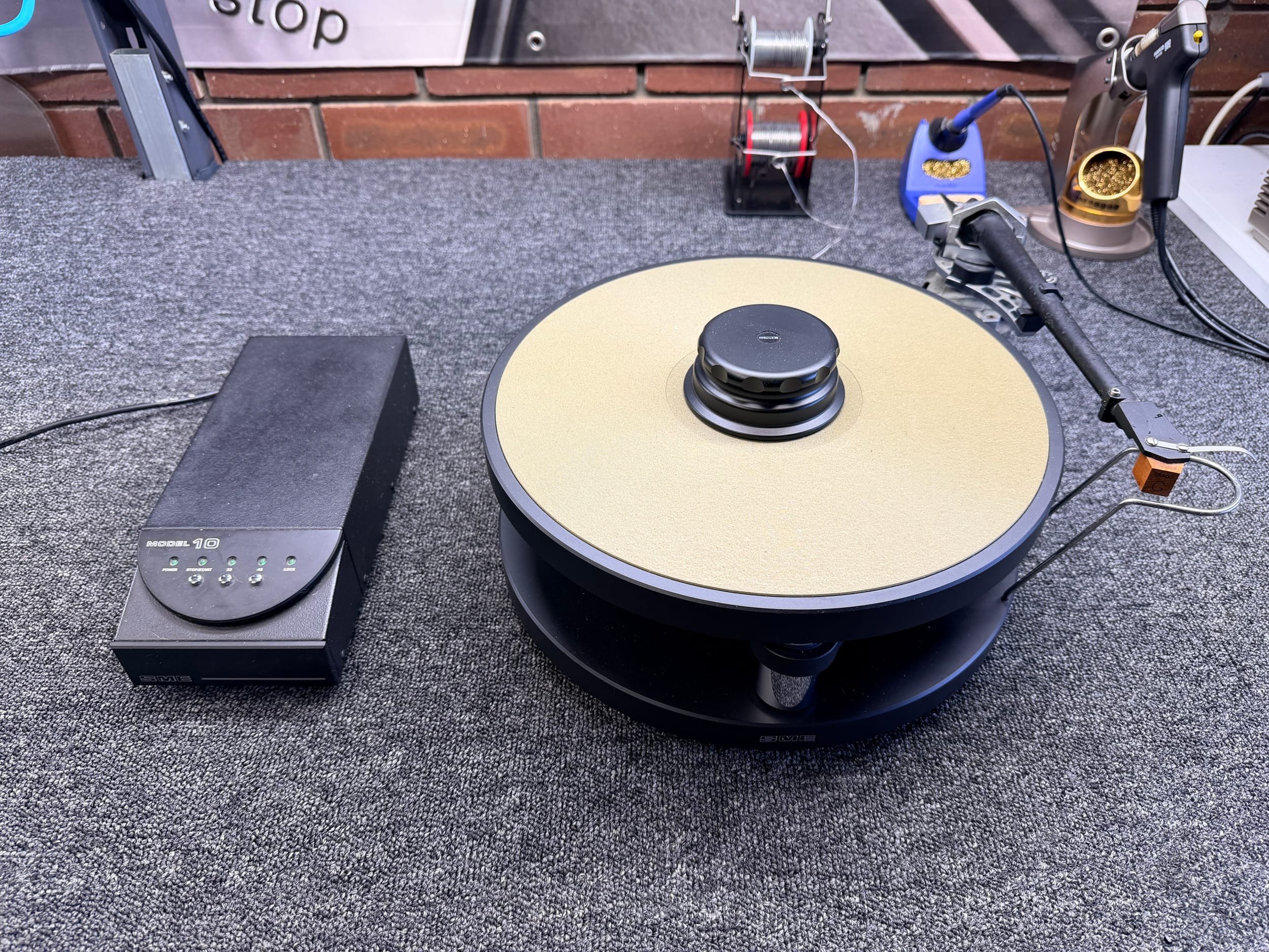
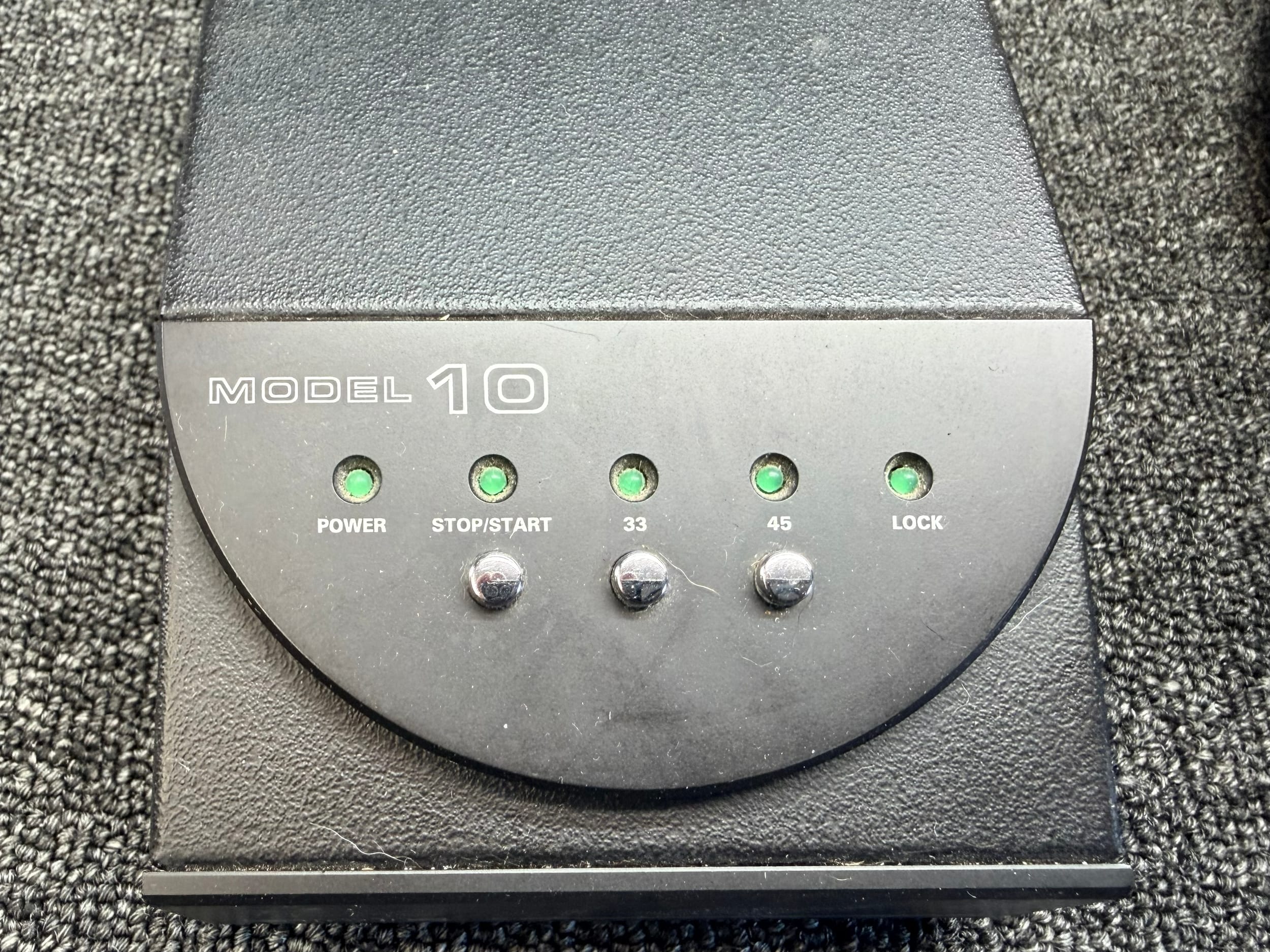
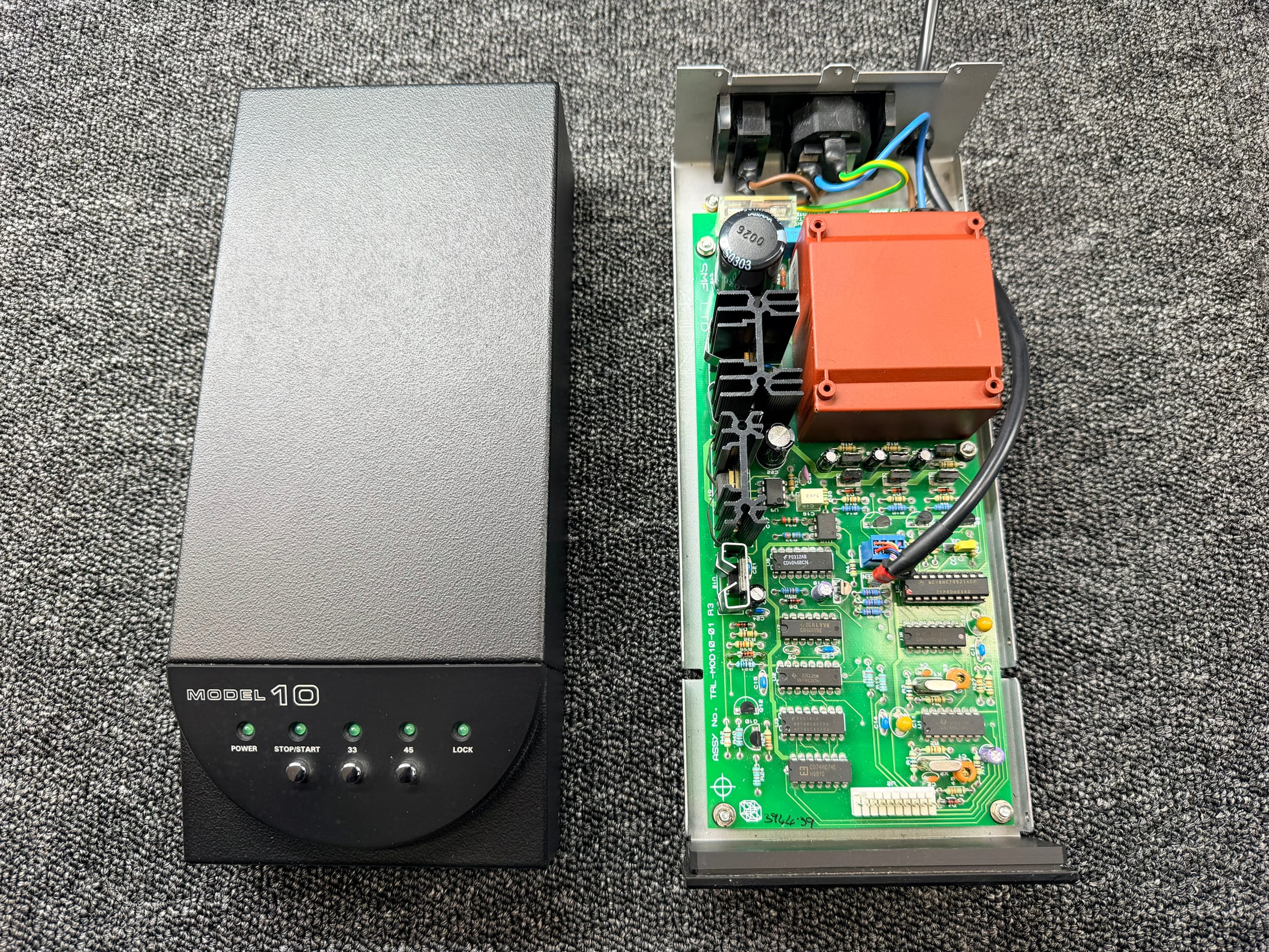
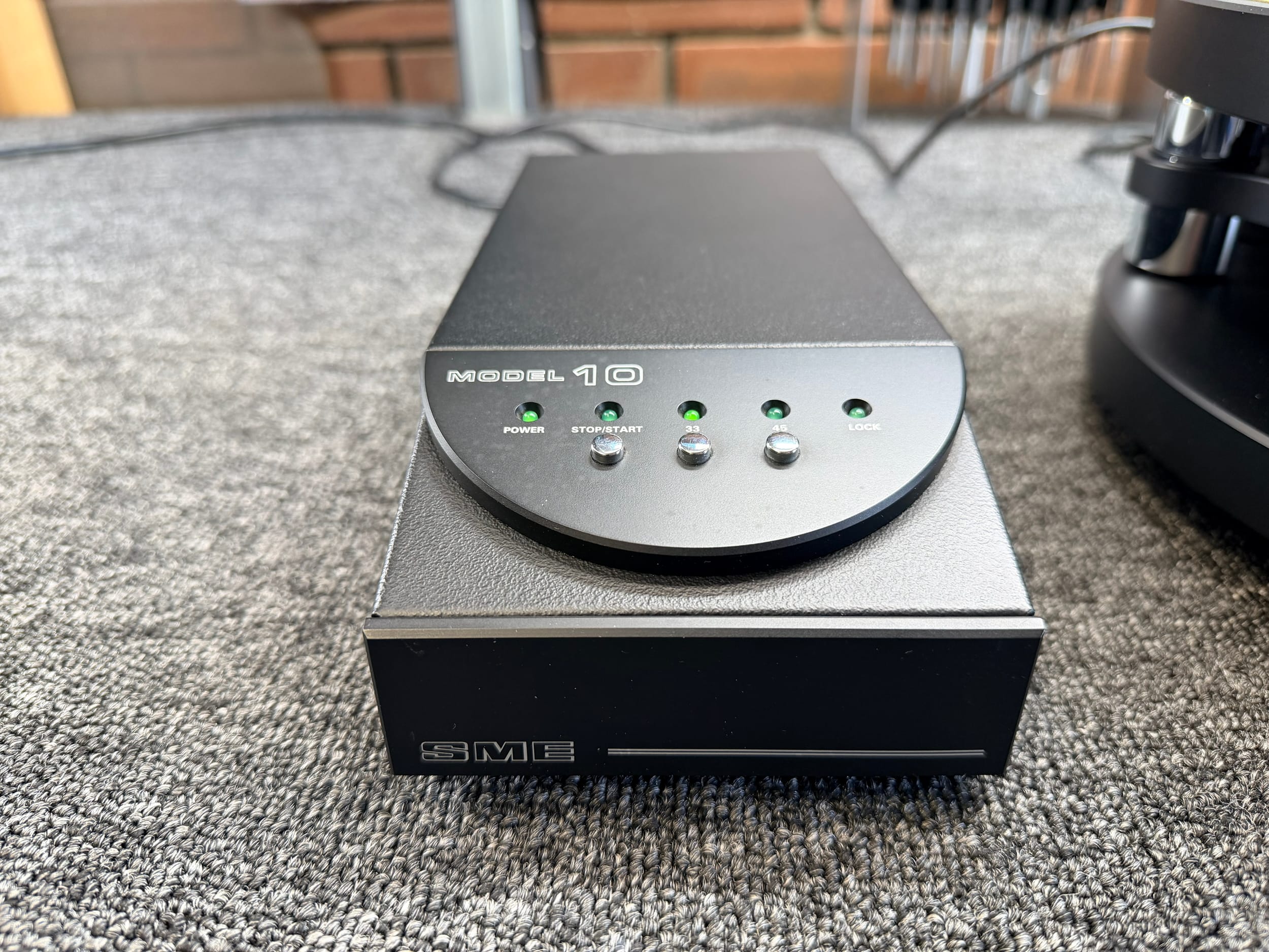
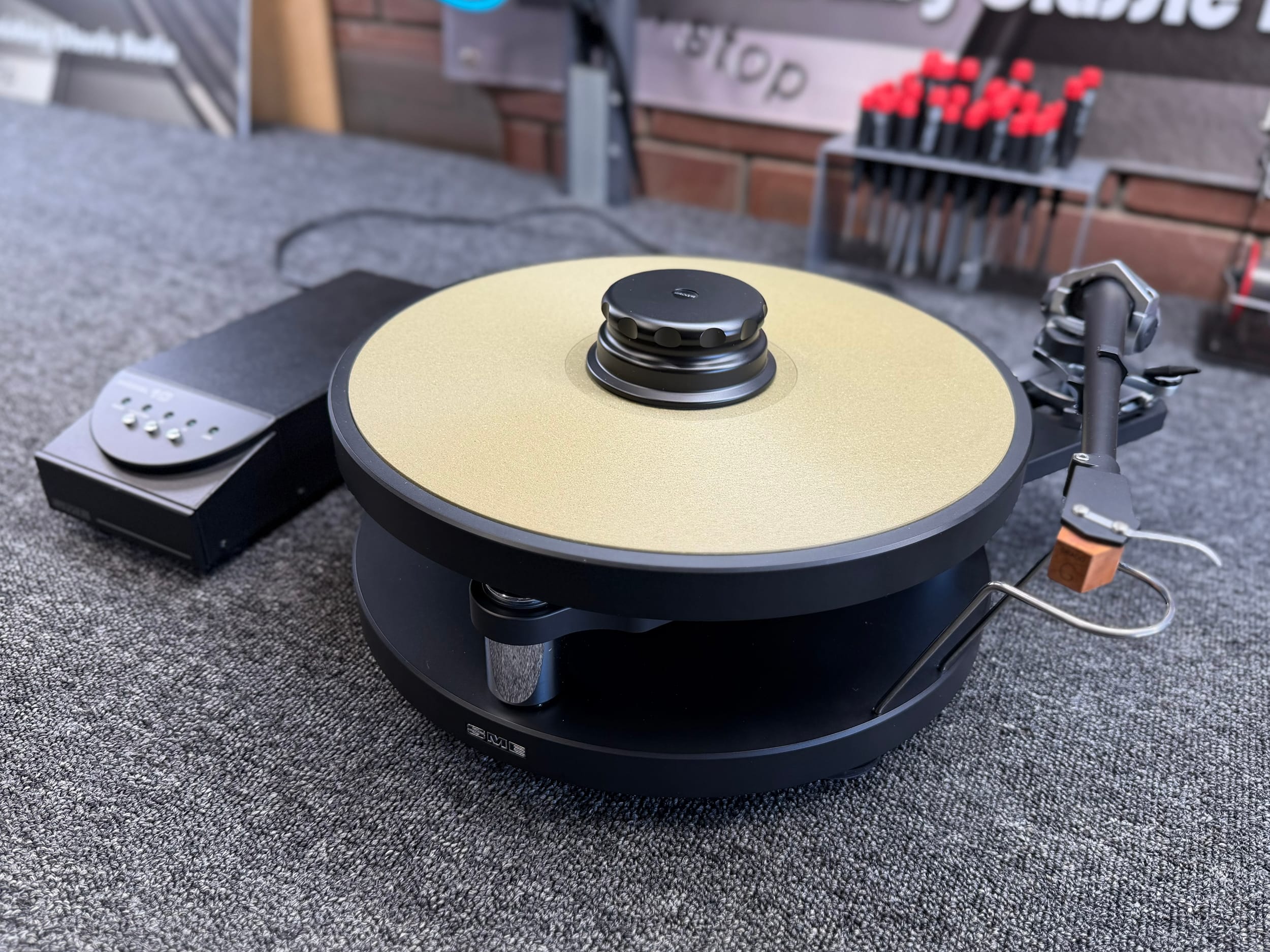
The separate outboard controller is a high-quality affair offering pushbutton operation and the almost instantaneous start-up and slowdown that’s typically only found in direct drive machines. There are three push buttons for start/stop and speed selection, and indicators for running speed and quartz lock, and that’s it.
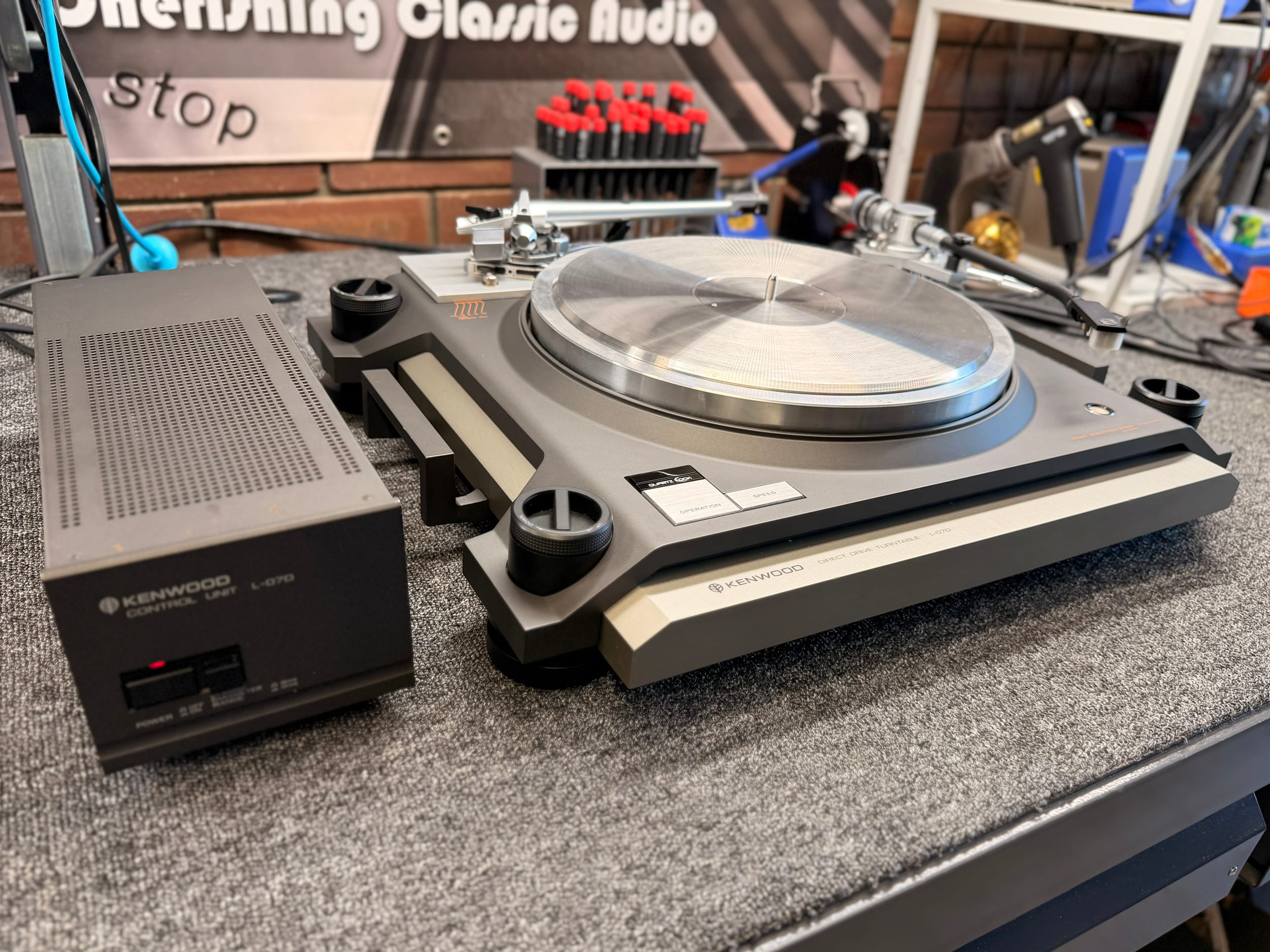
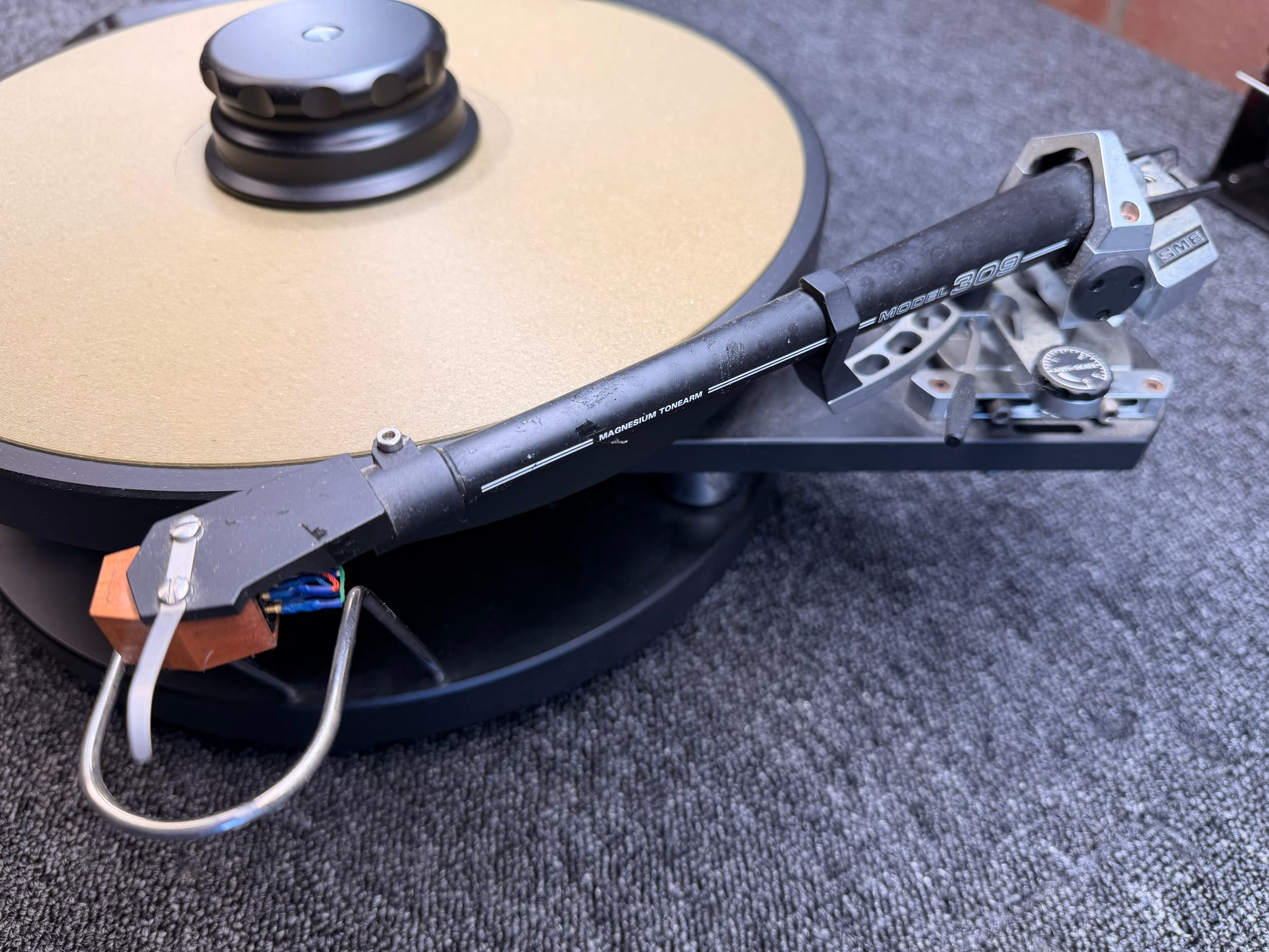
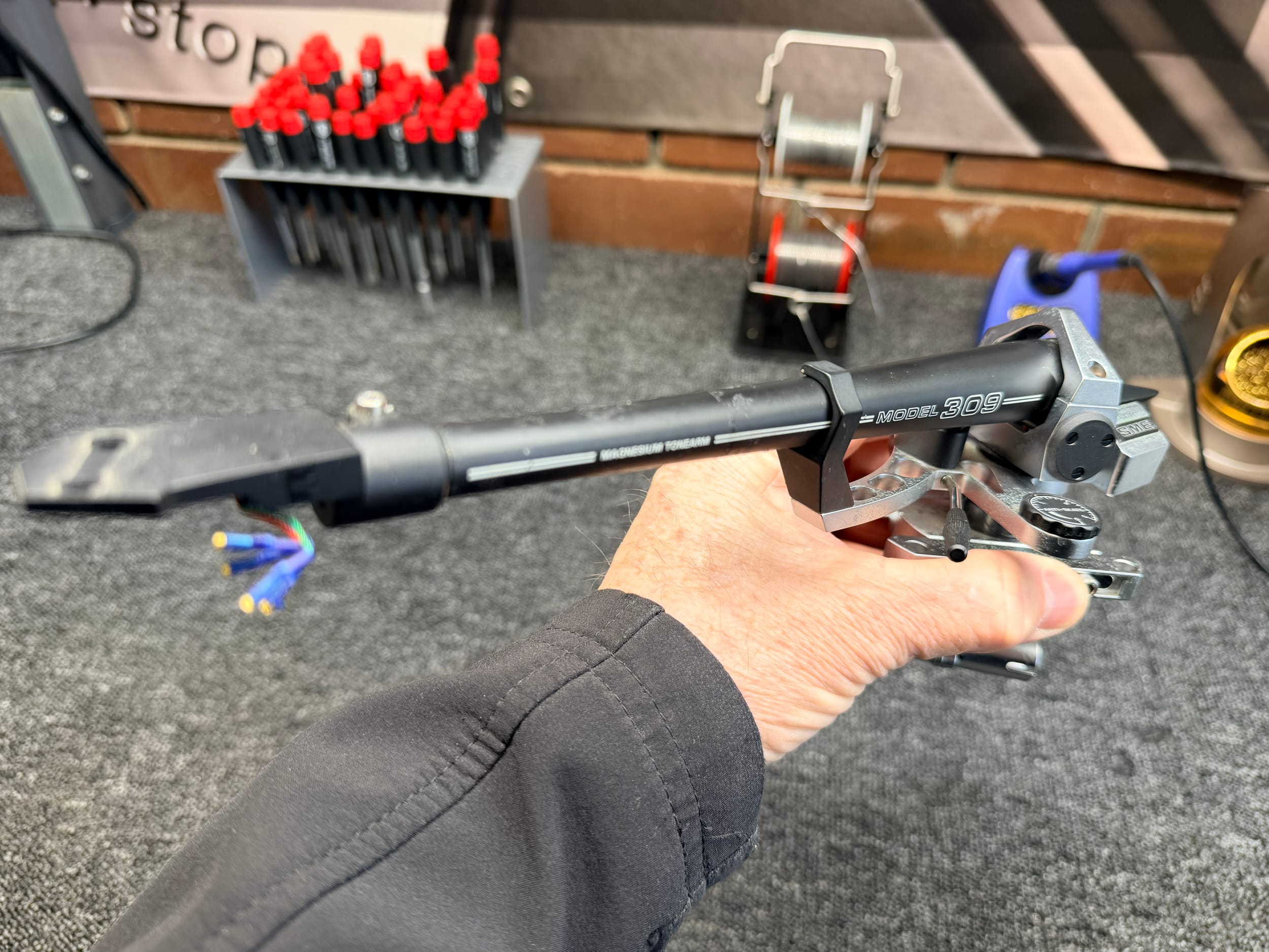
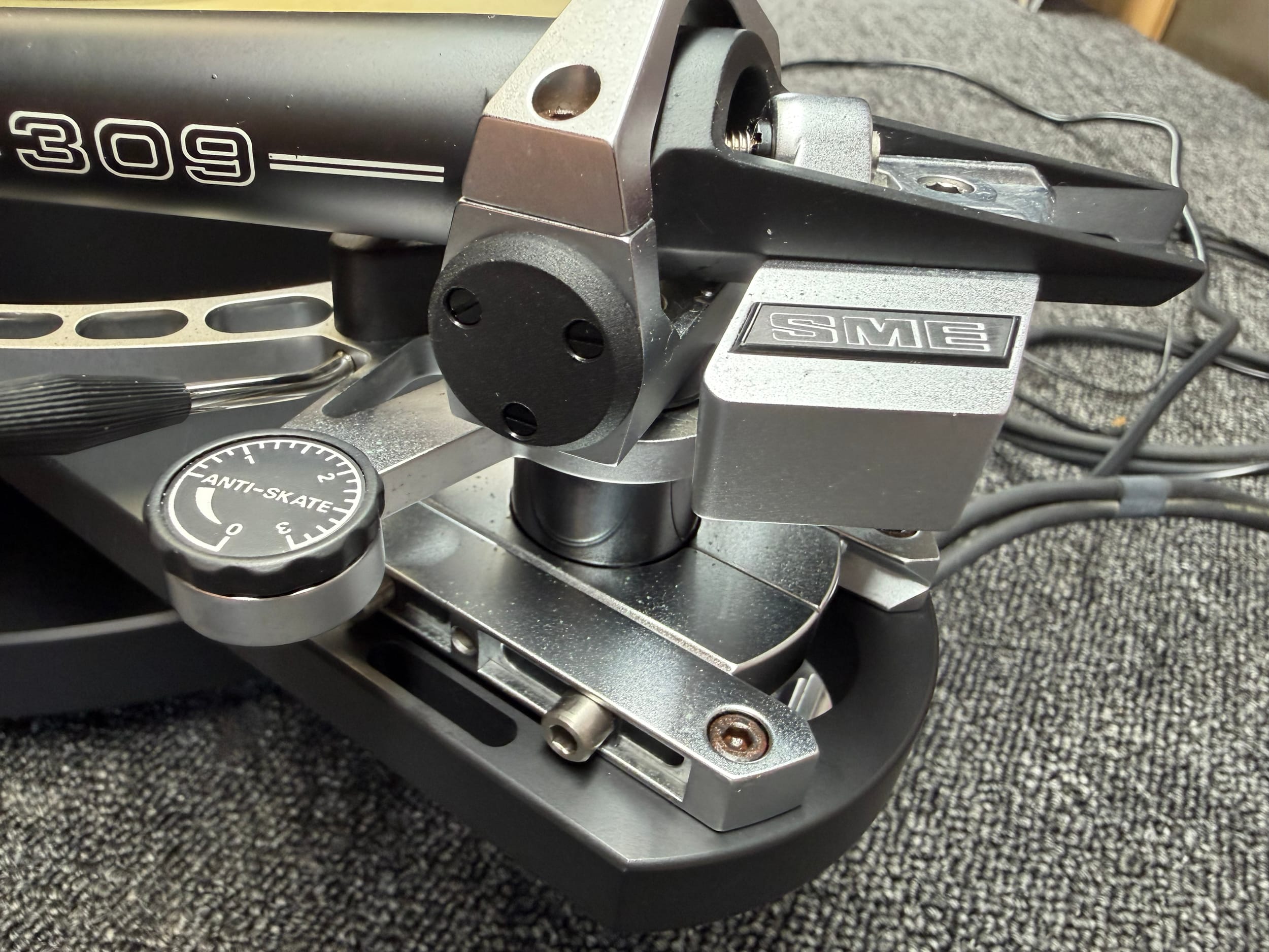
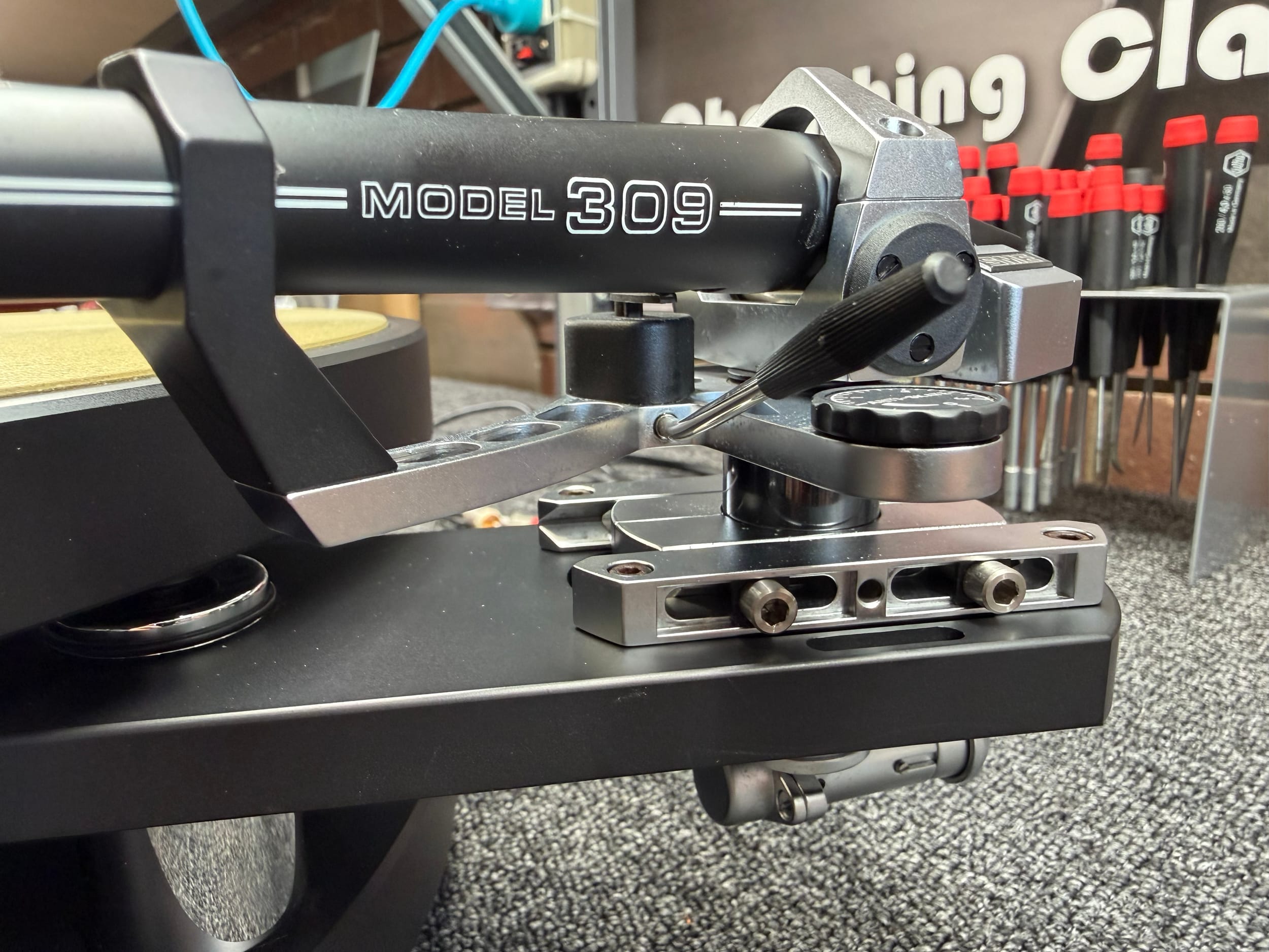
The tonearm on this unit is the venerable SME 309, a lower-cost and simplified version of the higher-spec SME IV, with lower-spec bearings, that you’ve seen elsewhere on my site, like on this Kenwood L-07D, for example:
The SME 309 is an excellent tonearm, though of surprisingly low mass and a little short compared with some of my favourites. The 9.5g effective mass means cartridge selection should be carefully made, and one needs good advice on such matters.
You can read more about the SME Model 10 in this typically excellent review from Stereophile.
SME Model 10 Specifications
Courtesy of Google AI
Speeds: 33.3, 45, and 78 rpm (with ±0.01% fine pitch adjustment)
Dimensions: 370 mm × 250 mm × 161 mm (with record clamp fitted)
Weight: 16 kg (38 lbs) net with power supply; 18.25 kg (55 lbs) shipping weight
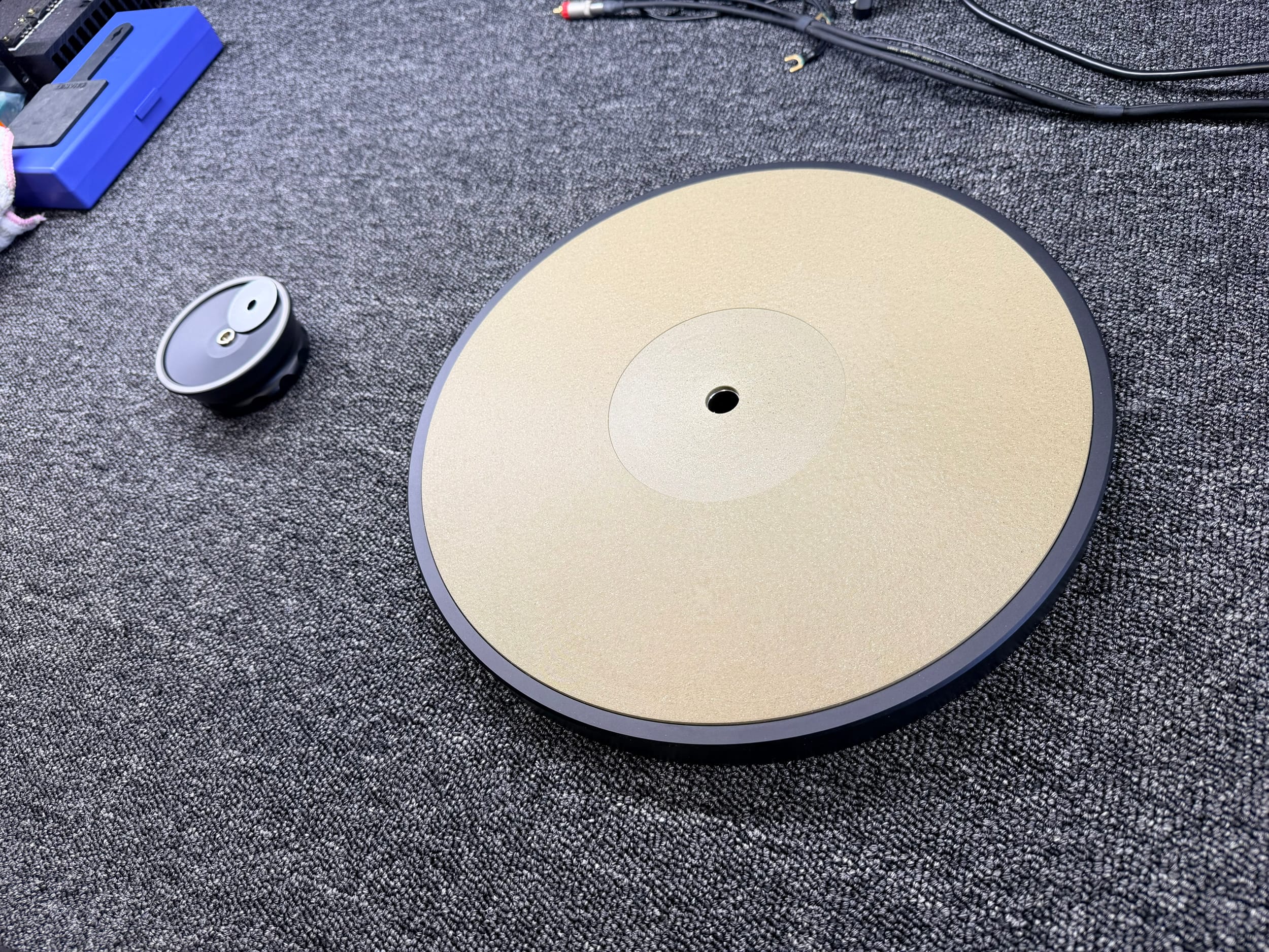
Platter: 304 mm diameter, extensionally damped with a diamond-turned top surface
Motor: 8-bit microprocessor-controlled drive unit with regenerative braking
Tonearm: Fixed-bearing design with a one-piece pressure die-cast magnesium armtube
Effective Mass: 9.5 g
Cartridge Balance Range: 6 – 17 g
Vertical Tracking Force: 0 – 3 g
Chassis/Suspension: Sub-chassis carried on three polymer-loaded towers
Problems
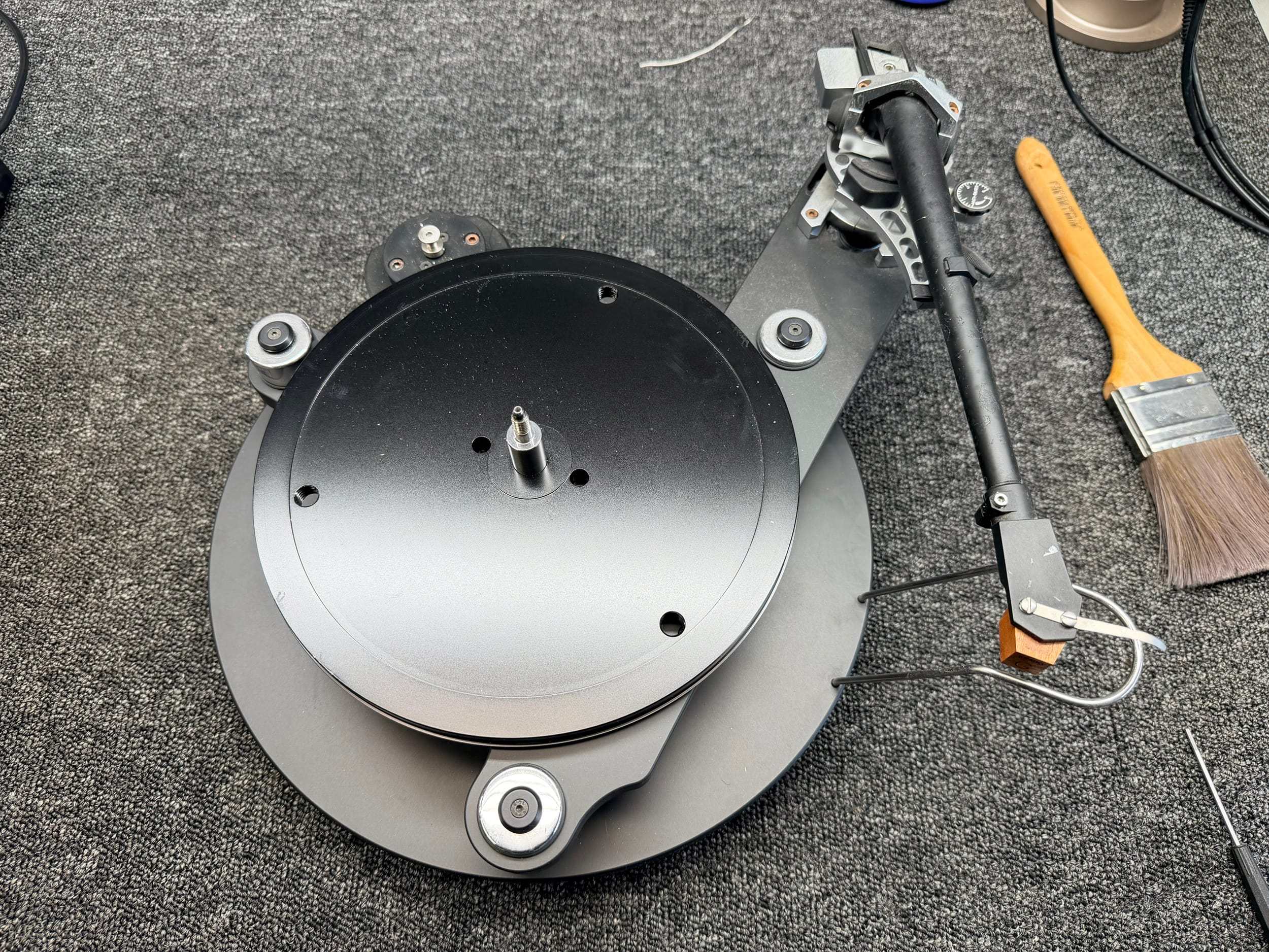
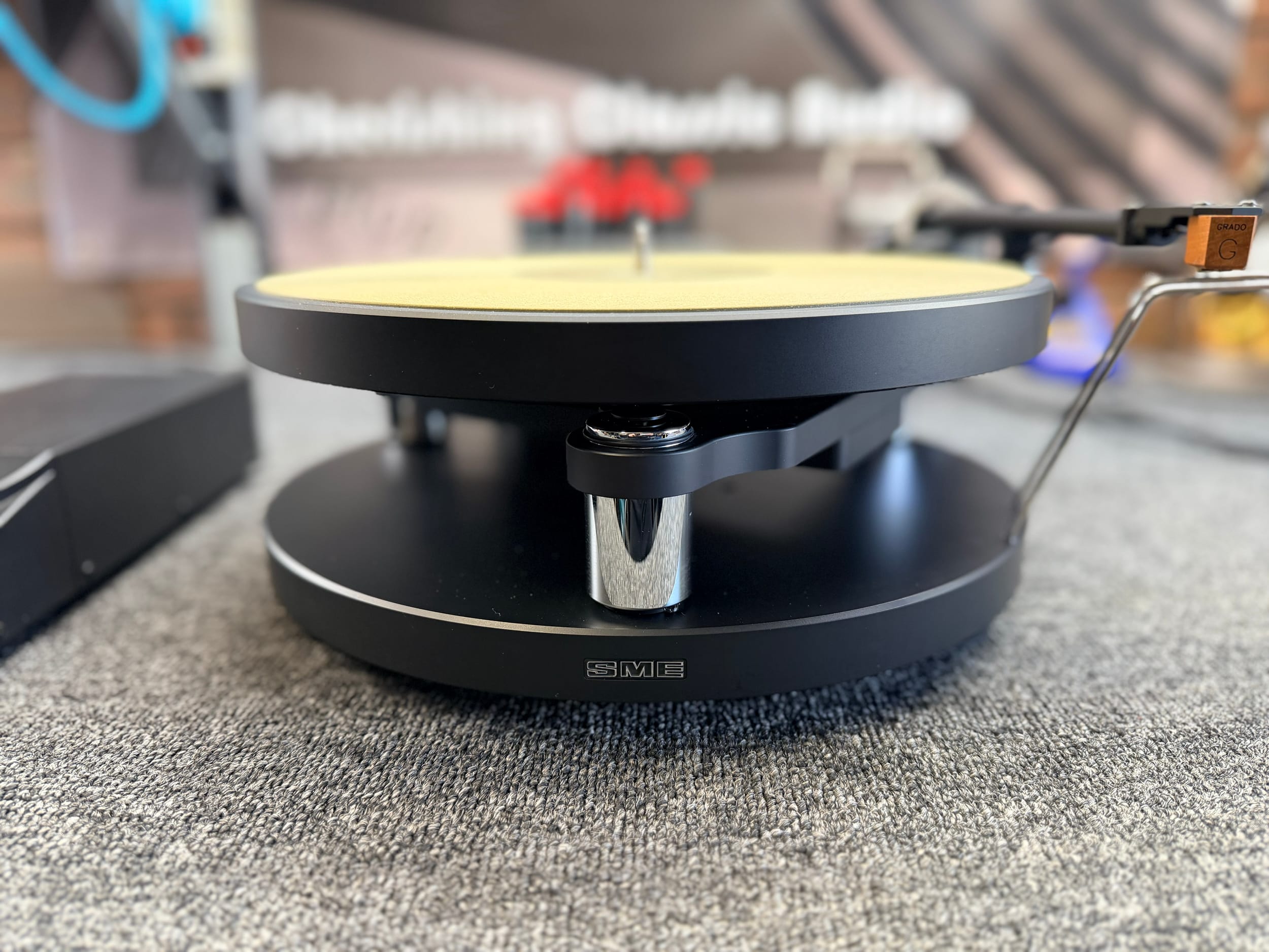
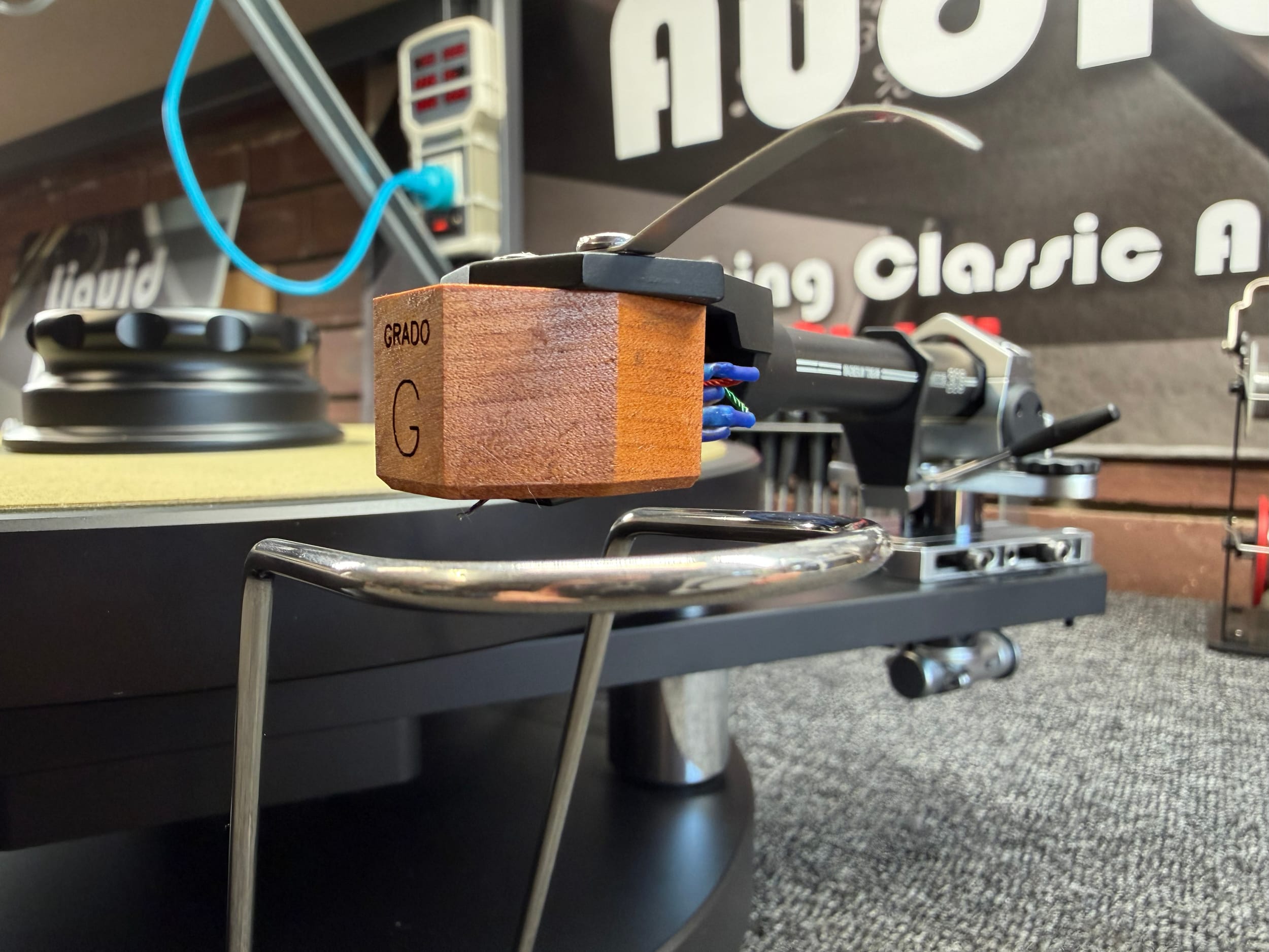
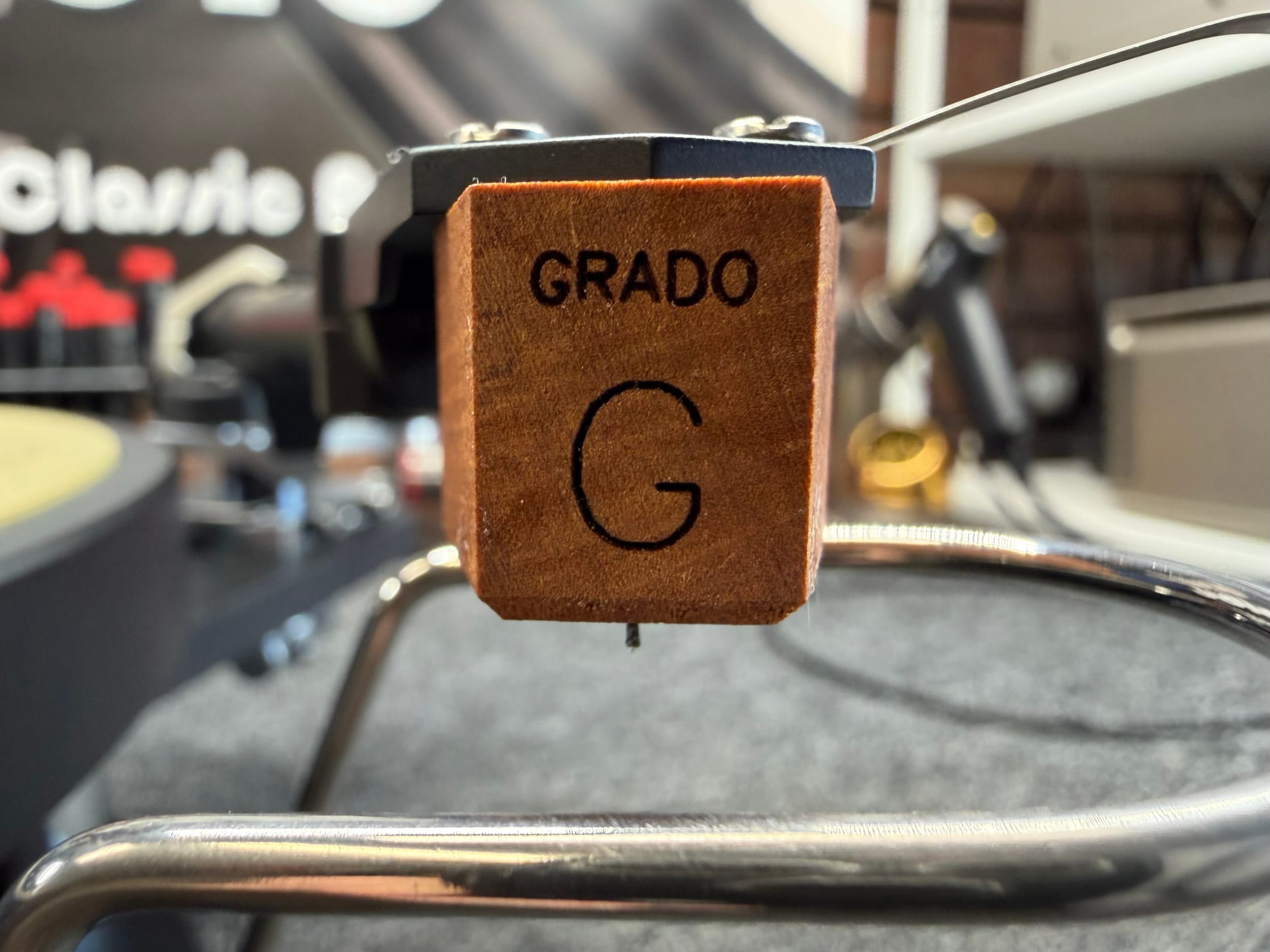
So this SME Model 10 arrived in non-running and somewhat neglected condition, and in need of deep cleaning, service and a proper, careful setup. She is fitted with a Grado RS ‘reference line’ moving iron cartridge, a decent choice and certainly well-suited to the lower mass of the SME 309 tonearm.
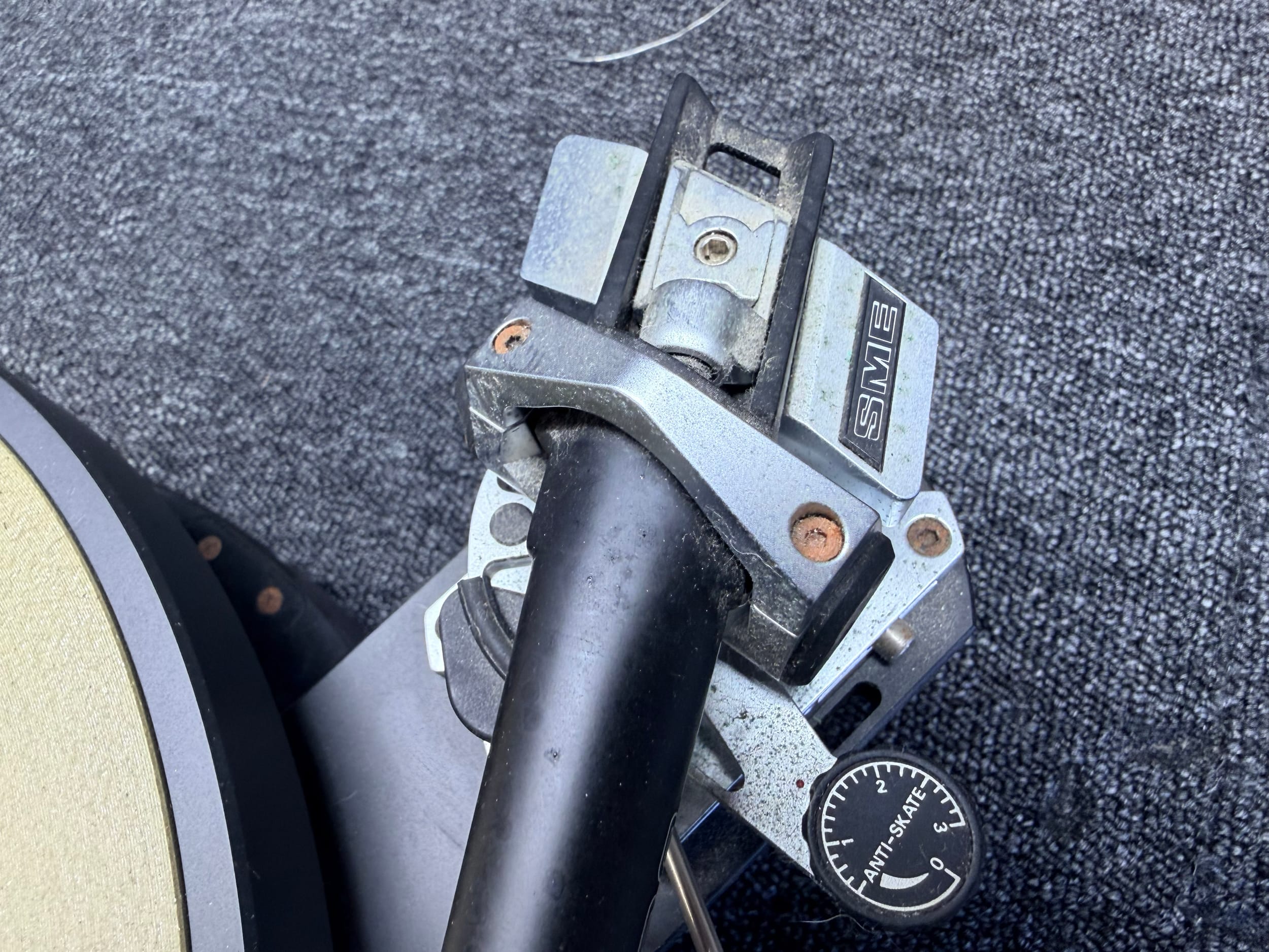
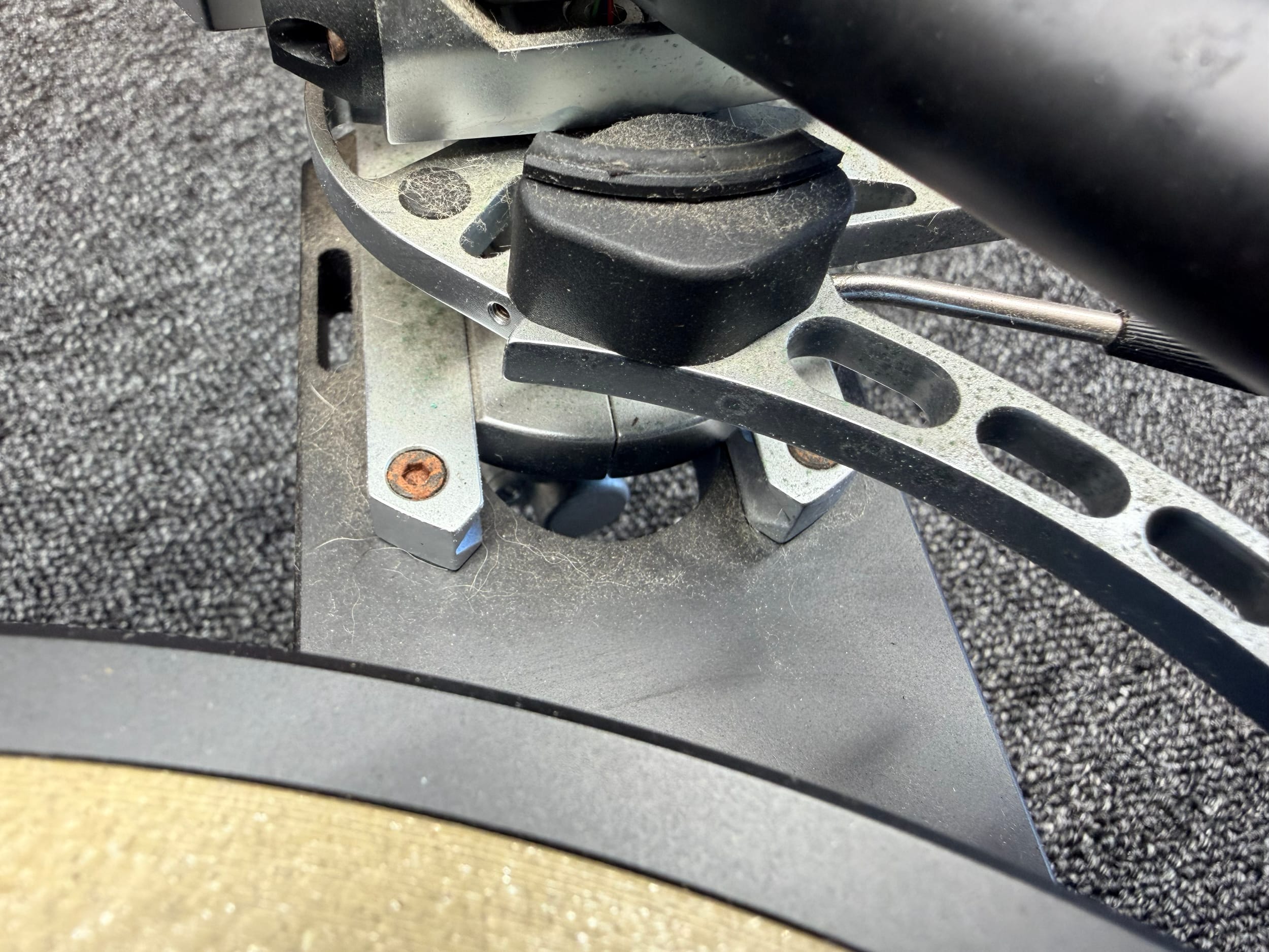
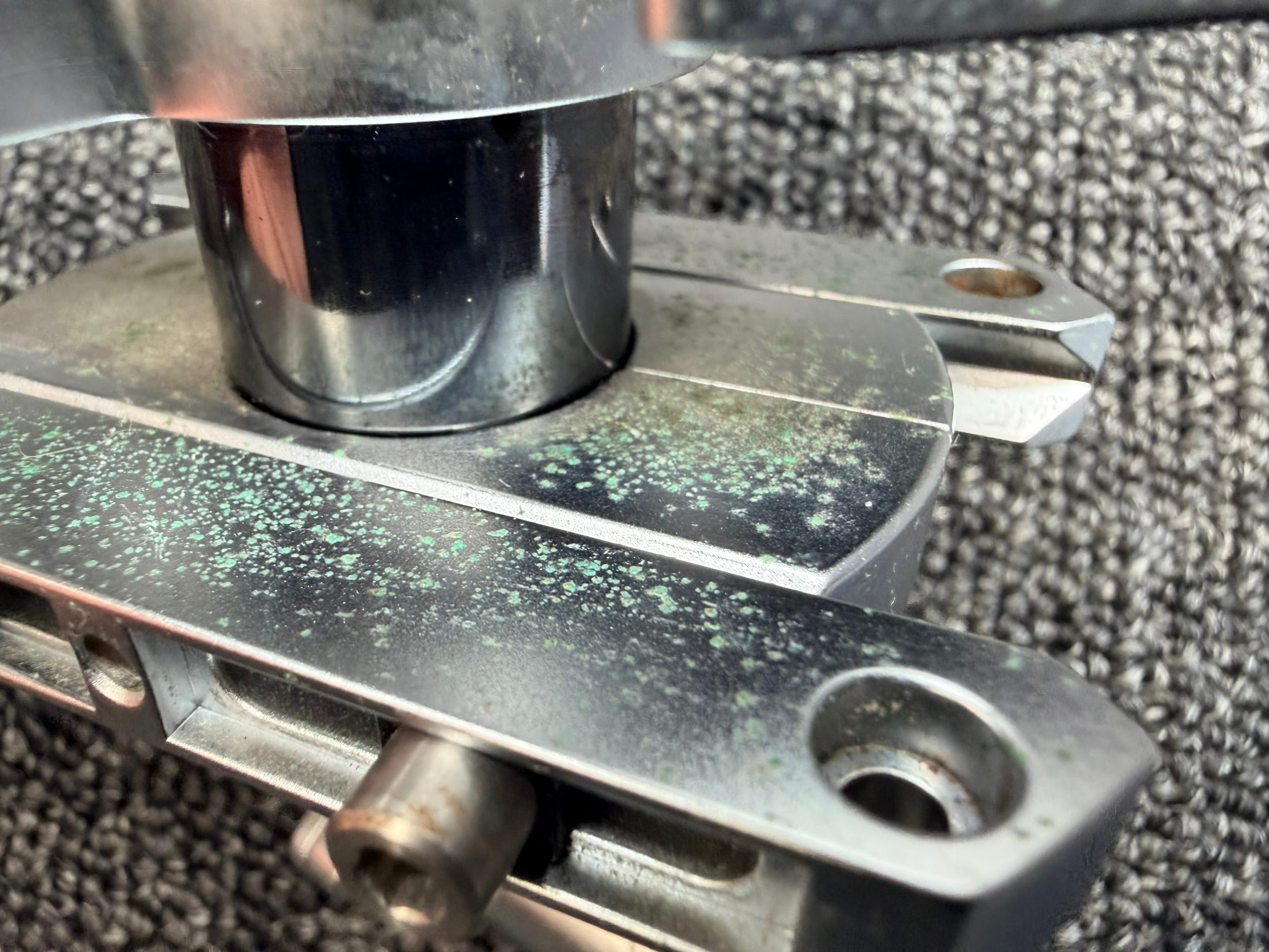
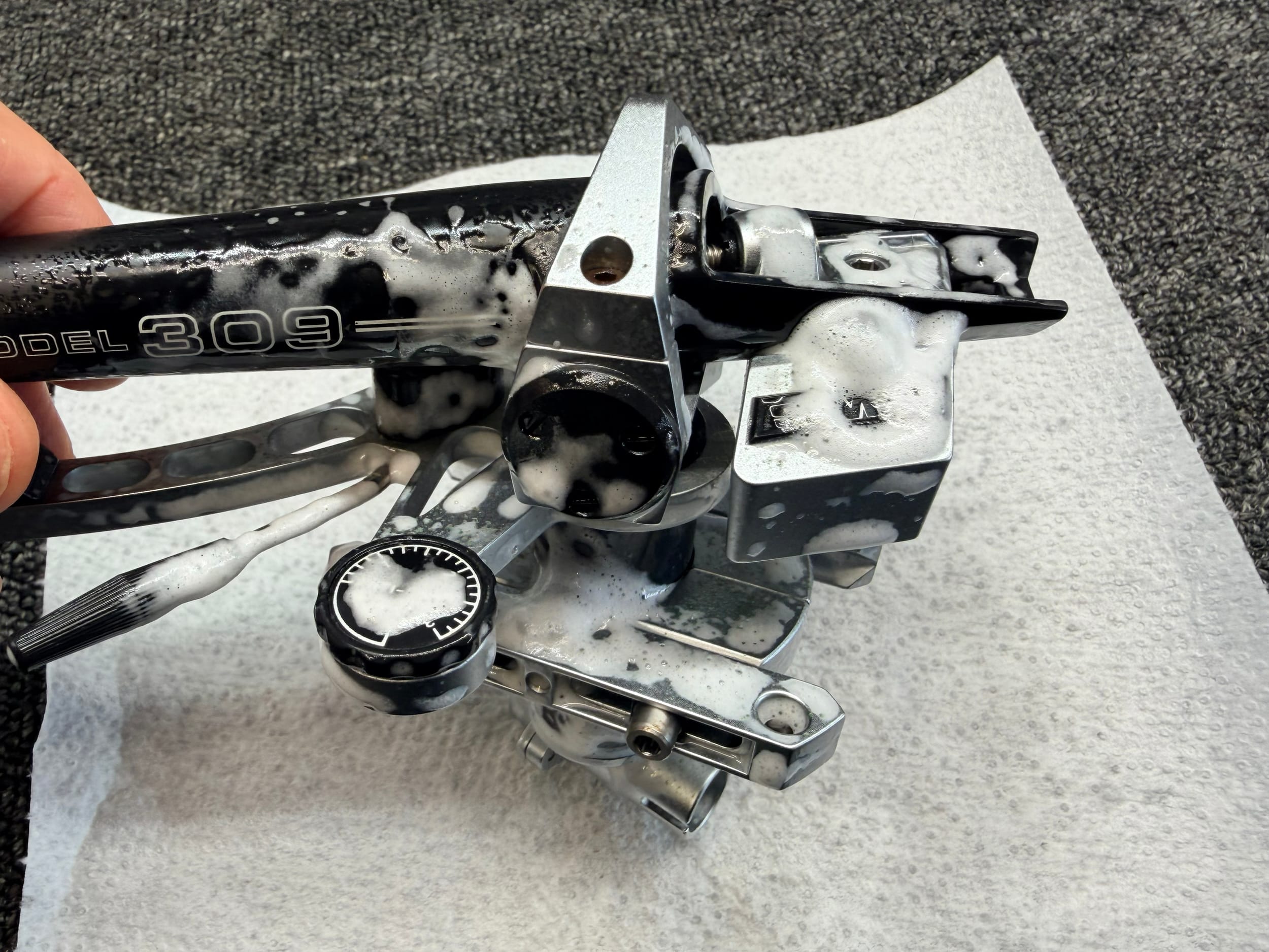
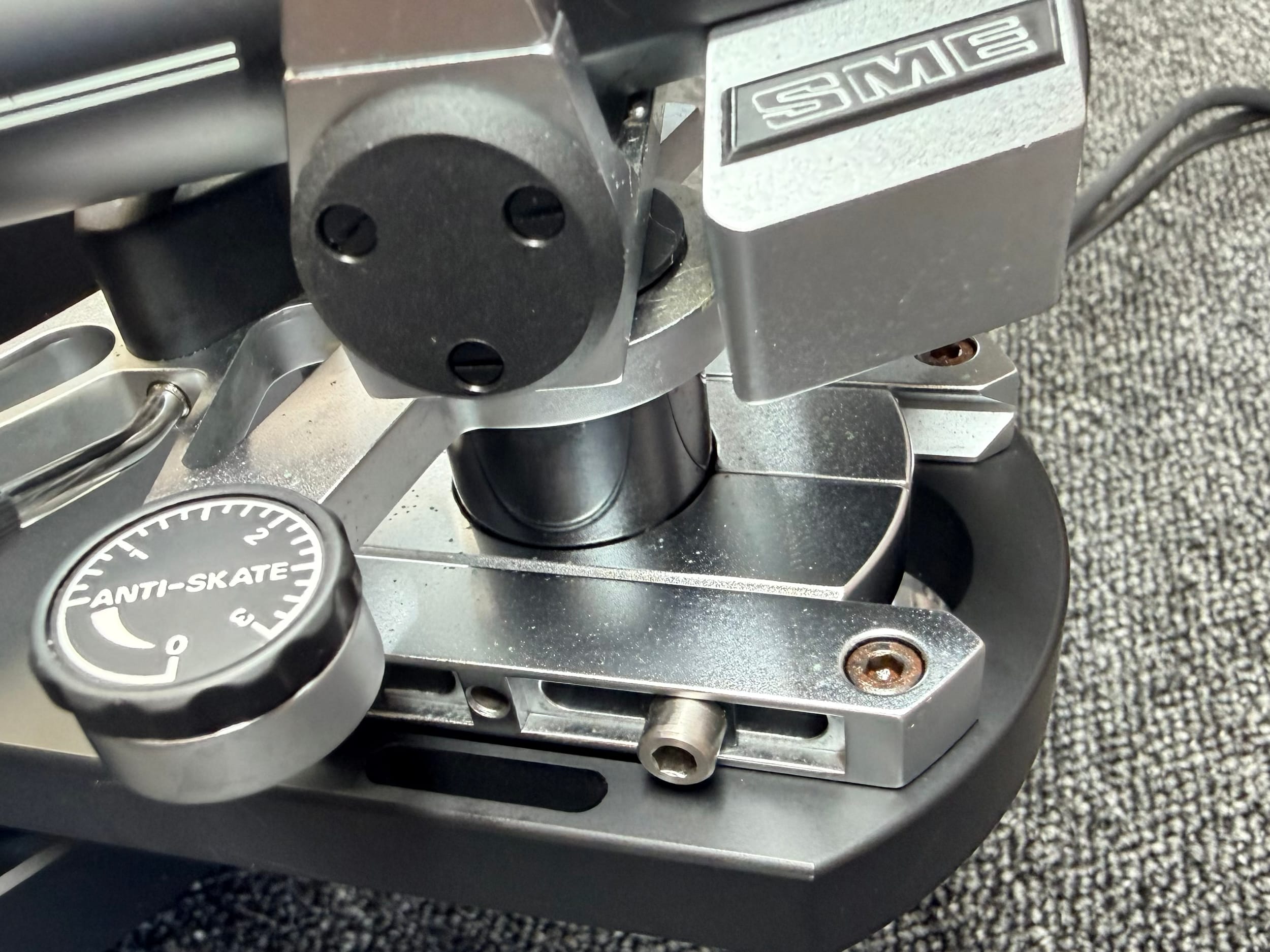
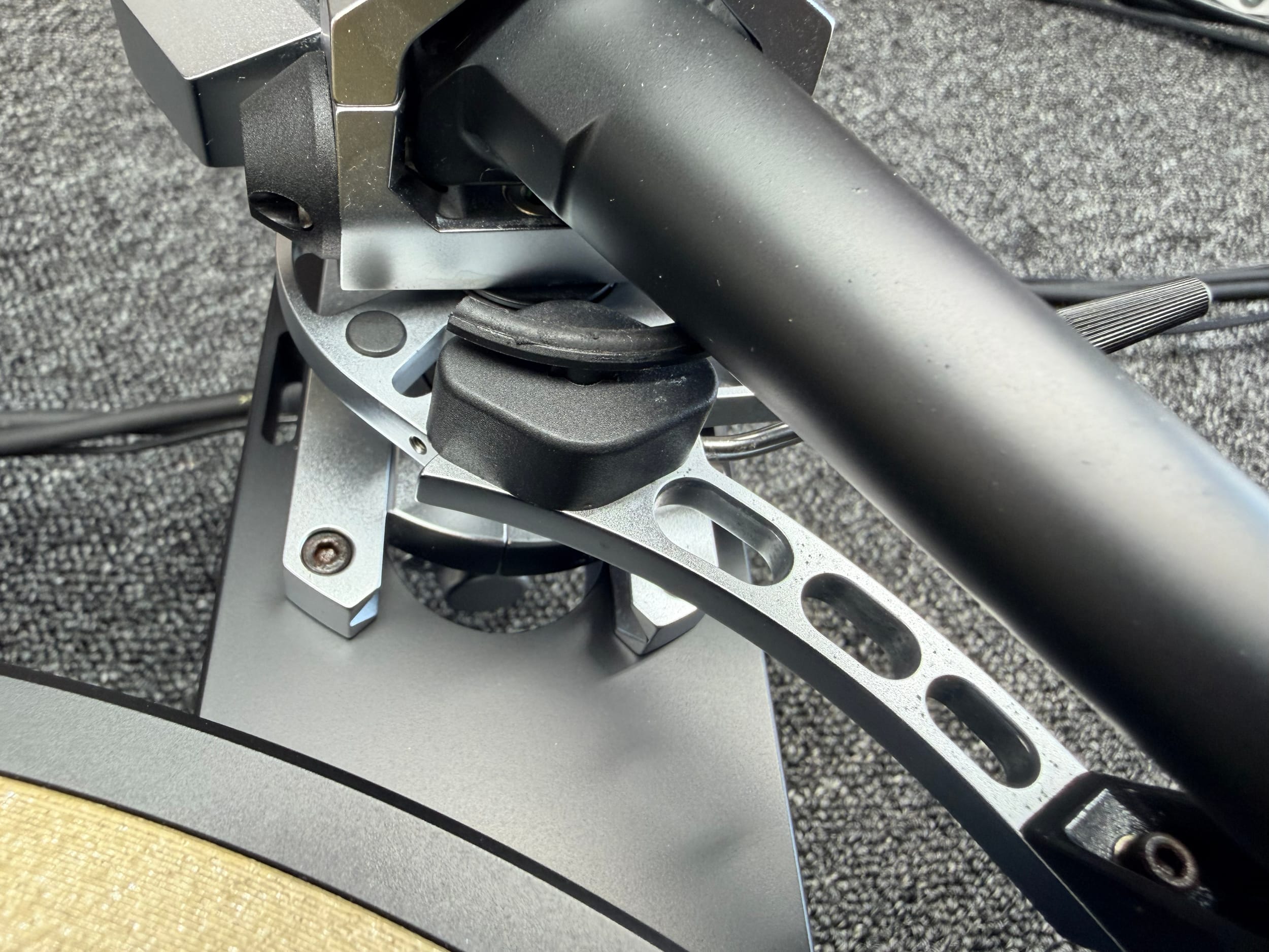
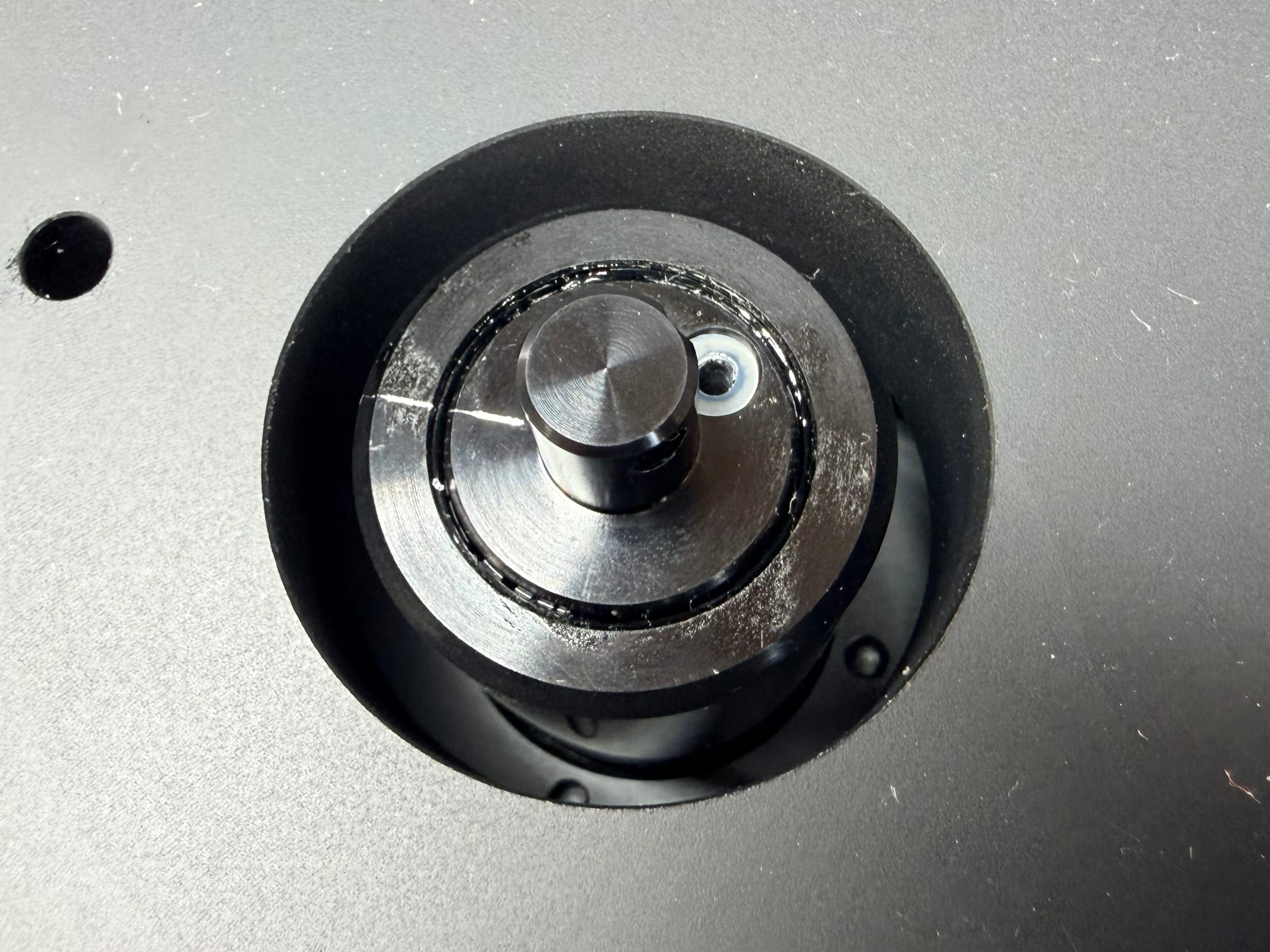
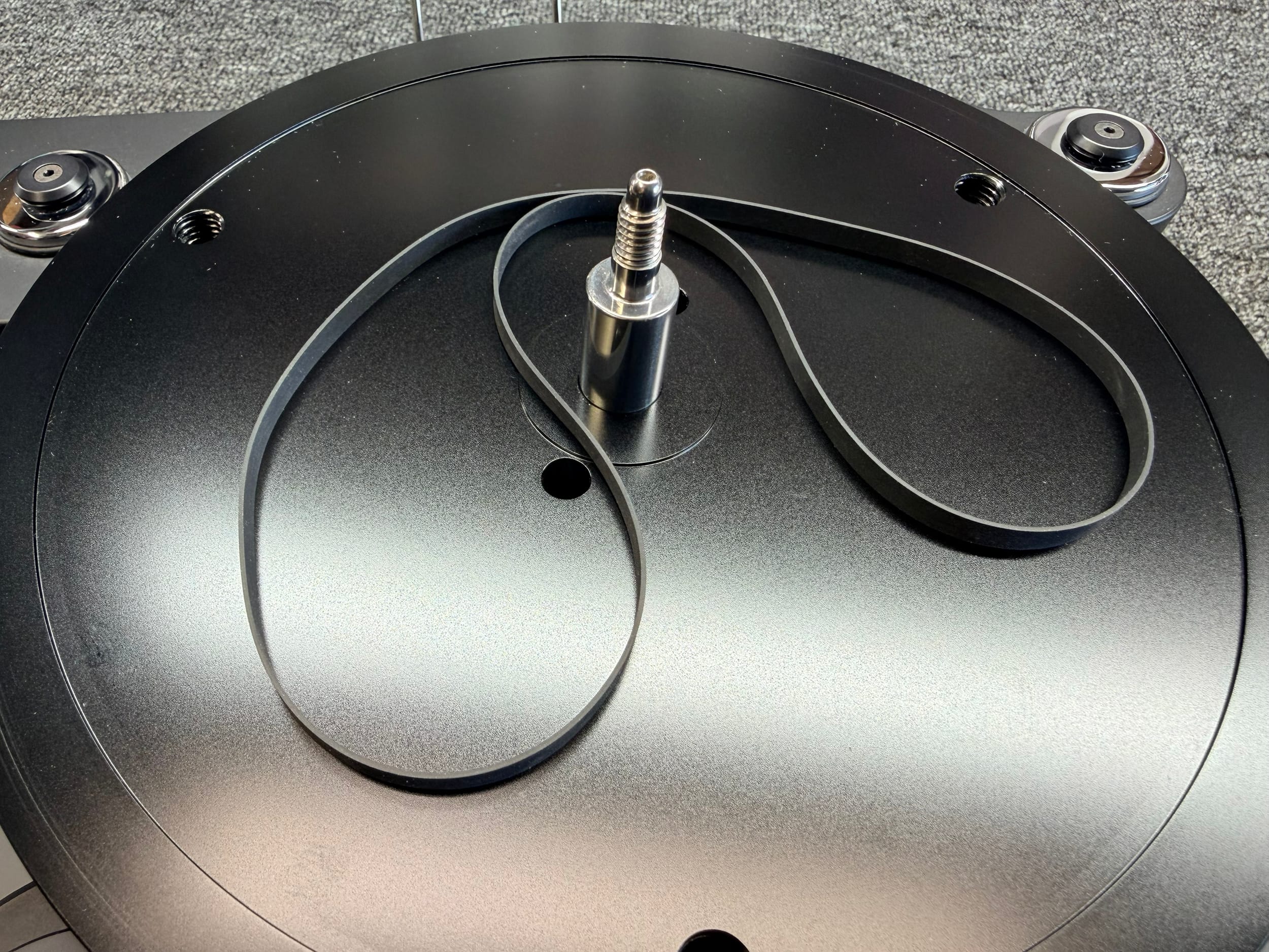
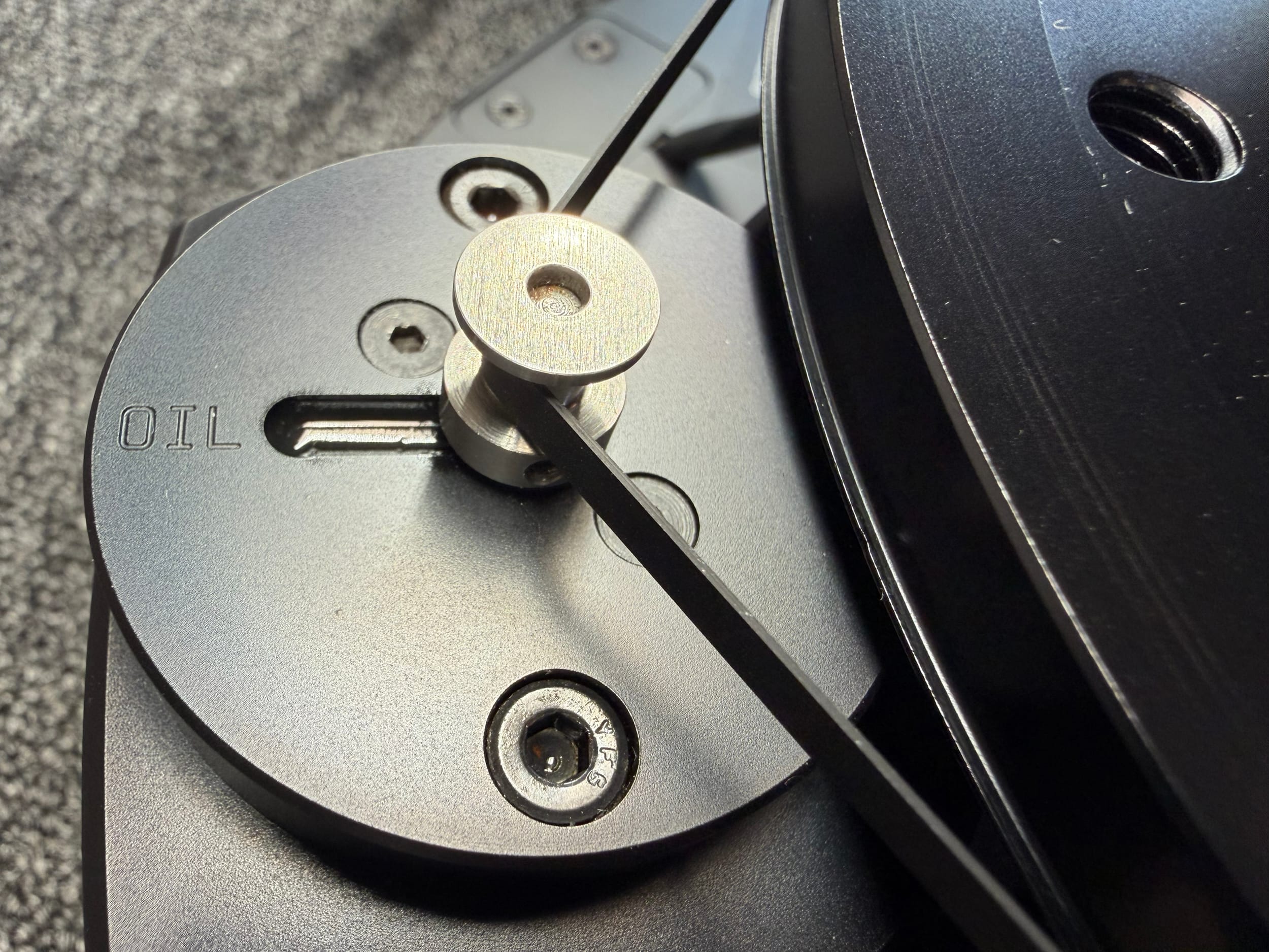
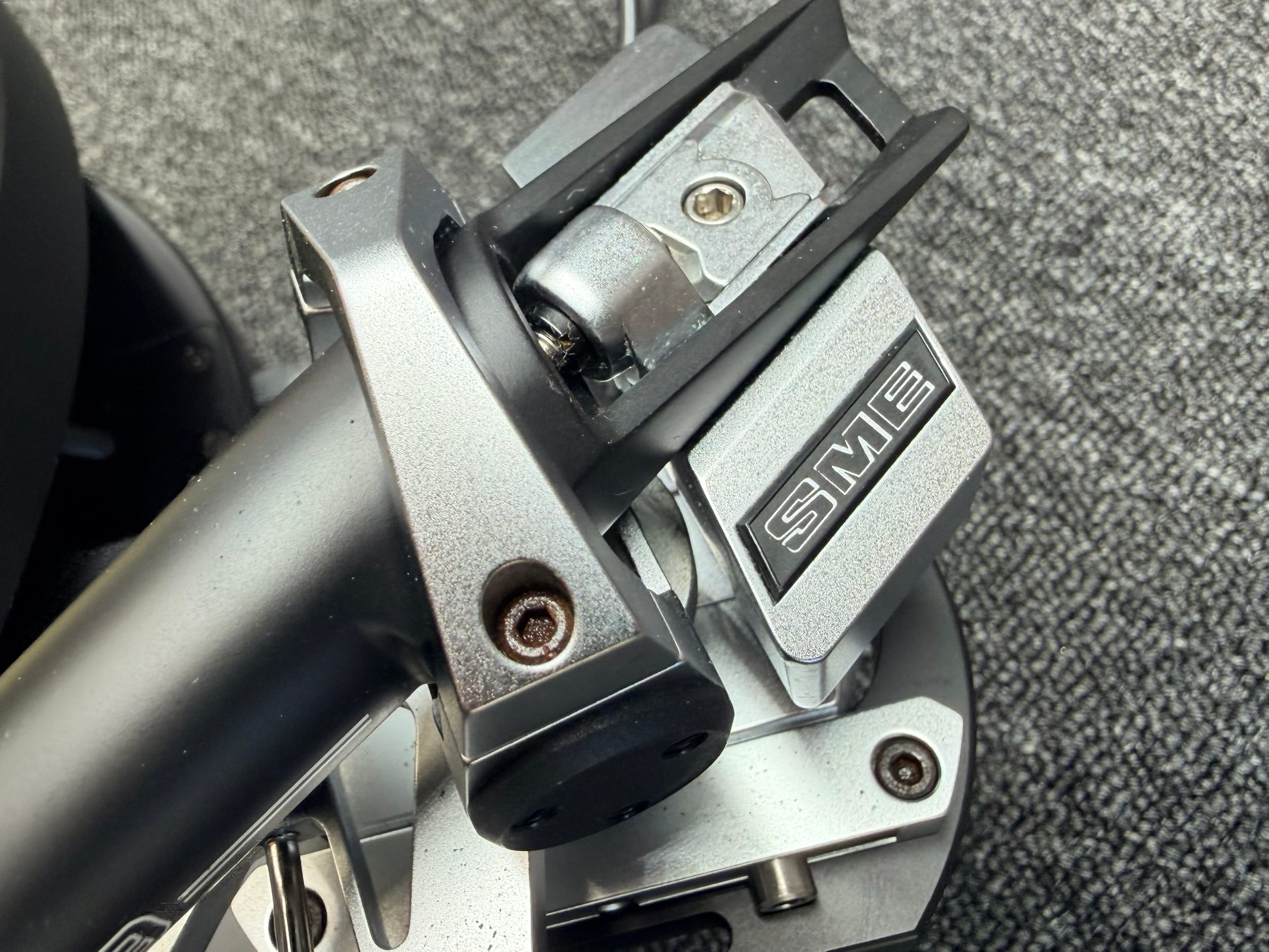
The issues with this unit included widespread dust, dirt and corrosion/oxidation, the need for lubrication and for tonearm removal to facilitate careful cleaning and detailing, plus a drive belt to replace the one missing here. The belt proved to be a somewhat tedious piece of the puzzle, but one that I was able to solve successfully.
Lets dig in.
Service
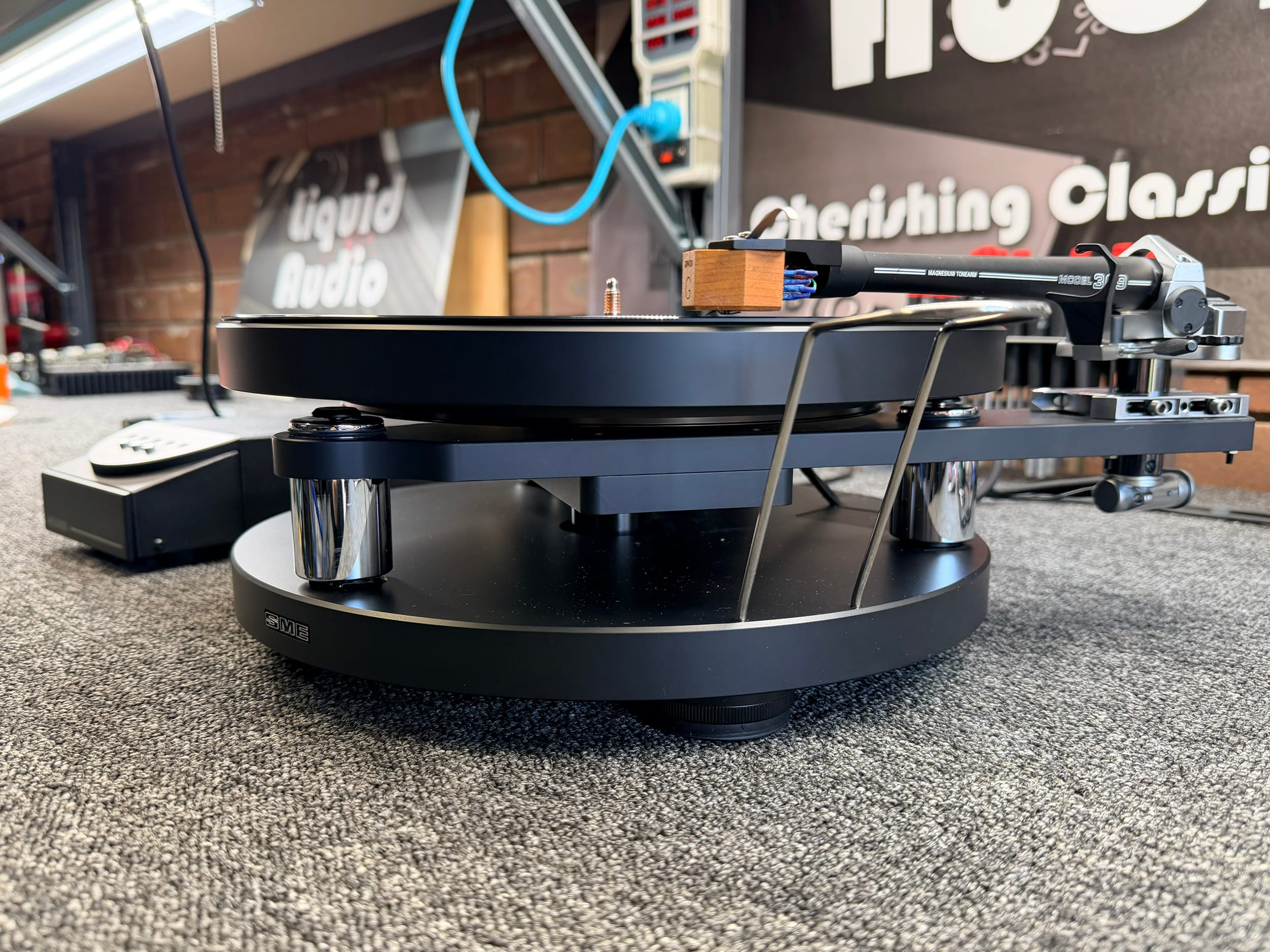
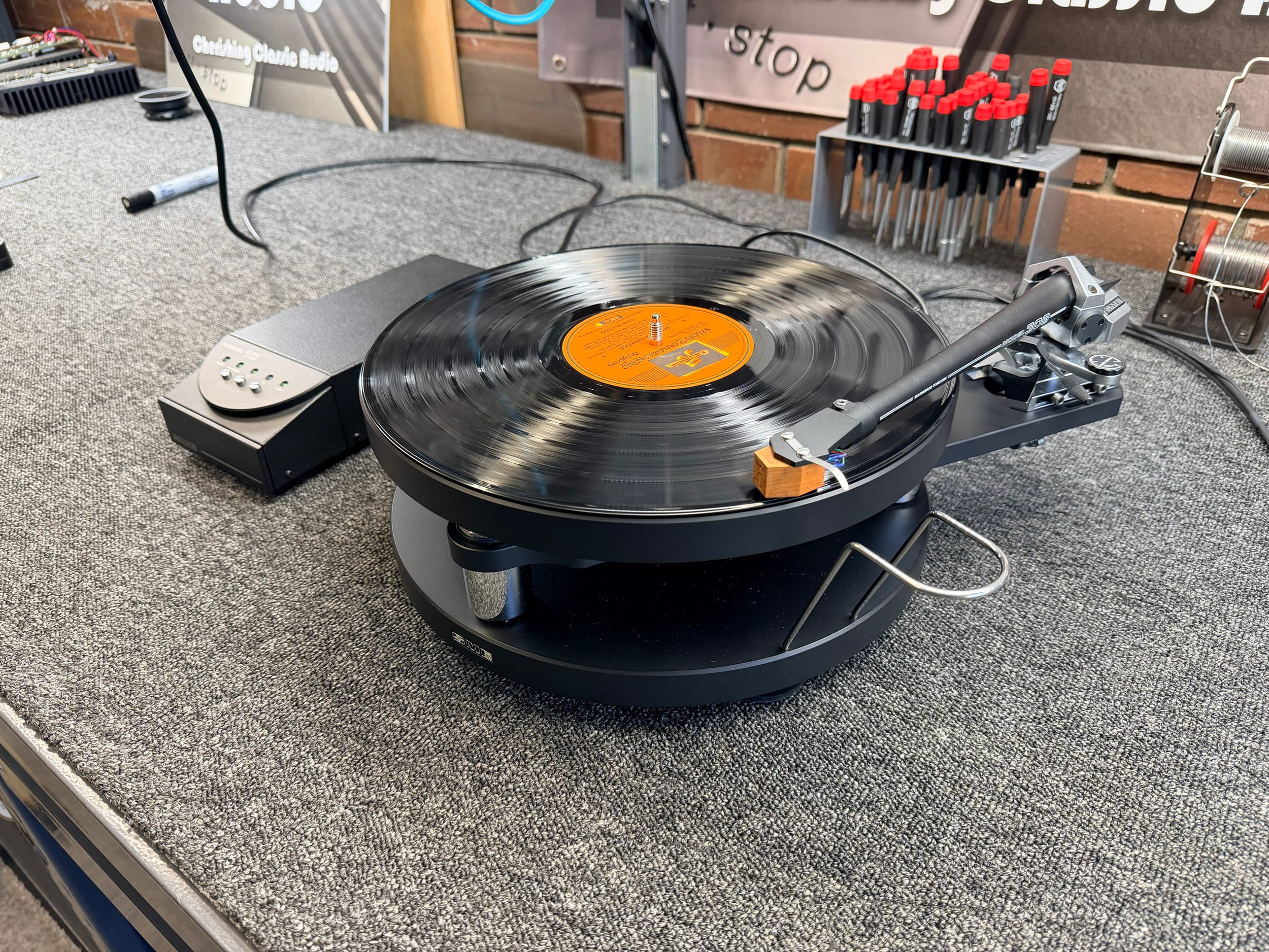
Results
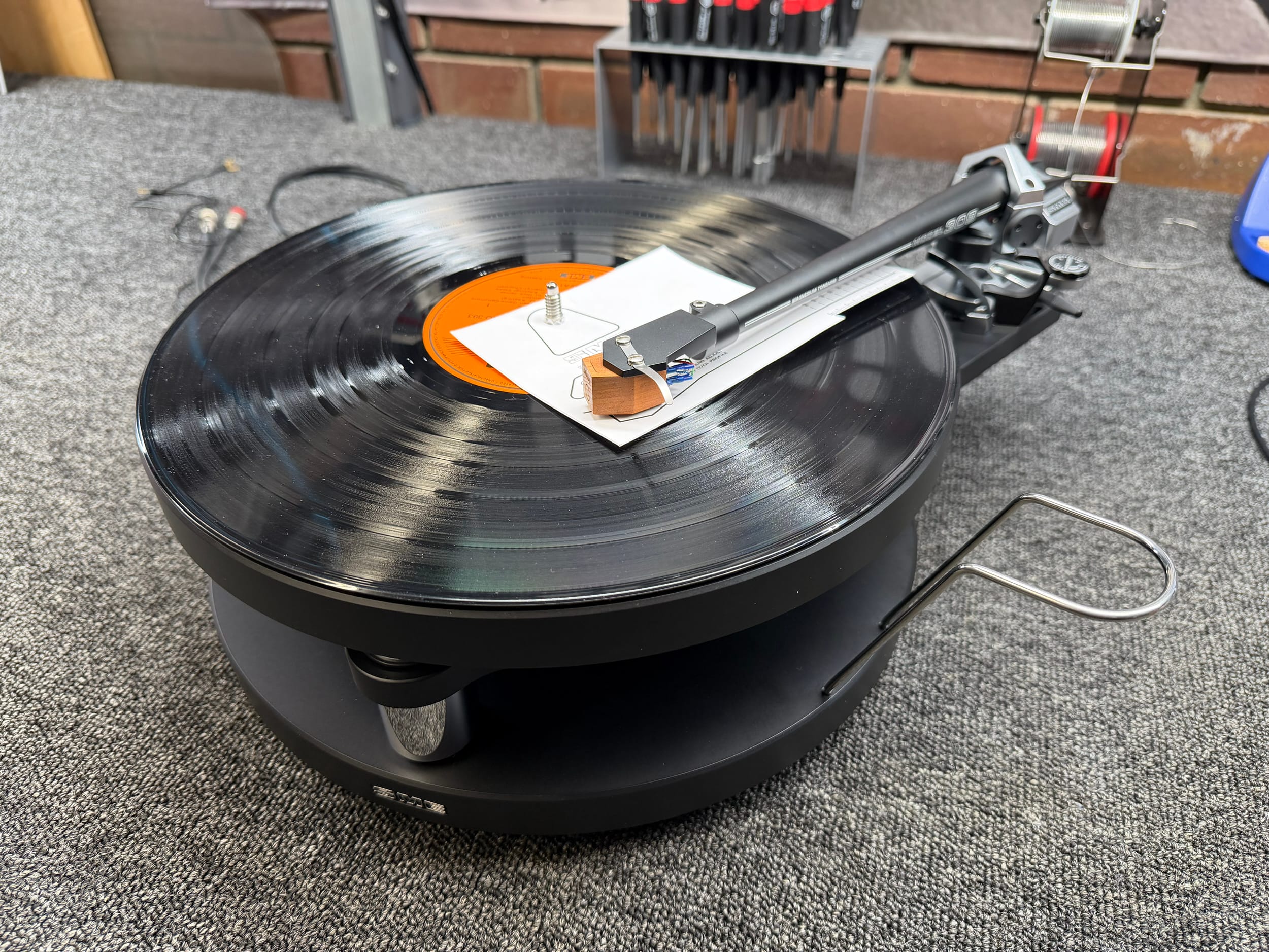
This was a particularly satisfying job, especially given that it came after two big warranty jobs for Plinius and feeling so ordinary for such a long time. The belt issue was out of my control and unfortunately cost me a lot of time I didn’t feel comfortable charging my customer for. That said, the result is so good that I know the owner will be happy, which somewhat compensates.
Update: He IS very happy:
Hi Mike
I thoroughly enjoyed this write-up. Amazing piece of work … Photos look great. I can see you take great pride in your work, and I’m very happy with the care and attention given.
Yes, the turntable has had quite a history – originally in my apartment in Kuala Lumpur, Malaysia then shipped in a container back to Perth. It had a good home in a custom-built hi-fi room in my North Beach home until my ex-wife had other plans. It was then neglected in storage…
Thanks again
Mark C
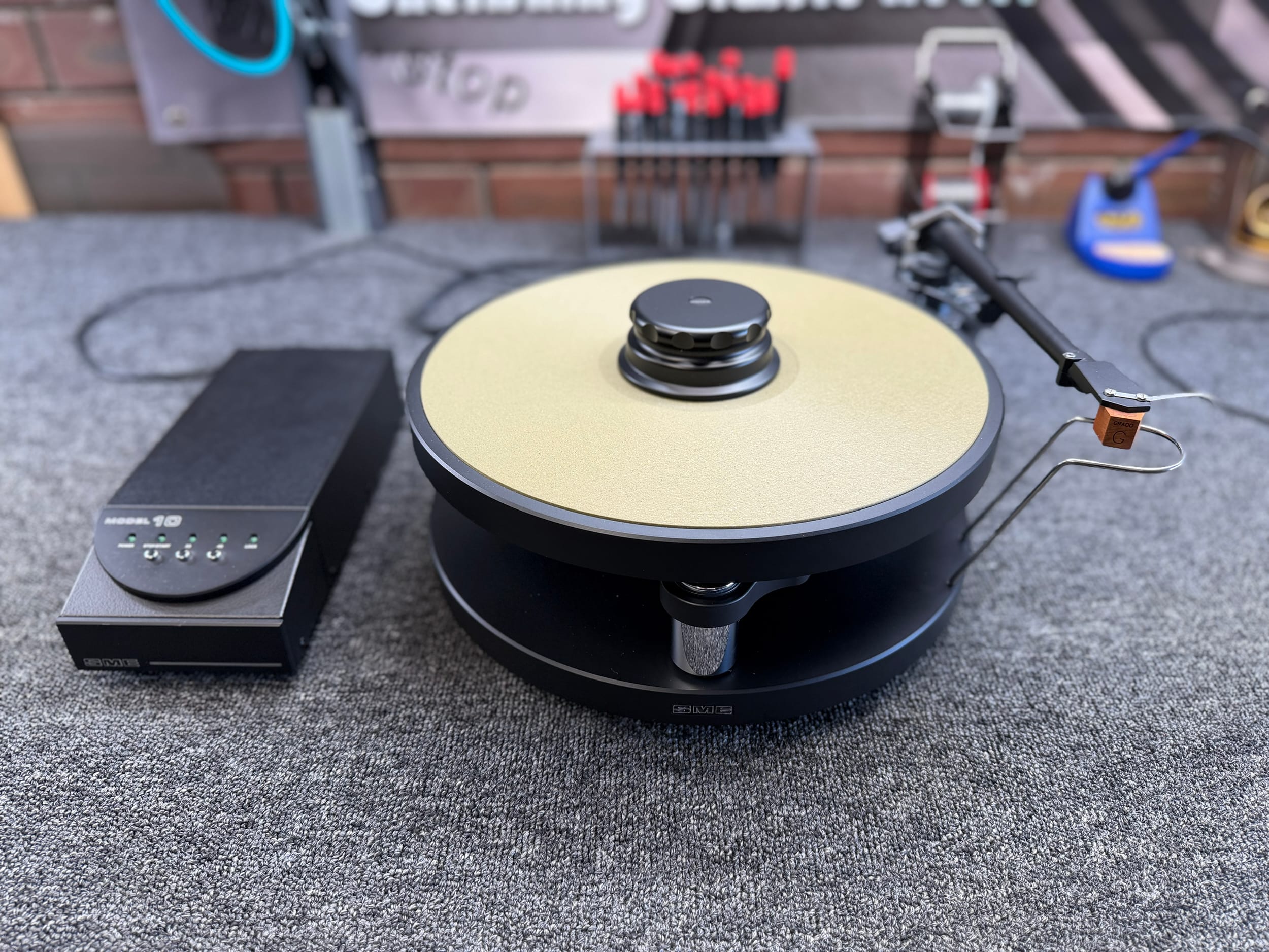
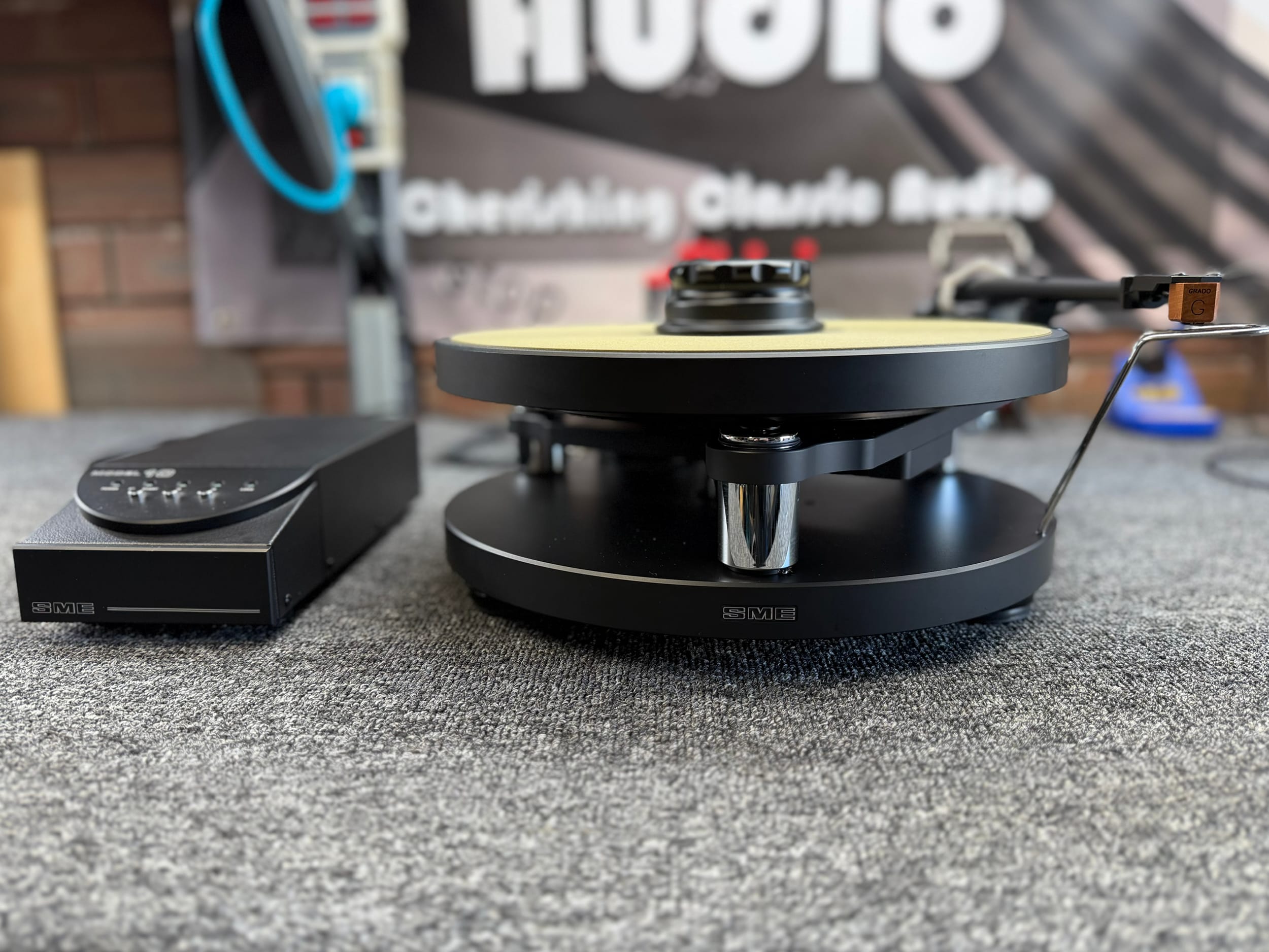
The Bottom Line
I’m often asked for advice about buying turntables, so the obvious question here is, should you buy an SME Model 10…? These typically sell for less than $10K AUD on the used market, and for that money, compared with some of the new Clear Audio and Rega options out there, for example, a Model 10 is a no-brainer. Compared to other pre-owned high-rollers, there is a lot of choice, including some real heavy hitters, but I still highly recommend the SME Model 10, along with those others.
The engineering and machining here are far beyond what most of the others are doing these days, that it is a genuine pleasure to work on anything SME. This is a precision instrument, not a lightweight particle and poster board machine that plays records slightly too fast – well, at least not with an appropriately sized belt! Direct-drive turntables don’t have the ‘belt variable’ problem, of course, but they are more complex.
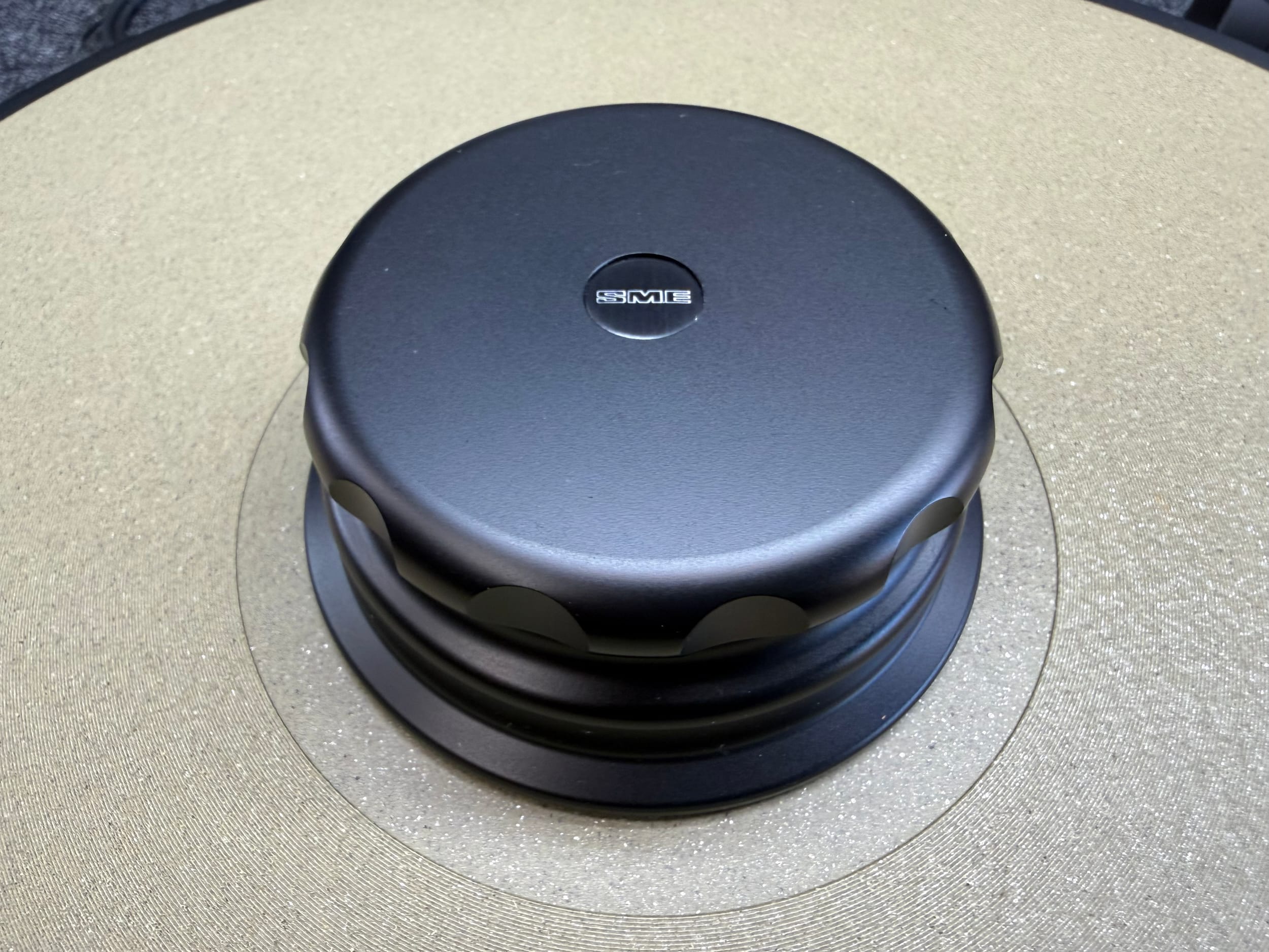
Given how good the SME tonearms typically found on these decks are, and the inclusion of the lovely SME record clamp and generally high level of fit, finish and performance. I highly recommend the SME Model 10.
Thanks!
As always, thank you for visiting, and thanks to the owner of this lovely turntable for entrusting her with Liquid Audio. I hope you enjoyed reading about another classic piece of hi-fi equipment. If you’d like me to look at your SME Model 10 or any other high-performance turntable, don’t hesitate to get in touch.
A ton of work goes into creating these articles, and it’s all done in my time off. You can support my efforts to spread the word about beautiful hi-fi equipment and keep it alive by engaging our services, commenting, liking, sharing, subscribing, spreading the word and donating, using the button in the footer. You can also view our supportive legends on the new page dedicated to them.
Discover more from LiQUiD AUDiO
Subscribe to get the latest posts sent to your email.
Whoever treated this masterpiece needs a good dose of verbals! You, mate, did a nice job of “refloating” the sunken disaster.
Thanks Brian, a lovely owner, but this one had some history and needed a little TLC, for sure.
That`s nice to know that the treasure restored by you now has a loving owner!
Good to see you back Mr Mike
Continue to enjoy your articles which I find interesting, informative and not too technically complicated for the likes of myself
Thanks, Rod, making a slow comeback, glad you’re still enjoying the articles!
Love the minimalist look. Don’t suppose it’s for sale??
Yes, these are very cool turntables, Brian. I think the owner plans on keeping this one, though!
Amazing job on a beautiful t/t. Well done love your articles.
Good on you, Arthur, thank you for that. Liquid Audio loves great customers like you!
Glad to hear you’re on the mend Mike, and I hope full recovery is soon. Nice T/T by the way.
Thanks, Steve, much appreciated, and she certainly is a beauty!
Another great article, Mike. I hope that you are fully recovered and feeling better. I quite like SME even though I would not buy it. It is one of only two good British turntables (Avid being the other) even if both are difficult to justify at their respective prices compared to Japanese turntables including from fifty years ago like the L-07D. The SME IV and V tonearms were competitively priced and it is sad that now they can only be purchased with an SME turntable.
Thanks, Marius. I’m getting there, but it’s a journey. Agreed regarding Avid and SME, and I love SME arms. We were all shocked when they stopped selling arms, has to be one of the worst business decisions of all time. I’m told that has been reversed and the arms will appear again before too long!
Hey Liquid Mikey,
Good to hear back from you with your much appreciated efforts, I too have been pretty crook but happy to say like you I am fully well now.
Thanks for the article and I would like to get some Accuphase advice soon but only when you’re 100%.
Till then stay well.
Hey Frank, always good to hear from you, and I’m so glad you are feeling better! Glad you enjoyed the article, and you have a ton of advice time banked here @ Liquid Audio. Just let me know when you feel ready, and we will discuss!
Yes will do, fyi I bought a 1979 C220 but it is a bit stinky!
Great preamp but will need lots of reviving!
Hello Liquid Mikey
Been looking at a few of your overhaul projects and hats off to you for producing a end result that and owner will be very happy with.
After seeing the SME 309>SME 10 in a condition that strongly suggests moisture, I became quite focused on the rusting on the fastenings. I could not help but think if the Grado Cartridge is stored in the same condition much might have deteriorated with out of sight parts.
The link is to a Australian based cartridge refurb service which receives cart’s from across the world.
They may assist with a investigation/overhaul of the Grado Cartridge if the owner wishes to look into this.
https://www.allclearaudio.com/
Thanks for those kind words, John, and I’m glad you’re enjoying the articles. I may have mentioned in the article that the owner had lived in Southeast Asia, which explains the humidity and accelerated oxidation.
I offer a fairly comprehensive, in-house cartridge assessment and cleaning service; more on that here: https://liquidaudio.com.au/cartridge-inspection-deep-cleaning/. Thankfully, this cartridge was A-OK, though I have suggested a better cartridge for this customer and his SME-10.
I use and recommend Soundsmith for cartridge retipping/repair. I’ve fitted one retipped cart from the business you mentioned via a customer of mine. I have a critical eye for such work, and it was decent, but I have seen better. That is a new business, and I’d like to see more examples to form a firmer opinion about their work. As a turntable specialist, working over a long period of time, I’m fortunate to have a very large cartridge/turntable sample size, certainly larger than most!