
Servicing, yes, repairing, probably not.
Double Trouble
Dual or double-cassette decks have two cassette mechanisms instead of the single mechanism more commonly found in better cassette decks. It’s important to note that dual cassette decks were the cheapest cassette decks of their time. Long-term usage and serviceability were not high on the designers’ list of priorities with these low-cost machines.
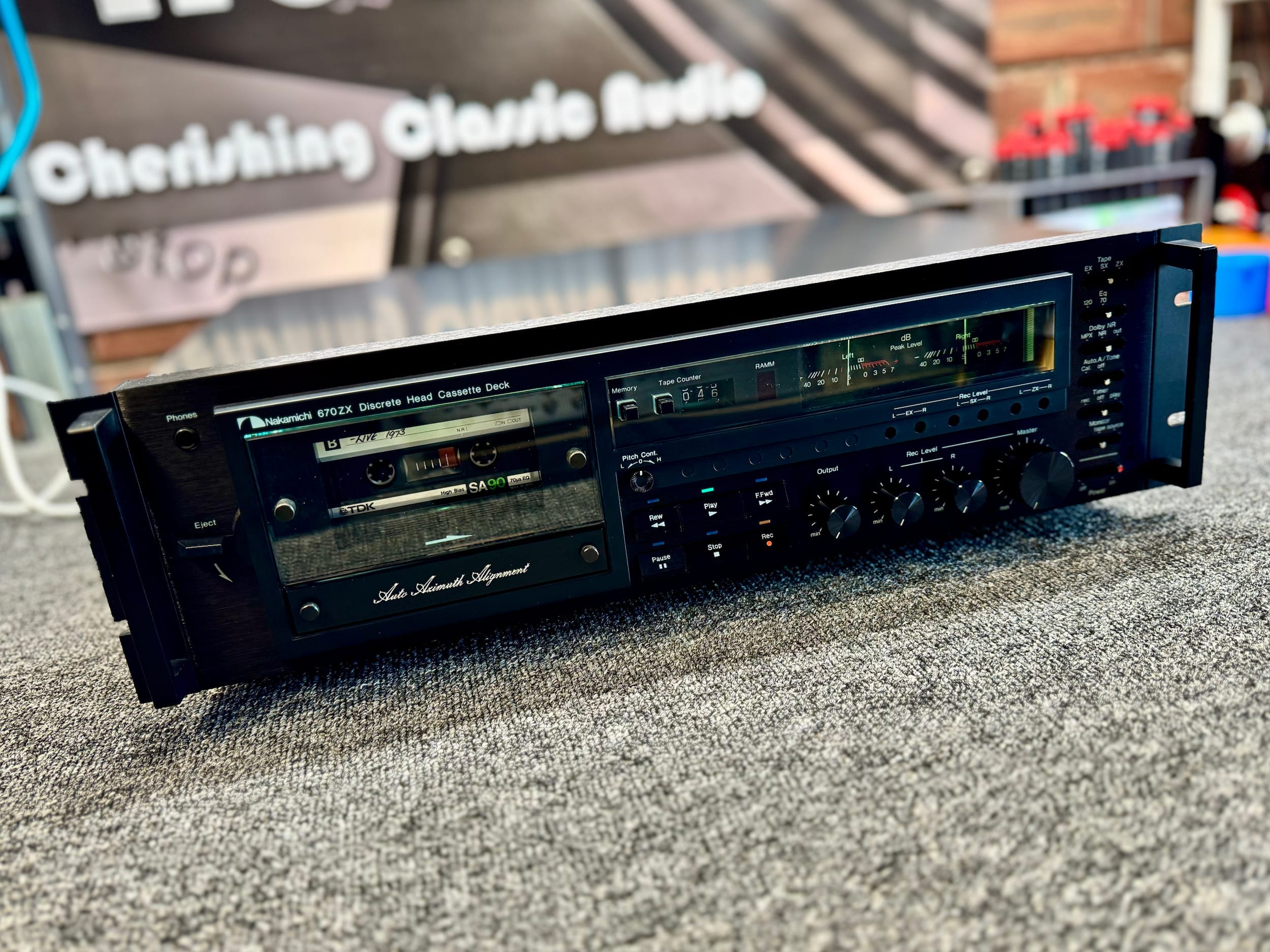
If you haven’t read any of my in-depth cassette deck maintenance articles, know that this can be some of the most labour-intensive work in hi-fi. Properly servicing one deck is involved, so servicing two usually cheaply made mechanisms doubles the work that needs to be done, yet it may not be economically viable or sensible given what the equipment is worth.
Two mechanisms in dual cassette decks means 2 x heads, belts, capstans, and pinch-rollers, 2x the cleaning and 2 x the disassembly and reassembly. Doubling the already time-consuming workload usually means more work than these decks are worth. For these reasons, I’m happy to service dual cassette decks but generally avoid repairing them.
Viability
If both decks in a dual-cassette machine need only light maintenance, then this work is worthwhile. If both decks need repair in the form of idlers, belt replacement, or other deeper service work, though, costs almost immediately exceed the very modest value of even the best dual cassette machines.
Most owners simply don’t want to spend hundreds of dollars on what is a low-cost and low-performance dual cassette deck. That said, some people will do this deeper dual cassette deck work, and I am happy to recommend someone if it’s important to have yours running and you are happy with repair costs that will exceed the value of the deck.
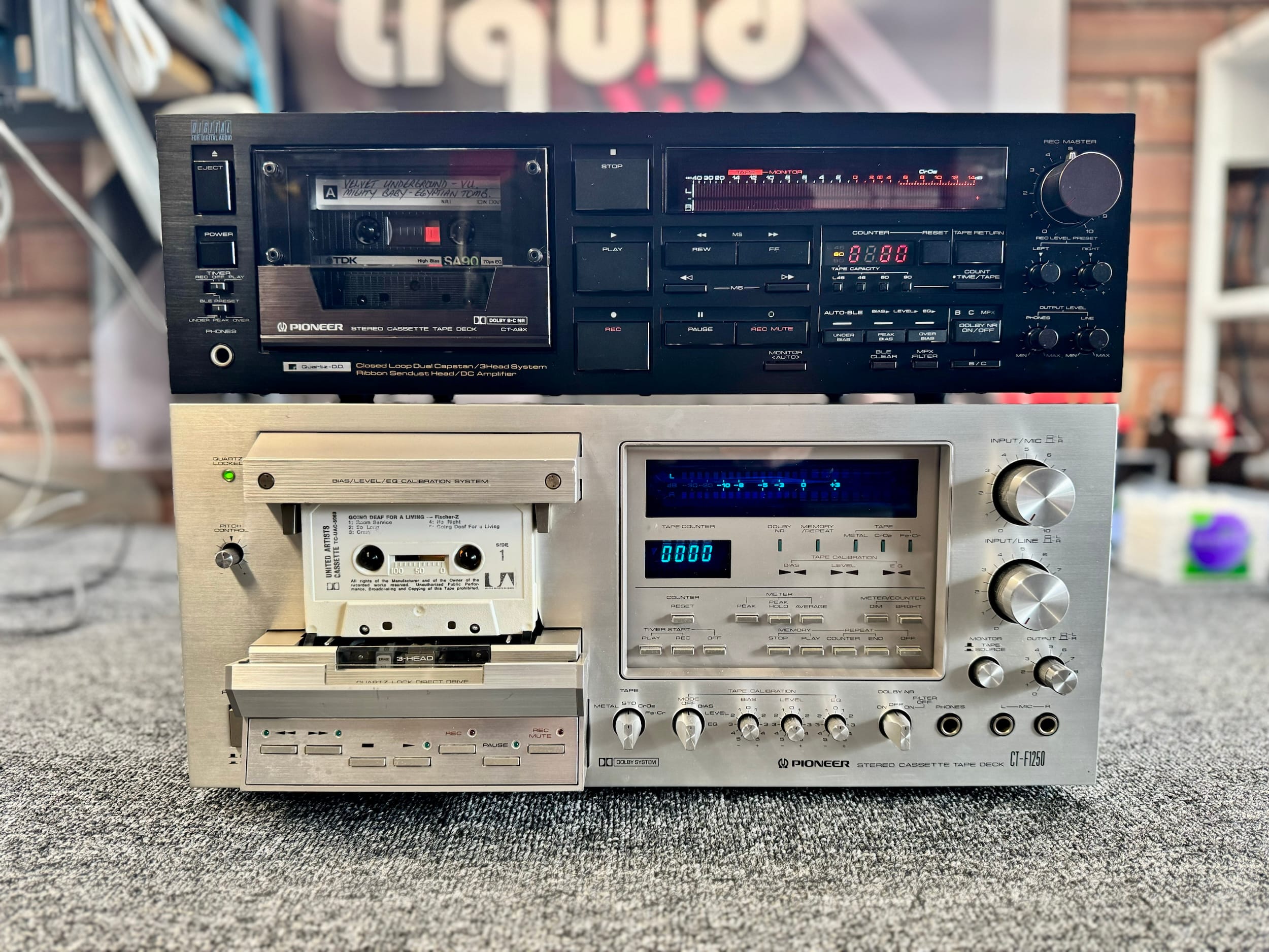
The opposite is true of good single-deck machines, and I still work on those, like my two beautiful Pioneers. Single-deck machines are built better, perform better and are usually nicer to work on. Decks like this are almost always worth servicing and repairing, but a whole day or more may be needed for complex decks like these.
Discover more from LiQUiD AUDiO
Subscribe to get the latest posts sent to your email.