
There is a long-standing myth that belt drive is a superior drive methodology for turntables. It isn’t.
There’s a bit to know, of course, but the TLDR is that the drive method is only one of many factors determining turntable performance. Direct drive (DD) has many advantages, but DD is also more expensive to do well, and if you read no further, that’s the end of the story.
Science (Myths vs Facts)
I have a direct drive washing machine, and it’s a much better machine than the belt drive washer it replaced, but, like a washing machine, a turntable’s performance is the sum of many parts and systems working together. There are great examples using each drive type.
The notion that belt drive is inherently superior was started in the ’70s, mostly by the British hi-fi press supporting their then-strong local industry and perpetuated by certain manufacturers and collaborators in the hi-fi media who are so ensconced in propagating this myth that they simply cannot ever say anything different, even though they know it to be untrue. The obvious lack of experience of so many hi-fi consumers leads to further propagation and amplification of misinformation like this.
One critically important goal of any good turntable is to spin the platter as close to the perfect speed as possible, with as little variation and vibration as possible. Belt drive offers no inherent advantages in any of these areas and disadvantages in most cases and implementations. It IS cheaper to implement, though, and this is, without a doubt, why it’s so widely adopted.
The best performers by these metrics are direct drive turntables. This is science, and the data is measurable. That said, there are exceptional belt drive and direct drive turntables. I’m lucky enough to own an end-game example of each, and I can confirm that the drive method is not the most important factor to consider.
Costs
Design and manufacturing costs are the reason you don’t see many new direct drive machines these days. It’s cheaper to make decent belt-driven turntables, suiting smaller niche manufacturers, and this is why most affordable decks are belt-driven.
Manufacturers can build a belt-drive turntable using readily available, low-cost motors. It also suits the buying public, who generally don’t want to spend $20K USD on a turntable, hence the preponderance of good reviews of cheap belt drive machines. Most simply don’t know what they don’t know. That again!
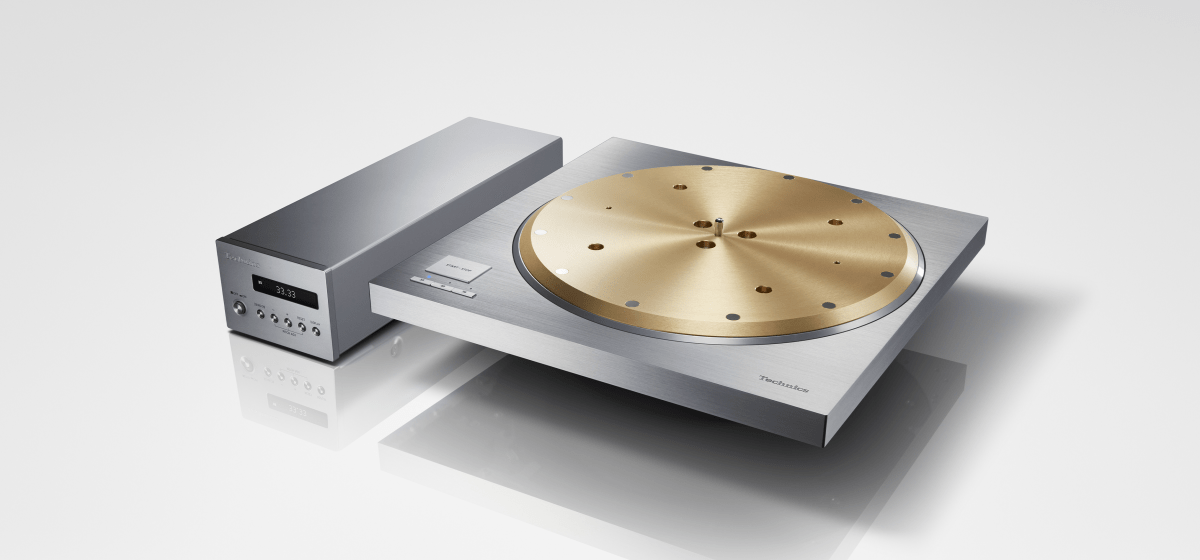
Direct drive machines are much more expensive to design and manufacture, but direct drive has advantages in terms of torque, speed consistency, and noise, so where cost is no object, you’ll generally find direct drive.
The performance advantages of direct drive systems explain why some of the best and most expensive turntables, tape machines and cutting lathes utilise direct drive. That being said, there are some killer, high-end belt-drive turntables from the golden era, and they shouldn’t be discounted.
The bottom line is that you get what you pay for, always. A good turntable, no matter what drive method, is expensive.
Apex Use Cases
As I mentioned, most of your records were recorded, mastered, and cut on direct drive tape machines and cutting lathes. Did you know that? Have you thought about why that is? Ponder it for a moment because it is critically important and simply ends arguments about which drive type is preferable.
People far smarter than you or I choose what’s best in cost-no-object scenarios like record-cutting lathes. It’s their job to pick the best option. Record-cutting lathes are direct drive for several very good reasons that apply not only to making records but to playing them, as is hopefully obvious.
Superior methods are always used where performance is critical and cost is no option. This explains why many of the great turntables are direct drive and why those machines are so highly sought after.
Some folks get upset about this, but most of them haven’t owned or even heard a genuinely high-end machine like an L-07D, SP-10/SL-1000 or GT-2000. My perspective, being only interested in what’s best and having worked on and listened to thousands of turntables over the years is simple: show me an excellent turntable and I’ll enjoy it, belt, idler or direct-drive.
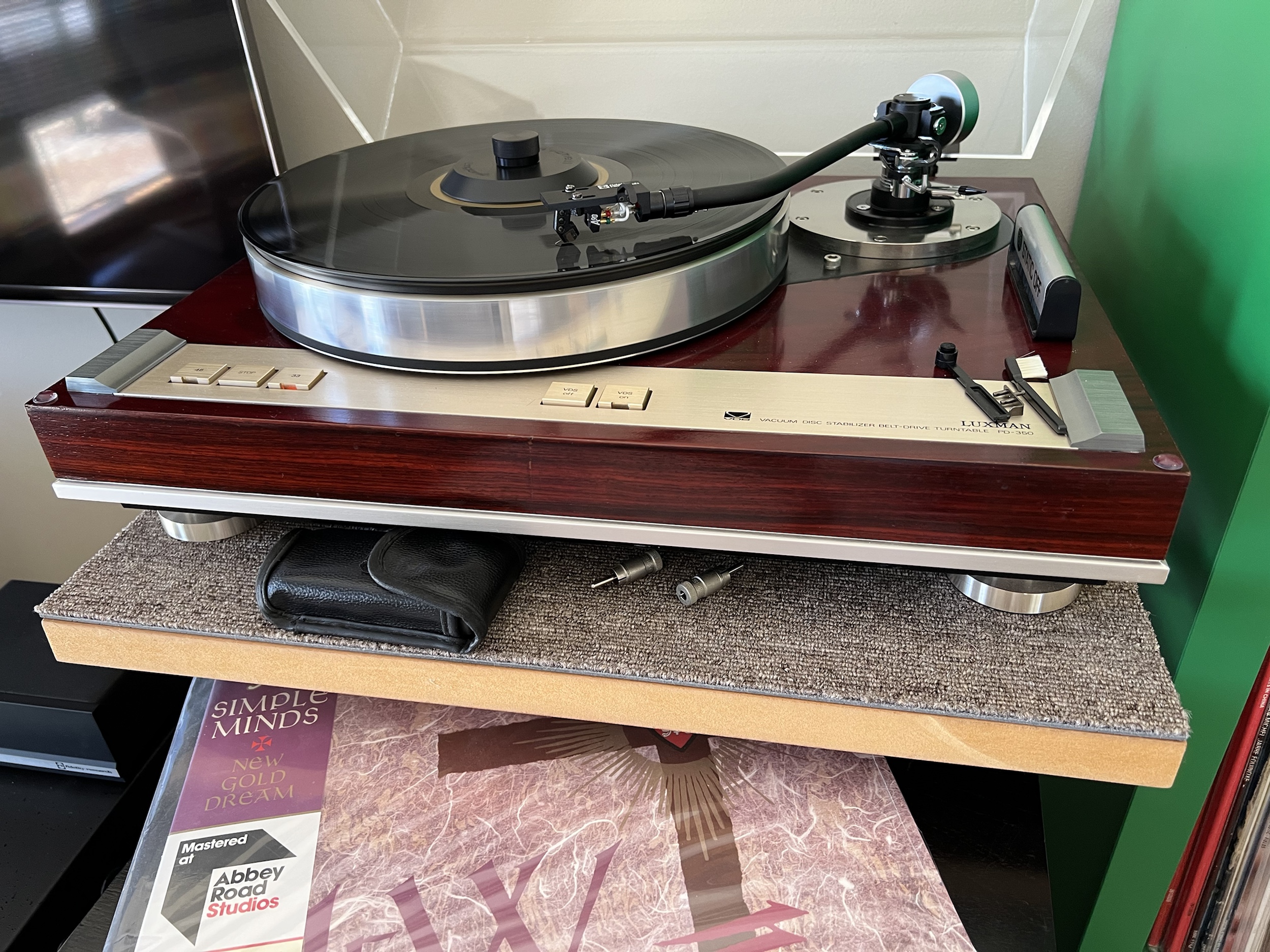
My current working reference is a belt-drive Luxman (Micro Seiki) PD-350, and it’s a phenomenal turntable, as you’d expect of something weighing 30kg and costing as much as a motorcycle when new. I love my direct drive Kenwood L-07D, but I have to say, the PD-350, with the Fidelity Research FR-64S tonearm I fitted recently, is so good, the differences really don’t matter.
Sum of the Parts
This explanation is the truthful and informed one, from someone with rather deep turntable experience and almost immune to marketing and pseudoscientific nonsense. As I’ve mentioned in other FAQs, the performance of a piece of equipment is rarely defined by just one part of it. This is certainly true with turntables, where the drive method is rarely the defining factor in turntable performance, but merely a part of it.
One must look at all factors, including drive method, chassis construction, platter and tonearm design when evaluating a turntable. One should also find retailers who understand the principles I’ve outlined here, as they are most likely to steer you in a useful direction. Great turntables come in various flavours, belt drive and direct drive. You need to choose which aspects of the design and performance matter most to you!
Discover more from LiQUiD AUDiO
Subscribe to get the latest posts sent to your email.