
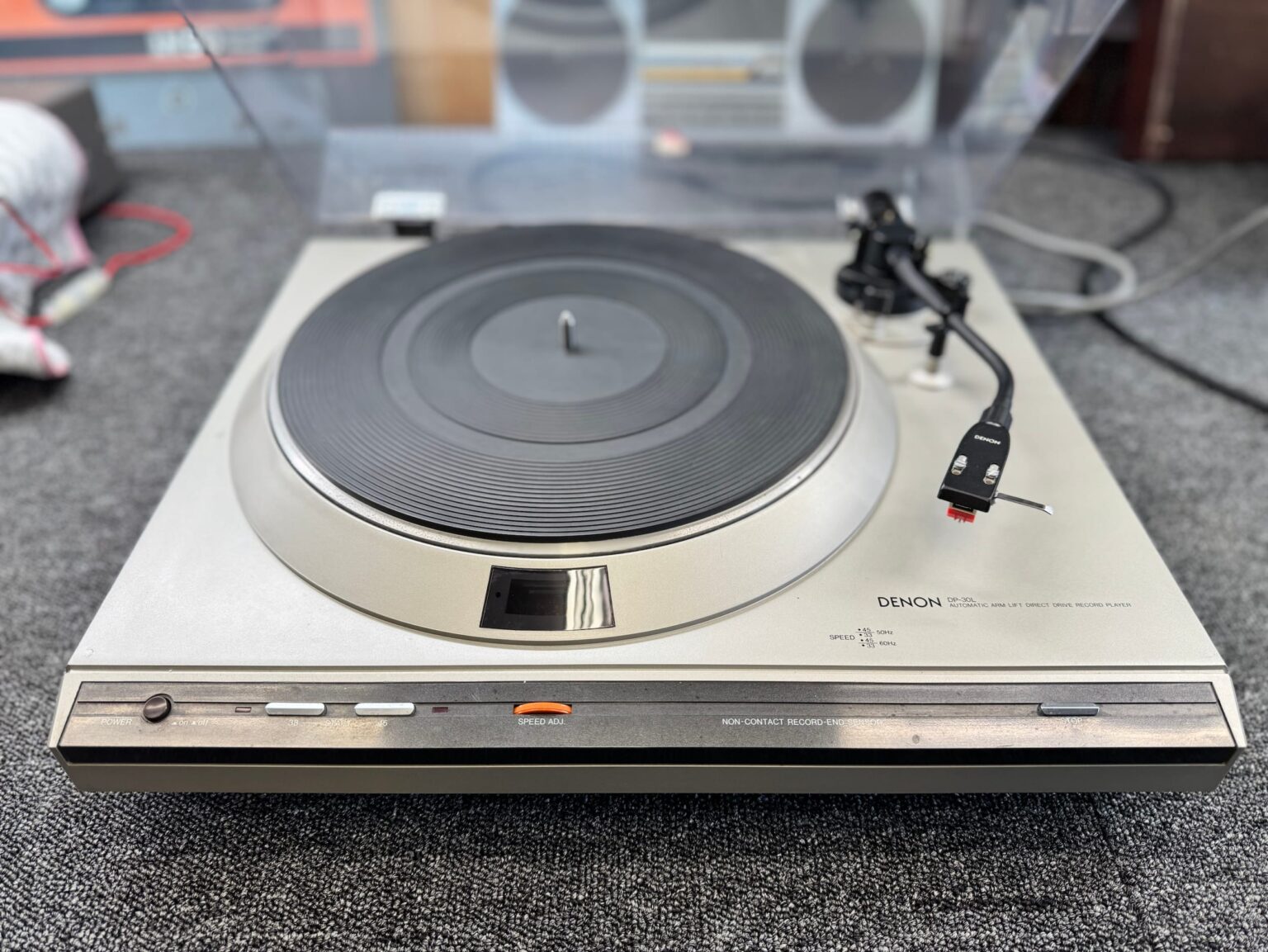
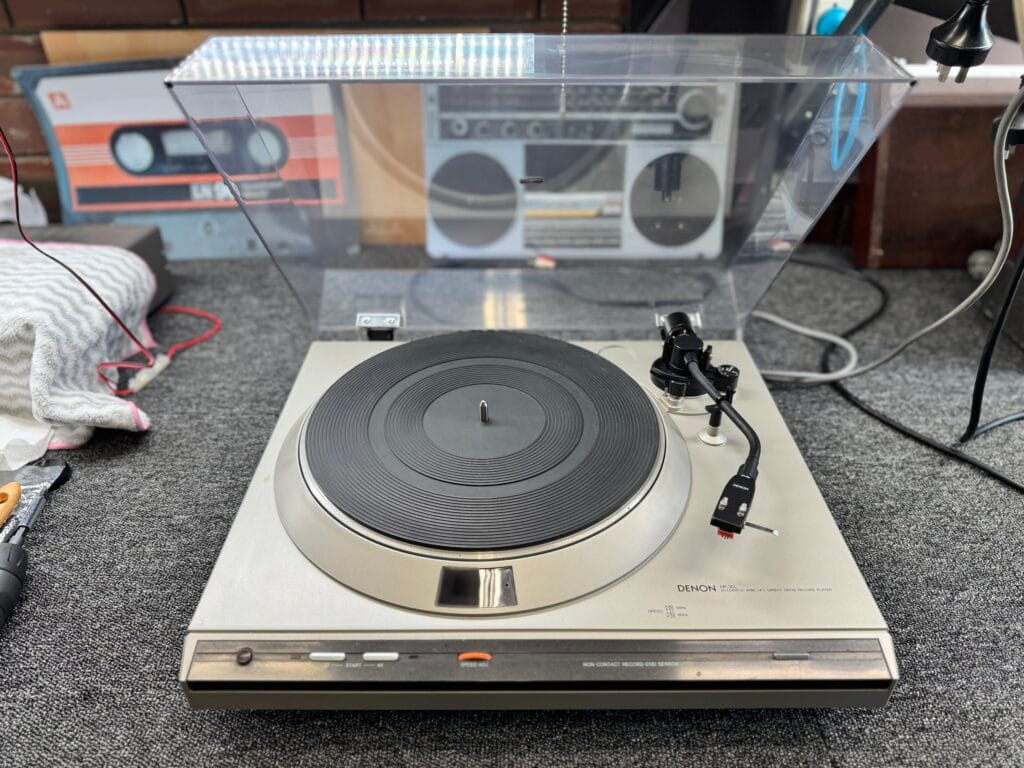
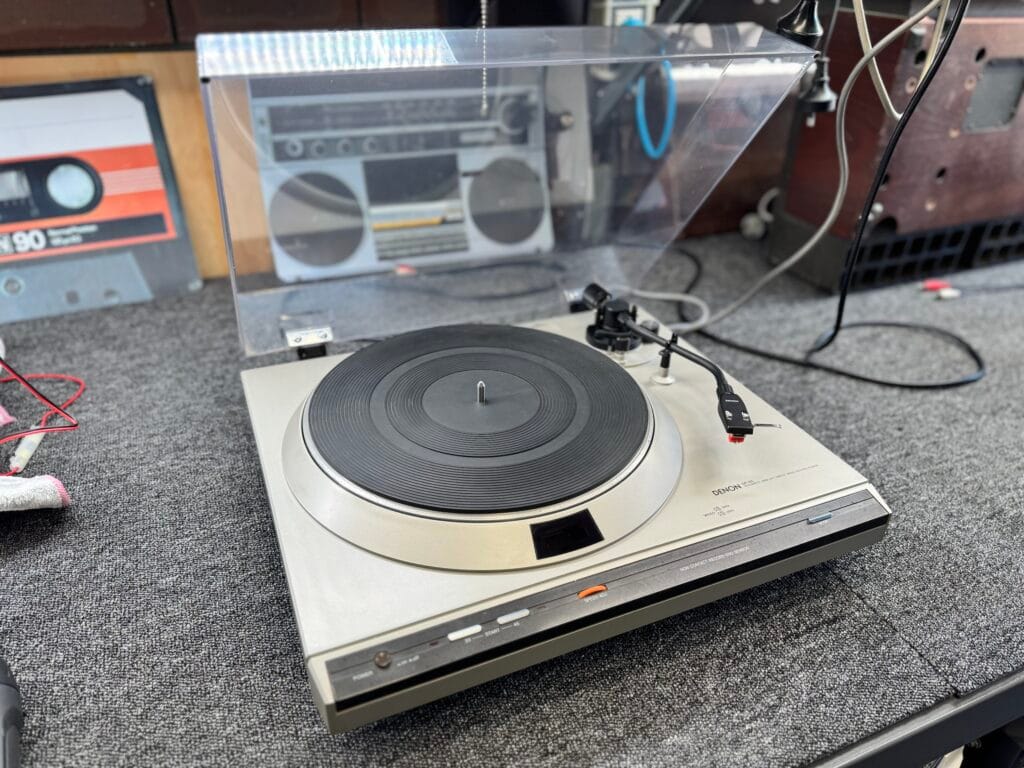
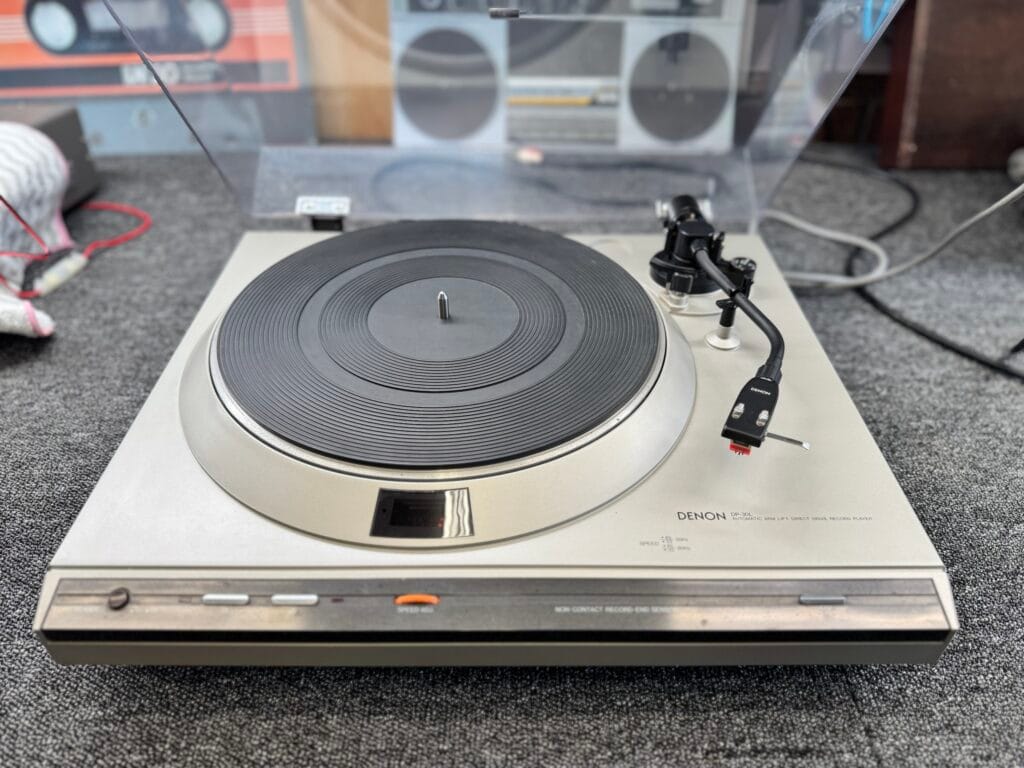
It’s turntable time again, so let’s look at the classic Denon DP-30L direct drive turntable for the first time in 8 years!
Welcome back, everyone, as we take a brief and probably overdue look at another of my favourite turntables, the venerable Denon DP-30L. I last wrote about the Denon DP-30L back in 2017 in a service and repair article, and I’ve reviewed this lovely deck back in the same year.
Given that the equipment I’ve worked on recently is the easiest for me to write about, this is a great opportunity for another look at this high-value turntable from one of Japan’s great manufacturers. Don’t worry, though, there are plenty more turntables I’ve not yet written about coming 🙂
Background
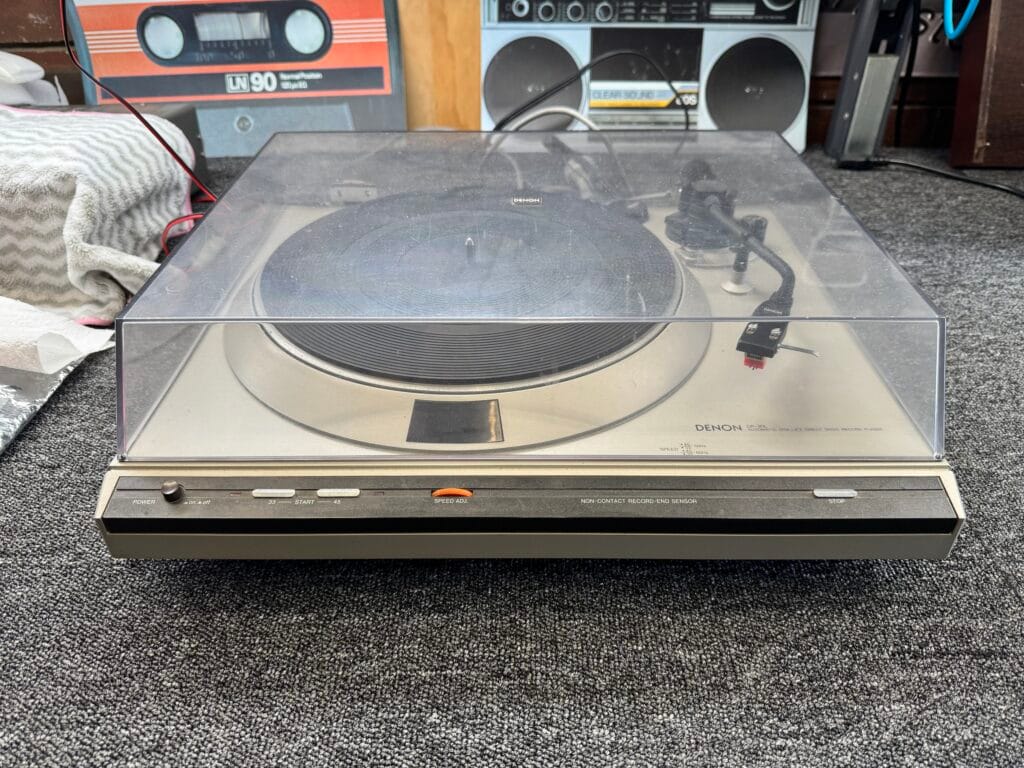
The Denon DP-30L was a mid-range staple from Nippon Columbia Denon, at a time when CD was knocking on the door, quite literally. The customer who owns this DP-30L also owns a lovely Denon DP-1200, a nicer direct drive turntable from 1977 and one of my faves at this level.
There are many similarities between these two classics from Denon, and you would go wrong with either, but the DP-1200 is a better performer, more substantially built and more collectible, I think. Both are automatic in the sense that the arm lift and lower operation is controlled electronically, a nice feature that helps save styli after excessive beer and wine consumption.
If you’d like to read a little more about either, check my DP-30L review and various DP-1200 articles. Denon made many other great turntables that I’ve worked on, including the beautiful Denon DP-62L from the same era as this DP-30L, and the stunning Denon DP-3000 / 3500 I made a video about, and some I’ve yet to write about, and which are coming.
Denon DP-30L Specifications
Courtesy of Audio Database, adapted by Liquid Mike
| Type | Full auto player |
| Deck/Motor | |
| Drive system | Speed servo and direct drive |
| Motor | AC servo motor |
| Speed control system | Speed servo by frequency detection |
| Number of revolutions | 33 1/3, 45 rpm (± 3% adjustable) |
| Speed switching mechanism | Push Button Type |
| Wow and flutter | 0.018% WRMS or less (DENON measurement) 0.025% WRMS or Less (JIS Measurement) |
| Signal-to-noise ratio | 78 dB or more (DIN-B) |
| Start-up characteristic | Within 1.5 Seconds (33 1/3rpm) |
| Turntable | Aluminum Die Cast 30 cm |
| Moment of inertia | 190 kg / cm2 |
| Tone Arm | |
| Type | Static Balance S-Shaped With Electronically Controlled Auto Lift Mechanism |
| Effective length | 220mm |
| Overhang | 16mm |
| Tracking error | 3 degrees or less |
| Needle pressure variable range | 1 Rotation 2.5g (1 Scale 0.1g) |
| Applicable Cartridge Dead Weight | Approximately 13 ~ 18g (including shell, etc.) |
| Head shell | Made of aluminum alloy, 8g |
| Output code | Low capacity cord, approx. 1.2m |
| Attachment mechanism | Anti-skating mechanism |
| General | |
| Cabinet | Newly developed integrated H. D. C. molding |
| Power consumption | 14W |
| External dimensions | Width 450x Height 140x Depth 403 mm (closed) |
| Weight | Approx. 9.2 kg |
| Price | Around 45,000 Yen / $450 AUD |
| Year | 1981 |
Service
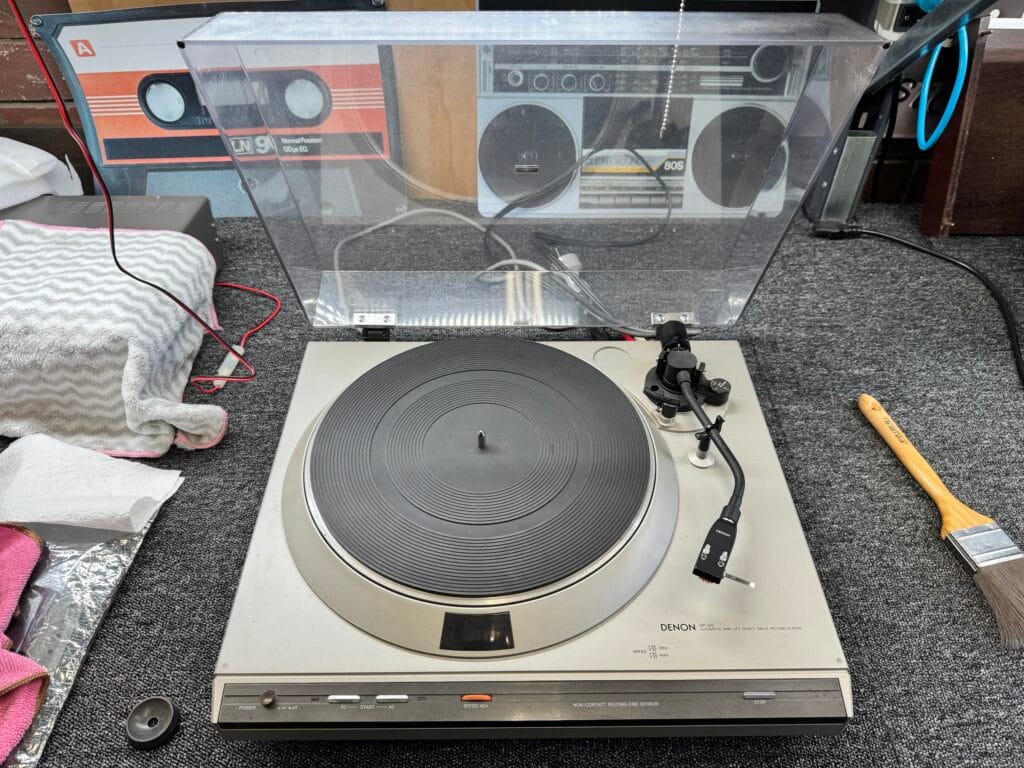
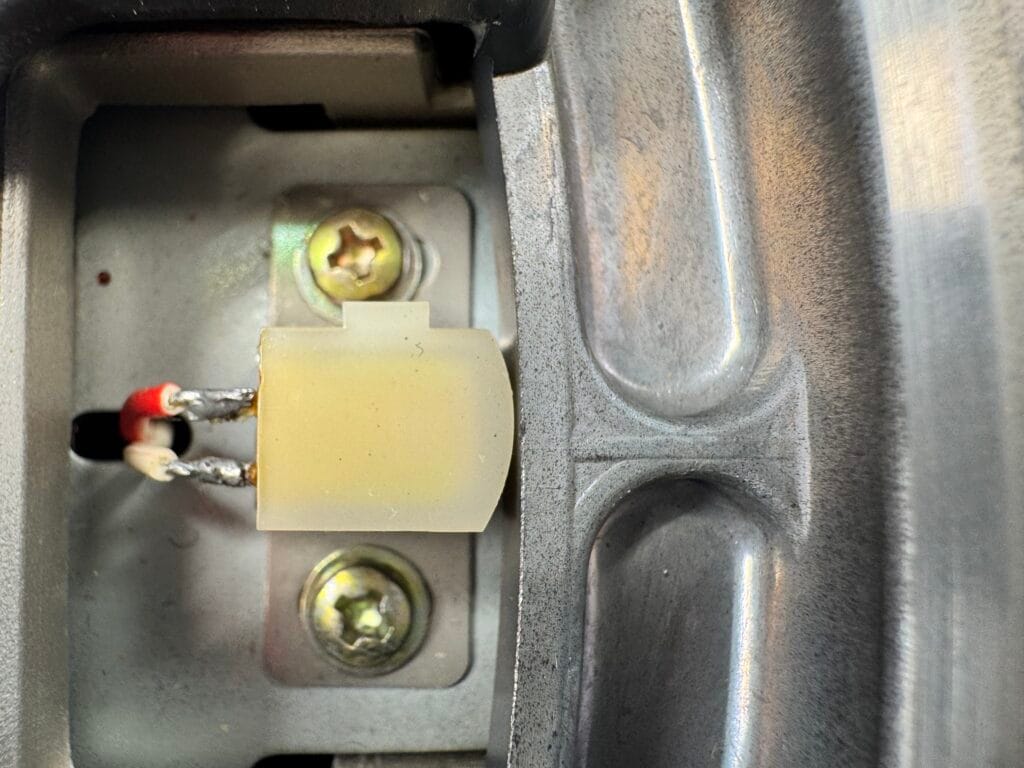
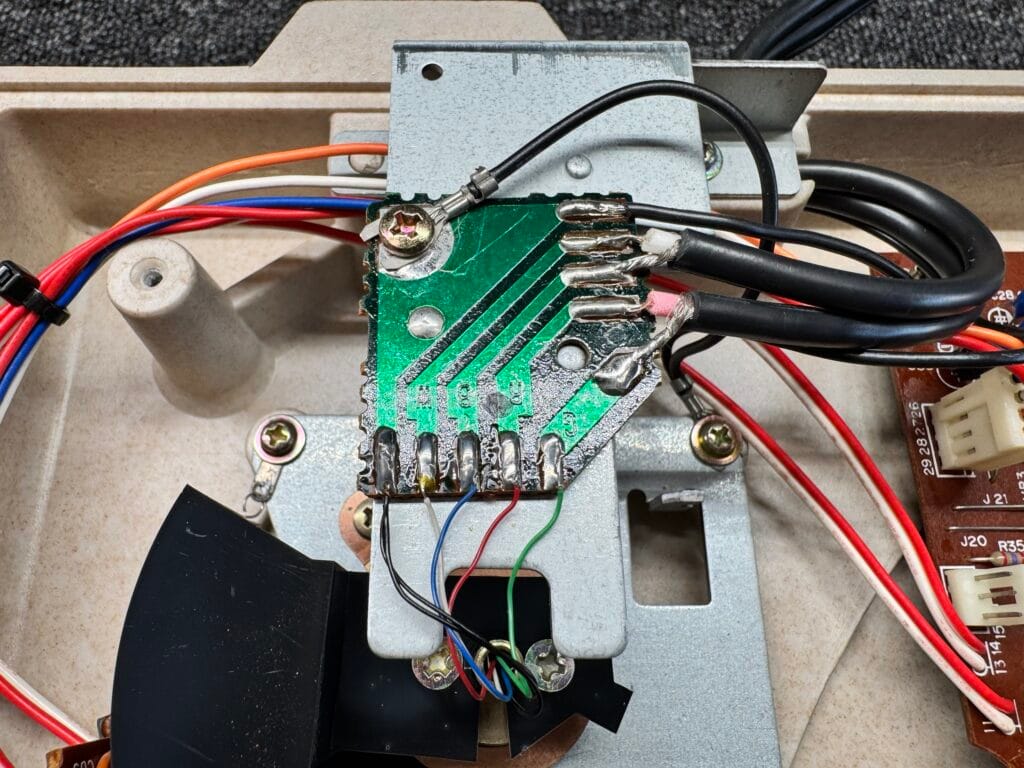
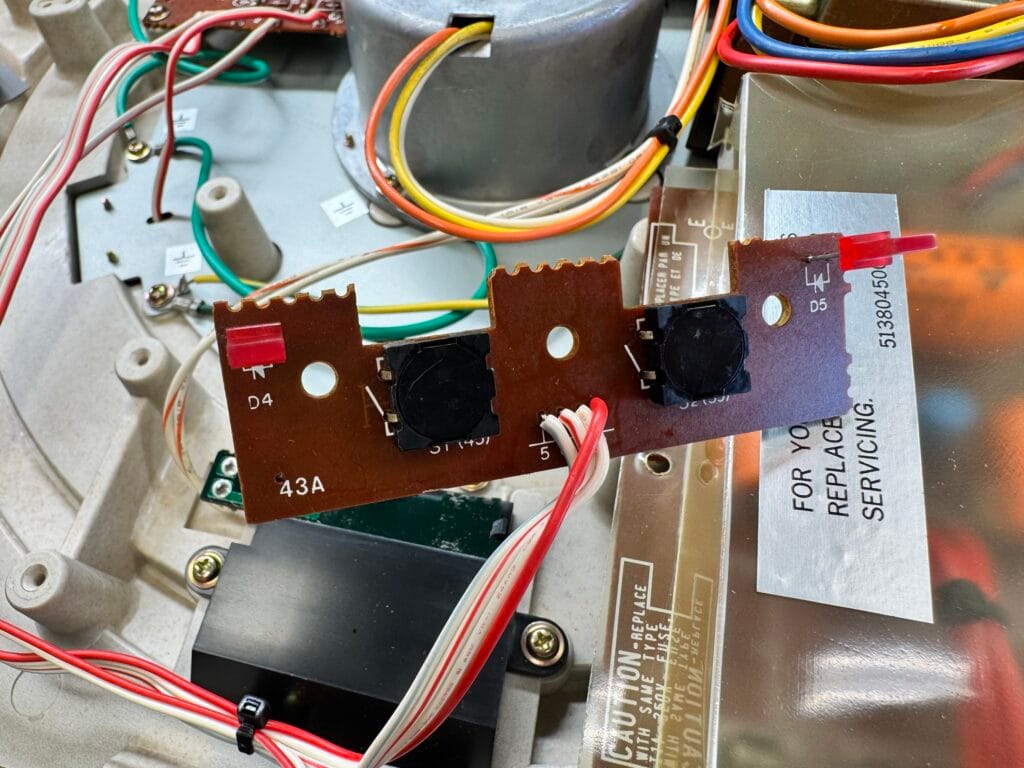
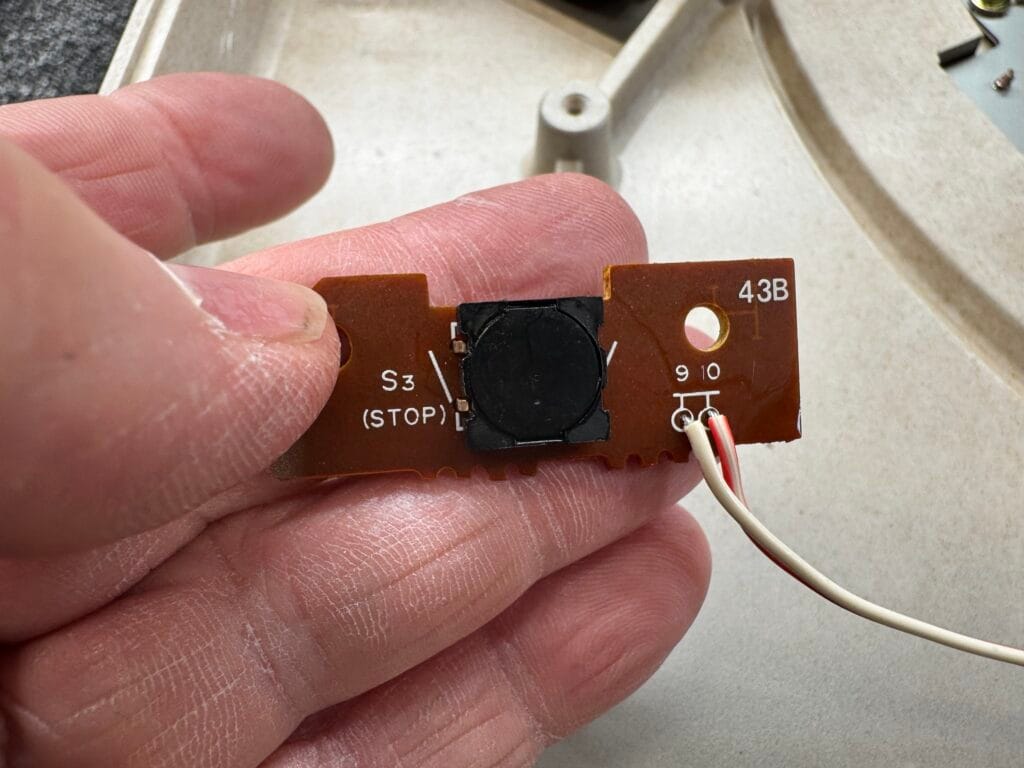
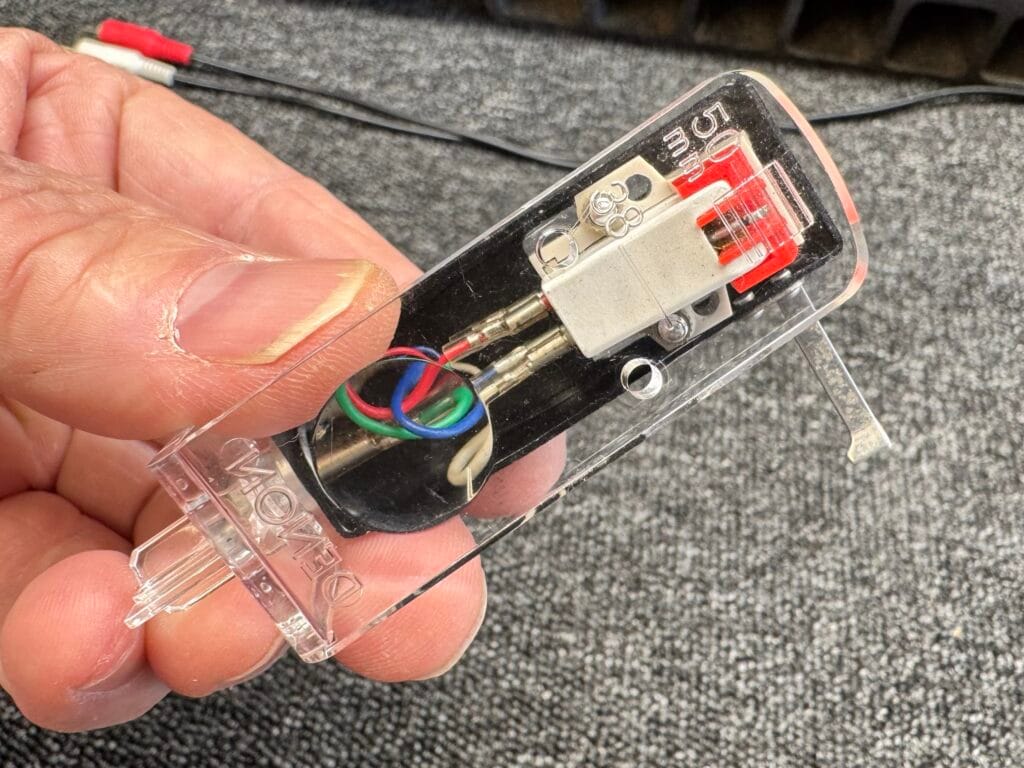
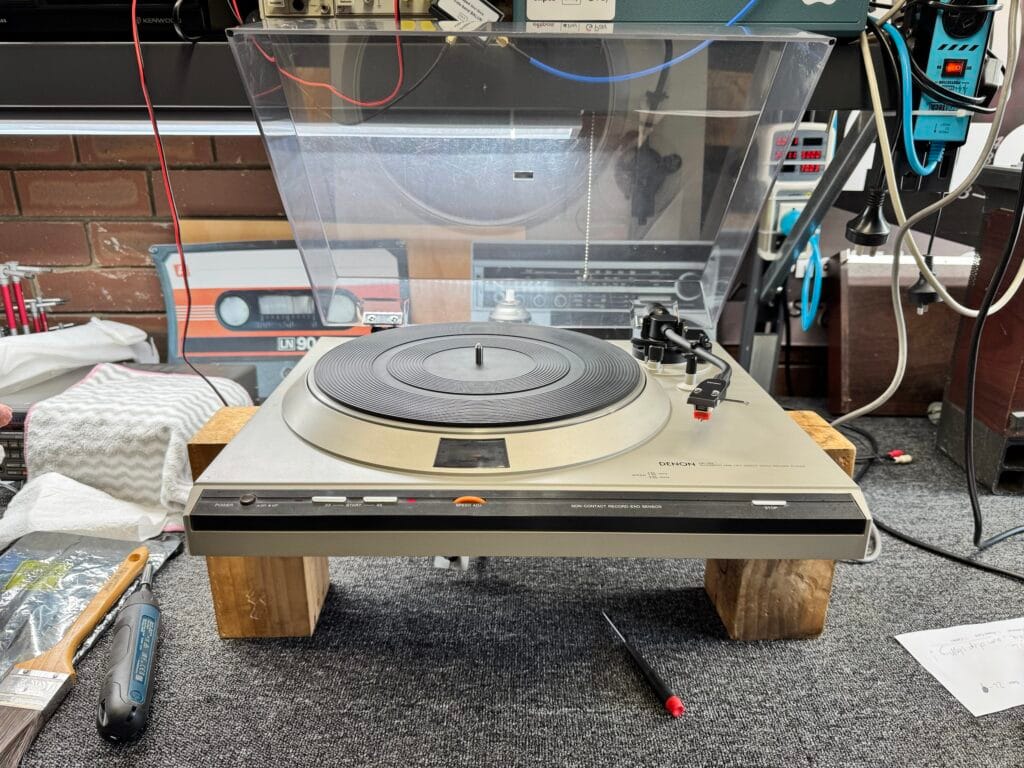
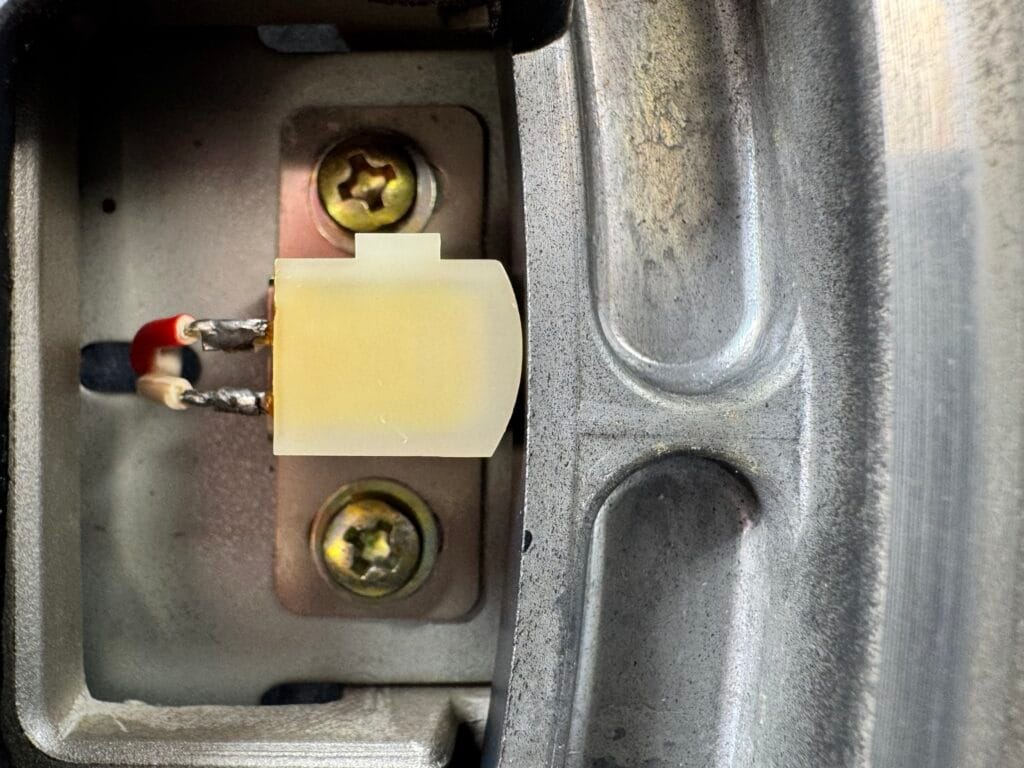
This lovely Denon DP-30L came to me in need of the typical service these units need every 5 – 10 years. From memory, there were a few speed inconsistencies and issues, and the deck needed the usual deep clean, set-up, and electronic adjustment, service, etc.
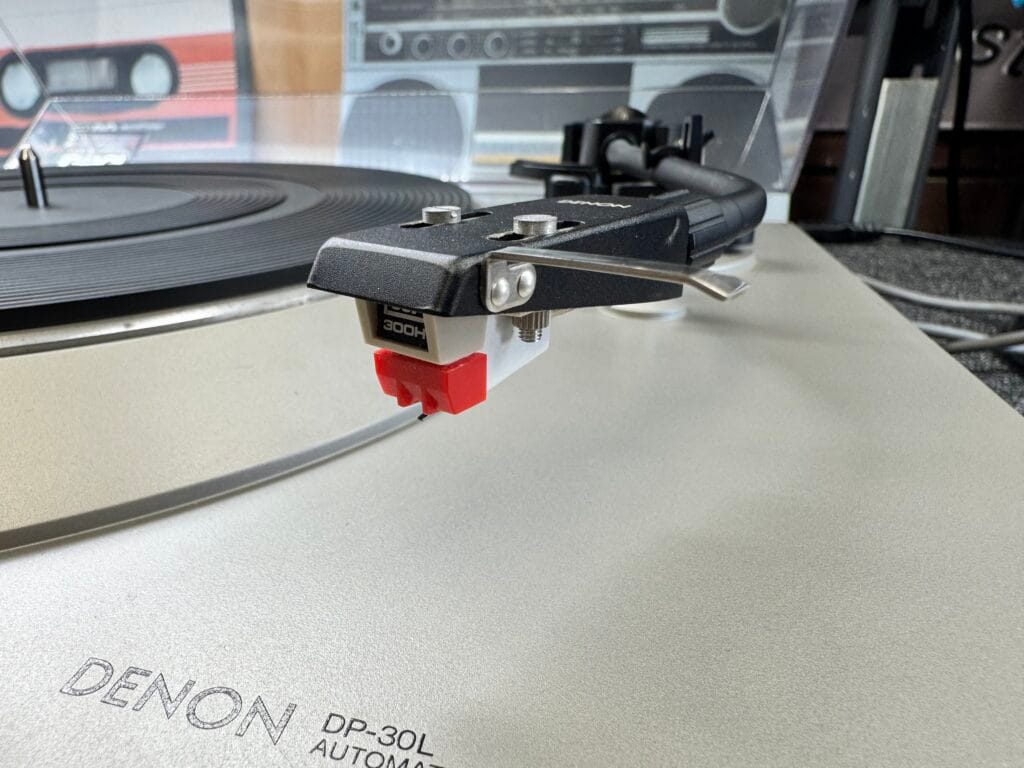
One particular issue was with the ronearm vertical axis bearings, which had seized up a little and were causing strange tonearm behaviour. I’ve resolved this issue on many turntables over the years, but it requires careful cleaning, treatment and adjustment of bearings, and so is a deeper service item.
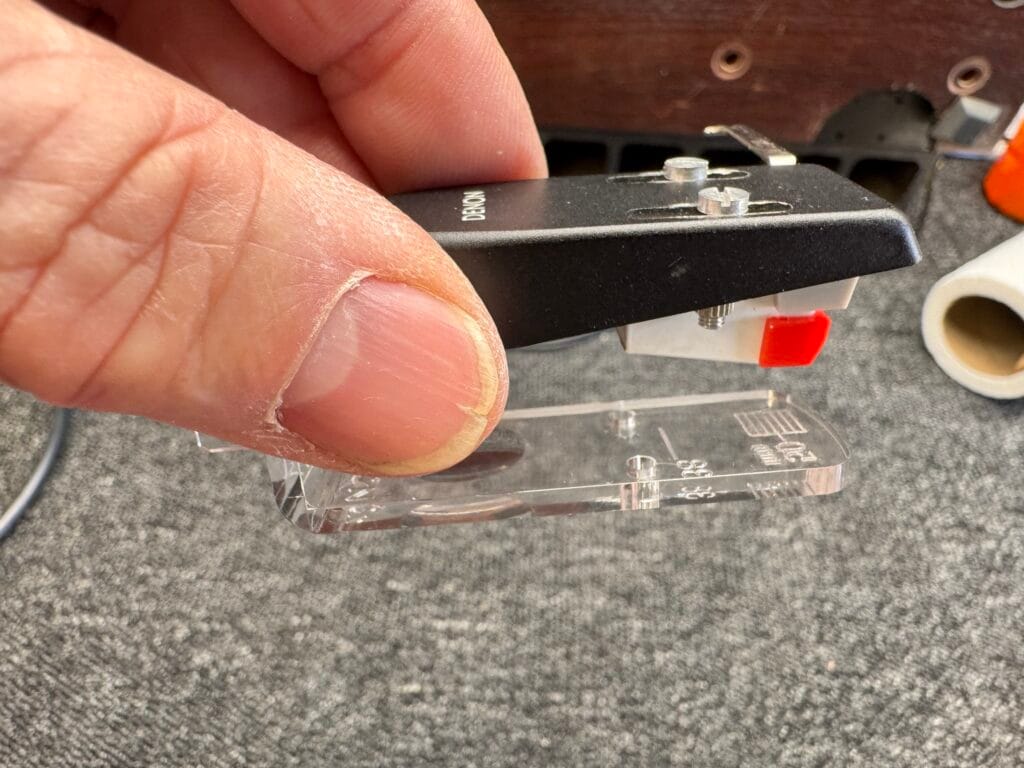
Let’s step through that process.
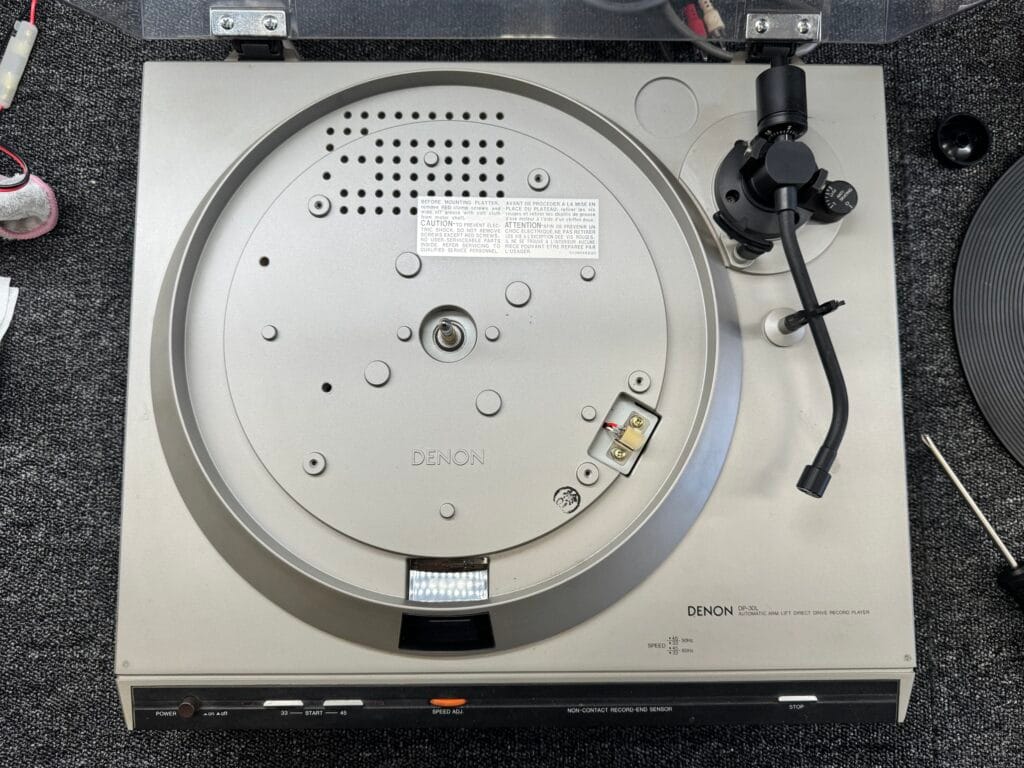
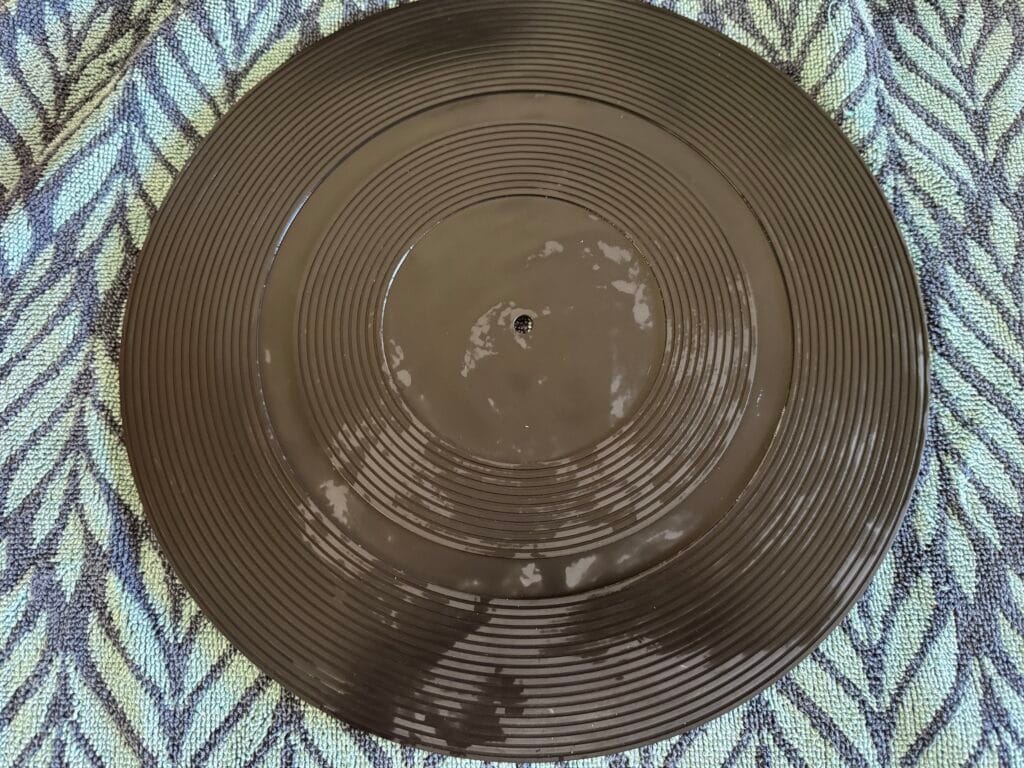
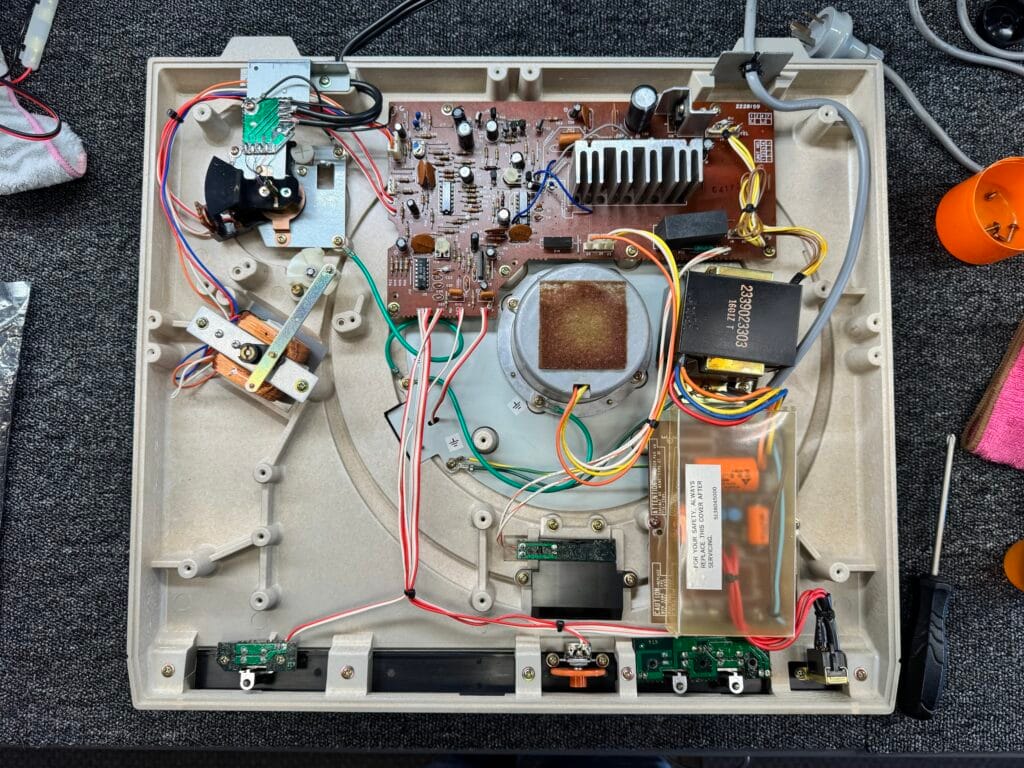
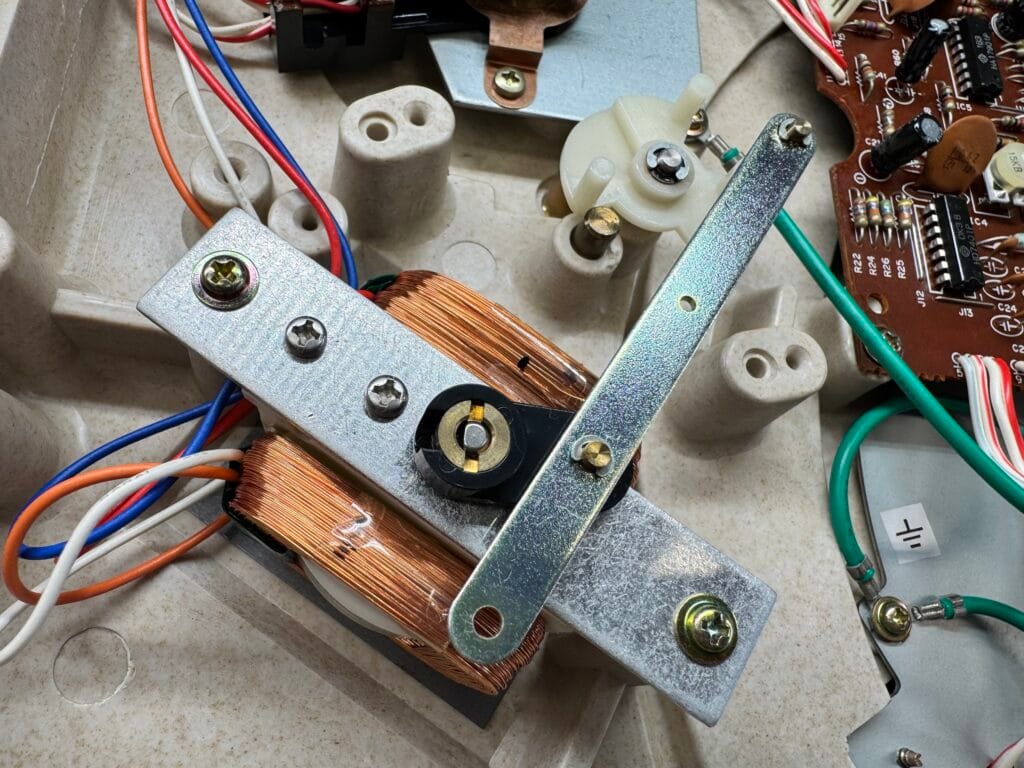
Results
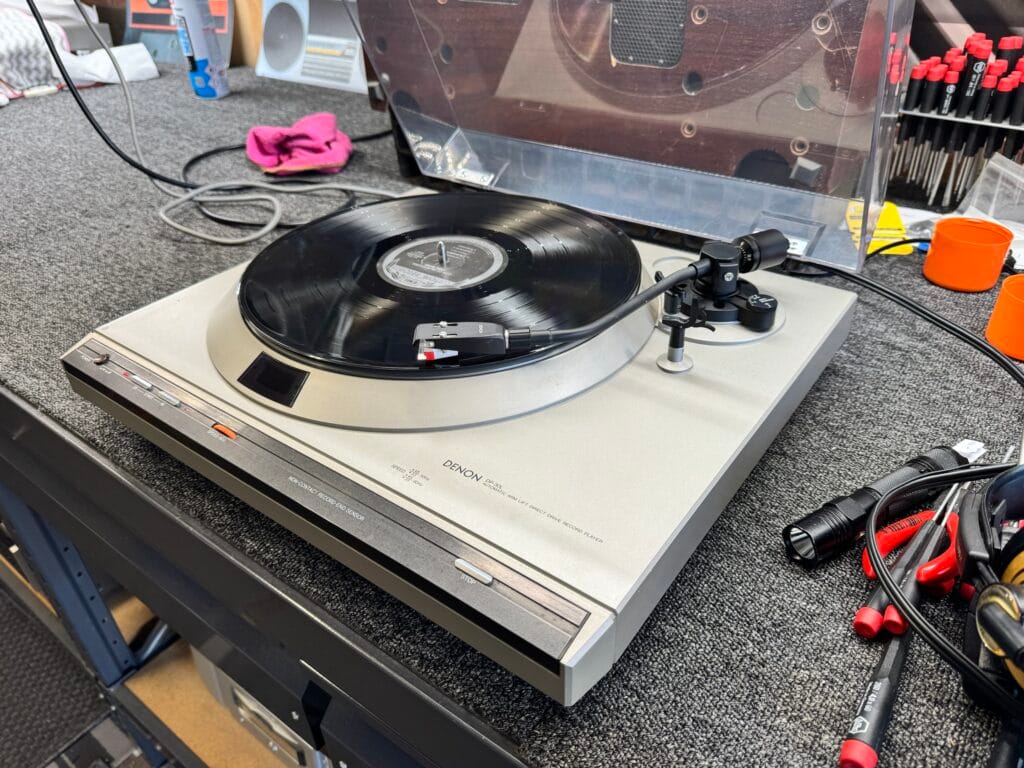
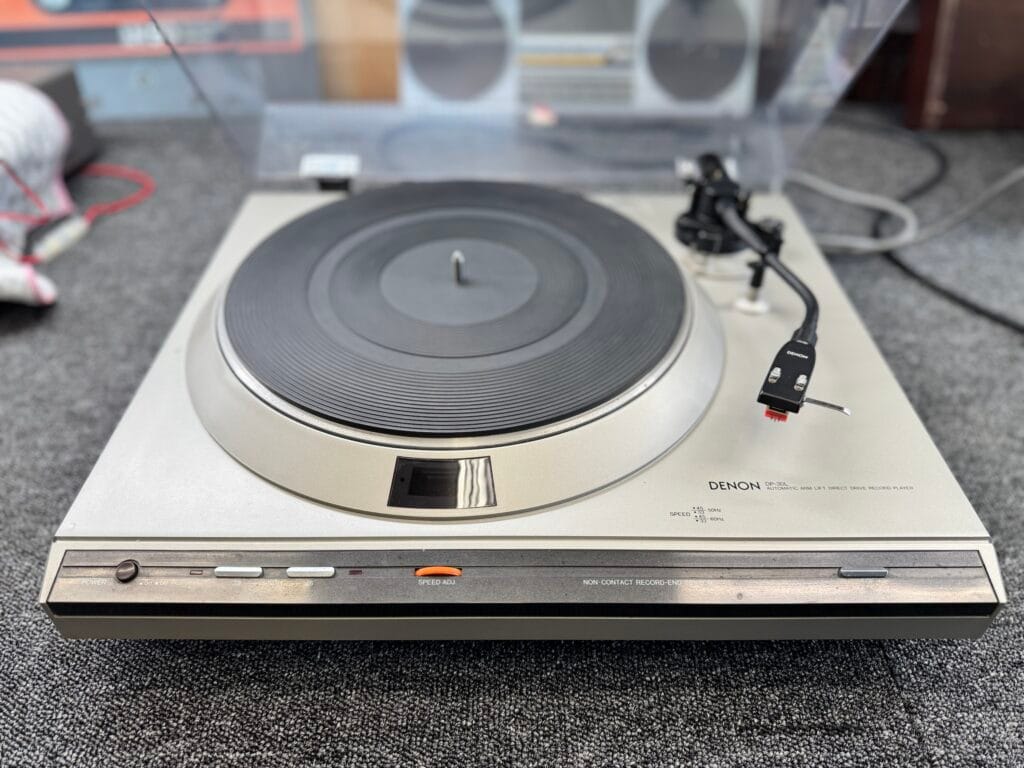
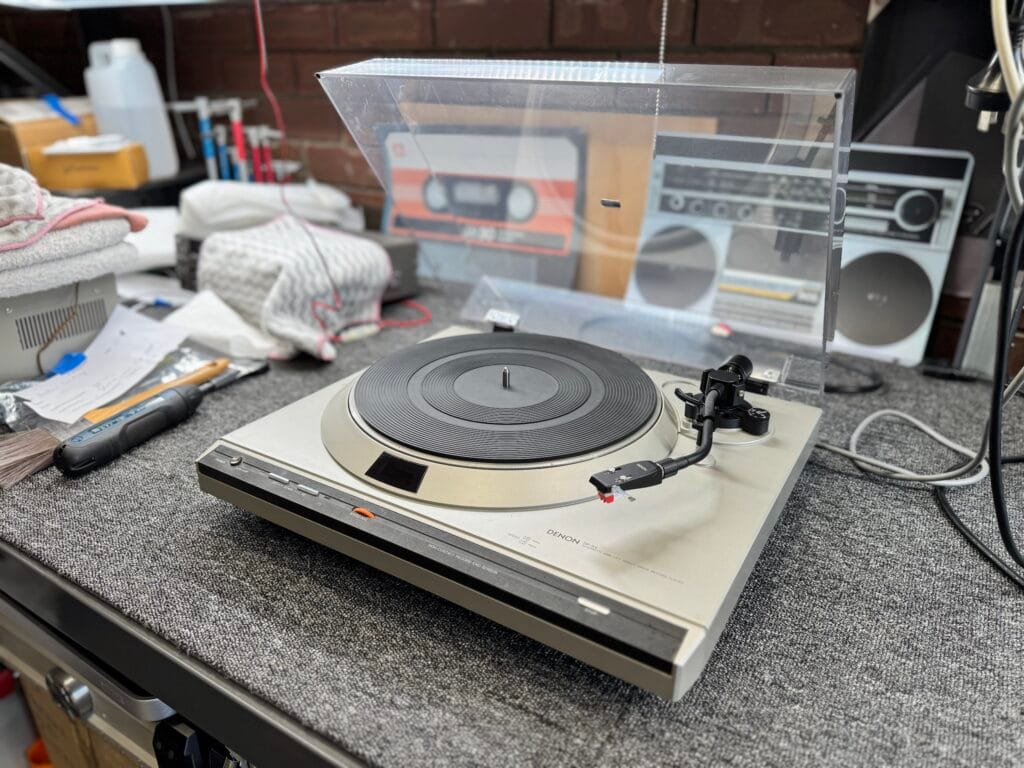
I’m pleased to report there are no issues here; this lovely Denon DP-30L is running beautifully once again and is back with her grateful owner. As usual, there are no earth-shattering claims, magic or guru beard-rubbing mysteries here, just a methodical, technical approach that thankfully readers and my customers seem to appreciate.
The tonearm moves smoothly and freely once more; the deck is running at the correct speed when switched to either running speed, without adjustment, in the middle of its range. The cartridge and tonearm are now also set up correctly, with the correct, factory-specified overhang and other parameters. As a result, the deck sounds much better than she did.
I highly recommend the Denon DP-30L to those perhaps wanting to upgrade from a basic belt drive deck or a cheap newer machine. In the DP-30L and others like it, you have a genuinely collectible piece of iconic equipment rather than something pretending to be. I respect that, and others who do.
Thanks!
As always, thank you for visiting, and I hope you found this article informative. If you’d like me to look at your Denon DP-30L, DP-1200 or any other lovely Denon turntable for you, don’t hesitate to contact us.
Sidenote: As you know, very little original, quality, trusted content like this exists. That’s always been a big driver in my creating it. I was recently asked: Who pays me to write these articles? My surprised reply was “Nobody!”, though that would be nice!
This site is 100% independent, ad-free, and everything is created by me, in my time, and at my expense. People can support us in various ways, including commenting, liking, sharing, subscribing, and donating using the button in the footer. Recent donors are listed in the sidebar/footer. Tell your audio friends because it helps me, which helps you!
Discover more from LiQUiD AUDiO
Subscribe to get the latest posts sent to your email.
Hey Mike – many of the Japanese items, turntables especially, that I’ve imported have that musty, salted air smell about them.
Whether its decaying rubber, or some other part(s) that gives off the smell, it’s always there when I lift the dustcover on my current GT-2000.
Have you noticed that too, and what’s your treatment for it?
Jon
Hi Jon, thanks for your question. I’m familiar with the sorts of smells you refer to; thorough cleaning and airing can significantly reduce them. I have deep cleaning regimens that can reduce and even remove the worst smells, such as those associated with smoking-affected equipment. In this case, thoroughly clean your GT and wash the mat, then let them air in a safe and shaded location for as long as possible. Rubber mats often have strong smells, and changing them for a different type can be useful. You need to retain your GT’s custom mat, so washing it is the best option.