
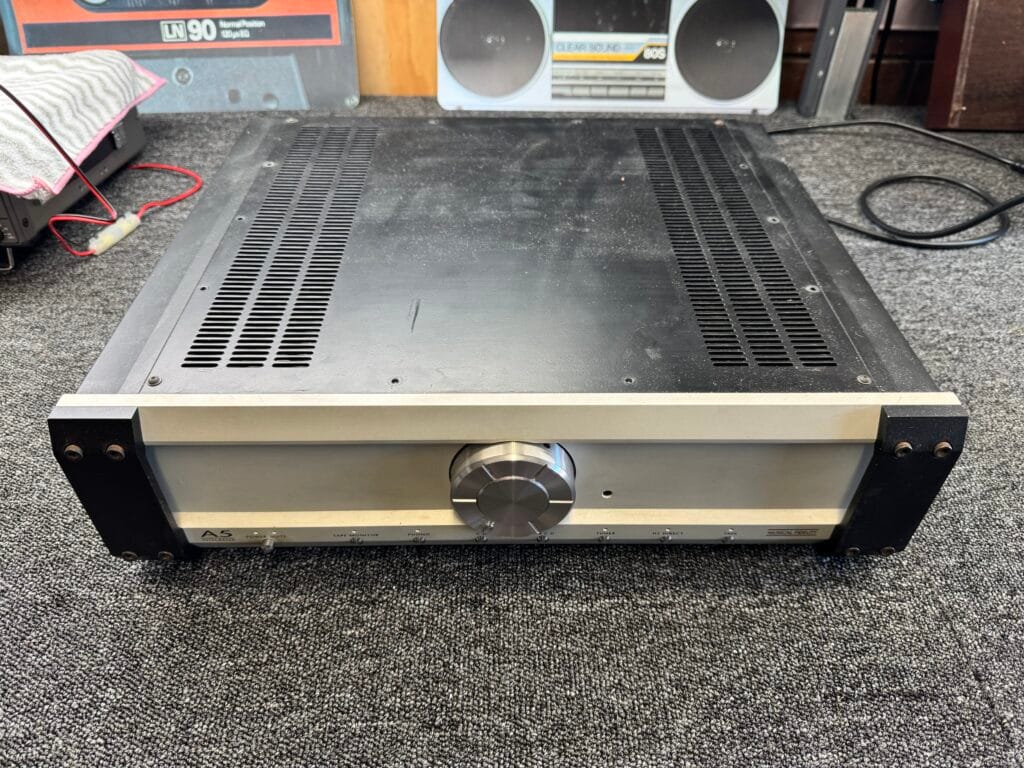
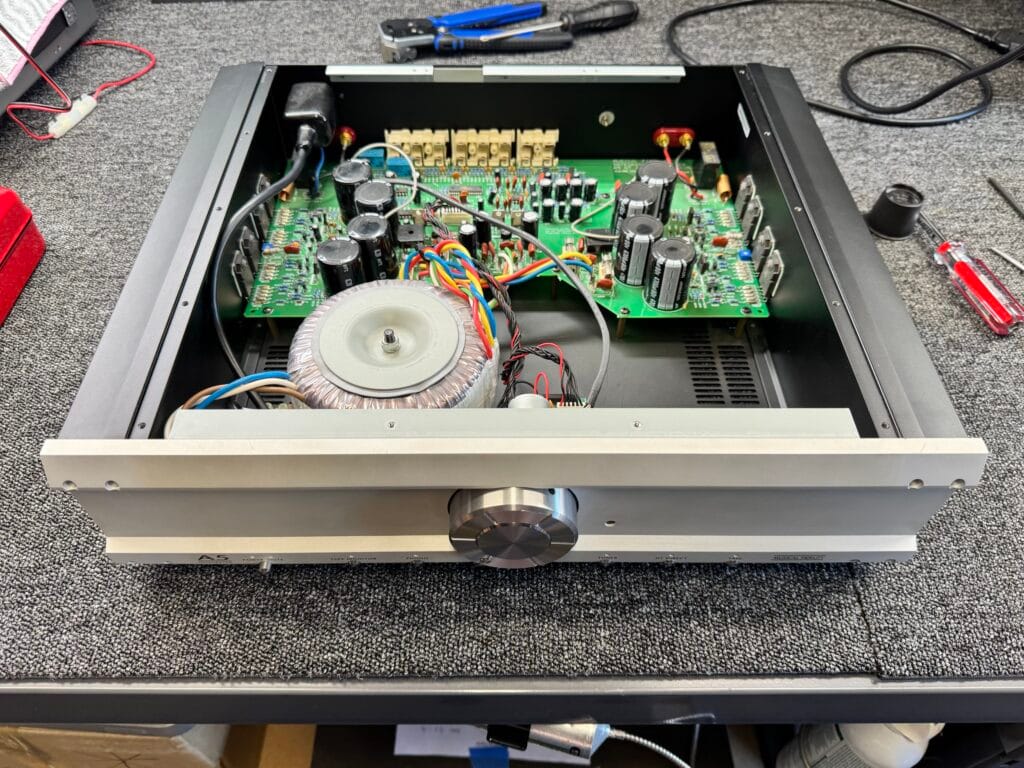
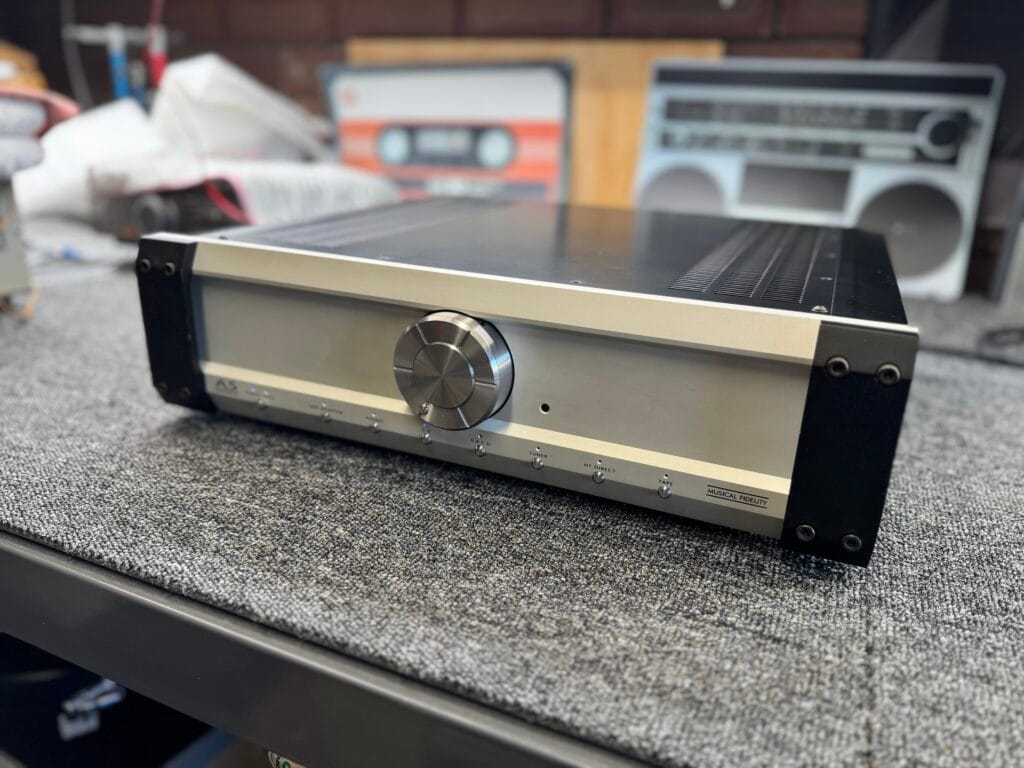
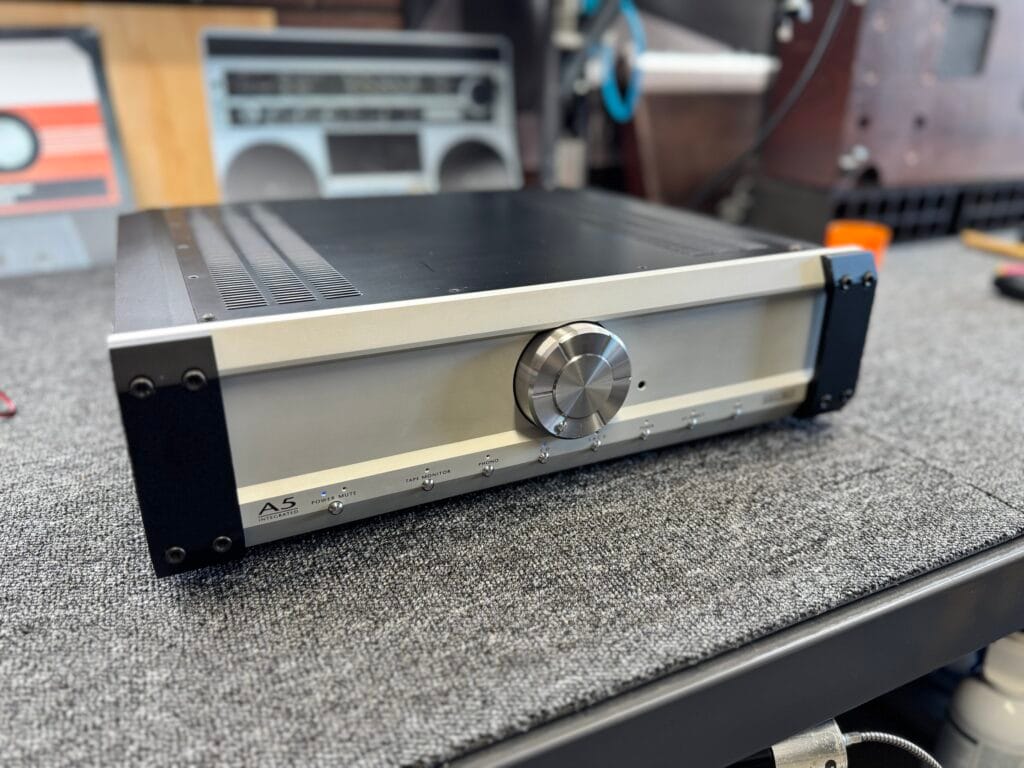
Join me as I repair a common issue with Musical Fidelity products, and this Musical Fidelity A5 integrated amplifier.
Many will know that I’m quite fond of some older Musical Fidelity models. I’ve owned a couple of them, including the great Tri-Vista 21 tube DAC, and repaired and improved many Musical Fidelity pieces over the years, including epic KW-750 and Nu-Vista M3 power amplifiers and other cool pieces I need to write about. Anyway, I thought it was about time for an amplifier article, and given that I’ve recently repaired this one, this is the one you get!
I’m very pleased to have the support of the Australian Musical Fidelity importer for my work with MF products, and that of the local official Musical Fidelity repairer, my good friend Jason @ The Speaker Doctor, and I thank them both for it. Collaboration like this is very helpful in terms of obtaining technical data, parts and so on, and our cooperation and combined efforts help MF equipment owners achieve high-quality repairs to their equipment, and keep it running.
The Musical Fidelity A5 integrated is what I see as something of a transition product for MF. This is a decent piece of gear, but the quality had dropped a little by this time, and it is let down, as other MF gear is, by poor component quality and cost-saving measures.
The biggest issues I’ve found are the Darlington output devices, which are no longer made and hard to source, and the cheap Chinese parts like Jamicon capacitors and fuse holders that fail even in MF’s premium line of amplifiers, like the AMS35i class A integrated amplifier, a model I’ve repaired several of.
Musical Fidelity A5 Integrated Specifications
Courtesy the legends over at HiFi Engine
Power output: 250 watts per channel into 8Ω (stereo)
Frequency response: 20Hz to 20kHz
Total harmonic distortion: 0.01%
Damping factor: 140
Input sensitivity: 2.5mV (MM), 330mV (line)
Signal to noise ratio: 96dB (MM), 100dB (line)
Channel separation: 70dB (line)
Dimensions: 440 x 125 x 400mm
Weight: 16.6kg
Accessories: Mains lead, remote control
The Problem
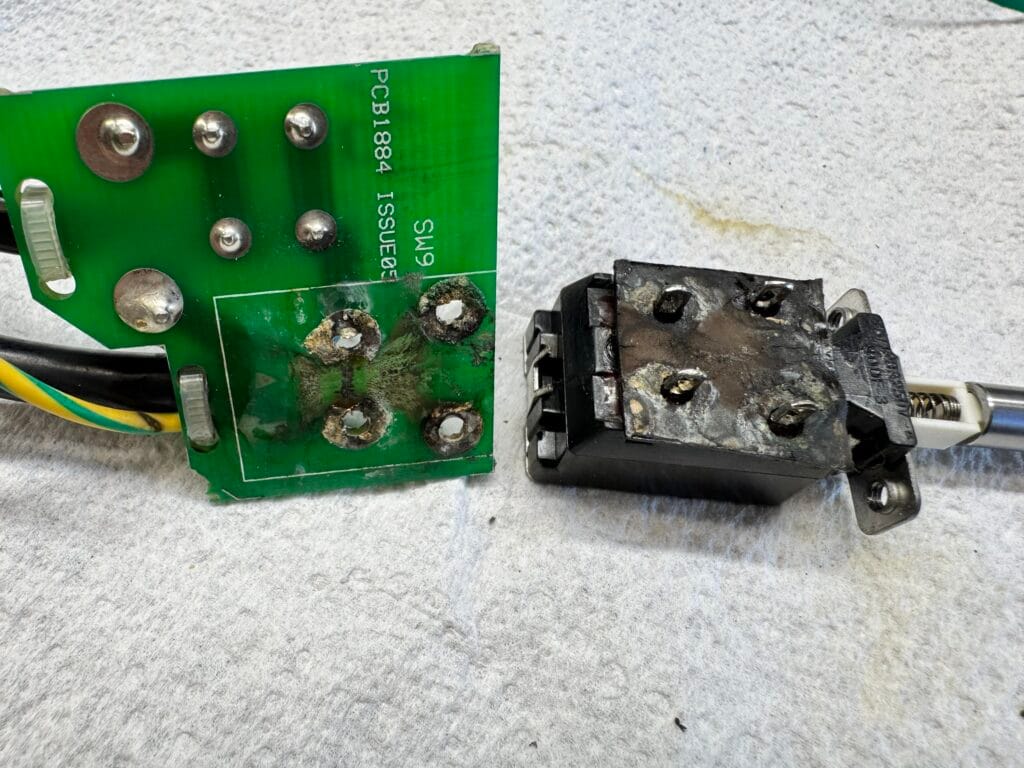
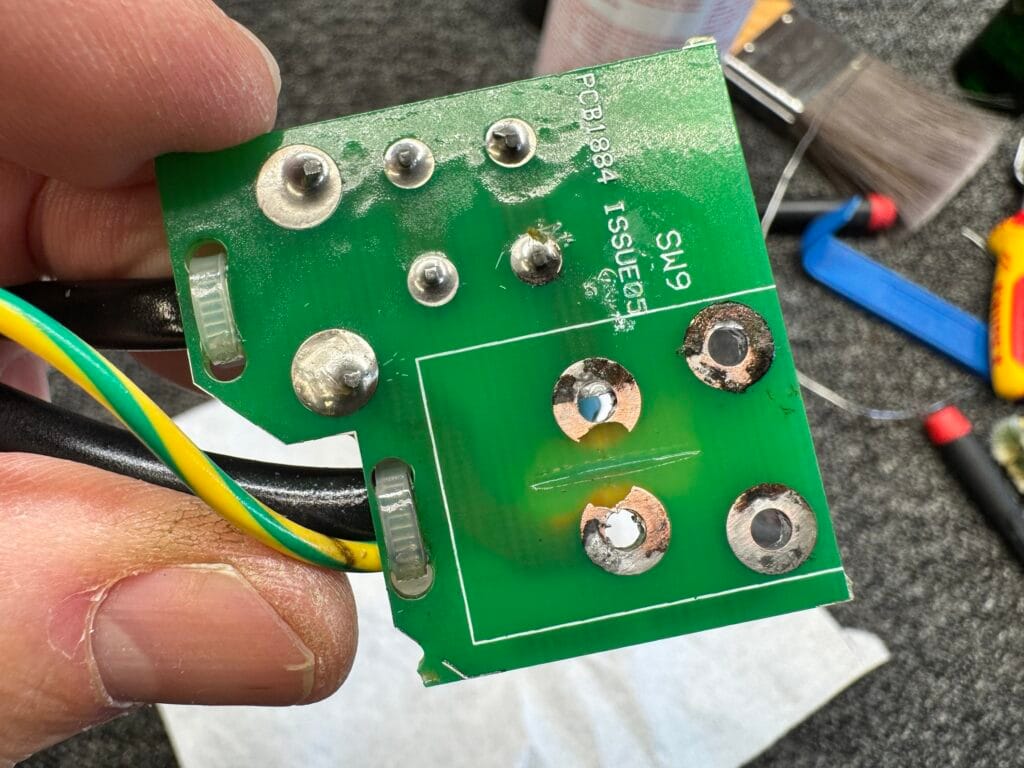
Which brings us to this curious and not so little problem with this era of Musical Fidelity equipment. There is one fault common to this series that really scares people when it happens. In this article, I’ll be focusing on that one fault. The power switches, or more specifically entire switch assembly, can vaporise in a frightening puff of smoke, that leaves them looking something like this:
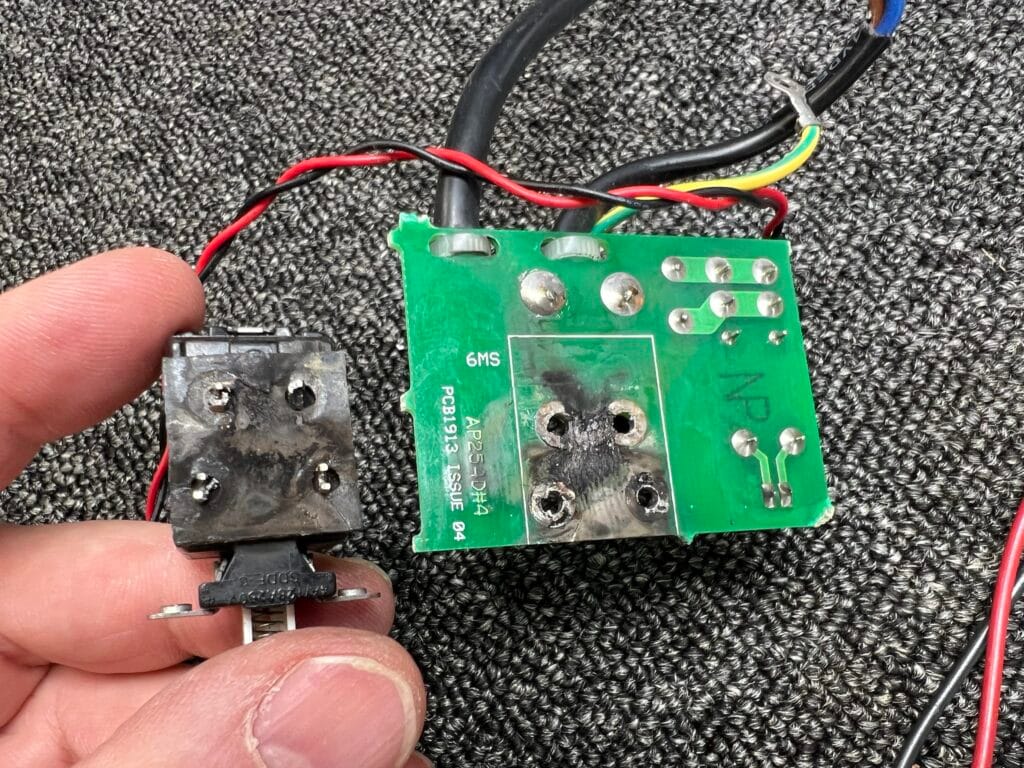
Let me explain the details of what happens here, because nobody else seems to know about or understand its exact nature. I’m sharing this information, like I did with the Musical Fidelity A3 battery leakage issue, and many other repairs, as part of my ongoing contributions to the hi-fi community, and in the hope that we can save a few more of these and other models with this design issue.
What happens is this:
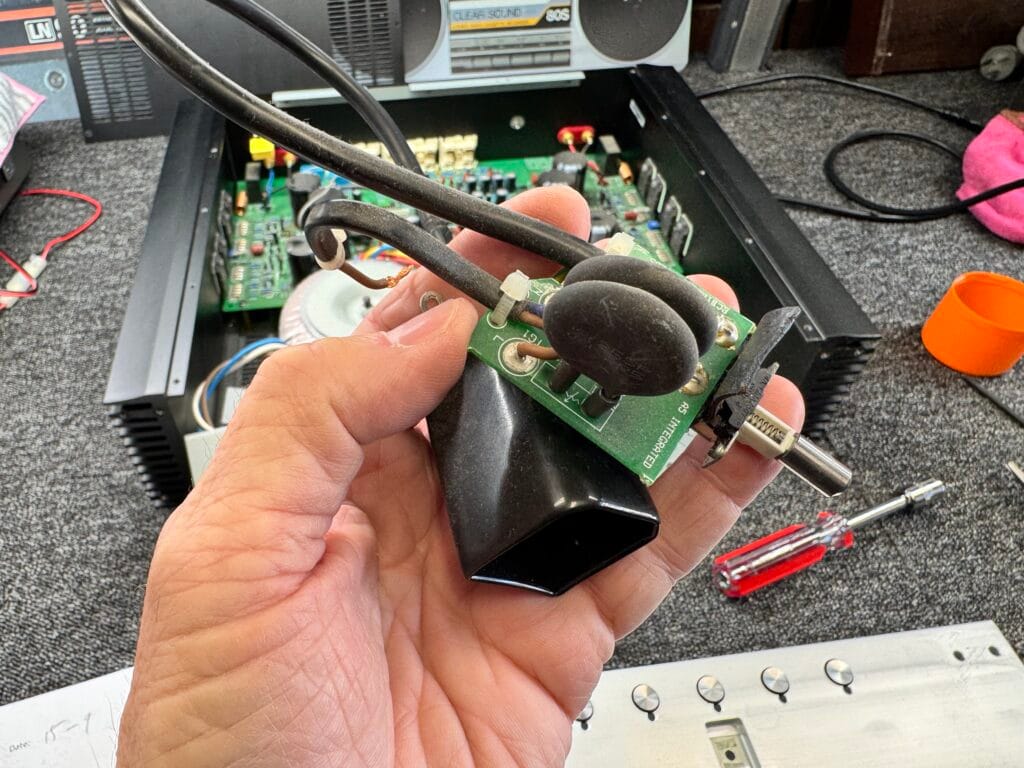
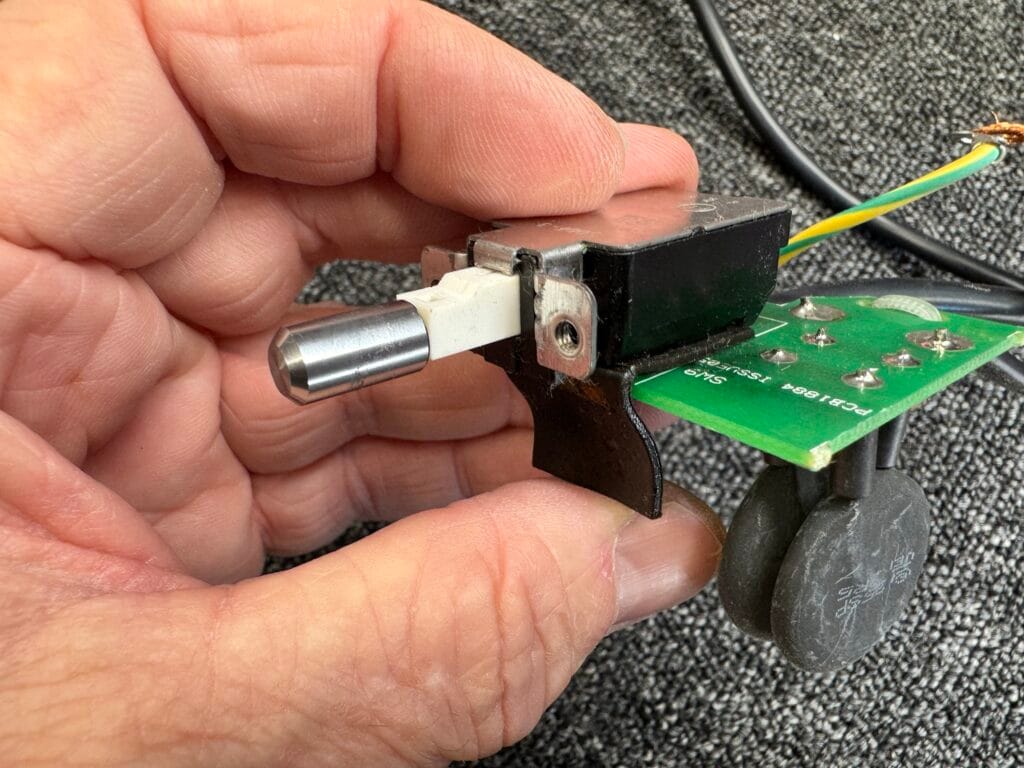
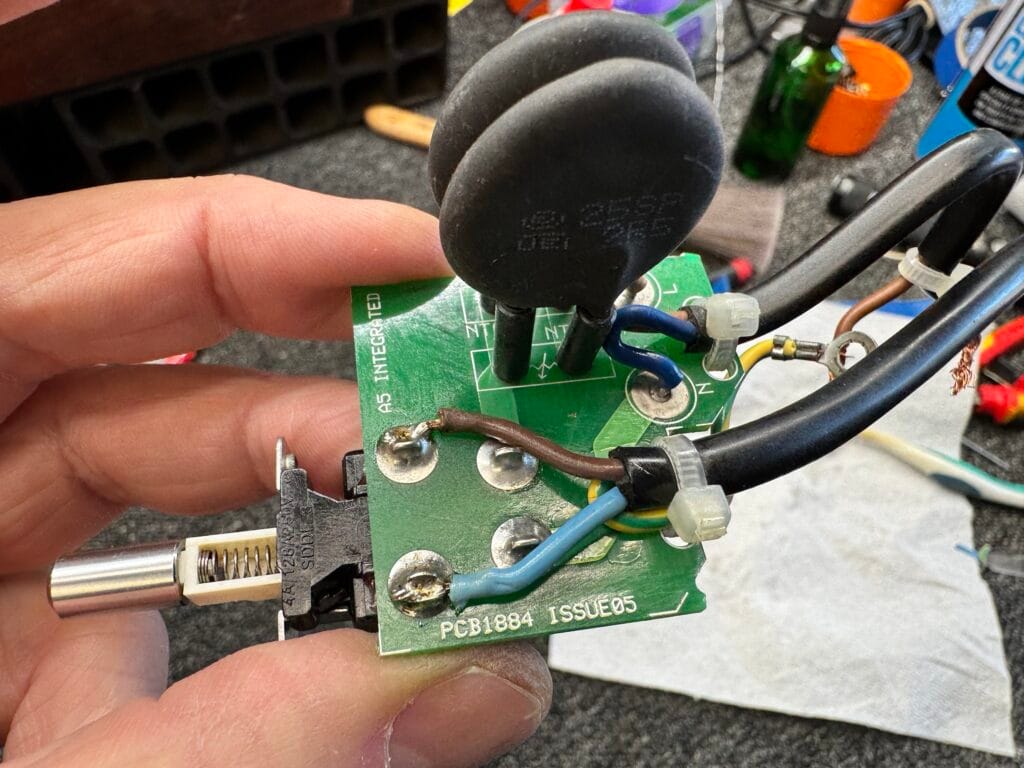
- The switch assembly consists of a quality fibreglass PCB, a cheap mains switch, and sandwiched between them, a black ‘rubber’ buffer. This was not a good idea.
- You might assume that the switch fails, but based on my repair of this Musical Fidelity A5 integrated, the black rubber buffer, over time and perhaps some atmospheric/environmental factors, outgases, causing the rubber and/or the adjacent board to become at least semi-conductive.
- Given that this rubber is in direct contact with terminals with a potential difference of 240V, the inevitable happens: arcing, which burns the board and the switch, destroying the whole lot, unless caught immediately.
- The signs and symptoms? The sights, sounds and smells of electrical arcing. If any of this happens when you switch on your MF A5, switch off and remove power to it IMMEDIATELY!
This fault is designed in, in the sense that the rubber installed between the switch and PCB will eventually fail. Once the above happens, there is little that can be done to save the assembly or switch. A new assembly is needed, and I ordered the very last one available, IN THE WORLD, for the job in the image above!
Thankfully, in today’s case, the owner caught this AS SOON as it started to happen. He contacted the Musical Fidelity importer, who suggested he bring the unit to me, knowing that I’ve repaired a few models with this same fault over the years.
Repair
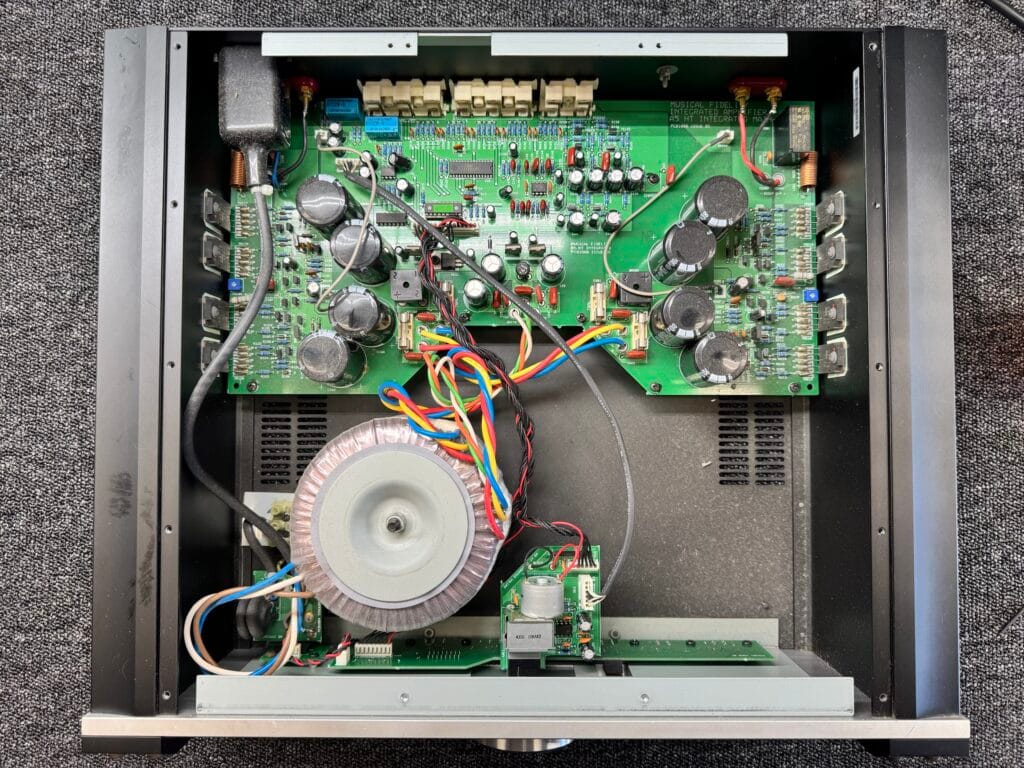
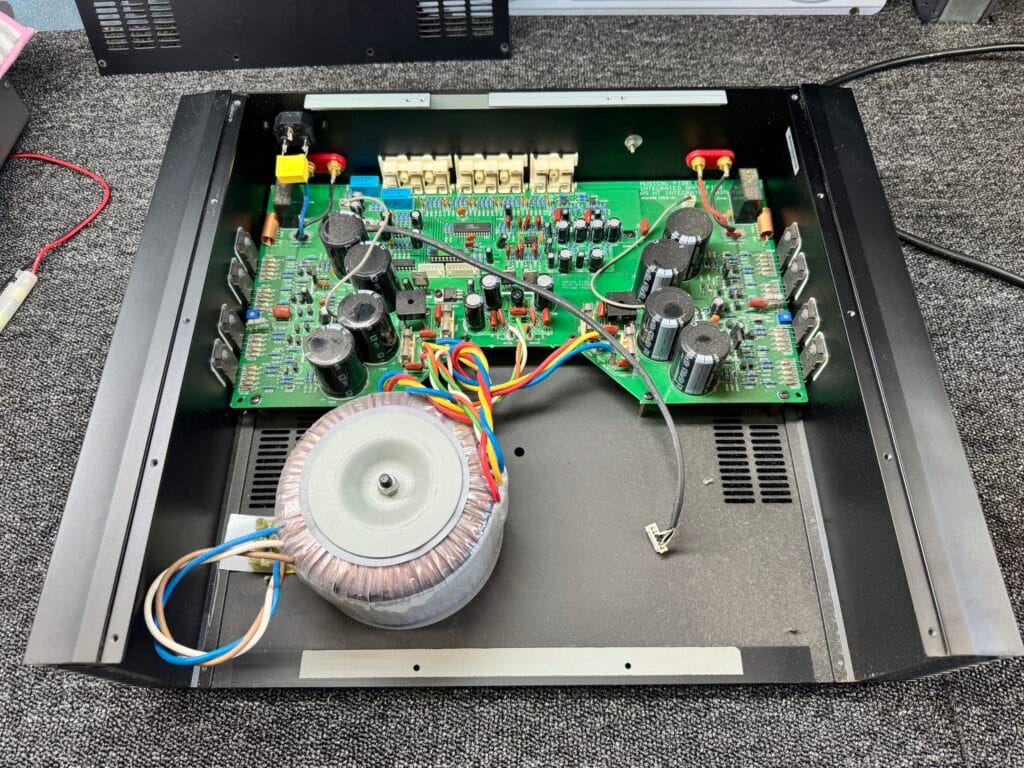
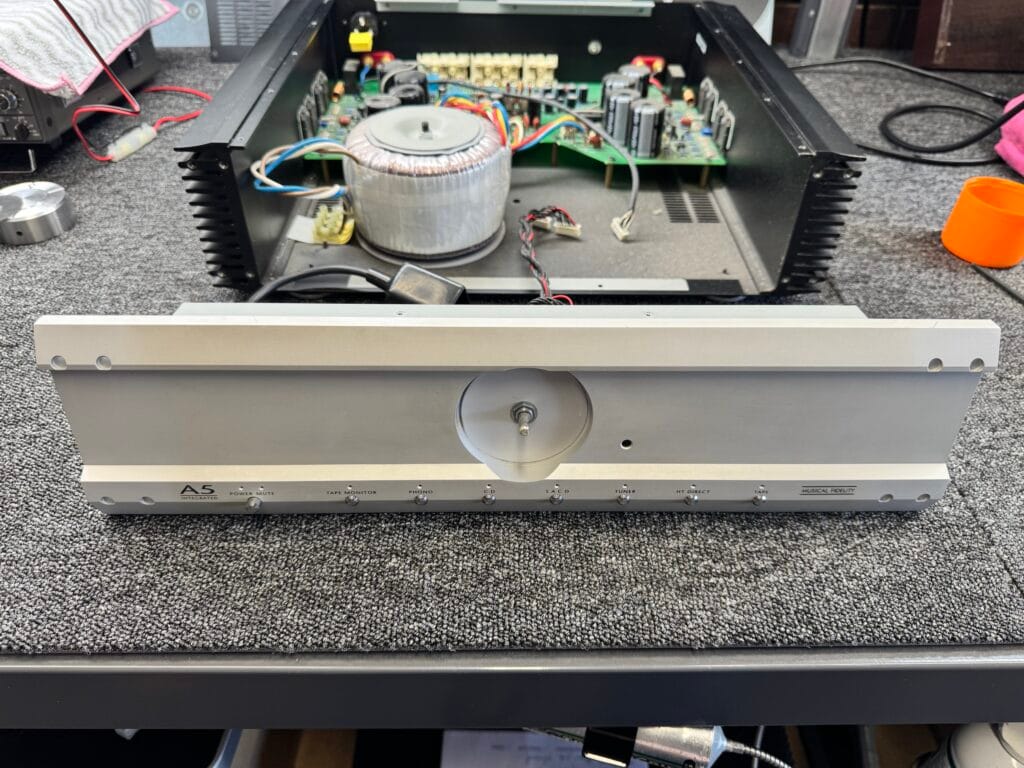
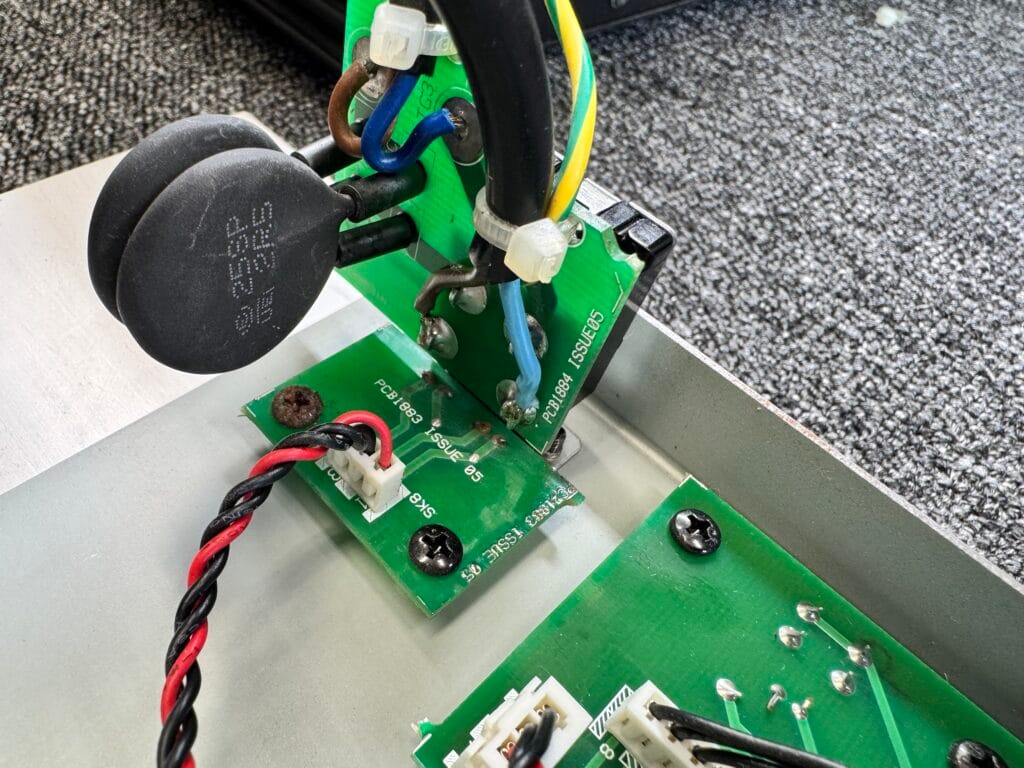
As I’ve mentioned, this Musical Fidelity A5 integrated amplifier came to me in what is a best-case scenario, in that the switch assembly only just started to fail. I was able to implement a solution that works nicely here. Keep in mind that, without official factory parts, these models are no longer supported when they fail, meaning you are expected to throw them away. This is a most unfortunate stance by the manufacturer regarding an obvious design issue. MF ought to rectify that.
Let’s take a look at the details.
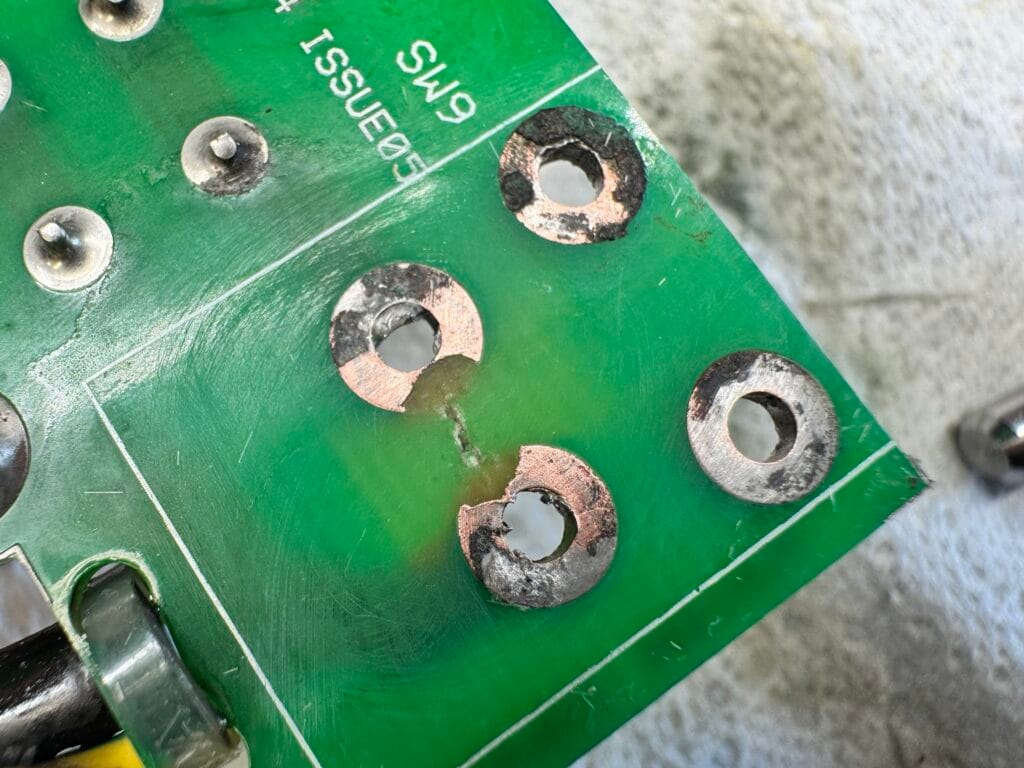
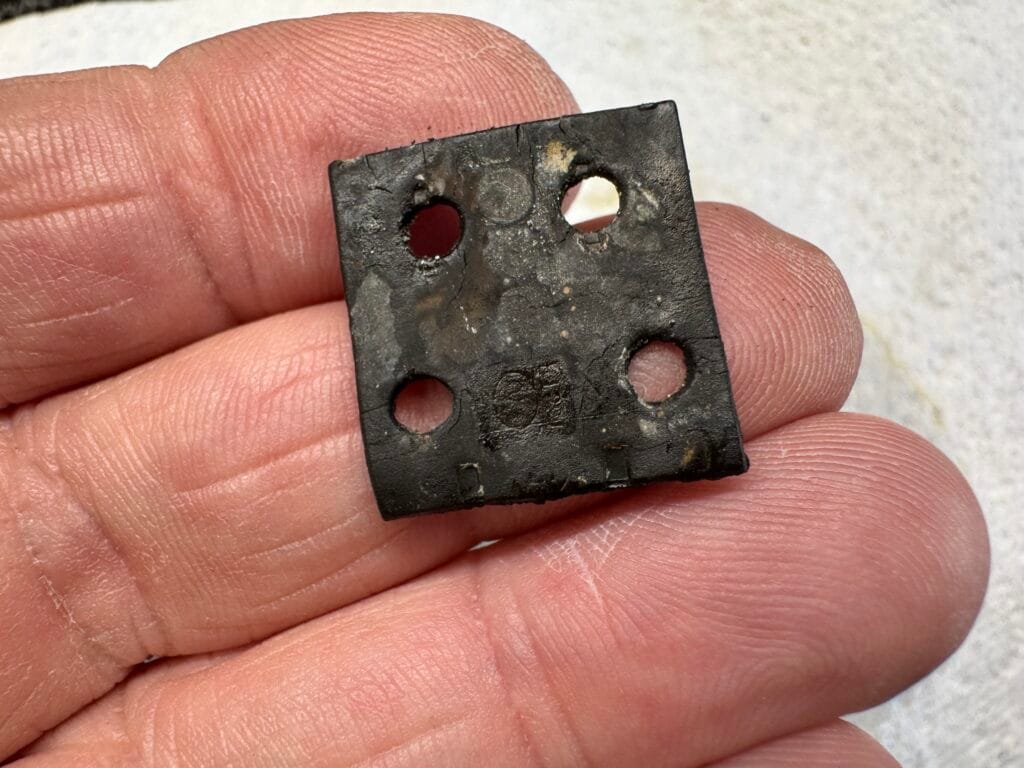
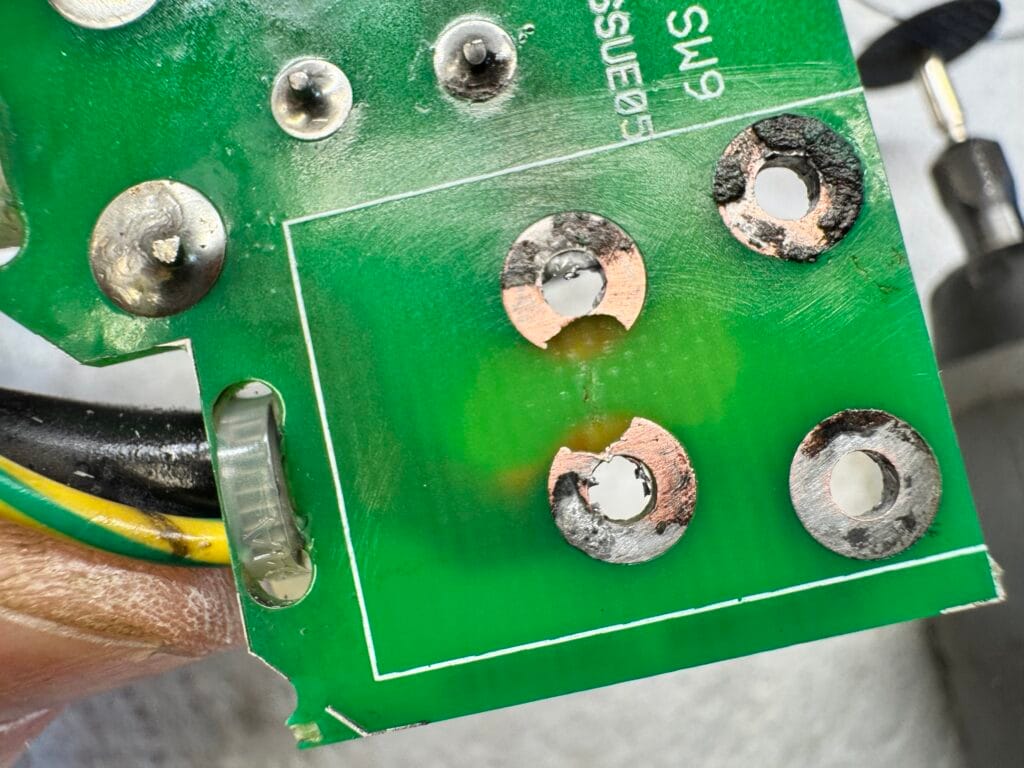
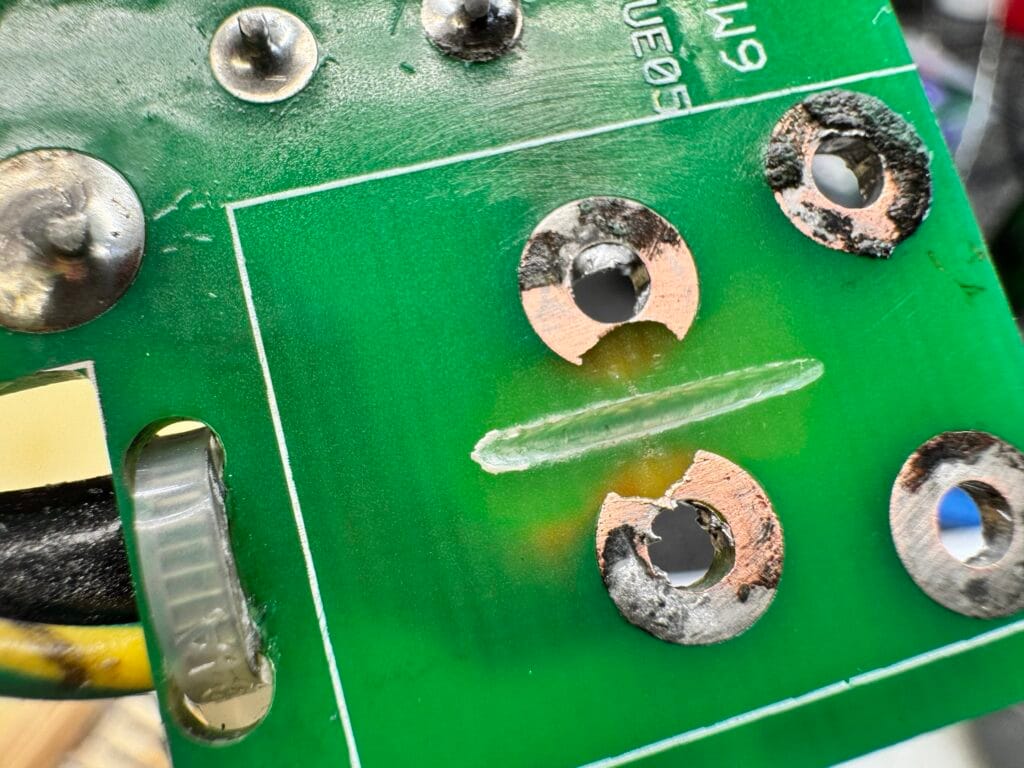
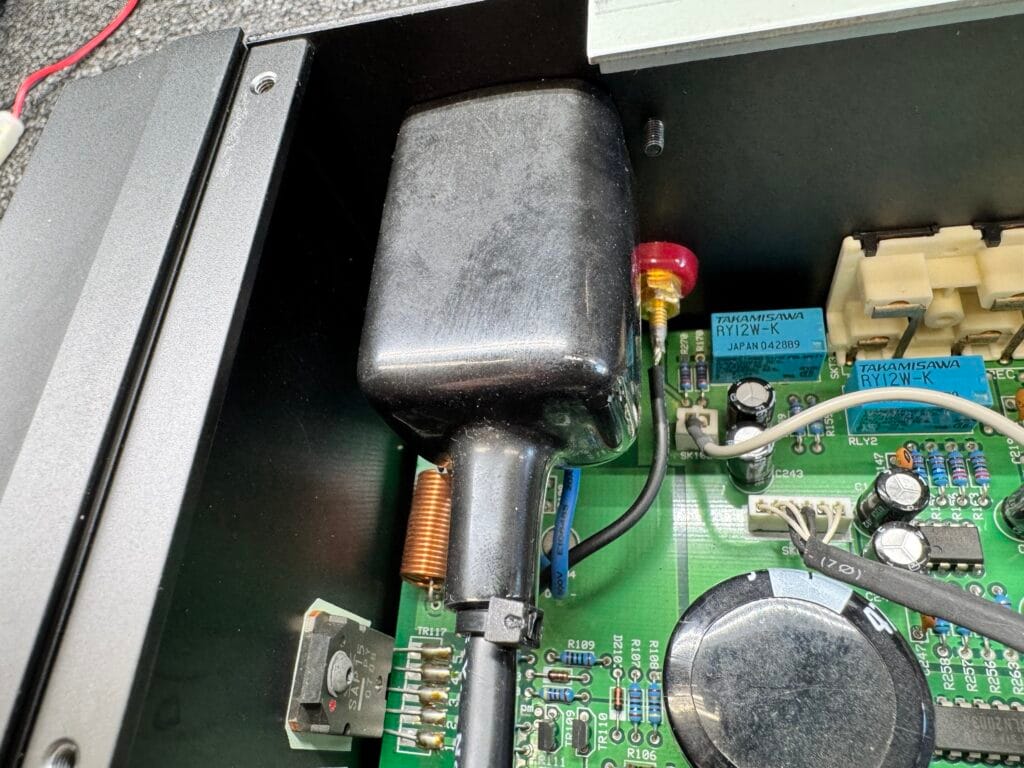
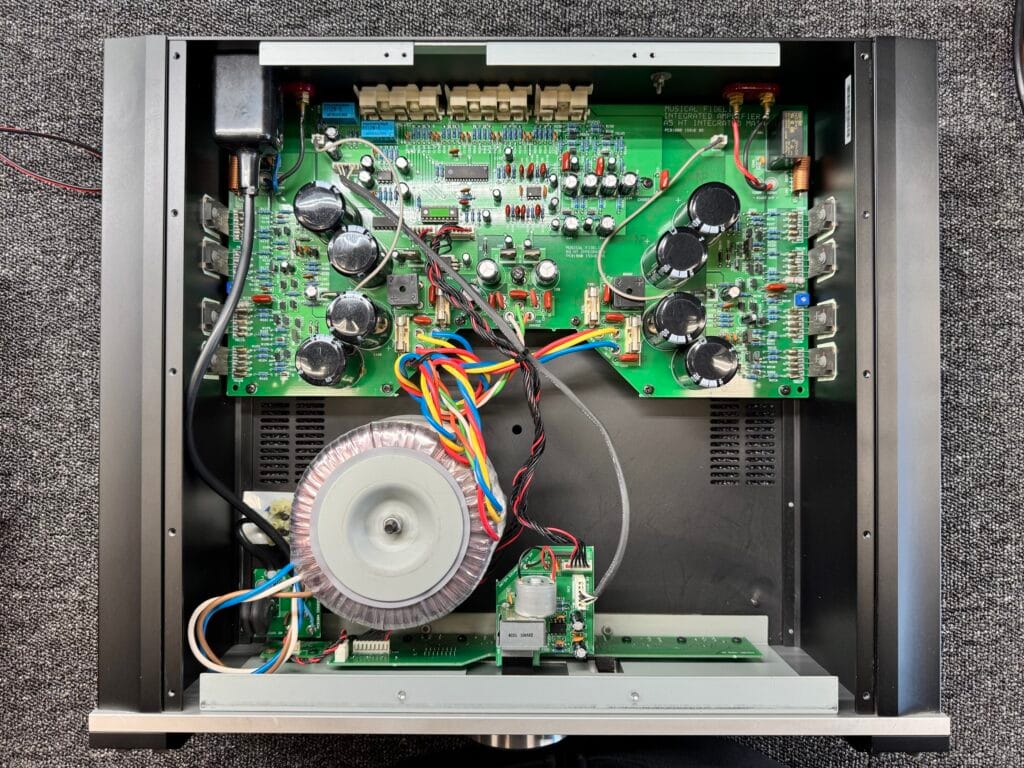
Results
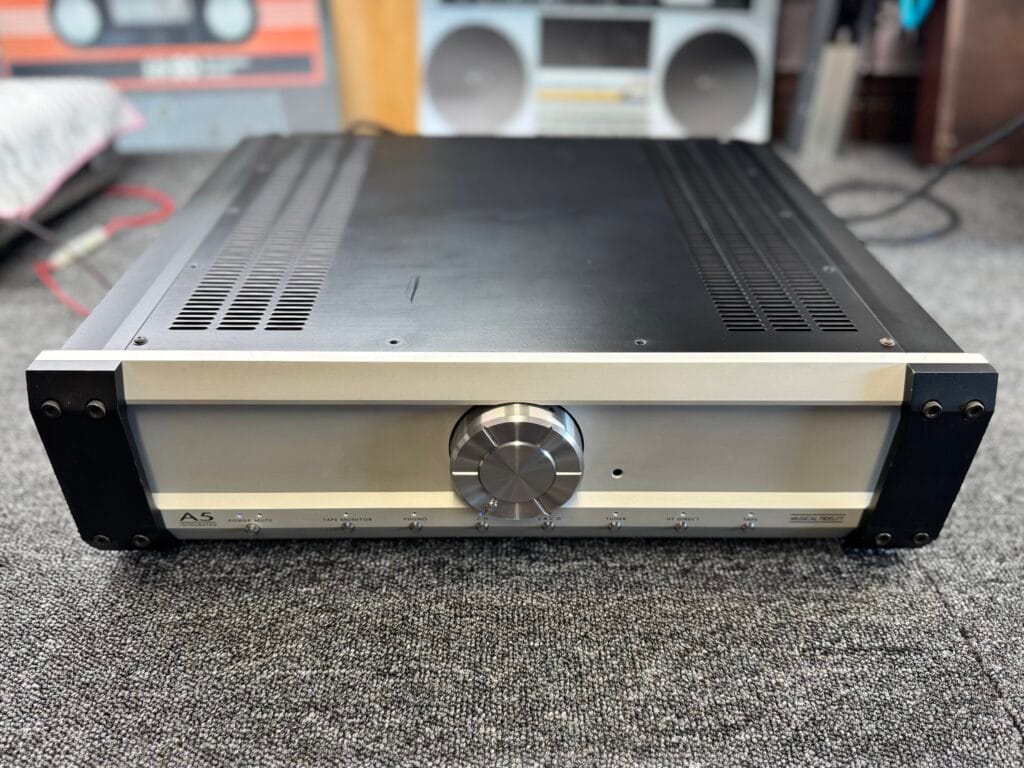
Again, nothing groundbreaking here, folks, but saving an otherwise decent and desirable component like this Musical Fidelity A5 integrated amplifier is certainly worth it, where it’s viable to do so. Given the total unavailability of these switch modules and the fact that I’ve needed to install several over the years to save A5 series amplifiers, any time we can save an otherwise serviable switch assembly, this has to be attempted.
So, the question some might be wondering is “What happens if the switch assembly is vaporised like it was in the first image?” This is an excellent question. Previously, I would have just ordered another switch assembly, but we cannot do that now. For these cases, moving forward, I’m thinking a switchable IEC inlet in place of the existing one might be the best option. This would, unfortunately, require cutting into the back panel, so it’s worth exploring other options first.
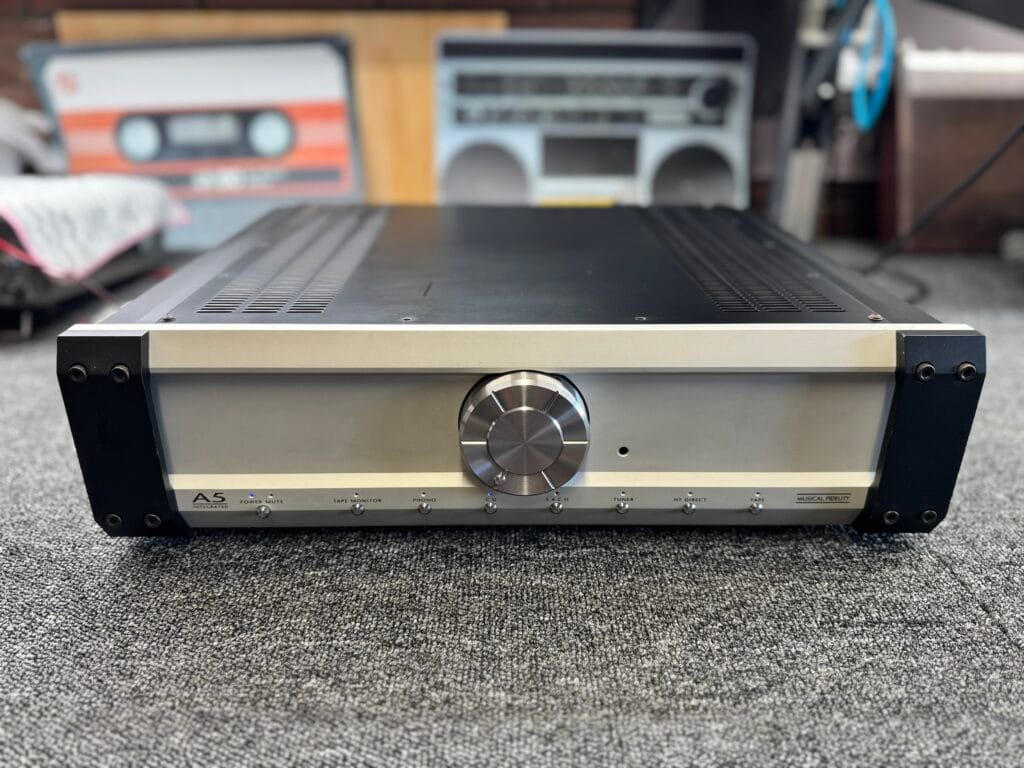
Thanks!
As always, thank you for visiting, and I hope you found this article informative. If you have a Musical Fidelity A5 integrated, pre, power, or any other decent Musical Fidelity equipment you’d like me to look at for you, don’t hesitate to contact us.
Sidenote: As you know, very little original, quality content like this exists. I was recently asked: Who pays me to write these articles? My surprised reply was “Nobody, though that would be nice!”
This site is 100% independent, ad-free, and I create and do everything. People can help support my work by commenting, liking, sharing, and subscribing, and by donating using the button in the footer. Recent donors are listed in the sidebar/footer. Tell your audio friends because it helps me, which helps you!
Share this:

Discover more from LiQUiD AUDiO
Subscribe to get the latest posts sent to your email.
Again Mike another fascinating article to read
I obviously dont have your expertise, but I love how you break things down both visually and by written work so that “lay” people like me can follow the repair work you are doing
a real satisfaction of achievement form both sides of the table repair
Rodney Pegg
Thank you, Rod. That is great feedback, and I really appreciate it. I hope you are feeling much better than when I last saw you!
Hi,
Thanks for this article. I own a A5.5 integrated amplifier, when i turn on, and put my ear next to the power switch, i can hear like a buzzing sound. Is this the problem you are referencing with this amplifier?? Do you know of a trusted service technician in Melbourne for this unit. Thanks George.
Hi George, glad you enjoyed the article. If you can hear buzzing from the switch, or see or smell anything weird, stop using her immediately and get her to a specialist, to give you the best chance of preserving the switch/board. I don’t know of any good repairers in Melbourne, but ask Tony @ Len Wallace Audio in Sydney who he recommends in Melbourne for this job.
Thank you for your reply,… its definitely a buzzing sound, bzzzz, but no smells or anything else… from the power switch, not crazy loud, but you can here it near the power switch…. i purchased it used maybe 4 years ago, and it was like that when i got it… ill do my best to try and find someone to fix it… thank you, yes , your article was detailed and very enjoyable to read and learn… thank you again George.
All good, George, always happy to help.
Same issue here and fixed with your shared experience!!
Outstanding, well done!