
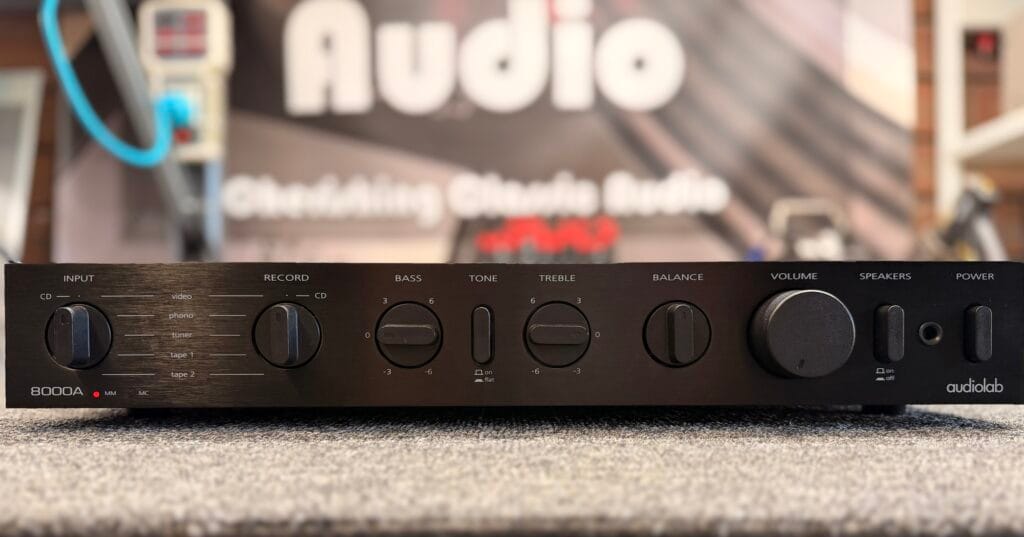
Join me as I repair one of my all-time favourite integrated amplifiers, a classic, made-in-England Audiolab 8000A.
I’d first like to thank Steven for generously donating this old beauty, and a couple of other pieces, rather than sending them to recycling, as usually happens when they get to this point. This article is dedicated to Steven and others who’ve kindly and environmentally thoughtfully donated pieces like this Audiolab 8000A rather than scrapping them.
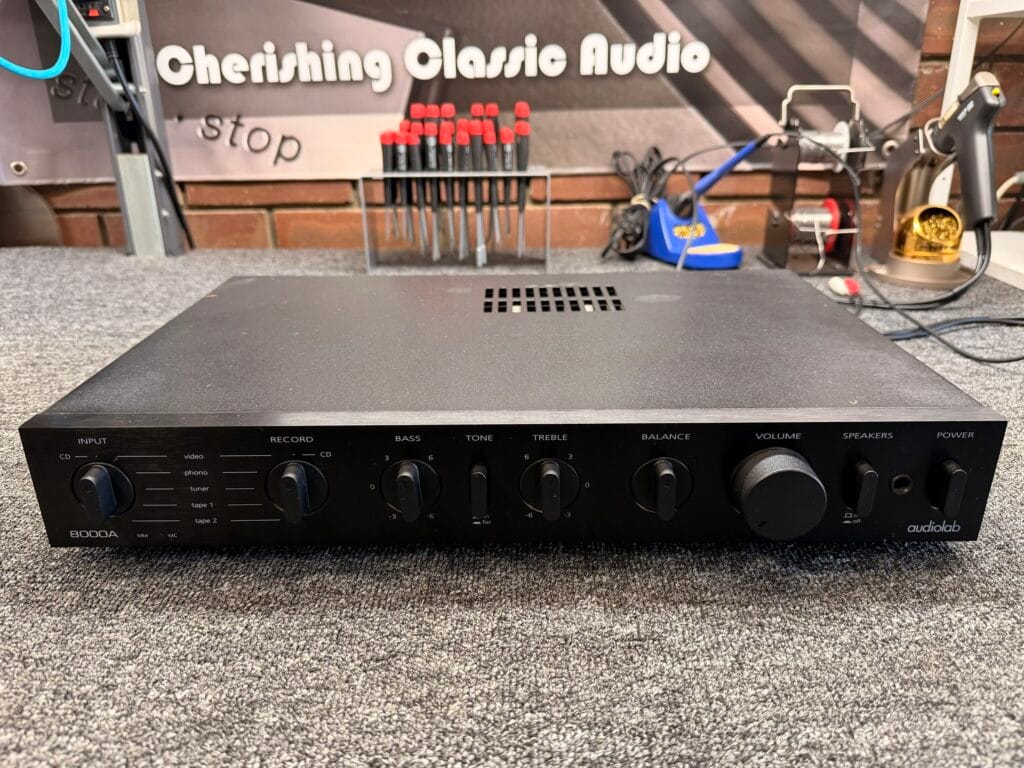
Naturally, this isn’t the first Audiolab 8000A I’ve worked on. I’ve repaired many of them and others in the series over the years, and these and the 8000P power amplifier and 8000Q preamplifier remain firm favourites of mine. I made a video about the Audiolab 8000A back in 2018, so feel free to check that one out. I’m not sure if I will edit together a video for this one, but I may, just not today.
Design & Features
I’m genuinely enthusiastic about the Audiolab 8000A integrated amplifier for many reasons, so much so that after resurrecting this one, even though I don’t need it and could get decent money for it, I’m thinking I might keep it for a rainy day, unless someone makes me an offer I can’t refuse.
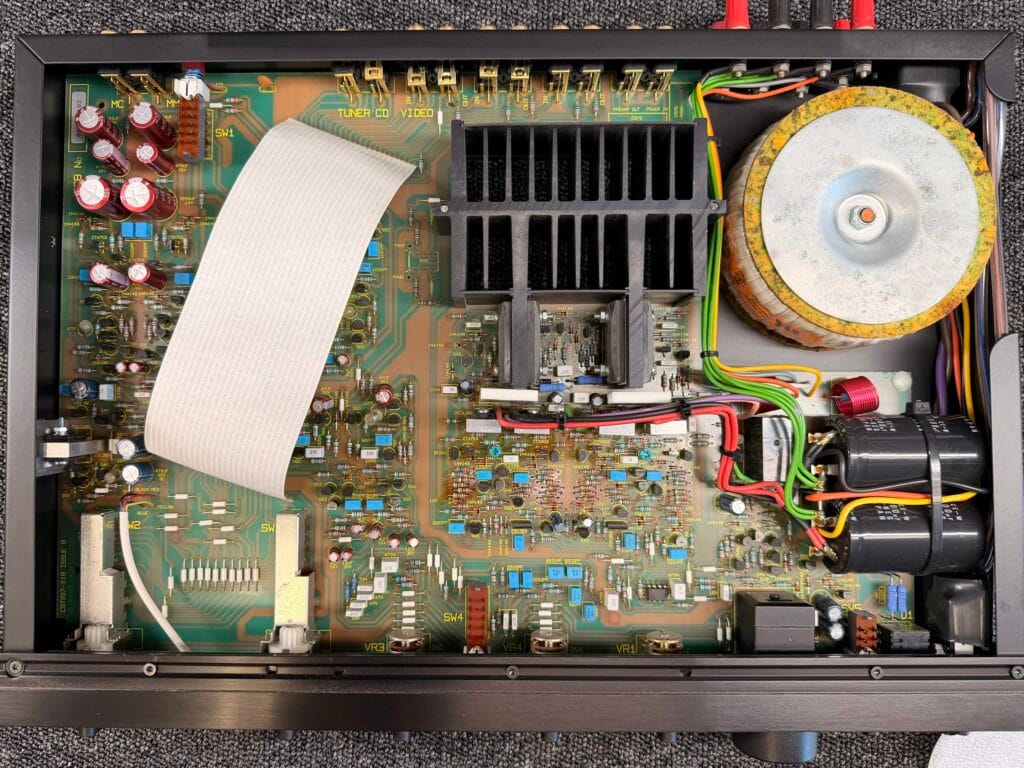
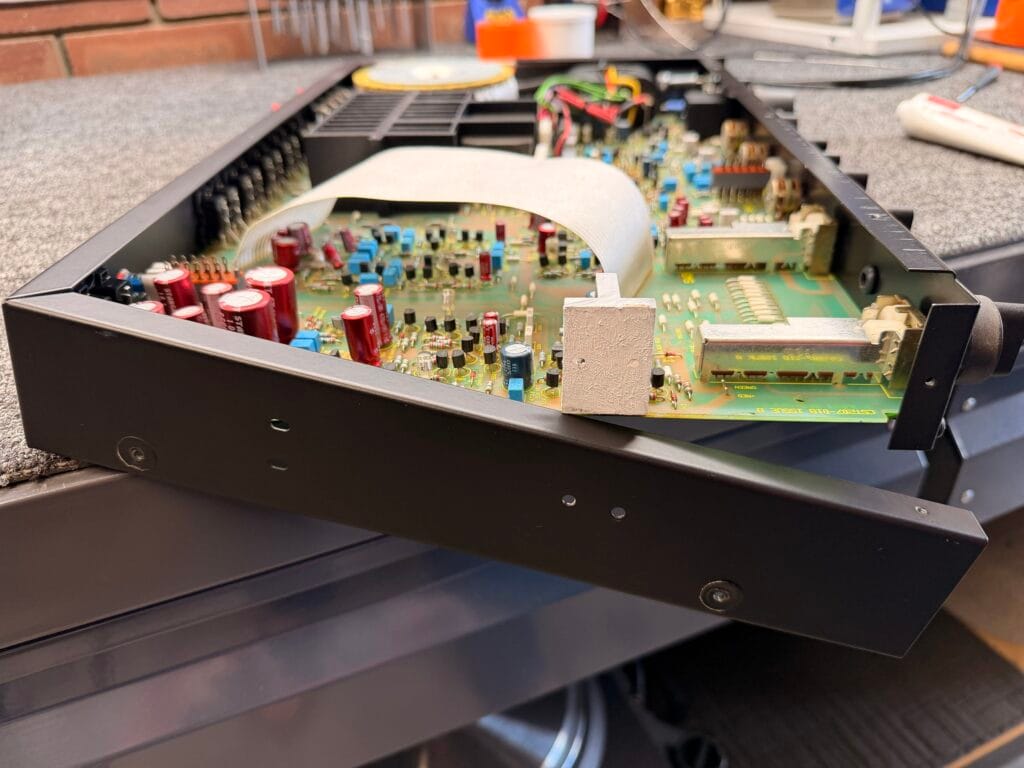
There are many things I like about the Audiolab 8000A, and I’ll run through a few of them. The amplifier utilises a one-board design with zero signal wiring. Everything from the (fragile as you’ll see) RCA connectors to the front panel controls mounts directly to one large board. This improves signal integrity, reliability, reduces costs, and means that the 400 Great British Pounds these sold for was a bargain for the performance you received.
Next is the parts quality. The parts used in the Audiolab 8000A are, for the most part, better than the parts found in most comparable amplifiers from that time. Audiolab really didn’t cut too many corners here, and you’ll see plenty of high-quality electrolytics, film capacitors, and premium switches. There are some weaknesses, though, as we will see.
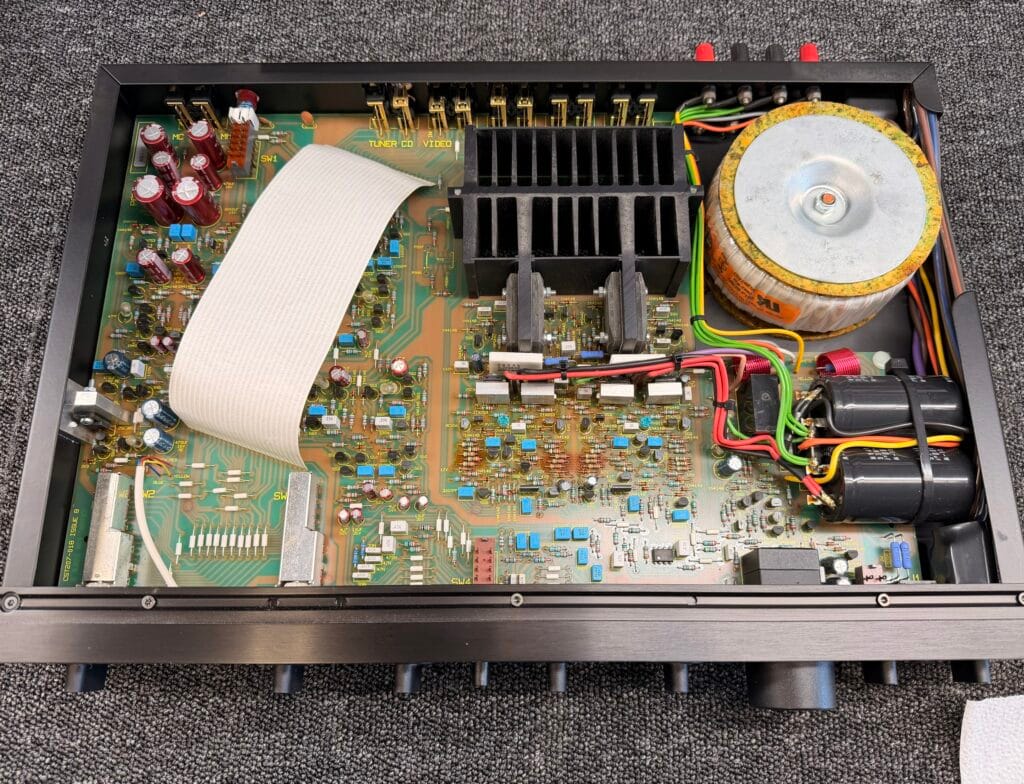
Even the design of the output devices and heatsink module is beautiful. Pairs of output devices are bolted together, sandwiching the heat sink material, creating a dense and space-efficient one-piece design. The top and bottom cases are perforated where the heatinks are, to allow for convective airflow, and so the relatively small heatsink area works well with the reasonably robust 60 W design.
There’s a proper discrete phono preamplifier in the Audiolab 8000A. Once again, high-quality parts are used, and this preamplifier also caters for moving coil cartridges, which is unusual at this price point. There is also a headphone amplifier/buffer, proper tone controls, a tape loop and quality binding posts. Nothing has been omitted from this beautiful-sounding amplifier.
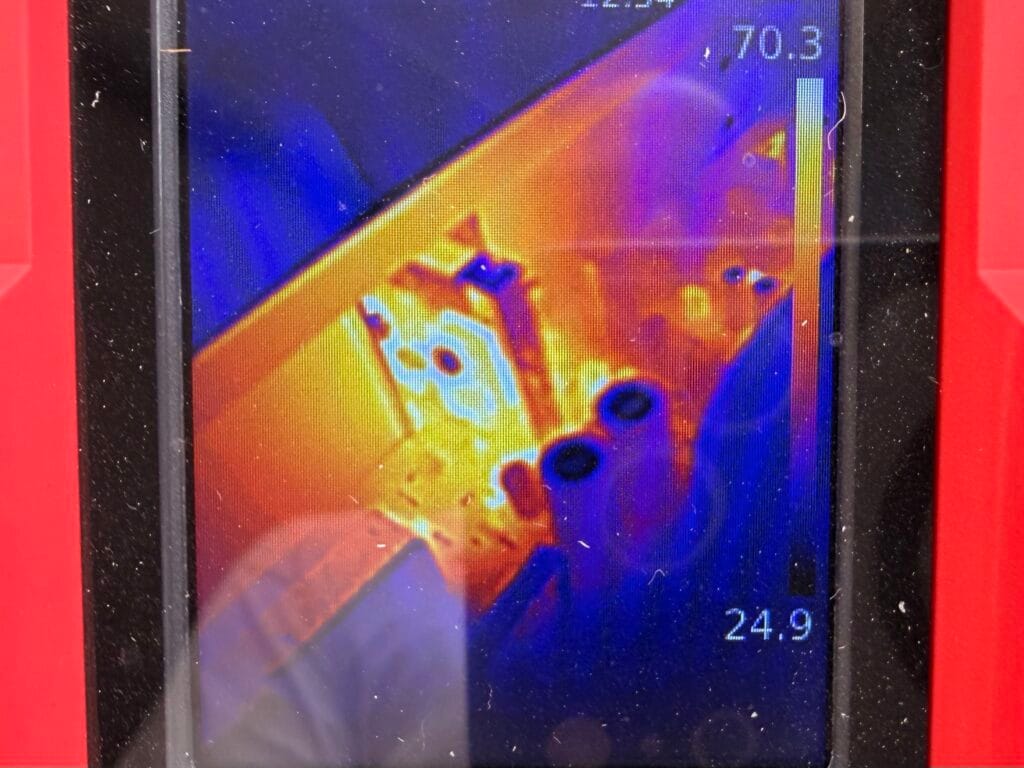
The only issues that I would note here are that the Audiolab 8000A is biased to run reasonably warm, and certain solder joints degrade over time, especially in warmer climes. The electrolytic capacitors associated with these warm parts of the circuit suffer, and the 8000A/8000P is one of the few designs I come across that typically needs to be deeply overhauled at this age. This is all predictable and fixable, however.
You can read more about the classic Audiolab 8000A in this HiFi News article, and on the modern Audiolab website. A quick word on old vs new Audiolab, though. Old and new Audiolab are not the same, nor really even similar, except by name. The only Audiolab products I would own are from the original made in the UK series that this 8000A comes from, before they changed ownership the last time. I should also note that there are several iterations of the Audiolab 8000A, even from the made in the UK era.
Audiolab 8000A Specifications
Courtesy of HiFi Engine
Power output: 60 watts per channel into 8Ω (stereo)
Frequency response: 20Hz to 20kHz
Total harmonic distortion: 0.05%
Input sensitivity: 0.11mV (MC), 2mV (MM), 100mV (line)
Signal to noise ratio: 75dB (MC), 78dB (MM), 80dB (line)
Channel separation: 60dB (line)
Output: 100mV (line), 0.7V (Pre out)
Speaker load impedance: 4Ω to 16Ω
Dimensions: 445 x 74 x 335mm
Weight: 7.6kg
Price: GBP £410 in 1991, equivalent to about $2200 AUD in 2026
Problems
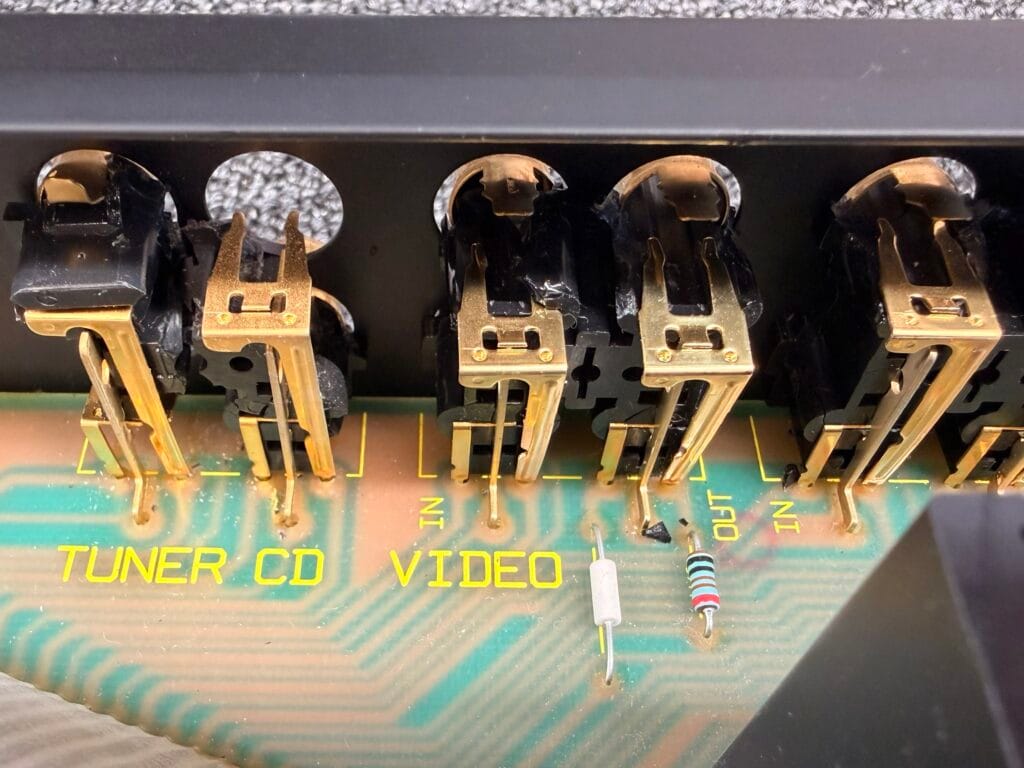
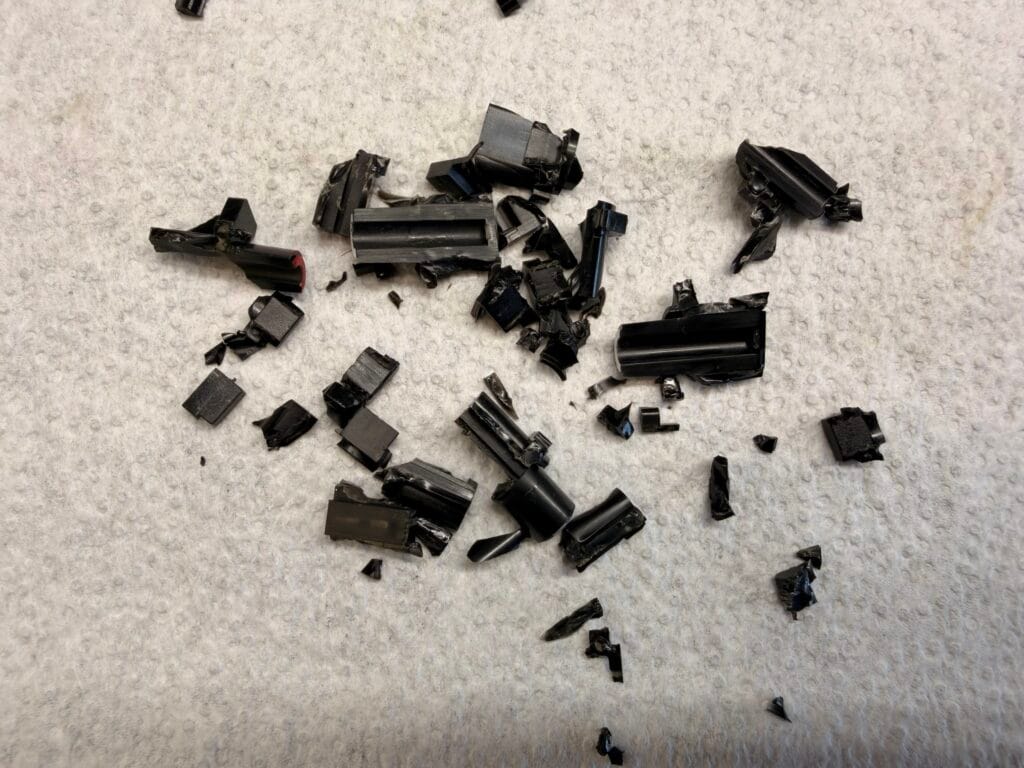
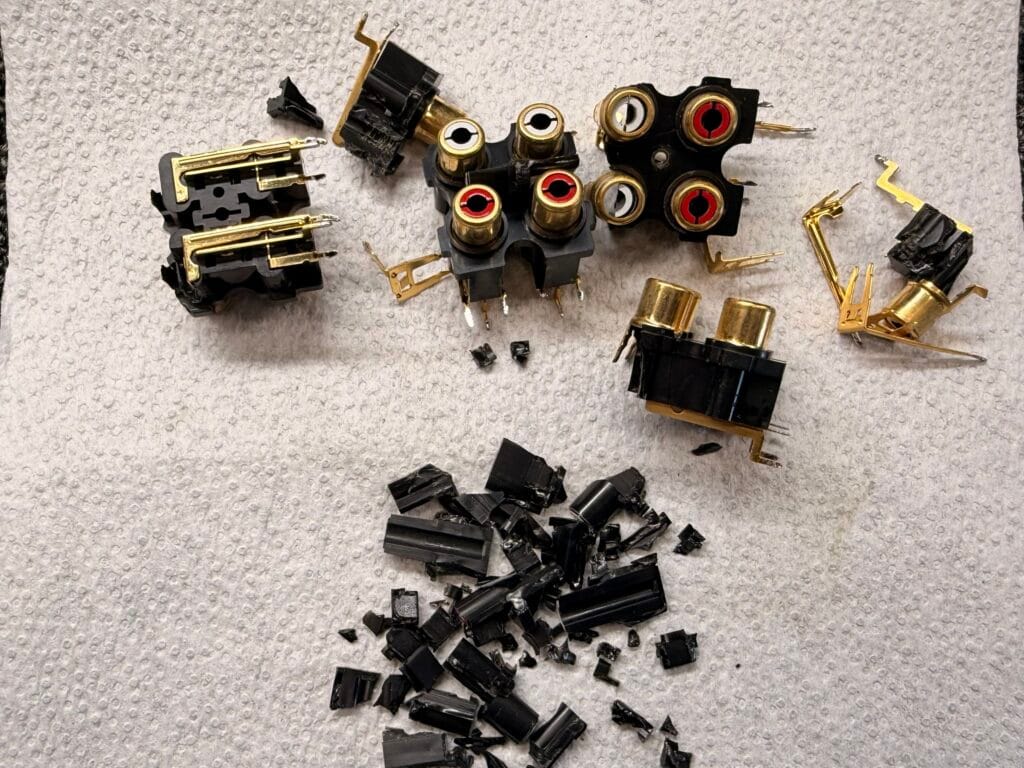
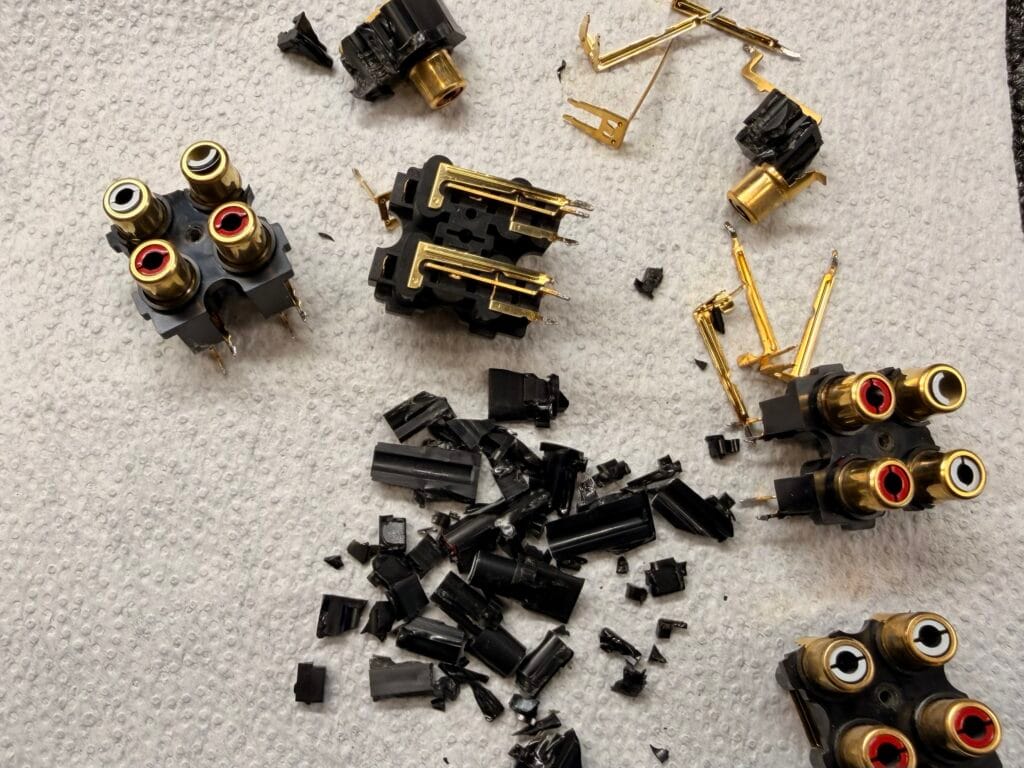
The Audiolab 8000A is a generally reliable and strong performer. That said, this Audiolab 8000A, like others I’ve worked on, needed at least a partial overhaul to deal with and remediate the dry joints and thermally compromised capacitors. That’s generally it for what is a reliable design, apart from one other, more serious issue: this 8000A rattled like a tin can filled with coffee beans!
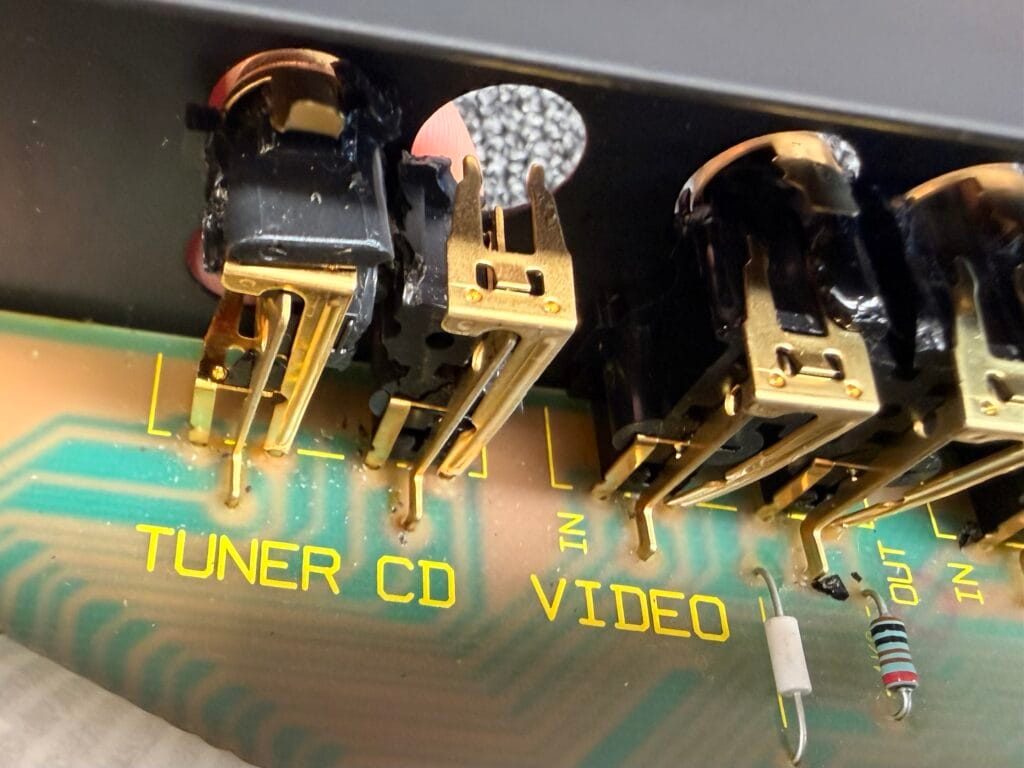
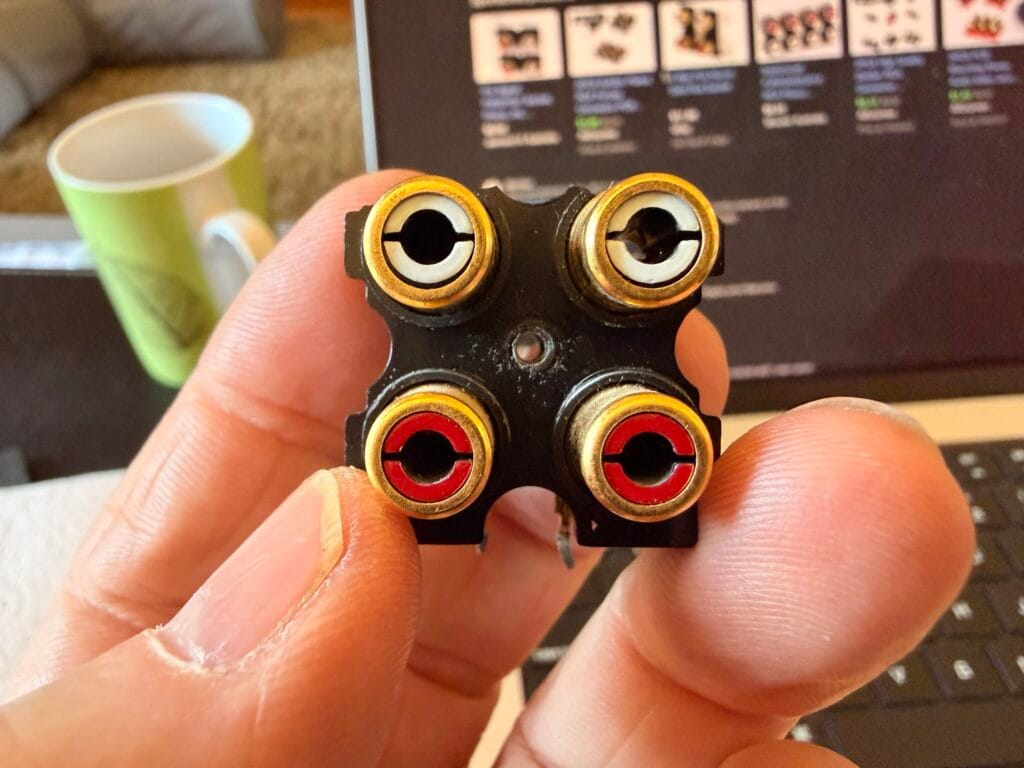
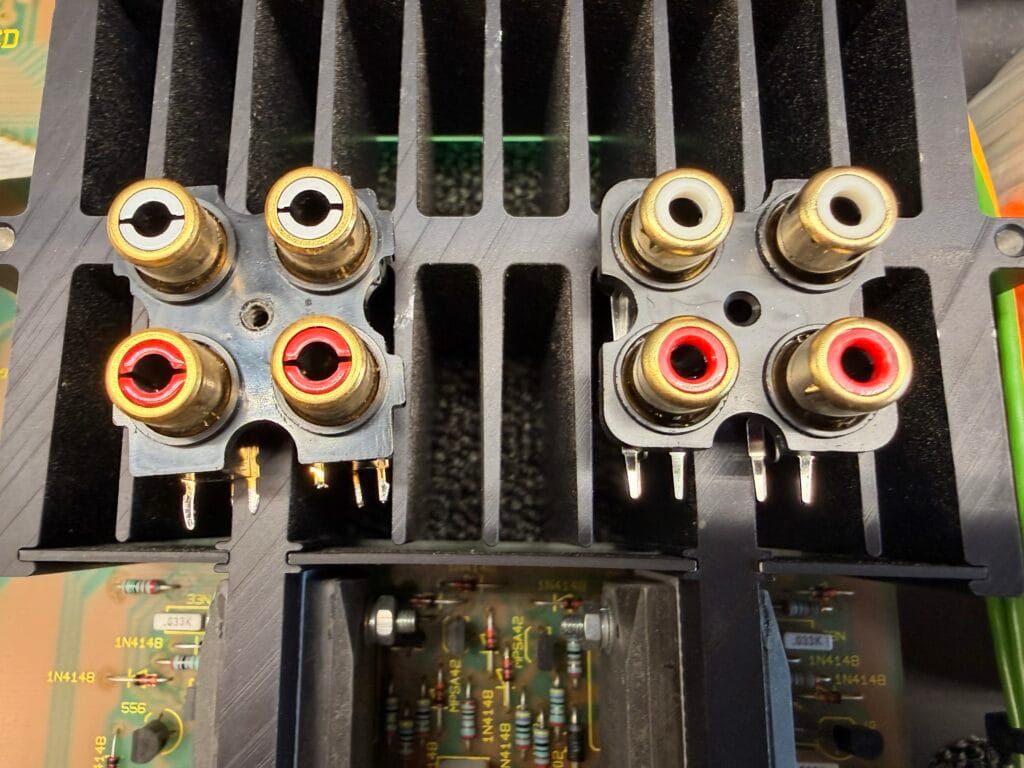
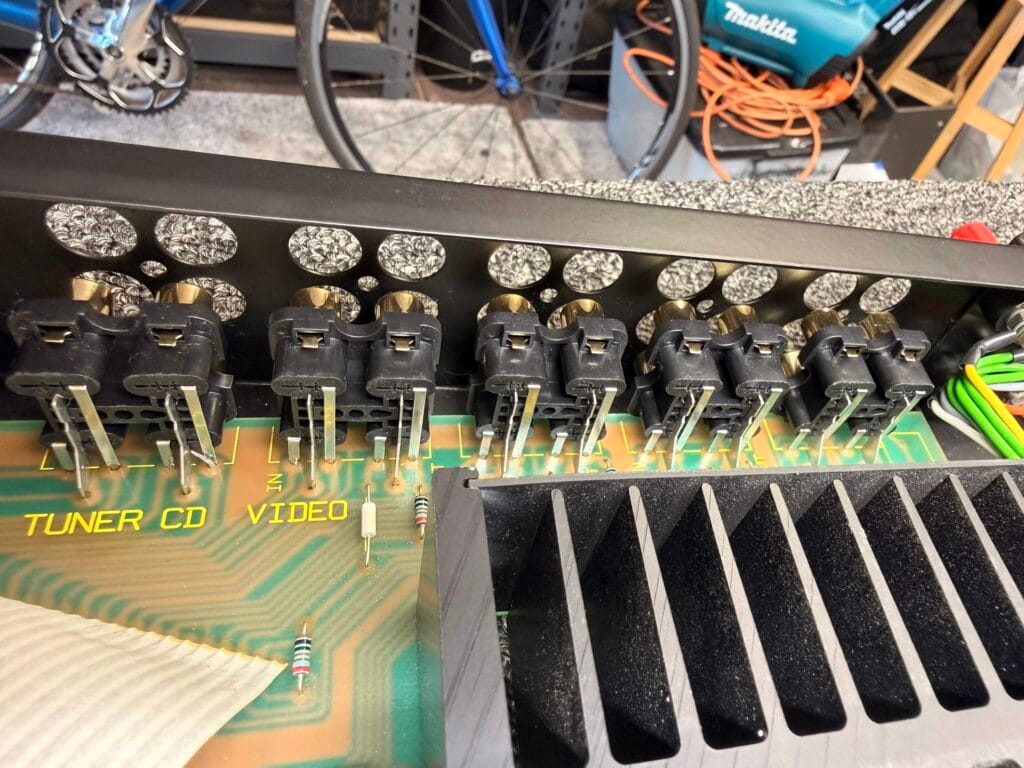
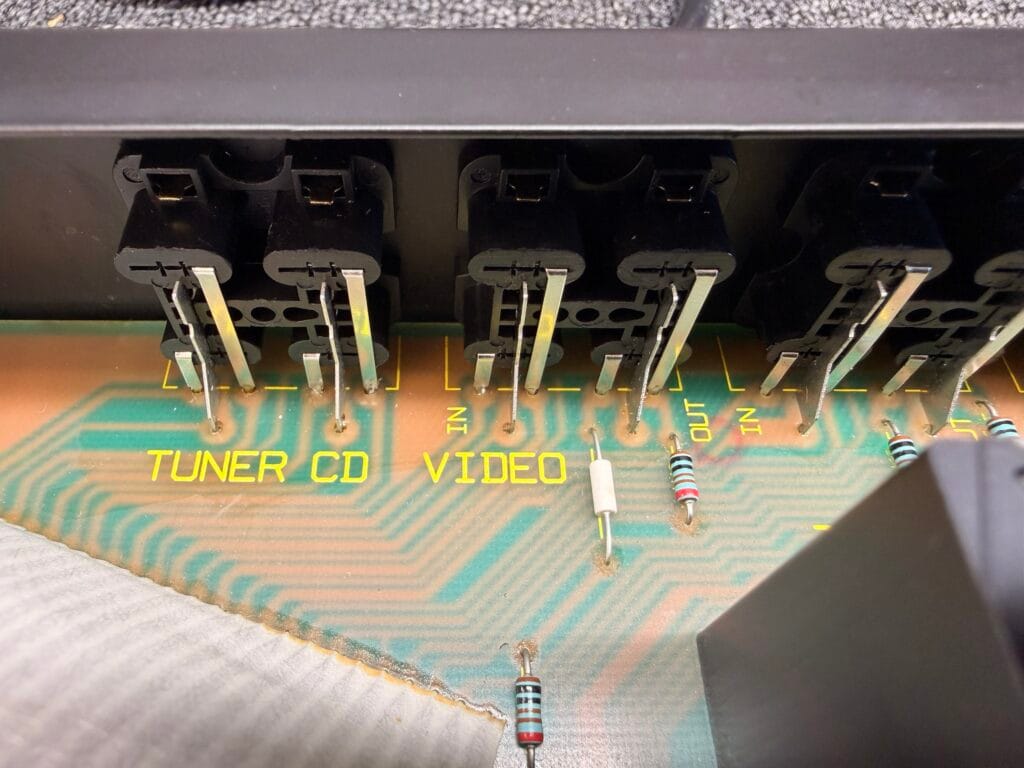
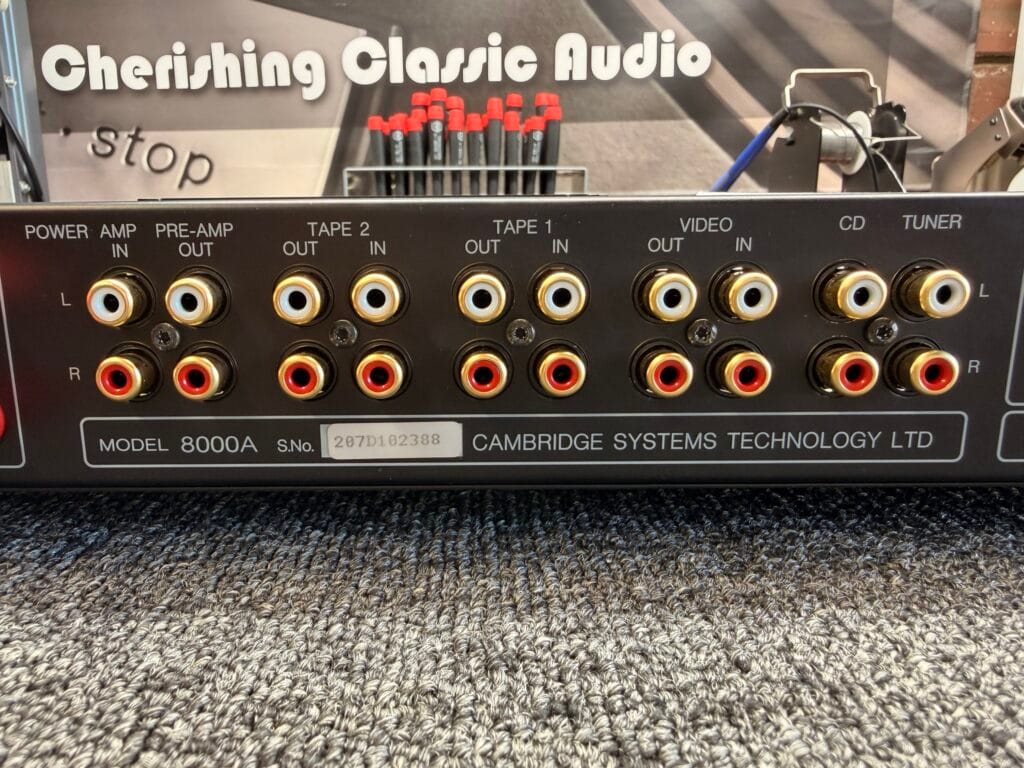
The issue is that the RCA connectors fall apart with age and use, and this affects other models in this series. The problem is significant because the whole amplifier has to come apart to deal with it, as you will see. Sometimes only one or two connectors need to be replaced, but in this 8000A, five of the six pairs of connectors were destroyed, crumbling into plastic dust and metal shards. All of the RCA connectors needed replacement in this unit.
Repair
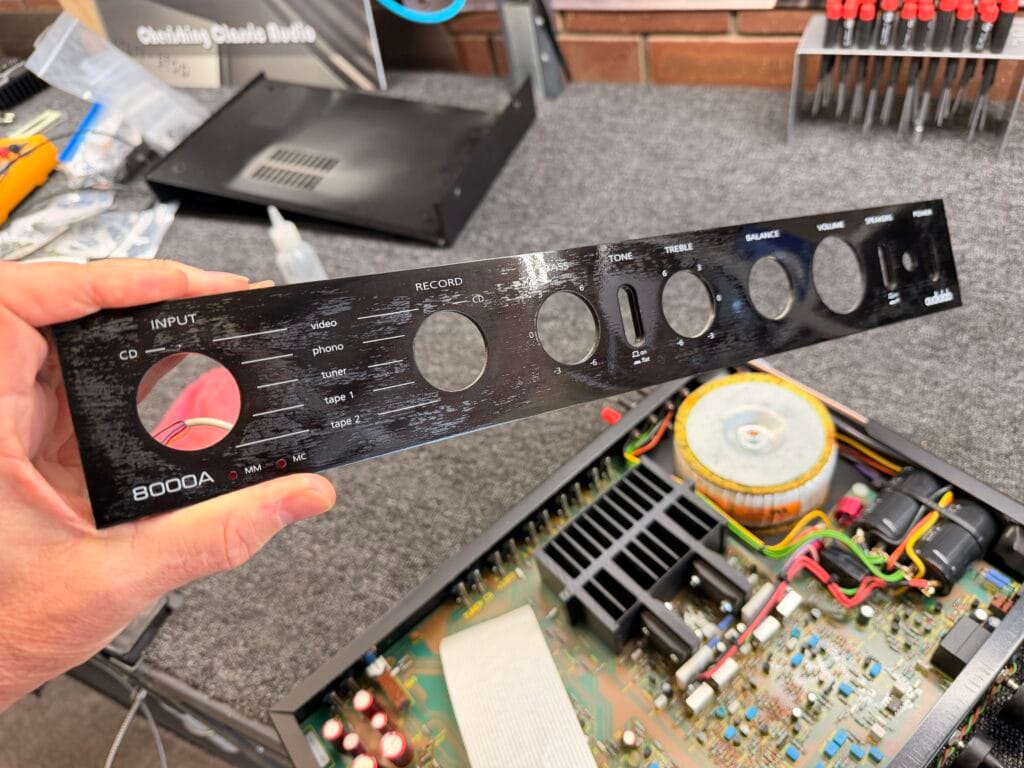
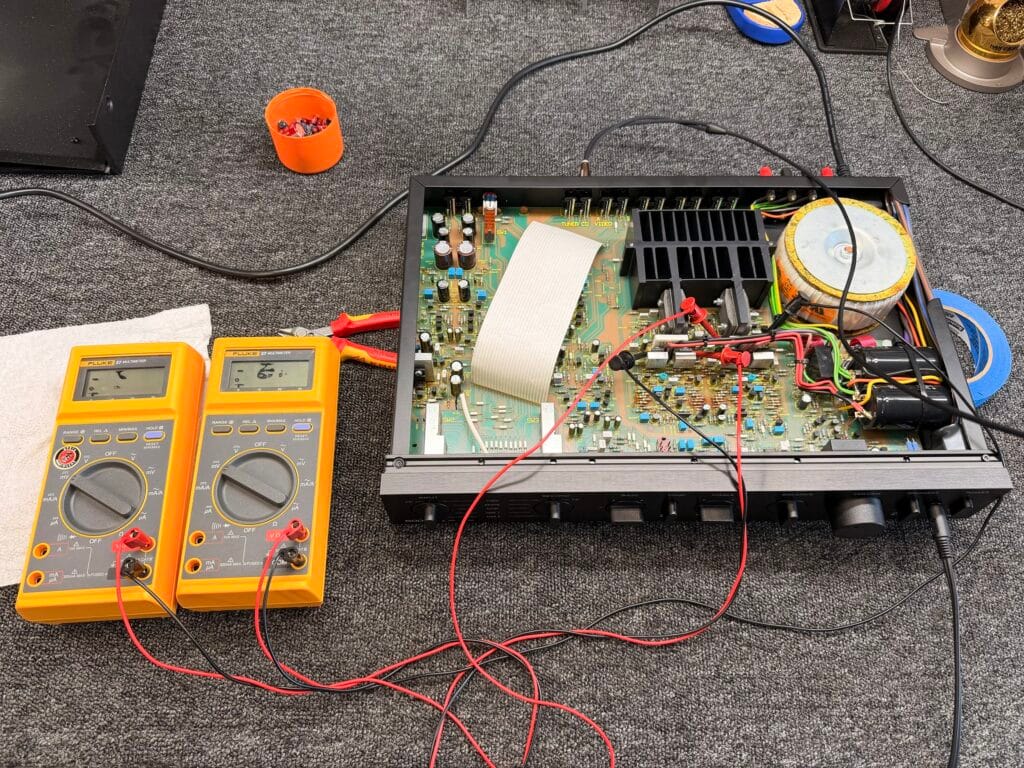
Repairing this audiolab 8000A was broken down into two stages. Stage one involved sorting out the issues with the RCA connectors. Stage two was overhauling the amplifier itself, in this case using better-than-original parts.
Let’s go.
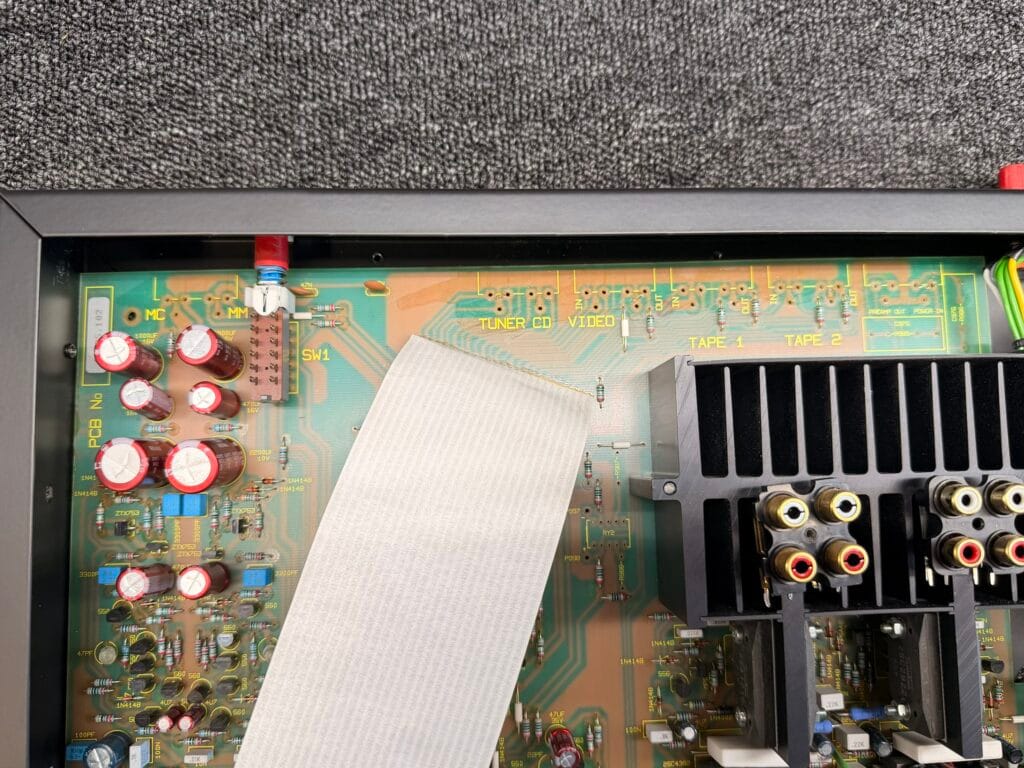
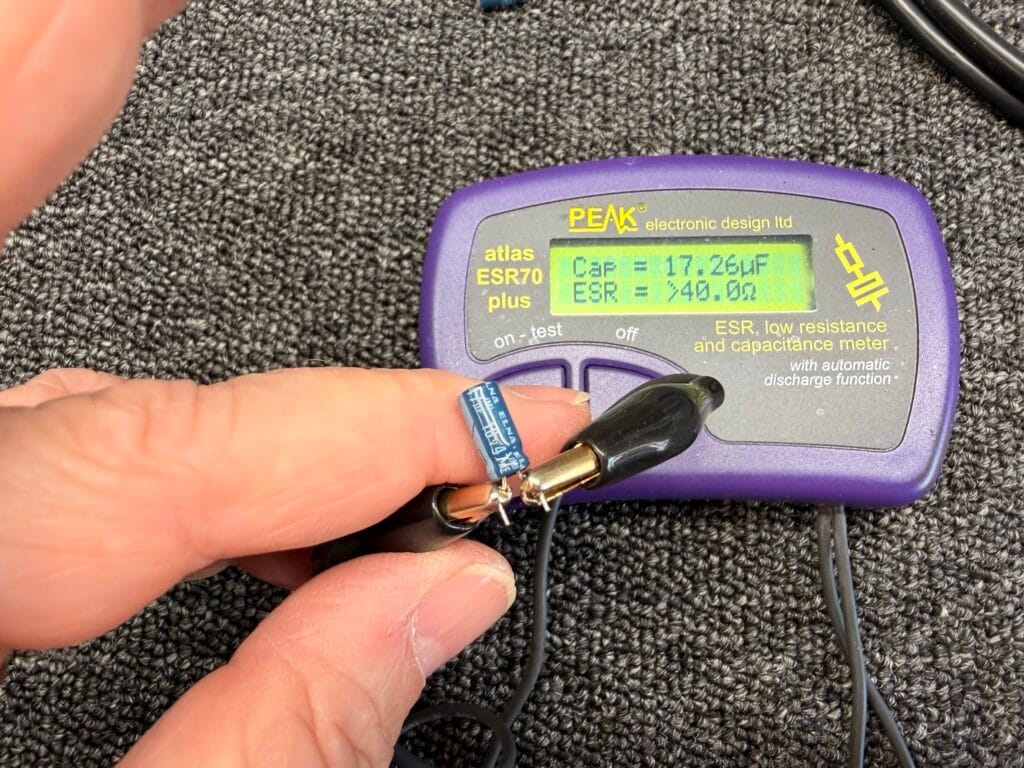
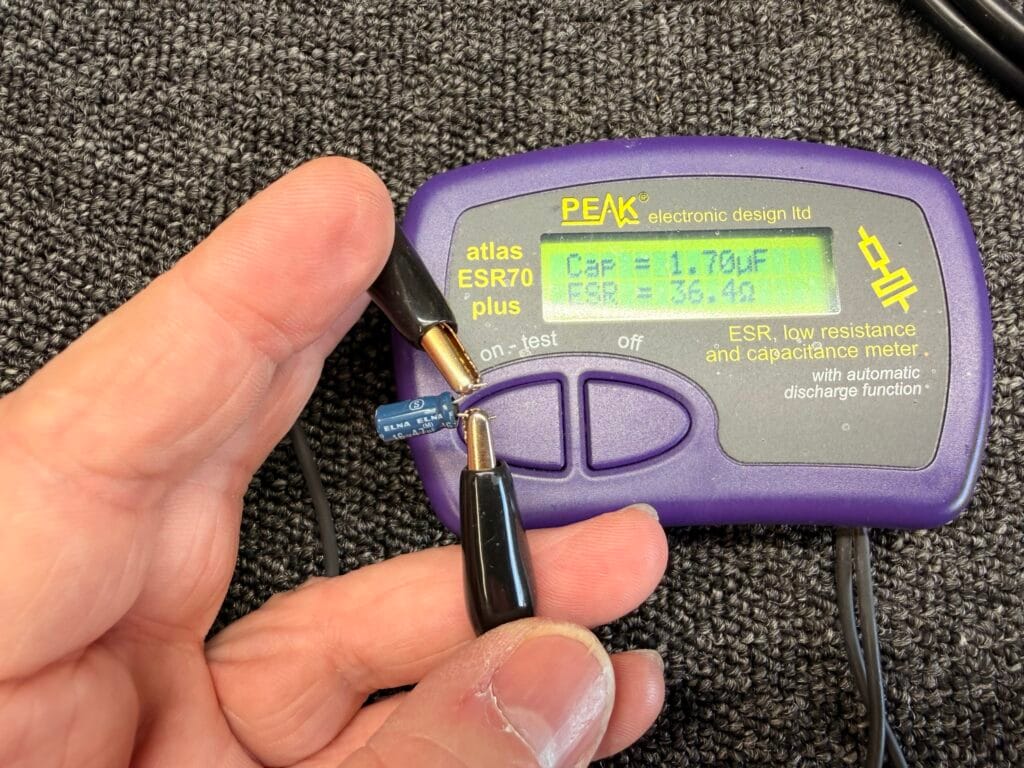
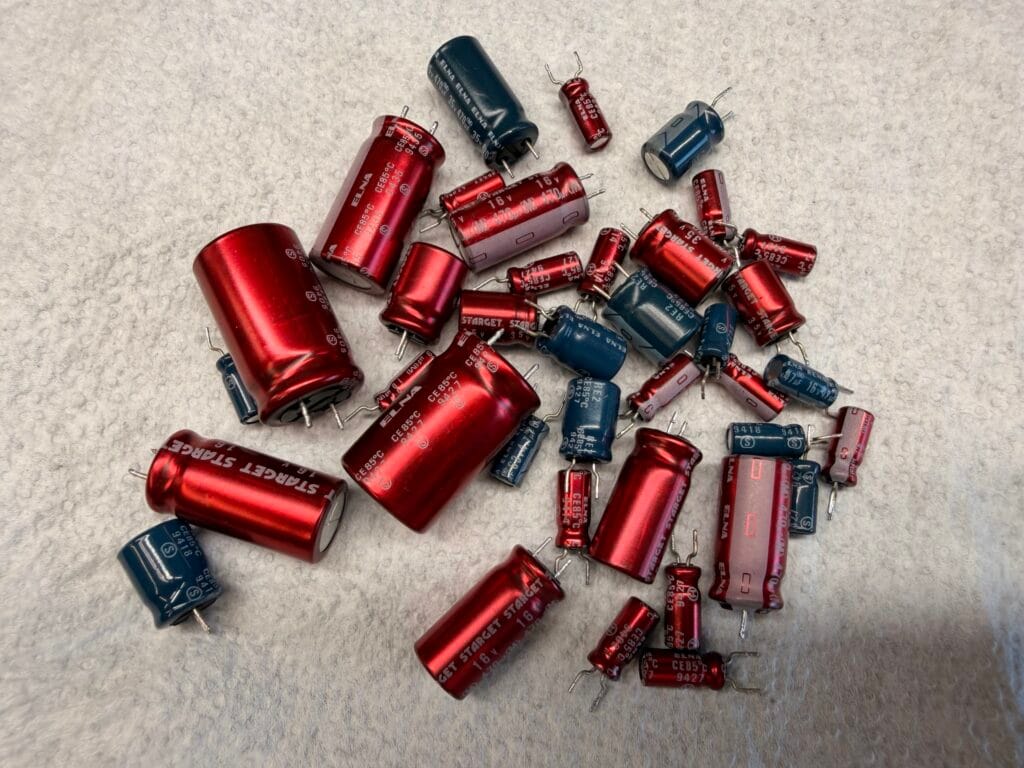
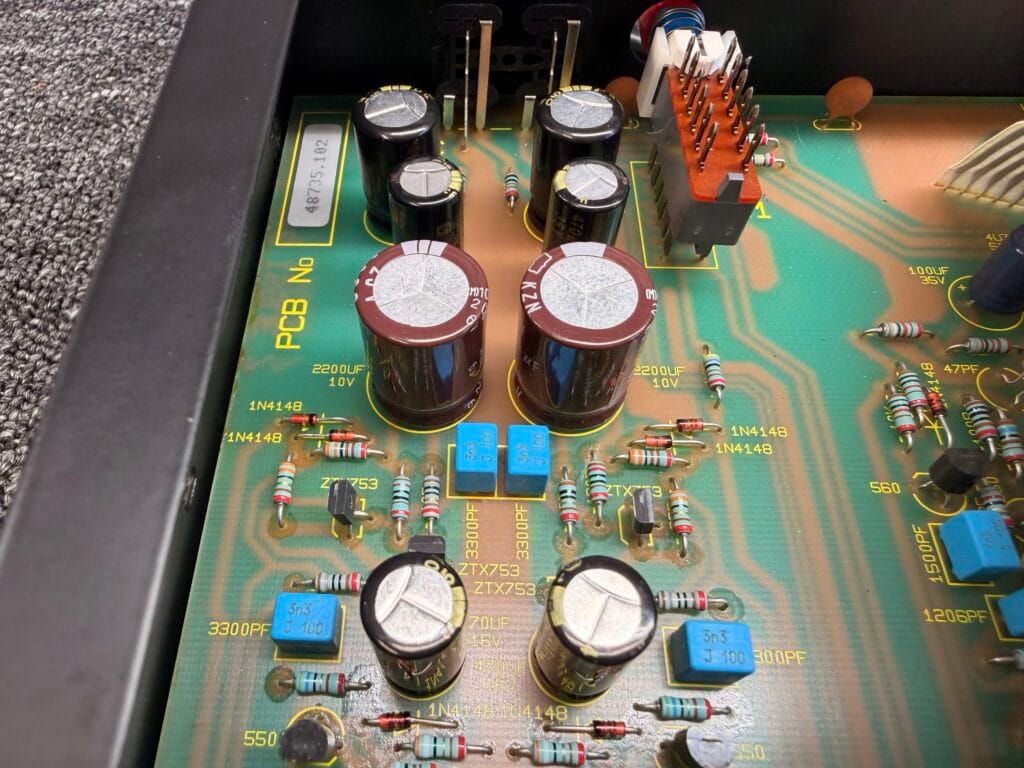
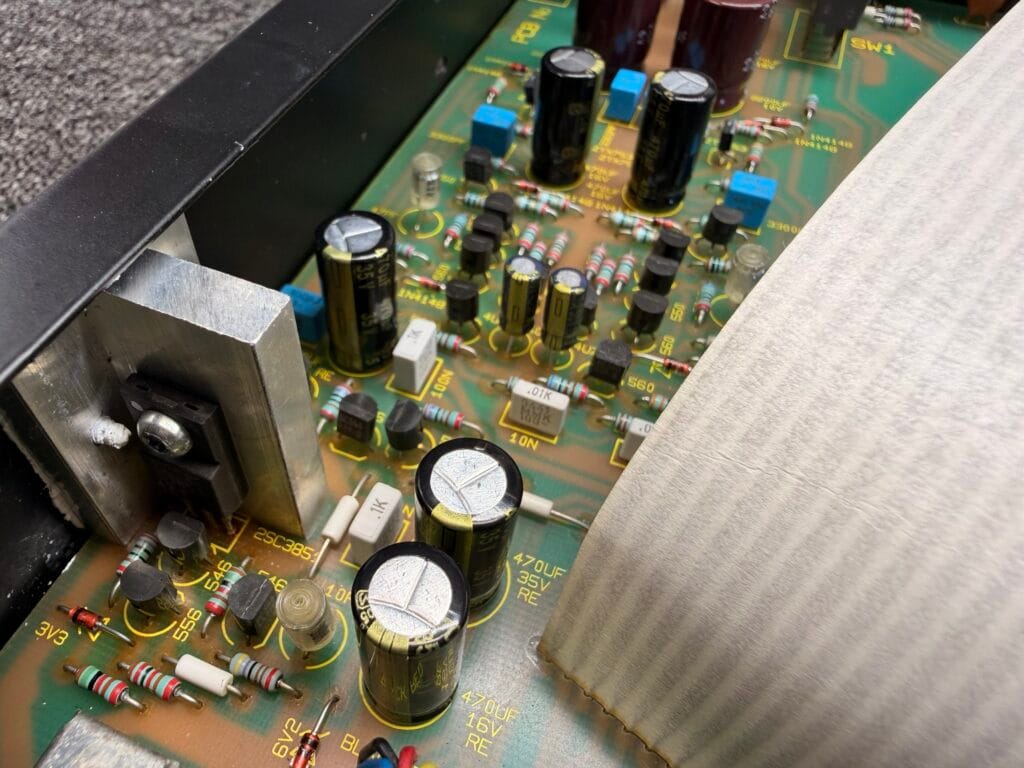
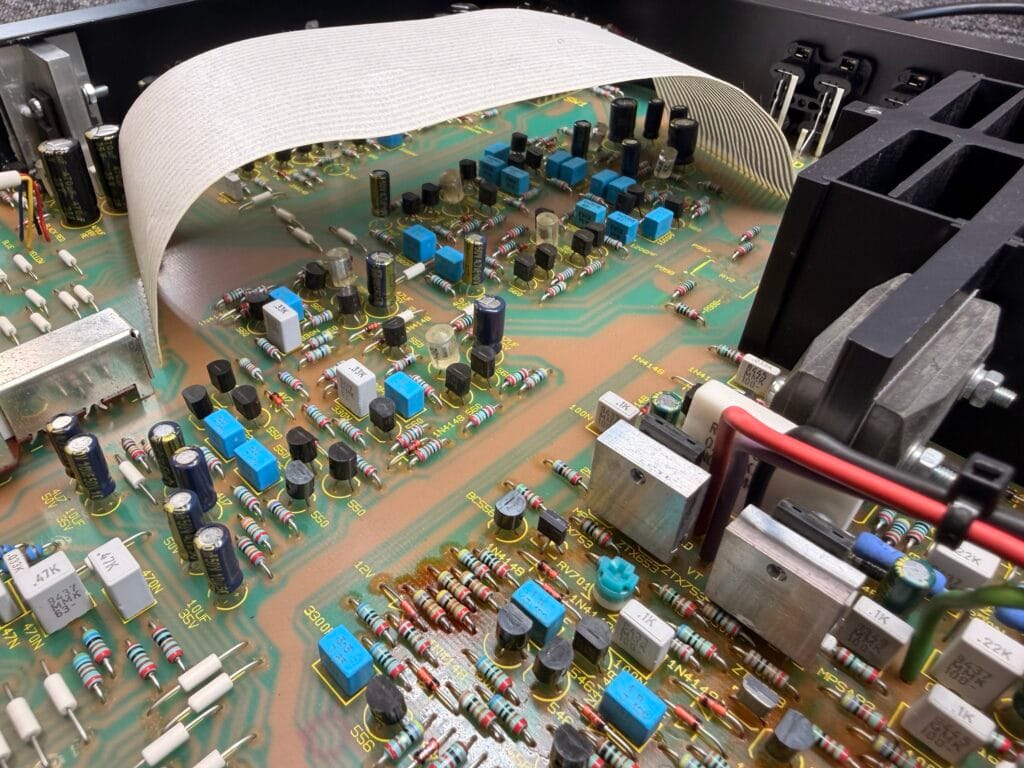
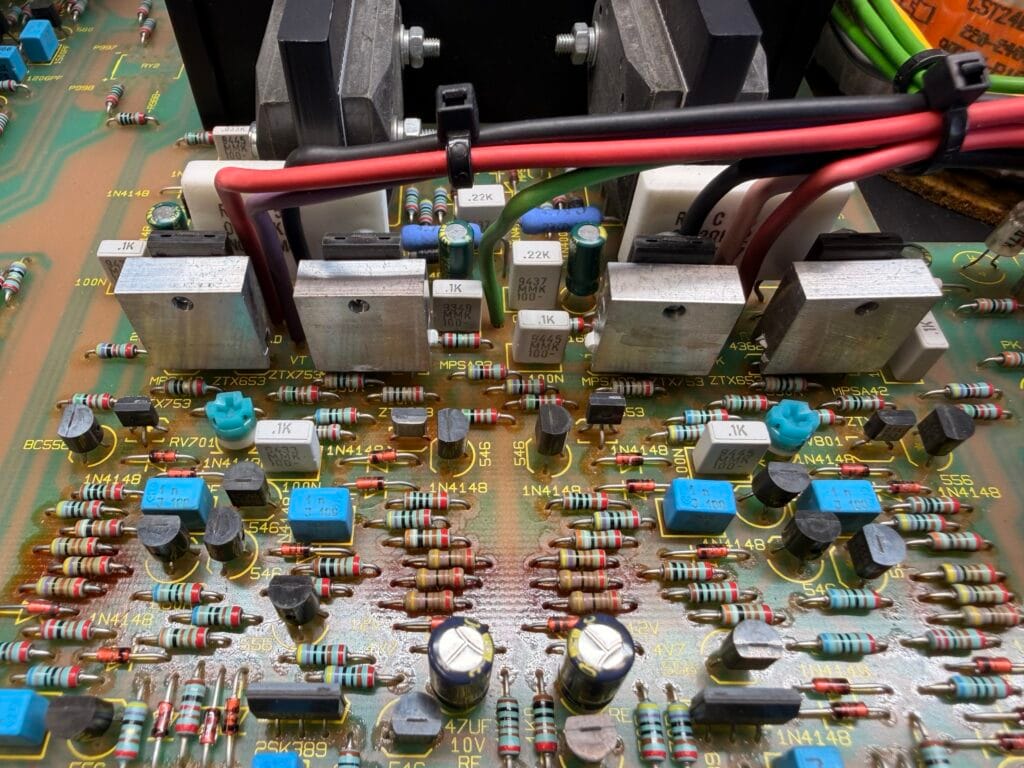
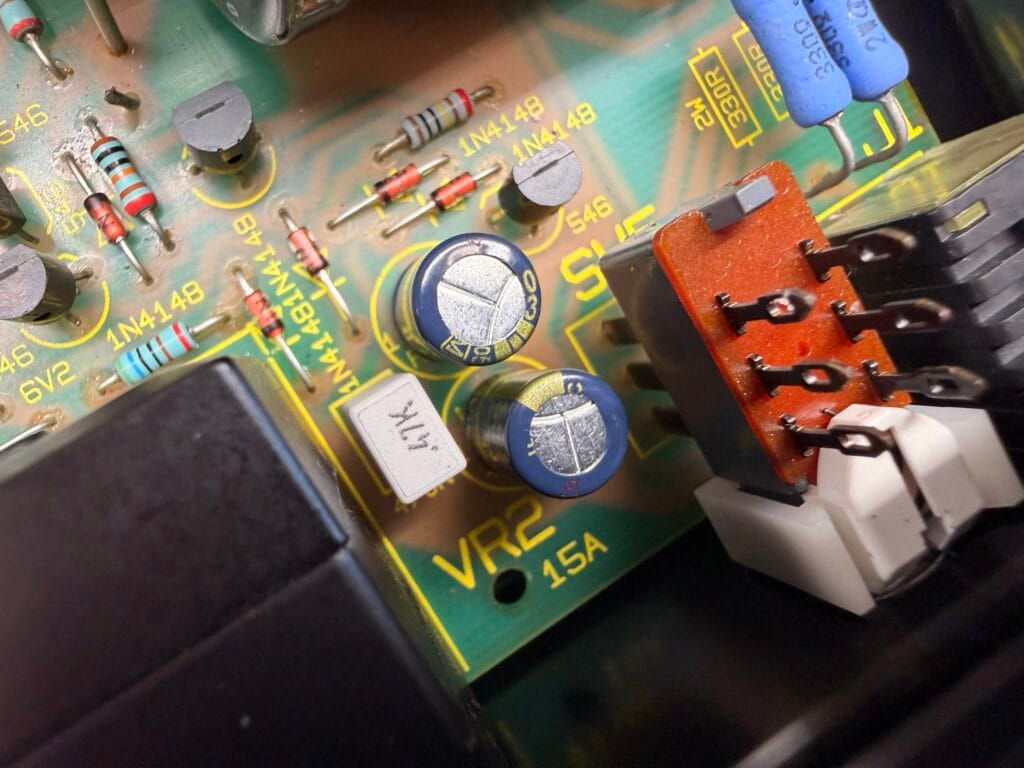
Next, it’s time to overhaul the rest of the amplifier and replace some tired electrolytic capacitors. The original parts are of excellent quality, but simply thousands of hours past their rated life span, in a design where they are pushed to the edge, thermally.
Results
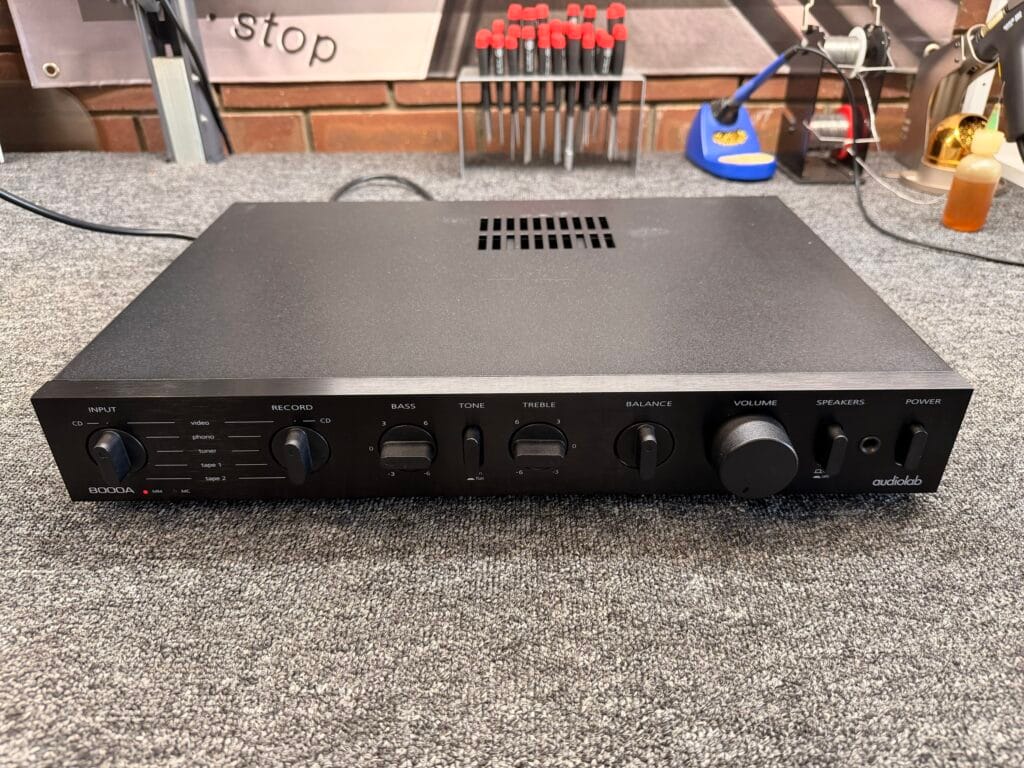
Wow! This broken and donated Audiolab 8000A now not only looks essentially brand new, but I can tell you from listening to her that she sounds absolutely fantastic. These things sound great when running properly and have a great headphone buffer. This one drives my Sennheiser HD-580 Jubilees beautifully, with real punch and slam.
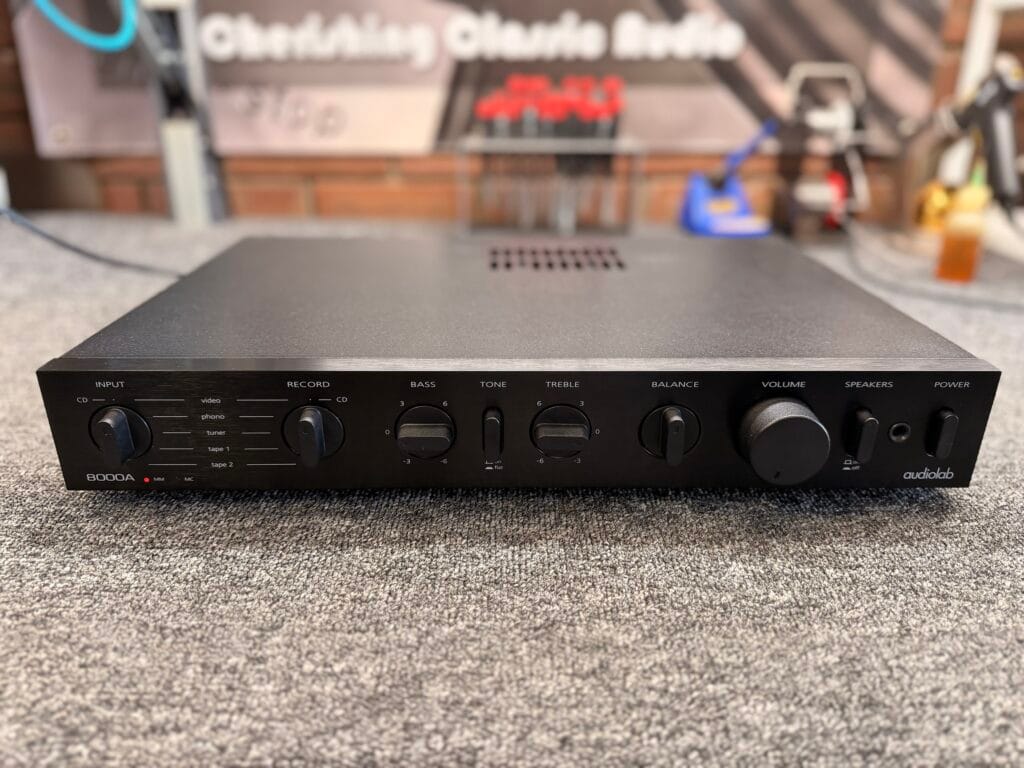
How good do these Audiolab 8000As sound? Well, if you haven’t heard one and are in the market for a full-function, smaller integrated amplifier with excellent sound quality and a really good MM/MC phono preamp, the Audiolab 8000A absolutely SPANKS ‘affordable’ modern equipment, selling for the $2K – 3K AUD price point that these would be, in modern money. I LOVE these things!
Just don’t go assuming that a proper old-school 8000A is the same as a modern, $2500 AUD Audiolab 8300. I promise you they are nothing alike, either sonically or in terms of design, build quality, or retained value. One model is still repairable and sought after, 35 – 40 years on. The other will not be, this I can promise. Don’t shoot me, I’m just the messenger. Use the information to your advantage, or don’t!
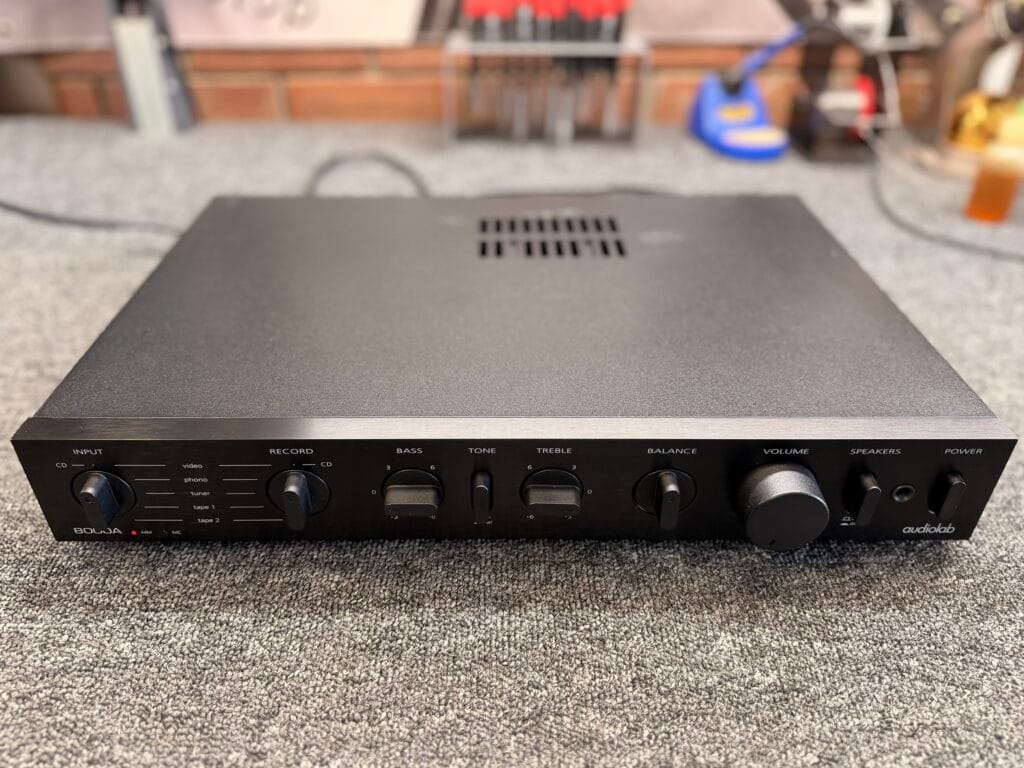
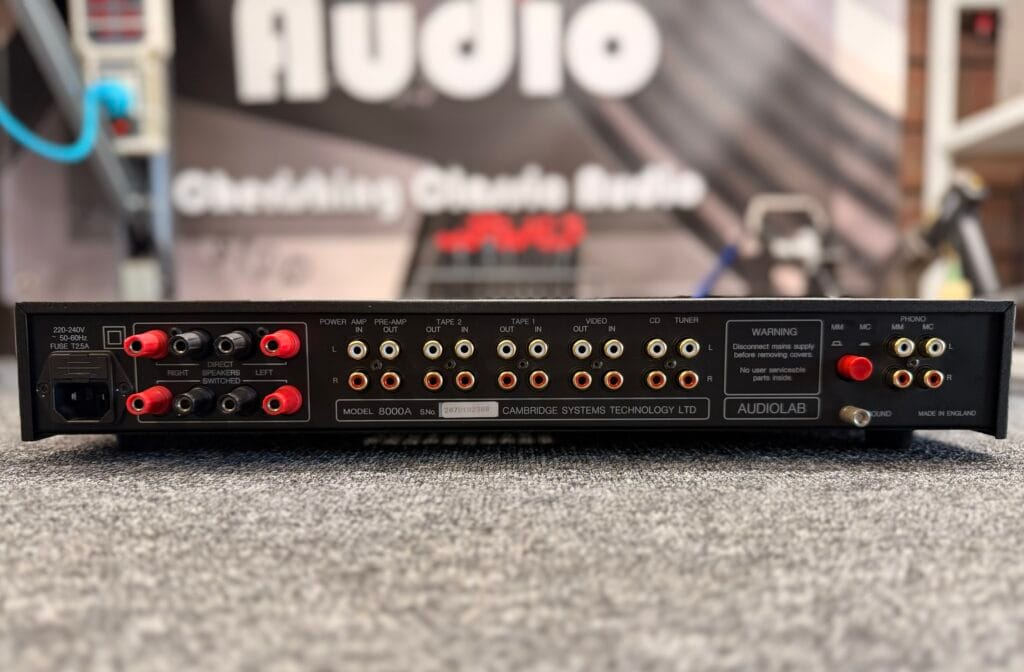
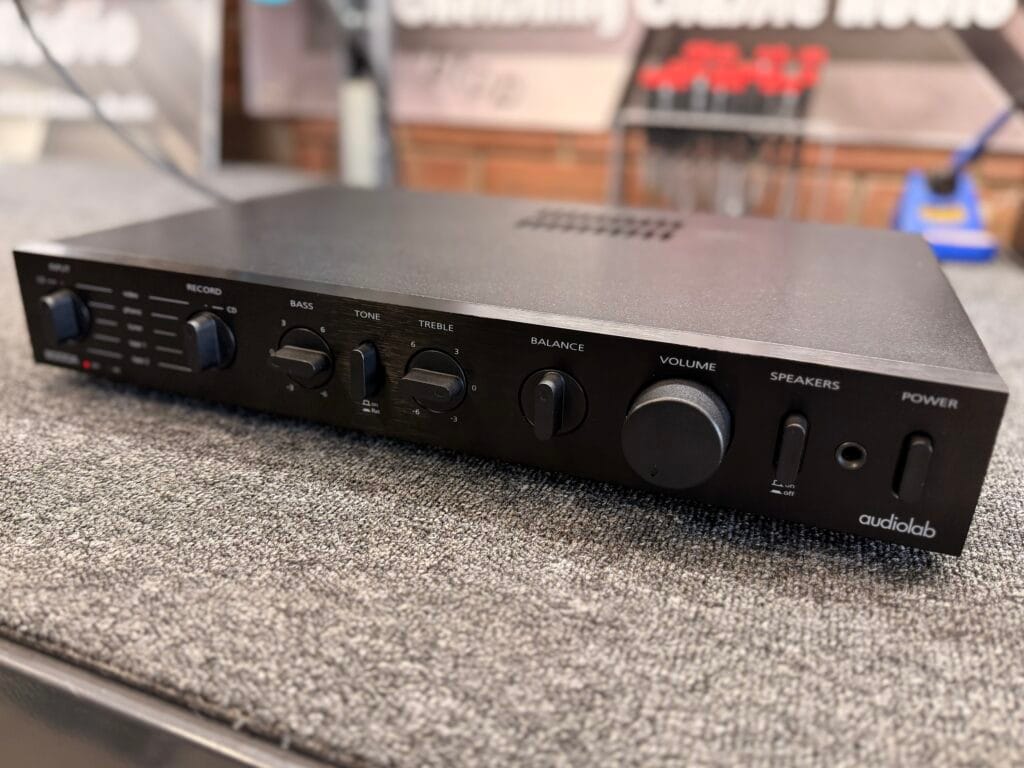
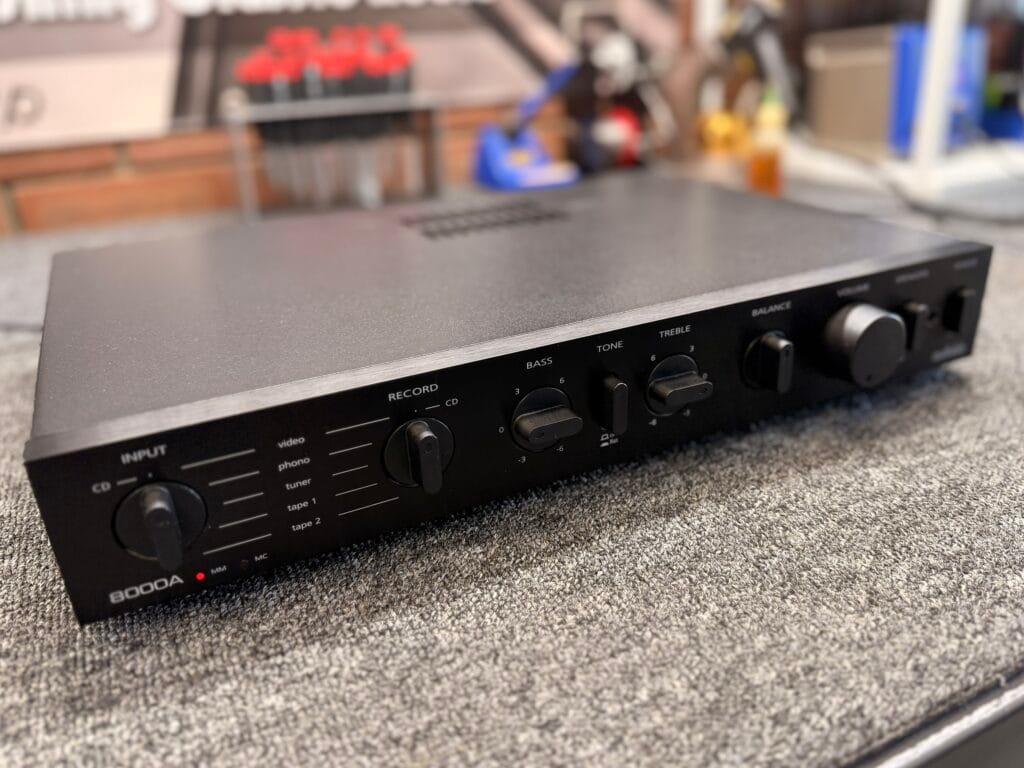
Now, will I keep or sell this completely overhauled and restored Audiolab 8000A? I honestly don’t know! I can use it in place of my Sansui AU-317 as a test amplifier. It’s a better-sounding amplifier, and it can accommodate moving coil cartridges, which my AU-317 cannot, which is helpful for me when testing turntables with MC cartridges.
Ultimately, I think I’ll sit on this one for a while and see how I go.
Thanks!
As always, thank you so much for visiting, thanks again to Steven, the donor, and I hope you enjoyed reading about another classic high-resolution integrated amplifier that has stood the test of time. If you’d like me to look at your Audiolab 8000A, C, Q, P or any other high-performance integrated amplifier, don’t hesitate to get in touch.
A huge amount of work goes into these articles. You can support me and my efforts to spread the word about beautiful equipment and keep it performing at its best, by engaging our services, commenting, liking, sharing, subscribing, spreading the word and donating, using the button in the footer. There is a list of recent donors in the sidebar/footer.
Share this:

Discover more from LiQUiD AUDiO
Subscribe to get the latest posts sent to your email.